Mercedes-Benz Aims for 100% Localization in China—Why the Sudden Shift?
 11/16 2026
 392
Anyone familiar with China's joint-venture auto market knows the drill: virtually every major global automaker builds cars in China through partnerships with domestic manufacturers—Beijing Benz, SAIC Audi, GAC Toyota, Dongfeng Citroën, and countless others. This has long been the standard playbook for joint-venture vehicles. But recent news has it that Mercedes-Benz now wants to be "100% made in China." Why the sudden change in production strategy?
1. Mercedes-Benz Going 100% Local?
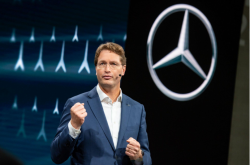
According to a report by Guancha, Mercedes-Benz Group CEO Ola Källenius said at the Süddeutsche Zeitung forum in Berlin that the company's previously effective mixed production model—dispersing production across factories in different regions and completing final assembly in China for the local market—is no longer viable.
He added that while pushing ahead with cost cuts and efficiency gains, the German automaker is now pursuing a "100% China for China" strategy. The all-new all-electric Mercedes-Benz E-Class sedan will be the first model built in China under this approach, with production slated to begin in the second half of next year.
To restore profitability, the Stuttgart-based automaker is undergoing one of its most sweeping product and cost-structure overhauls in years. Mercedes-Benz has been deliberately trimming sales volume, raising per-vehicle prices, and leaning on high-end models to protect margins.
The Chinese market was once a key profit engine for Mercedes-Benz, but this strategy is under mounting pressure there. Weakened demand for luxury cars and intensifying competition from increasingly tech-savvy local rivals sent Mercedes-Benz's China sales plunging 31% in the third quarter.
Källenius put it bluntly: "We—and any company that aspires to be a global player—must overhaul our entire business system, because more than 100 car brands in the Chinese market are locked in fierce competition."
2. Why the Sudden Change of Heart?
Mercedes-Benz now says it wants to be "100% in China, 100% for China." Its CEO has publicly declared in Berlin that the old model—shipping knocked-down parts overseas and assembling them domestically—no longer works, and that the entire system, from R&D to supply chain to production, must take root in China. Coming from the head of a century-old luxury brand, that's a striking admission. What's really going on?
First, Mercedes-Benz's performance pressure is unmistakable. Over the past three or four years, its China sales have lost their former luster—growth has slowed for several consecutive years or even turned negative outright. The days of easy money built on brand premiums are long gone. Just a couple of years ago, volume models like the GLC and E-Class still commanded a premium over sticker price; now they're being discounted by tens of thousands—sometimes over a hundred thousand—yuan. Sales staff at dealerships are cold-calling customers, practically begging them to come in for a test drive, and inventory pressure has pushed many dealers to the brink. Mercedes-Benz headquarters has to earmark real money every year for dealer subsidies just to keep the channel afloat.
The high-end segment is cooling too. Many people once paid whatever it took to sport a Mercedes-Benz badge as a status symbol, but young consumers today simply aren't buying it. Given the same budget, they'd rather have a domestic premium EV loaded with features than spend an extra hundred thousand yuan for a badge. The old playbook no longer works. Consumers have more choices and won't pay a premium for a nameplate alone. The easy-money era is gone for good. Previous price cuts failed to win back the market—slash tens of thousands, and rivals counter with far more features at a more sensible price. Under these circumstances, sticking to the old approach will only accelerate Mercedes-Benz's loss of market share. It's not that the company doesn't want to maintain its lofty premium posture; the market no longer affords it the room to do so. Resist, and what was once its core profit pool will become a direct liability.
Second, domestic NEVs have upended the market logic itself. As China's economy has surged—and especially as Chinese NEV makers have pulled ahead in recent years—domestic new energy vehicles have built up systematic advantages in smart cockpits, advanced driver assistance, spatial experience, iteration speed, and cost-effectiveness. If Mercedes-Benz insists on adapting German-designed products to the Chinese market, it will keep missing the mark. Many people don't realize that the competitive landscape in China's auto market shifted long ago. Consumers used to compare engine specs, chassis feel, and brand heritage.
Now, the first thing people do when they get in a car is check whether the infotainment system runs smoothly, whether voice control can handle continuous conversation, whether navigation can be projected straight onto the instrument cluster, and whether the driver-assistance system can handle lane changes and highway on/off-ramps on its own. The former European R&D system never prioritized any of this. Its usage scenarios are completely different from China's, so the products it designs naturally fail to match Chinese users' habits.
Applying European product logic to domestic competition in intelligent features that has already reached fever pitch is like bringing a knife to a gunfight—you're simply not on the same wavelength. In China's premium market today, a handful of BBA players no longer call the shots. New entrants keep emerging, and they understand user needs inside out. Whatever function you want, they can iterate and ship it within months. Under these circumstances, if Mercedes-Benz still clings to old thinking, users will vote with their feet. It's not that consumers no longer recognize the Mercedes-Benz brand—their needs have long since evolved. If you can't give people what they want, even the thickest brand halo will eventually fade.
Third, the traditional supply chain playbook is also running out of road. Mercedes-Benz used to produce globally and assemble in China, but the Chinese market now iterates more than once a year. Overseas-led development followed by local adaptation can no longer keep up. Under the old model, core components were built in German factories, shipped to China, and assembled into complete vehicles by domestic plants. The entire cycle was painfully long. If a component needed modification, a report had to go to German headquarters first, wending its way through layer upon layer of approval. By the time the process wrapped up, domestic competitors had already launched their next-generation products.
China's NEV industrial chain clusters are now highly mature. Nearby suppliers can deliver components to workstations at vehicle plants in half an hour. That kind of response speed was unimaginable under the old globally dispersed supply chain. While you're still waiting for overseas parts to cross the ocean, domestic automakers have already completed several product iterations and pushed costs down to a level you simply can't match. In Mercedes-Benz's previous cost structure, a hefty chunk went to transportation and tariffs on overseas components. There was no way it could adjust prices as nimbly as local brands and compete in the market.
Moving the entire supply chain to China essentially swaps out that once unbearably slow system for China's fast-paced one. It's not a choice—without the change, you can't even get a ticket to compete. Many people assume localization just means building a factory in China. If only it were that simple. Behind it lies a comprehensive rebuild of the entire procurement system, validation system, and cost accounting system—touching the very foundations on which Mercedes-Benz has operated for decades.
Fourth, the Chinese market is no longer just a sales endpoint—it must become an R&D source. Mercedes-Benz's old logic was simple: German headquarters defined every product, and the Chinese market was only responsible for selling cars. That logic has now been turned on its head. Without a thorough grasp of Chinese user needs—and without granting R&D authority to the Chinese team—the products simply won't sell.
Mercedes-Benz has now begun letting its Chinese team lead the development of smart cockpits and integrate navigation software commonly used by domestic users as well as large voice models. Such things were simply impossible a few years ago. European engineers used to puzzle over why Chinese users would want to watch short videos in the car or issue several consecutive voice commands to control different functions. They dismissed these as unnecessary gimmicks. Now they've finally realized that these so-called gimmicks are exactly the experiences domestic users care about most. Without building R&D centers here and handing core product-definition authority to a team that understands the local market, you'll never make products that meet the needs of Chinese users.
More importantly, technologies and experiences developed in China may eventually feed back into Mercedes-Benz's global markets. New energy demand in many regions around the world is now following the Chinese market's rhythm, and product logic proven in China applies in many other markets too. In other words, by making China an R&D source, Mercedes-Benz isn't just trying to defend its Chinese market—it's accumulating trump cards for future participation in global NEV competition.
Fifth, in the long run, Mercedes-Benz's pivot reflects a broader trend. The old formula was German-made, Chinese-sold. Now Mercedes-Benz must learn to be Chinese-defined, Chinese-made, and Chinese-priced. Each of these is harder than the last. Chinese-defined means products must be designed around the needs of the Chinese market. Chinese-made means the supply chain and production must truly take root locally. Chinese-priced means accepting the price logic of the Chinese market and no longer selling at high prices while putting on luxury-brand airs. The Chinese market is forcing Mercedes-Benz to transform—and this is an unavoidable future direction for many joint-venture automakers.
With an old map, you can no longer find the new continent. If joint-venture cars want to survive, they must learn to change—and learn to truly regard themselves as participants in the Chinese market rather than aloof outsiders. Mercedes-Benz's step may not be proactive; it's more being pushed forward. But at least it has found the right direction.
END
One thought for each day: The more calculating people are, the more they suffer. Suffering comes from both the body and the spirit. For modern people, the body grows ever more comfortable, yet the soul grows ever more fragile—and the suffering of the soul is the deepest wound of all. Half of our wounds come from the complex world, and half from the self that is so difficult to control. Calculating people both want to gain and fear to lose. The struggle between gain and loss distorts the soul. When everything is seen lightly and everything is left to fate, the heart can remain safe and sound in tranquility.
-
![]()
Behind Changan's Sale of a 10% Stake in Avatr: Reinforcing Its "Independent" Identity and Solving the AD Integration Challenge? | Mingjing Pro
-
Baidu Token Exchange Goes Live, Making "Reliability" Measurable
-
![]()
Mercedes-Benz Aims for 100% Localization in China—Why the Sudden Shift?
-
![]()
The Biggest Headache for a Silicon Valley CEO Isn't Jensen Huang...
-
![]()
When Selling Cars Stops Making Money, the Automotive Aftermarket Finally Ushers In Standardization
-
![]()
A Fearful Musk
-
![]()
Mercedes-Benz Goes Global, Begins "Tailoring" for China
-
![]()
The Chinese-Style Turnaround of Overseas Automakers