When Selling Cars Stops Making Money, the Automotive Aftermarket Finally Ushers In Standardization
 11/16 2026
 366
Farewell to the Gray Area: Automakers Enter Diversified Revenue Generation.
As October sales figures roll in, reality has once again upended the traditional peak season for the automotive industry: passenger car sales plunged more than 27% year-on-year, and the growth rate of new energy vehicles decelerated to 13%. Slow-moving inventory is becoming the new normal for the second half of the year.
When new car sales decline, the traditional commercial revenue of the automotive industry follows suit. In the past, the domestic automotive business model revolved primarily around new car sales, maintenance and repair, and parts replacement. With sales flagging, dealers are finding the going even tougher.
When the front-end market lacks vitality, the only option is to seek opportunities in the aftermarket. According to data from the Ministry of Public Security, by the end of 2025, the national vehicle parc exceeded 366 million units, including nearly 50 million new energy vehicles. The average vehicle age stood at approximately 7.3 years, with vehicles over 10 years old accounting for 38%.
The automotive aftermarket has become a fertile field that has yet to be fully cultivated.
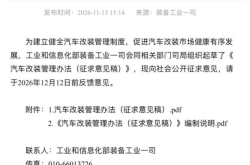
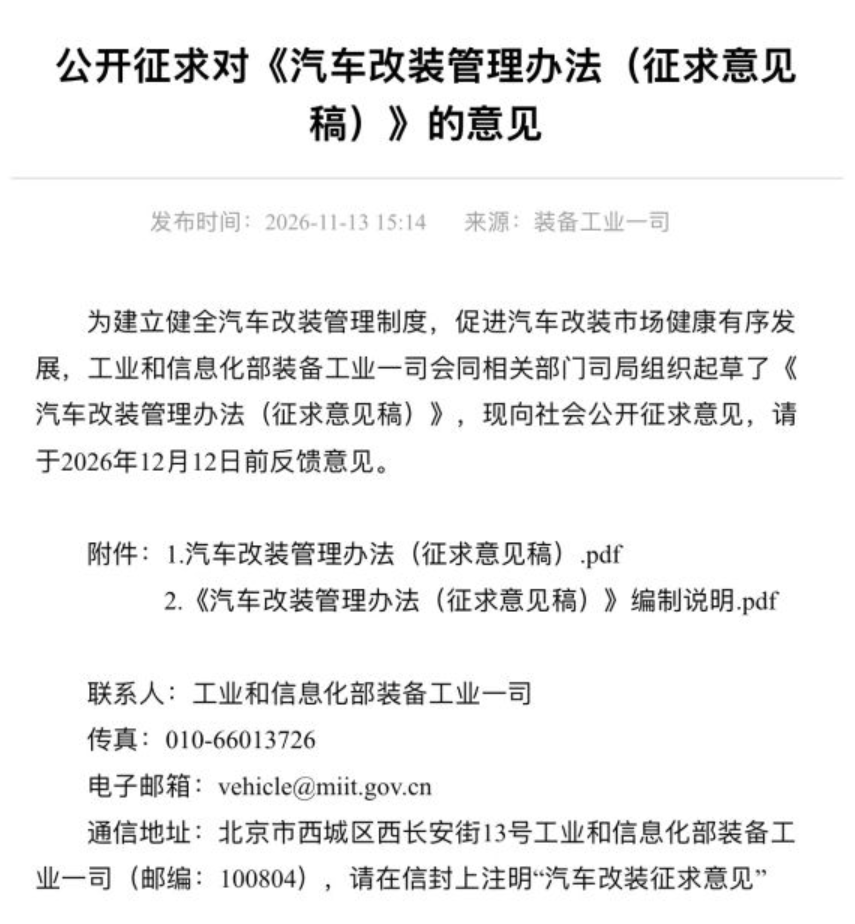
On November 13, the Ministry of Industry and Information Technology, together with the National Development and Reform Commission, the Ministry of Public Security and four other departments, released the "Automotive Modification Management Measures (Draft for Comments)" — the first systematic national-level regulatory document on automotive modification. It resolves the three long-pending questions of "what can be modified, who is authorized to modify it, and whether a modification is compliant" in one stroke, providing an official basis for a sector that has long operated in a gray area.
Demand and Orderly Liberalization
Judging by the vehicle parc alone, it is clear that the domestic automotive modification market is brimming with opportunities. The MIIT drafting notes explicitly state that the domestic modification market exceeded 150 billion yuan in 2025, a year-on-year increase of 20%.
At the same time, automotive modification is shifting from the performance-oriented consumption of the fuel vehicle era to personalized consumption in which ordinary consumers participate.
About 42% of modifications are concentrated in exterior modifications — car wraps, color-change films, decals, wheels, bumpers, side skirts, and exterior kits. These are highly visual, involve relatively simple purchase decisions, and lend themselves easily to social media dissemination.
In particular, as homogeneous competition among new energy vehicles has intensified, it has become difficult to continuously create differentiated experiences among users by relying solely on range, acceleration, screen count, and intelligent driving configurations. Through exterior modification, consumers can achieve personalized expression.
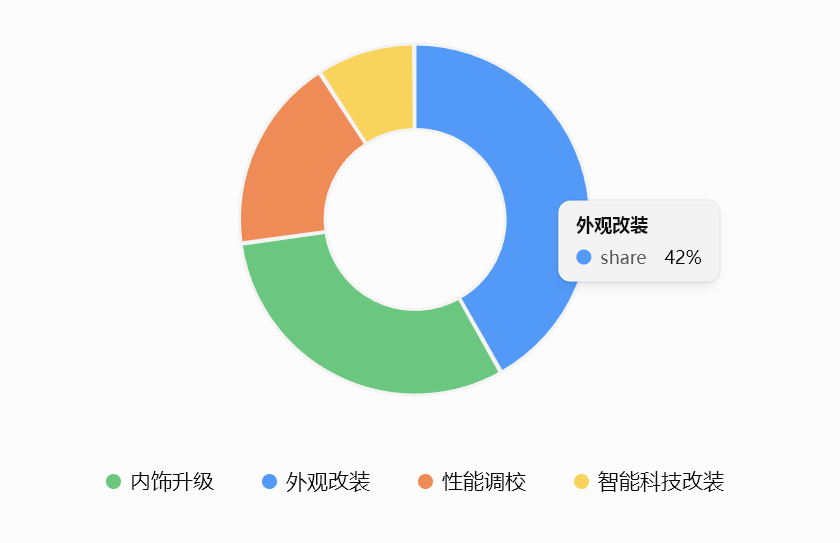
On the other hand, as vehicle age increases, demand for interior and intelligent features also grows. About 31% of modifications center on interior upgrades, including seats, audio, ambient lighting, storage systems, in-car entertainment, and comfort equipment. New energy vehicles, in particular, offer larger cabin spaces and rich electronic configurations, further generating modification demand.
Performance modification, which has long attracted attention, accounts for only 18% and is not the current mainstream. However, the hot sales of boxy models such as pure electric SUVs and new energy hardcore off-road SUVs have brought certain market increments.
Although the modification business has substantial consumer demand, for a long time a considerable portion of consumption has remained in the non-standardized market due to unclear regulatory boundaries, inconsistent qualifications among modification enterprises, and disputes over vehicle warranties and insurance.
The draft for comments can be regarded as providing a legal basis and specific management measures for modification at the institutional level. According to the current draft, modifications are divided into Category I and Category II. Category I has 29 items, covering projects that do not involve safety and environmental performance, such as body color, interior and exterior trim, and external structural components. Vehicle owners may implement them themselves or entrust shops to carry out the work. Category II has 14 items, involving general safety and environmental performance such as braking and suspension, and belongs to functional modification.
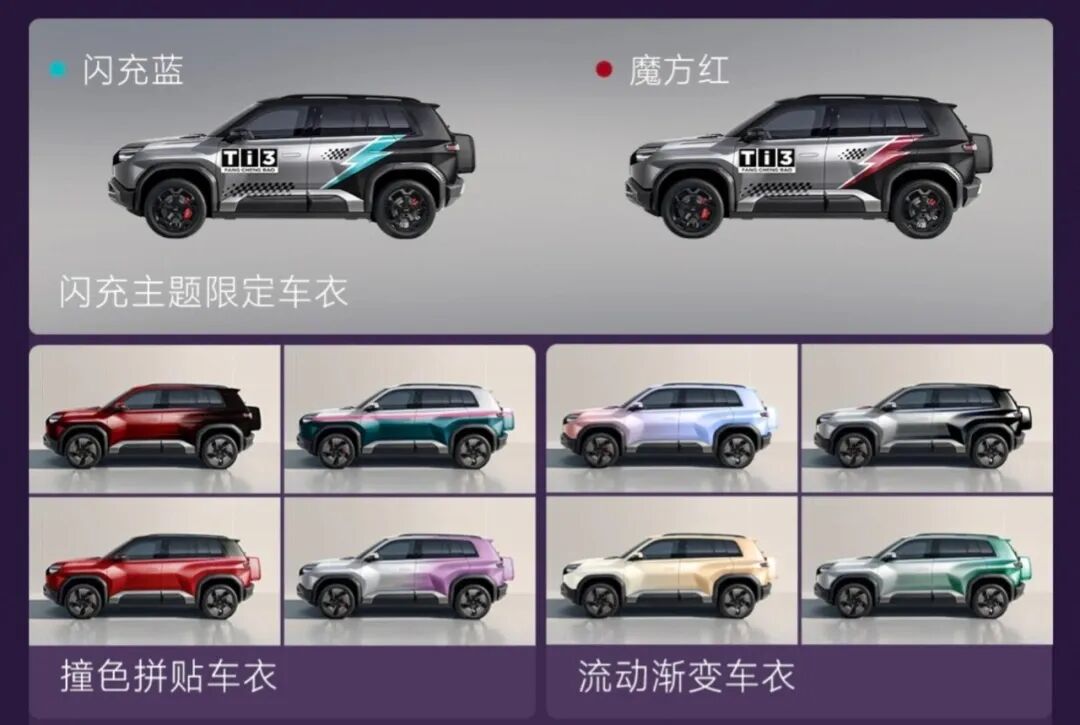
For ordinary consumers, this means that personalized decoration, comfort upgrades, and outdoor equipment installation that previously relied heavily on modification shops are expected to obtain a clearer compliance basis.
At the same time, Category II modifications are clearly defined. Enterprises carrying out such modifications must obtain authorization from vehicle manufacturers or imported vehicle dealers. The authorizing automaker bears primary responsibility for the quality and safety of the modified vehicle. The modification plan must be technically reviewed by a national-level testing institution, a certificate of conformity must be issued after completion, and a "one vehicle, one file" modification record must be established.
For vehicle owners who want to modify their cars, the draft provides a clearer modification list. The list itemizes project names and technical descriptions and indicates the handling method: for changing body color, change of registration is required; for some installation and replacement projects, change filing is required; for the remaining projects, no handling is required and they can be used immediately after modification.
In addition, the new rules require the establishment of a mechanism for traceability and supervision throughout the entire modification process. Modification enterprises are required to establish vehicle modification records and, within five working days after completion of the modification, submit them to the authorized automaker through the automotive modification information platform. Automakers must complete confirmation within fifteen working days to ensure the compliance of modification behavior and quality safety.
The draft for comments connects the previously fragmented channels among vehicle owners, modification shops, automakers, and administrative management departments. Automakers authorize modification shops to carry out modifications while bearing corresponding quality and safety responsibilities. Management departments can achieve efficient and refined management through the national automotive modification information platform. Vehicle owners can more easily find qualified modification enterprises, making modification more reassuring.
Official Modification
As for automotive modification, even before the draft for comments, domestic automakers had already begun making arrangements, seeking to seize this huge aftermarket in advance.
BYD, the domestic champion in both vehicle sales and new energy vehicle sales, began attempting to enter the automotive aftermarket as early as 2021, when it launched an official color-change service for the BYD Han and Tang. By 2025, BYD further expanded the models covered by the color-change service and launched limited-time promotional activities to promote it.
By 2026, with the Fang Cheng Bao brand, BYD truly opened up the automotive aftermarket. For the Tai 3 model, it offered not only basic services such as color change and decals, but also an official replaceable front-end solution, resolving modification filing issues at the automaker's filing stage through advance declaration.
In addition to BYD, Great Wall Motor has also deeply participated in modification research and development in hardcore off-road vehicles. At this year's Beijing Auto Show, it even held a modification culture day event, displaying finished products including official modifications and user co-creation.
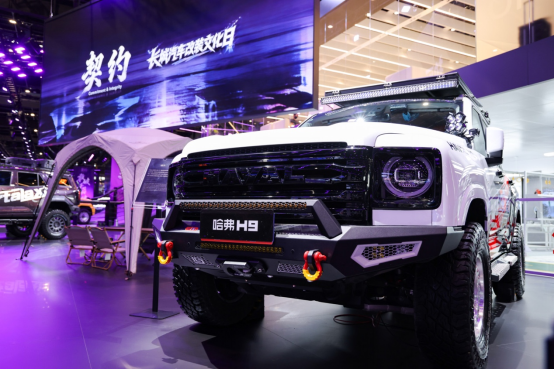
Data shows that more than 70% of Tank brand users have engaged in modification or installation behavior. Great Wall incorporates modification into forward vehicle development, reserves original factory interfaces, and achieves "factory compliance, user freedom", avoiding the risks of traditional modification.
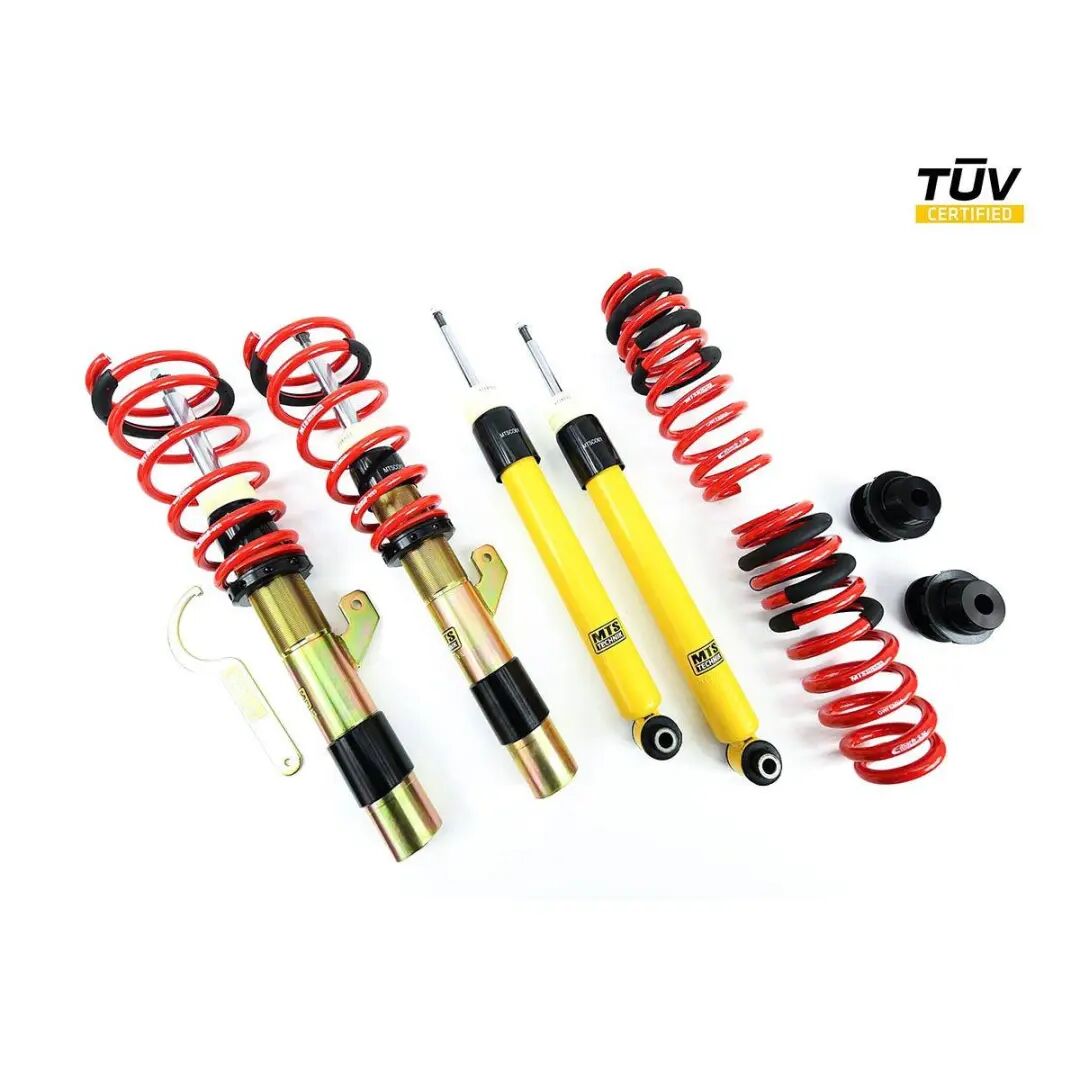
Among new forces automakers, official modifications are also concentrated on exterior components, mostly decorative products such as sport wheels and exterior kits. In terms of performance accessories, Firefly offers an official performance kit that replaces all four suspension springs of the vehicle for 2,999 yuan to improve handling performance.
Unlike fuel vehicles, on new energy models most modifications require automakers to open permissions. This is also why the draft for comments limits Category II modifications to enterprises authorized by automakers as the only qualified operators.
This still leaves a large gap compared with markets such as Europe, the United States, and Japan that have complete modification cultures. For example, in the United States, there are many professional modification parts brands, and enterprises can independently develop products around vehicle models without necessarily obtaining automaker authorization to carry out all types of legal modifications.
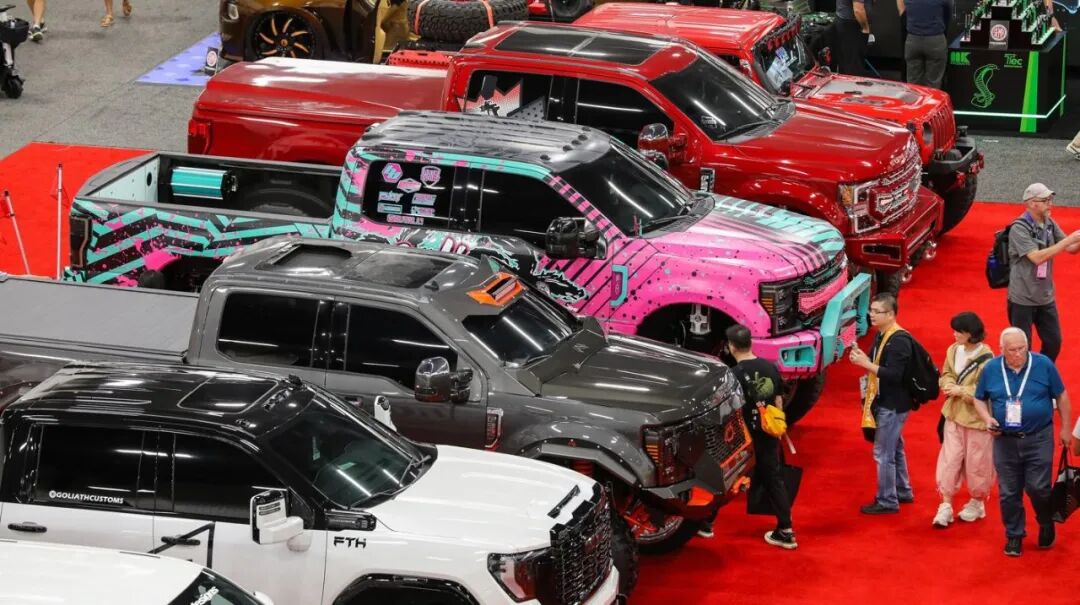
For example, for pickup trucks, the most popular models in the U.S. market, several modification manufacturers can provide compliant modification parts. In 2025, U.S. consumers spent more than 15 billion dollars on pickup truck modifications, accounting for 30% of modification market sales.
This is very similar to Germany, where modification parts can achieve compliance through ABE (Allgemeine Betriebserlaubnis, general operating permit for parts), parts certification, and related technical inspections. Modification parts have already formed a relatively mature certification and testing system, and independent modification brands have a high degree of specialization.
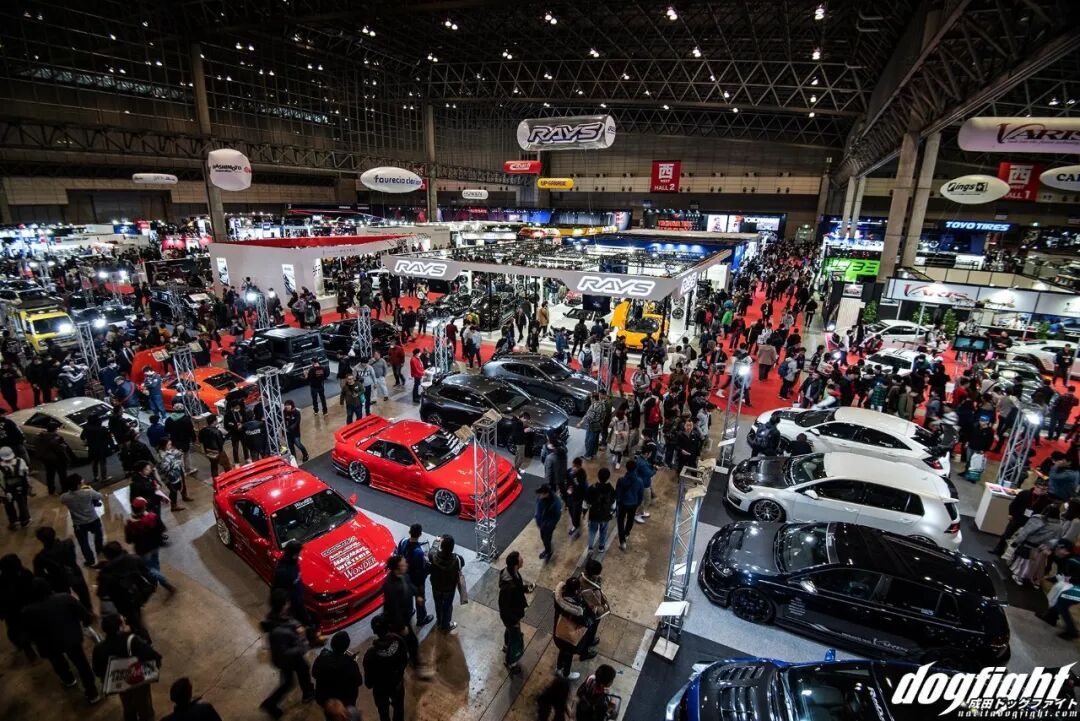
As for Japan, it manages modified vehicles effectively through the vehicle inspection system. Starting October 1 this year, it implemented adjustments to the modification vehicle declaration system, strengthening measures such as actual vehicle review and online declaration, reducing the administrative cost of compliant modification.
Considering the domestic reality, it is estimated that after the draft for comments is adopted, automakers will, on the one hand, increase investment in Category I modifications, launching official exterior customization to cater to consumers' personalized needs, achieving one-step completion at the time of purchase and reducing the number of filings.
On the other hand, in segmented markets such as the off-road vehicle market, automakers will increase investment in Category II modifications, leaving as much of this market as possible to their own authorized stores and generating revenue for terminal dealers through aftermarket services.
In the long run, the greatest value of this policy is not how much it will increase the scale of the domestic modification market in the short term, but that it has the opportunity to change the business structure of the domestic automotive modification industry.
In the past, vehicle manufacturers were mainly responsible for selling cars, and consumers then sought modification services on their own. In the future, vehicle manufacturers, modification parts enterprises, and automotive service enterprises may jointly establish a formal modification industry chain.
The domestic modification market will ultimately form an automotive personalized consumption ecosystem centered on vehicle manufacturers, based on standardized parts, and driven by user scenarios.
Note: Some images are from the internet. If there is any infringement, please contact us for deletion.
-END-
-
![]()
Behind Changan's Sale of a 10% Stake in Avatr: Reinforcing Its "Independent" Identity and Solving the AD Integration Challenge? | Mingjing Pro
-
Baidu Token Exchange Goes Live, Making "Reliability" Measurable
-
![]()
Mercedes-Benz Aims for 100% Localization in China—Why the Sudden Shift?
-
![]()
The Biggest Headache for a Silicon Valley CEO Isn't Jensen Huang...
-
![]()
When Selling Cars Stops Making Money, the Automotive Aftermarket Finally Ushers In Standardization
-
![]()
A Fearful Musk
-
![]()
Mercedes-Benz Goes Global, Begins "Tailoring" for China
-
![]()
The Chinese-Style Turnaround of Overseas Automakers