Pony.ai: Robotaxi Fleet Expansion—Can This Growth Be Sustained?
 11/20 2026
 556

Chaoyong AI Editorial Team
On the eve of a major organizational restructuring in 2022, Pony.ai CEO James Peng sent an all-hands email stating that the company's primary goal was simply to "survive."
At the time, the autonomous driving industry was weathering a capital pullback. Pony.ai subsequently restructured its China and U.S. teams, shifted its technical staff to regional management, established a company-level technical steering committee, and began confronting head-on the challenges of survival, revenue, and organizational efficiency.
Four years later, Pony.ai has just released its Q3 2026 financial results: total revenue of RMB 299 million, up 75.2% year over year and a new record high; as of September 30, the Robotaxi fleet numbered 2,768 vehicles, Robotaxi revenue jumped 165.4% year over year, and passenger fare revenue surged nearly 400%.
Profitability has yet to turn positive, but the Non-GAAP operating loss stood at RMB 391 million, narrowing 7.6% year over year, and the Non-GAAP net loss was RMB 328 million, narrowing 13.9% year over year.
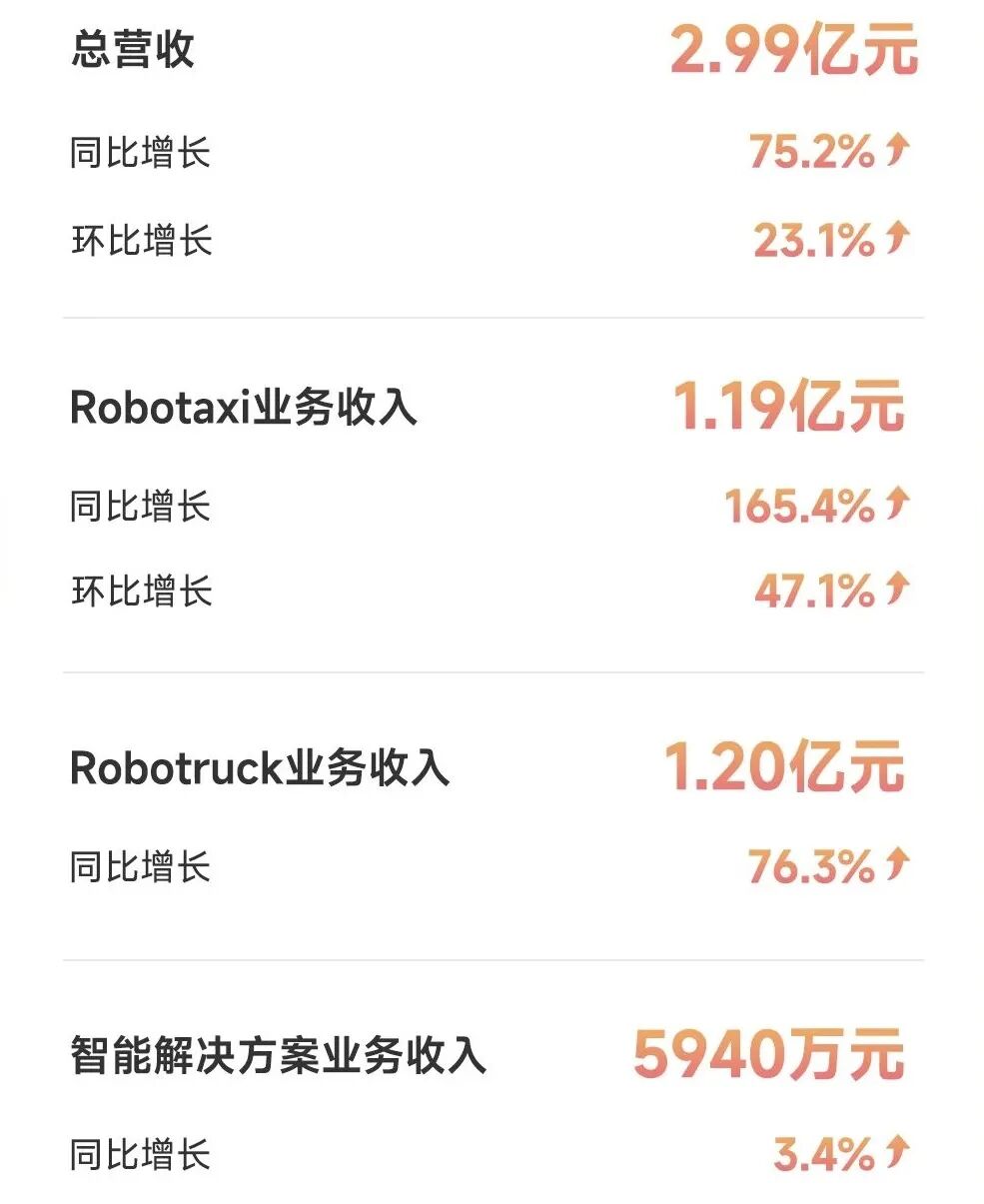
Pony.ai Q3 2026 Financial Report
Judging from the financials, Pony.ai's survival pressure has eased somewhat compared with 2022. But whether it has already secured a favorable ecological niche and can "survive" without worry is a conclusion best not drawn too early.
Whether self-operated revenue can continue, whether partners will repurchase, and whether licensing and operation revenue-sharing can grow after delivery—these determine whether this is a lasting business or merely a phase of fleet ramp-up. External competition, too, has left little time for verification.
Apollo Go is accelerating expansion in key cities and overseas; WeRide is competing for mobility platforms and fleet partners with a similar co-building model.......City permits, order density, automakers' mass-production capability, and third-party capital are all resources that Pony.ai cannot monopolize.
Only by continuing to drive repurchases, growing recurring revenue, and reducing replication costs while competitors expand simultaneously can this round of growth settle into a solid ecological niche. Pony.ai has proven it can grow, but has not yet proven that growth can be sustained.

Robotaxi Was Once Not the Main Growth Driver
Since its founding, Pony.ai has been developing an L4 "virtual driver." In 2018, it launched PonyPilot in Guangzhou, entered autonomous freight in 2019, and then addressed vehicle platform and engineering challenges through automaker partnerships.
Revenue, however, could not wait until Robotaxi matured. In 2020, the company established a truck division; in 2023, it set up its POV business, attempting to convert its L4 accumulation into front-installed assisted driving revenue.
Advancing on three fronts became the way to cope with delayed commercialization.
The financial data record this detour.
According to Pony.ai's 2024 F-1 and 2025 20-F filings, in 2022 revenue from Robotaxi, Robotruck, and licensing and applications was US$8.967 million, US$22.368 million, and US$37.051 million, respectively;
by 2024, those figures were US$7.266 million, US$40.365 million, and US$27.394 million, respectively.
Robotaxi's revenue share fell from 13.1% to 9.7%, and at that time it was not the revenue base.
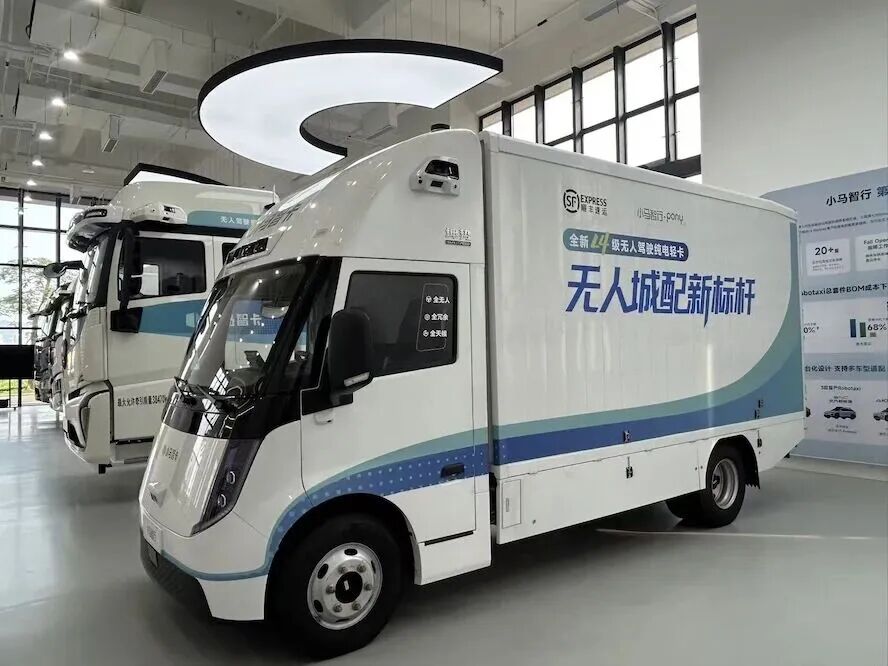
Robotruck
Robotruck assumed a more pragmatic survival function. With Sinotrans' logistics scenarios, the company preserved a commercial revenue curve during the years when Robotaxi revenue was low.
POV was another trial and error: because the partnered vehicle models failed to achieve mass production at scale, among other reasons, Pony.ai exited the front-installed assisted driving business in Q3 2024 and refocused on L4 passenger vehicles and trucks.
This history should not be compressed into "strategic vacillation." More accurately, Pony.ai once tried to spill over its L4 capabilities into L2 revenue, and ultimately found that similar technology does not mean commercial compatibility.
A Group of Engineers Began Learning to Operate Fleets
James Peng was formerly chief architect of Baidu's autonomous driving unit, and Tiancheng Lou once worked at Google's autonomous driving team and Baidu. The two serve as CEO and CTO, respectively, and as of March 31, 2026, together held approximately 69.7% of voting power. Business expansion, capital investment, and strategic contraction mainly depend on the judgment of the founding team. Most of the core management also comes from the technical ranks.
CFO Haojun Wang simultaneously manages finance and human resources; Ning Zhang is responsible for the autonomous driving system and the Beijing office; Luyi Mo is responsible for the Guangzhou and Shenzhen offices and Robotaxi operations.
After the 2022 organizational restructuring, the technical team shifted to regional management, and a company-level technical steering committee was established.
According to the 2025 20-F, as of the end of that year, the company had 1,669 employees in total, including 745 in R&D, 255 in technical deployment and production, and 481 in operations. R&D accounted for 44.6%, and the latter two categories combined accounted for 44.1%, almost equal to R&D.
Pony.ai is therefore no longer a pure algorithm team. It must not only train the virtual driver but also complete vehicle model adaptation, mass-production introduction, vehicle deployment, remote assistance, and city services; whether the organization can standardize operational experience determines whether expansion can be converted into sustained growth.

Why the Seventh-Generation Model Drove This Round of Growth
In 2024, Tiancheng Lou said in an interview with 36Kr that L4 no longer had technical blockers, and mass production, cost, operations, and policy had become key to commercialization. The real change occurred after vehicle models, regulation, and order density improved simultaneously.
According to Pony.ai's disclosures, the seventh-generation autonomous driving kit adopts automotive-grade components and a platform-based design, with BOM down 70% compared with the previous generation. GAC and BAIC versions have been mass-produced in succession, and Toyota-partnered models have also entered commercial operation.
Front-installed mass production makes the autonomous driving system an asset that can be delivered with the vehicle, depreciated, and held by third parties.
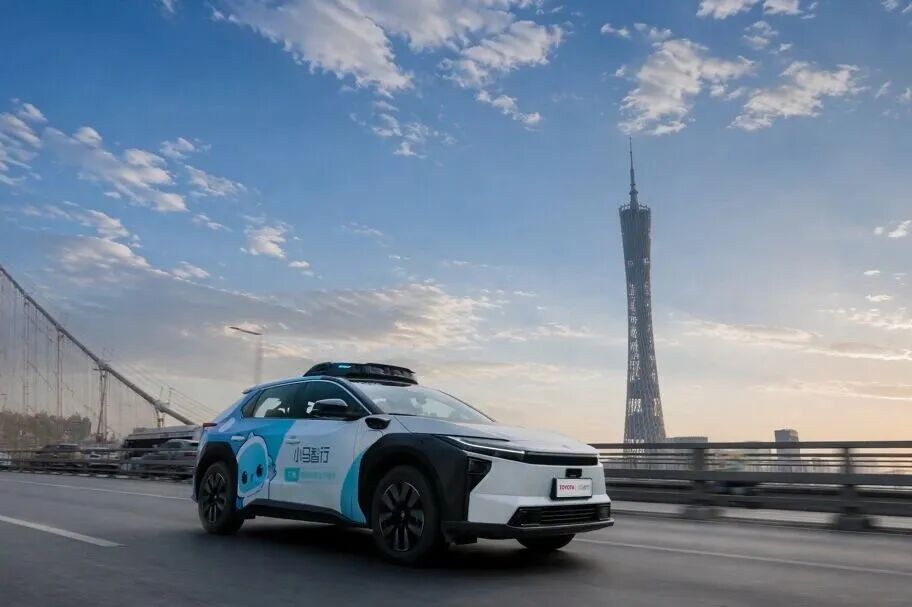
bZ4X Robotaxi
Regulatory opening is another condition. Only when vehicles move from testing to charging can orders, empty driving, charging, and depreciation enter the same operating statement.
In November 2025, Guangzhou's city-level per-vehicle unit economics turned positive; in February 2026, Shenzhen followed.
The UE caliber includes direct operating items such as vehicle and kit depreciation, charging, maintenance, remote assistance, insurance, and ground support, but does not yet cover headquarters R&D, cold start in new cities, and overseas expansion expenses.
Between per-vehicle break-even and company profitability, there are still two doors to pass through: city replication and headquarters expenses.

Competitors Are Accelerating Simultaneously; First-Mover Position Is Not Safe
According to Baidu's Q3 2026 report, as of October that year, Apollo Go covered 30 cities; in the third quarter, fully driverless operating orders in Shenzhen increased by about 170% quarter over quarter, the operating area in Dubai expanded, and the fleet doubled.
It can rely on Baidu's platform and capital to withstand a longer investment cycle, but orders and city scale do not equal a profitability advantage. WeRide is a more direct competitor.
As of July 31, 2026, its Robotaxi fleet exceeded 1,800 vehicles, covering more than 60 cities in 13 countries, also expanding through platforms such as Uber and Grab and local partners.
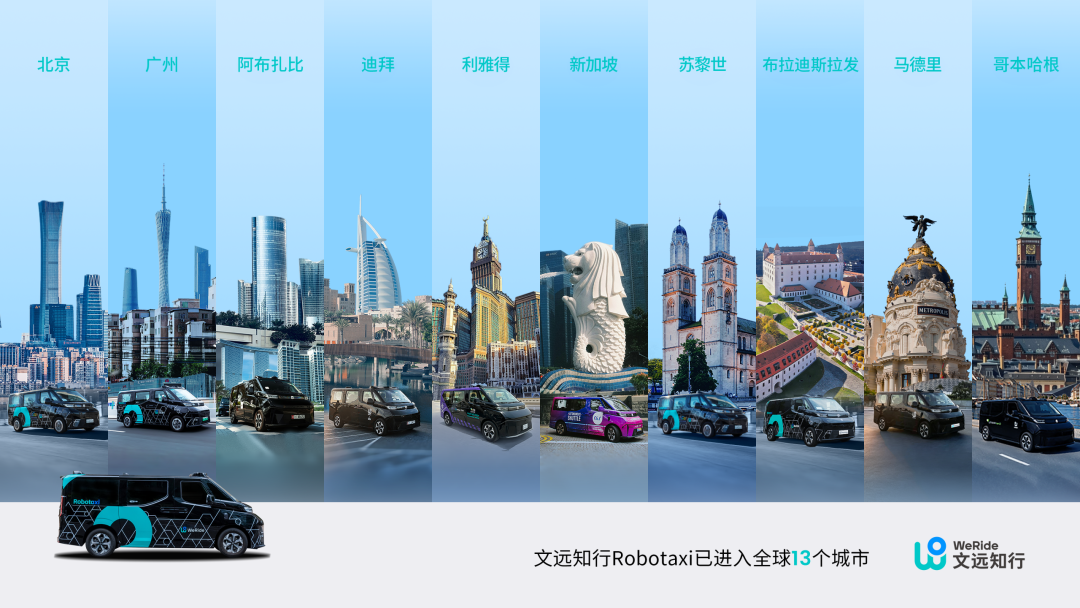
The fleet calibers of different companies are not entirely consistent, and victory cannot be judged simply by number; what truly overlaps are high-density operating areas, overseas platform entry points, and industrial partners willing to invest.
Mobility platforms, too, have no reason to connect only one technology provider. Bargaining power ultimately returns to vehicle utilization, partner returns, and support costs: whoever can make fleet orders more stable and invest fewer personnel when adding vehicles is more likely to win the next purchase.
Only when Pony.ai's mass-production and operational experience is converted into returns that partners can account for will it become an ecological niche.

Self-Operation and Co-Building Determine Whether an Ecological Niche Can Form
If only vehicle investment is considered, self-operation is a heavy business. But self-operation is also Pony.ai's most irreplaceable trust asset: scheduling, remote assistance, charging, maintenance, and user feedback cannot be completed by algorithm demonstrations alone; the self-operated fleets in Guangzhou and Shenzhen not only generate fares but also serve to validate the business model. The co-building model unfolds on the basis of this validation.
Partners provide vehicle funding, local operations, and user entry points, while Pony.ai provides the autonomous driving system, vehicle model integration, and operational support, and earns revenue through complete vehicle sales, virtual driver licensing, and operating fees.
Domestically, self-operation and co-building proceed in parallel, while overseas it relies more on local platforms and fleet operators. The meanings of the three revenue streams are not the same.
Complete vehicle sales can expand revenue at delivery, licensing fees depend on continued vehicle use, and operation revenue-sharing depends on real orders and utilization.
In the first nine months of 2026, the company's product revenue grew 124.5% year over year, faster than the 66.0% growth in service revenue; product revenue's share rose from 39.3% to 46.6%, mainly due to increased complete Robotaxi vehicle deliveries under the co-building model.
This still cannot directly prove that recurring software revenue has become the main source of growth.
Asset risk can be transferred, but demand risk will not disappear. If partners cannot obtain enough orders after purchasing vehicles, subsequent purchases, licensing renewals, and operation revenue-sharing will all be affected.
To judge whether Pony.ai can form an ecological niche, one cannot only look at whose books the vehicles are recorded on, but also at whether partners repurchase, whether licensing and revenue-sharing grow, and whether new vehicles still require substantial in-house support.

The Conditions for Sustained Growth Lie Beyond the Fleet
Management has begun to explain the next round of scaling through organizational efficiency.
Tiancheng Lou said that every 100 Robotaxis require only 3 people for daily operations, PonyWorld reduces engineering investment for deployment in new cities, and the unified technical architecture can also be reused across Robotaxi and Robotruck.
But public information has not yet fully clarified whether these 3 people include remote assistance, engineering support, and headquarters personnel. A truly asset-light model should manifest as the company's capital expenditure, support personnel, and operating costs no longer rising proportionally when third-party fleets expand.
Group finances also remind people that fleet growth and company profitability remain two different things.
In Q3 2026, the company's gross profit was US$7.913 million, operating expenses were US$76.643 million, and free cash flow (Non-GAAP) outflow as defined by the company was US$78.239 million. Mature-city UE is still insufficient to cover group R&D and expansion investment.
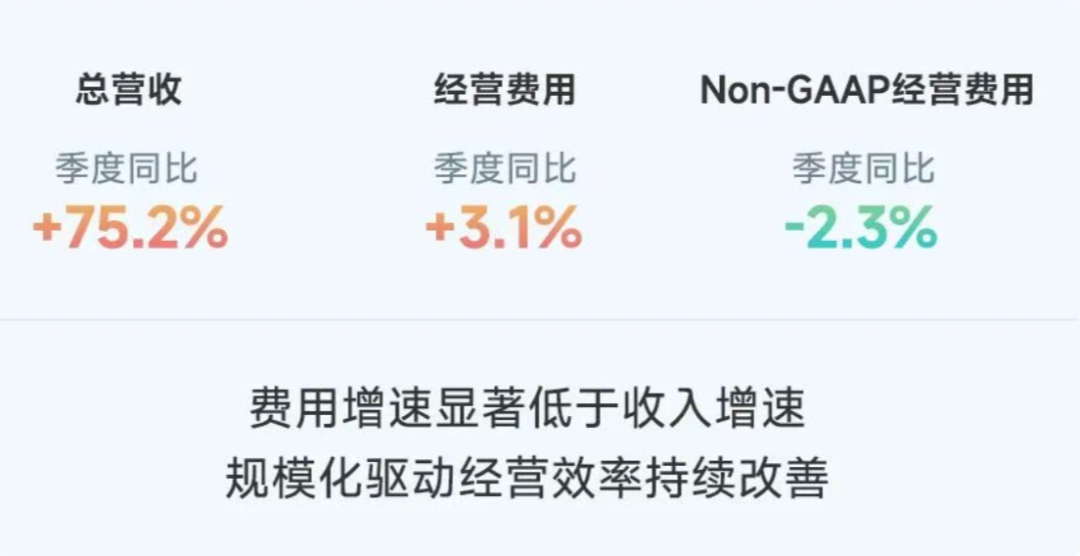
Pony.ai Q3 2026 Financial Report
Robotruck simultaneously provides revenue support and customer concentration risk. According to the 2025 20-F, that year its revenue accounted for 45.1% of the group; transportation service fees related to Sinotrans accounted for about 72.9% of Robotruck revenue and 32.9% of the group's total revenue.
It can share revenue pressure, but it cannot replace Robotaxi in answering the questions of sustained licensing, city replication, and partner repurchases.

Chaoyong AI Viewpoint
Pony.ai's most important accumulation over the past decade is not only autonomous driving algorithms, but the ability to turn algorithms into vehicles, turn vehicles into paid services, and then break down paid services for different industrial partners.
These capabilities have given Pony.ai a first-mover position in this round of expansion, but Apollo Go and WeRide are applying pressure through city density, overseas partners, and operational efficiency.
The more accurate judgment at present is: survival pressure has eased somewhat compared with 2022, but whether growth can be sustained and whether group profitability can be improved still lack complete verification.
Next, four key metrics should be monitored: whether partners make repeat purchases, whether the share of licensing and revenue-sharing arrangements can grow, whether the number of newly added vehicle support staff declines, and whether new cities can replicate the Guangzhou and Shenzhen experience more quickly.
For Pony.ai in 2022, "survival" meant keeping the organization intact; today, it means proving its irreplaceability.
-
![]()
Tencent Can't Win on WorkBuddy Alone
-
![]()
NetEase Q3 Earnings: Pipeline Gap Syndrome Bites, With a New "Prescription" on the Way
-
![]()
DeepSeek's Quota Limits: Are Free Users Becoming the "Roadblock" to AGI?
-
![]()
Starting at 279,900 Yuan: A True Large Six-Seat Boxy SUV—Whose Nose Does the Titan 9's Price Rub in the Most?
-
Vertilite (Zonghui Xinguang) Files for IPO: The Revenue Gap Behind 900 Million Units Shipped—and What a 5 Billion Yuan New Business Could Add
-
![]()
Chinese Smart Driving Goes Global: Clearing Four Hurdles
-
![]()
Claude Goes Wild: The Overseas Mac mini Rental Craze Explained
-
![]()
Alibaba Forced to "Hold Back"