Insta360 Revenue Surges, Yet Profits Dive: Stock Price Slashed by Half This Year, Earnings Projections Revised Downward
 09/10 2026
 335
335
Harbor Business Observation, Shi Zifu, Wang Lu (Contributors)
As the pioneering 'panoramic camera stock' (688775.SH), Insta360 has witnessed a meteoric rise in revenues, but its interim profit performance has hit a recent low.
What has befallen this once-stellar company, which was a darling of the capital markets and performed exceptionally well?
1
Revenue Skyrockets, Profits Plummet into the Red
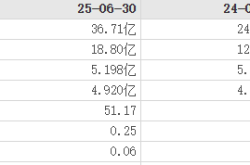
Insta360's 2026 interim report was a revelation: the company reported a revenue of 5.517 billion yuan, marking a 50.29% increase year-on-year. However, the net profit attributable to the parent company's owners plummeted to 30.407 million yuan, down a staggering 94.15% from the previous year.
A review of Insta360's interim reports over the years reveals a consistent trend: revenue continues to scale new heights, but profits are dwindling.

In the first half of 2026, the company's net profit after non-recurring items plummeted to -15.34 million yuan, a 103.12% decrease year-on-year.
Notably, the company's gross profit margin also took a significant hit, dropping sharply to 41.42% in the first half, down 9.8 percentage points from the previous year, marking a recent low. Insta360 attributed this decline to factors such as memory component prices, new product launch timing, and market competition. The company explained that with strategic inventory stockpiling in the first half locking in raw material costs, the gradual realization of economies of scale for new products (such as the X6 and Luna series), and the advancement of supply chain cost-reduction and efficiency-improvement measures, the pressure on product mix and cost structure is expected to stabilize and improve.
Regarding the net profit decline, the company cited two primary reasons: the dual impact of escalating raw material costs and staged investments in new business categories:
(1) Sustained Increase in Core Raw Material Procurement Costs: Affected by global memory chip market fluctuations, prices of memory chips like DDR continued to rise and remained high during the reporting period, posing significant challenges to the company's product costs and short-term profitability. Additionally, the company's strategic procurement of memory chips in the first half amounted to nearly 2 billion yuan, resulting in substantial cash outflows. This proactive stockpiling is expected to secure a stable supply and cost of memory chips, providing robust support for the company's future growth.
(2) Staged Investments in New Category Launch Phase: Panoramic drones, a new category for the company, are still in the market education phase. Significant investments have been made in R&D, production line construction, and market channel expansion. Without achieving economies of scale, these staged investments have negatively impacted the company's overall profits.
Specifically, in the first half, Insta360's net cash flow from operating activities was -2.761 billion yuan, compared to 241 million yuan in the same period last year, a 1245.12% decrease year-on-year. Selling expenses surged to 1.017 billion yuan, up 61.96% year-on-year; R&D expenses reached 1.007 billion yuan, up 79.26% year-on-year; administrative expenses were 249 million yuan, up 86.74% year-on-year. Overall, the company's operating costs soared to 3.231 billion yuan, up 80.46% year-on-year.
2
Earnings Projections Revised Downward by Institutions, Stock Price Tumbles More Than 50% This Year
Over a longer timeframe, Insta360's cost investments have been escalating. For the interim reports of 2020, 2021, 2024, and 2025, the company's selling expenses were 48.52 million yuan, 68.28 million yuan, 357.8 million yuan, and 627.8 million yuan, respectively, with selling expense ratios of 13.74%, 11.37%, 14.74%, and 17.10%. R&D expenses were 44.82 million yuan, 63.82 million yuan, 280.3 million yuan, and 561.7 million yuan, with R&D expense ratios of 12.70%, 10.63%, 11.55%, and 15.30%. Administrative expenses were 15.52 million yuan, 20.19 million yuan, 87.43 million yuan, and 133.2 million yuan, with administrative expense ratios of 4.40%, 3.36%, 3.60%, and 3.63%. In the first half of this year, the company's selling expense ratio was 18.43%, R&D expense ratio was 18.25%, and administrative expense ratio was 4.51%.
The company emphasized that the high R&D expenses were primarily due to its multi-category expansion and technological breakthrough phase, necessitating strategic upfront investments in custom chips, AI algorithms, and new business categories.
In fact, the dilemma of rising revenue but declining profits has been eroding investor confidence. During the investor relations event on September 4th, an investor inquired about the duration of this trend.
Insta360 responded that the first-half situation was attributed to: first, the sharp rise in memory chip prices increasing product costs; second, the company proactively increasing strategic R&D and market expansion investments; third, new categories like panoramic drones being in a staged investment phase without achieving economies of scale. In the future, the company will continue to pursue technological innovation and product updates, further strengthen cost control, improve capital efficiency, and strive to steadily enhance its profitability.
Huatai Securities' research report pointed out that considering the significant year-on-year decline in net profit in the first half of 2026 due to rising memory prices, and the expectation that this impact will persist in the medium to short term, it revised downward its net profit forecasts for the company for 2026-2028 to 554/1085/2082 million yuan (previously 900/1336/2087 million yuan, down 38.4%, 18.9%, and 0.4% year-on-year). Despite the company facing profit pressure from rising memory prices in the medium to short term, Huatai Securities remains optimistic about its long-term growth potential and maintains a "buy" rating, citing Insta360's strong product and marketing innovation capabilities, ongoing globalization strategy, and active integration of AI into its products and organization.
China Galaxy Securities stated that considering the significant losses in the panoramic drone business, it revised downward its earnings forecasts, projecting the company's revenue for 2026-2028 to be 142.1/192.4/251.6 billion yuan, up 45.8%, 35.4%, and 30.8% year-on-year, respectively, with net profits of 2.8/7.7/12.7 billion yuan, up -69.4%, 170.8%, and 64.5% year-on-year (assuming future recovery in core business profits and narrowing losses in the drone business), and EPS of 0.71/1.92/3.16 yuan per share. The current stock price corresponds to 168.1/62.1/37.7x P/E, maintaining a "cautiously recommended" rating.
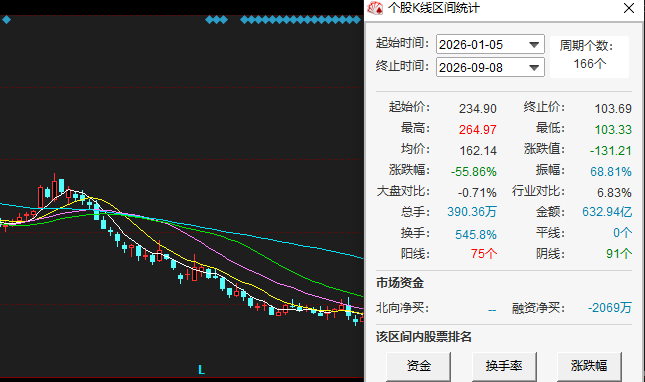
In terms of capital market performance, Insta360's stock price has plummeted by as much as 55.86% this year, indicating a significant lack of investor confidence.
3
Inventory Soars Multiple Times, Industry Growth Remains Robust
Another external concern is that Insta360's inventory has surged multiple times, hitting a new high in interim reports. As of the end of the first half, the company's inventory was 6.212 billion yuan, compared to 1.5 billion yuan in the same period last year and 584 million yuan in the same period in 2024.
An investor questioned whether the company's inventory of over 6 billion yuan, including raw materials, consigned processing materials, and finished goods, currently faces any impairment risks.
Insta360 stated that the inventory increase was mainly due to proactive strategic stockpiling of core raw materials like memory chips (with a book balance of 1.748 billion yuan) in response to global supply and demand fluctuations and price increases, as well as normal material preparation for the mass production and global distribution of new products (such as the Luna series, panoramic, and action cameras) in the second half. The company assured that the core raw materials and prepared materials have good liquidity and align with its production and sales plans. It strictly adheres to the Accounting Standards for Business Enterprises and conducts impairment tests on inventory at the lower of cost or net realizable value at each balance sheet date. Additionally, the company has established a robust dynamic inventory management and monitoring mechanism to closely track raw material market price trends and terminal sales digestion progress. With the global sales promotion of new products in the second half and the arrival of the traditional consumption peak season, inventory will be systematically reduced according to the business plan, and the overall impairment risk is controllable.
From an industry perspective, the smart camera market continues to grow at a healthy pace. In the first quarter of 2026, global shipments of handheld smart cameras reached 4.14 million units, up 33% year-on-year. Sales exceeded 10.5 billion yuan, up 20% year-on-year. IDC expects that by 2030, the global market size for handheld smart cameras will exceed 40 million units, with a five-year compound annual growth rate of nearly 18%.
As of the end of June this year, Insta360's cumulative global shipments of panoramic and action cameras have surpassed 10 million units. In terms of overseas market expansion, the company is accelerating its global channel layout. In August 2026, the company opened its first flagship store in Japan; in September 2026, its first flagship store in North America will open in New York's Times Square.
In the first half of this year, the company's overseas main business revenue reached 3.437 billion yuan, accounting for 63.40% of main business revenue.
Regarding its business plan for the second half, Insta360 outlined: 1. Continue to advance technological R&D and new product delivery; 2. Accelerate the construction of global offline channels and promote the operation of retail networks such as the first flagship stores in Japan and North America; 3. Deepen AI applications, optimize the App ecosystem and cloud services, and enhance user experience; 4. Strengthen supply chain control and refined management.
4
Intense Rivalry Between Insta360 and DJI: Who Will Prevail?
The market is also highly focused on the competitive dynamics between DJI and Insta360.
An investor questioned whether DJI's much larger profit scale could allow it to easily catch up and engage in price wars after Insta360 identifies consumer needs, effectively making Insta360 DJI's product manager and market educator. The investor inquired whether the company had any strategies to break through DJI's price blockade beyond consumer insights and detail-oriented innovation, which are the company's strengths.
The company believes that, regarding competition, enhancing industry growth through healthy competition is a common goal of the industry. The price competition strategy adopted by competitors has, to a certain extent, created favorable conditions for market expansion, helping to further cultivate user awareness and unlock potential consumer demand. More and more consumers are choosing Insta360 due to its differentiated advantages.
China Galaxy Securities believes that: 1. The competition between Insta360 and DJI is intense, involving not just price wars but also innovation battles. DJI pioneered square sensors in panoramic cameras to enhance user experience. Insta360 created the panoramic drone segment, launched action camera street photography kits, and introduced AI assistants in thumb cameras. The iterative product innovations from both sides benefit industry development.
2. Chinese tech consumer goods have a prominent leading advantage, particularly in supply chain strengths. Whether it's GoPro in the smart imaging sector or iRobot in the robotic vacuum cleaner sector, both, as industry pioneers, were eventually surpassed by Chinese brands.
3. Japan, once a powerhouse in digital cameras, has now significantly lagged in the handheld smart imaging sector. According to BCNRanking data, in the Japanese domestic camera market in April 2026, DJI and Insta360 held market shares of 72.5% and 12.5%, respectively, together accounting for 85%. Additionally, Insta360 is advancing its digital camera R&D project and is expected to capture market share from traditional digital camera manufacturers in the future. (Produced by Harbor Finance)
-
![]()
AI Investment: It’s Time to Change Tracks! When AI Resources Are Widespread, Profits No Longer Flow Only to AI Creators
-
![]()
Priced Starting at 999 Yuan! AirPods 5 Delivers More Value at the Same Price Point—Are the Two New Watch Models More Genuine Than the Duo?
-
![]()
Insta360 Revenue Surges, Yet Profits Dive: Stock Price Slashed by Half This Year, Earnings Projections Revised Downward
-
In-depth | OpenAI's First-Generation In-House Chip Shines, Unveiling a New Approach to Computing Power Beyond Expectations
-
![]()
The Imaging Industry is Being Revolutionized! DJI/Insta360/Hohem Steal the Spotlight at IFA, Pushing Canon and Sony to the Periphery?
-
![]()
Starting from 15,999 yuan! Apple's First Foldable iPhone Duo Released: First Under-Display Front Camera on Inner Screen, eSIM Only
-
![]()
Starting from 259,900 yuan, 5,500 orders in one day! Will the XT5 PHEV become Cadillac's Normandy in the new energy sector?
-
Mistral Raises €3 Billion in Series D Funding: European AI Powerhouse Ignites Global Computing Arms Race