104th in Ultrafast Nonlinear Optics: Mid-Infrared Dual-Comb Spectroscopy and Compressive Sensing Sampling
 10/19 2026
 430
The dual-comb spectroscopy (DCS) system utilizes two optical frequency combs with slightly different repetition rates to map optical spectral information into the radio frequency domain through multi-heterodyne detection, enabling broadband, high-resolution, and rapid spectral measurements without mechanical scanning. Particularly in the mid-infrared and long-wave infrared bands, the rich molecular rotational-vibrational absorption lines provide crucial 'fingerprint' information for gas detection and molecular identification.
Recently, two studies have expanded the long-wave infrared dual-comb spectroscopy technique from the perspectives of highly stable broadband measurement and compressed data acquisition, achieving broadband long-wave infrared dual-comb spectroscopy in the 7.5–11.5 μm range and demonstrating the feasibility of utilizing compressive sensing to reduce data sampling volume. These advancements provide a new technical pathway for the development of long-wave infrared dual-comb spectroscopy towards high-speed, low-data-volume, and practical applications [1,2].
The research team first constructed a long-wave infrared dual-comb system based on difference frequency generation (DFG). In the experiments, two freely running erbium-doped fiber mode-locked lasers with repetition rates of approximately 250 MHz were used. Each optical comb was split into two paths at around 1.55 μm and 2 μm, respectively, and the spectral broadening of the longer-wavelength path was achieved using a highly nonlinear fiber. The pulses from the two paths then underwent difference frequency generation in a 4 mm thick fan-out periodically poled OP-GaP crystal, resulting in a long-wave infrared frequency comb covering 7.5–11.5 μm. The two long-wave infrared combs passed through a 24 cm gas cell and were detected by a cooled HgCdTe (MCT) detector.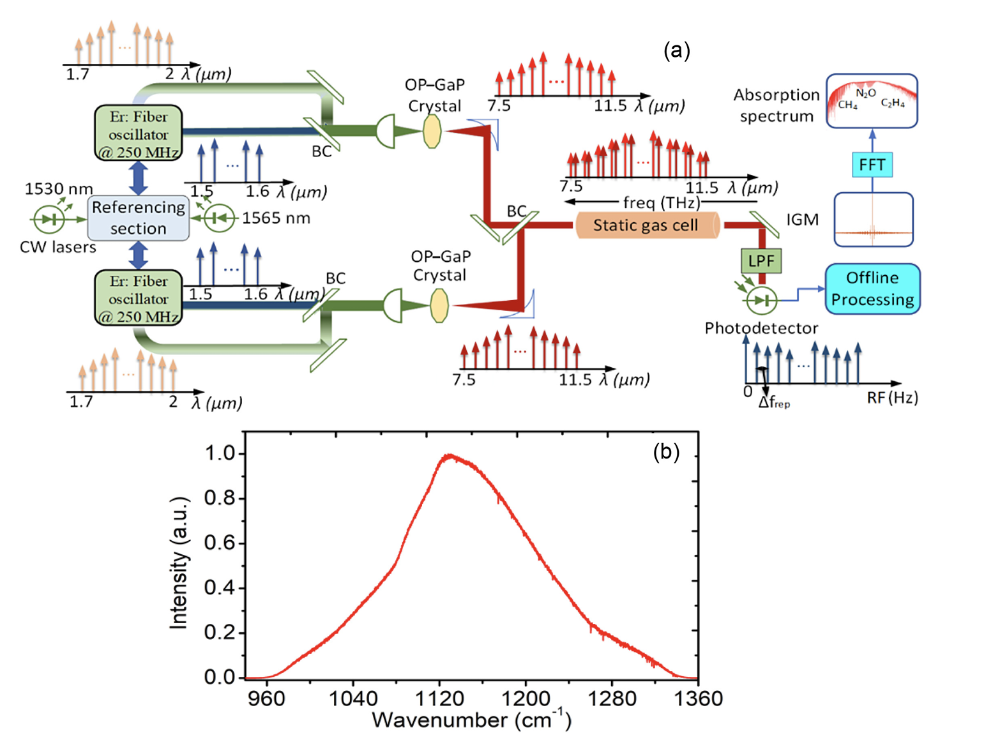 Figure 1 Schematic diagram of the mid-infrared dual-comb setup [1]
Since the two optical combs operate freely, their repetition rates and carrier-envelope phases vary over time, causing continuous drift in the relative time delay between the dual combs. If the interferogram is directly averaged over a long period, the interference fringes gradually lose coherence, leading to a decline in spectral resolution and signal-to-noise ratio.
To address this issue, the research team introduced two continuous-wave (CW) reference lasers with wavelengths of 1530 nm and 1565 nm, respectively. The reference lasers generate beat signals with the two optical combs. By simultaneously recording multiple radio frequency beat signals, the relative time and phase variations between the two combs are extracted in post-processing, enabling phase correction and time-axis resampling of the interferogram. This method does not require locking the combs to the reference lasers; instead, it uses the beat signals provided by the reference lasers for post-processing correction of the freely running combs, thereby restoring stable dual-comb coherence.
After coherent correction, the system achieved broadband long-wave infrared dual-comb spectroscopy covering 7.5–11.5 μm. The comb spacing of the system is 250 MHz, corresponding to a spectral sampling interval of approximately 8.34×10 cm, enabling comb-resolved spectral measurements.
The research team first validated the system performance using SO gas. In a 24 cm gas cell, spectra covering the entire measurement range were obtained with a 44 ms acquisition time, yielding approximately 35,014 resolved spectral points. Further analysis of the absorption spectra through Voigt line shape fitting showed good agreement between the measured SO concentration and the actual configured concentration.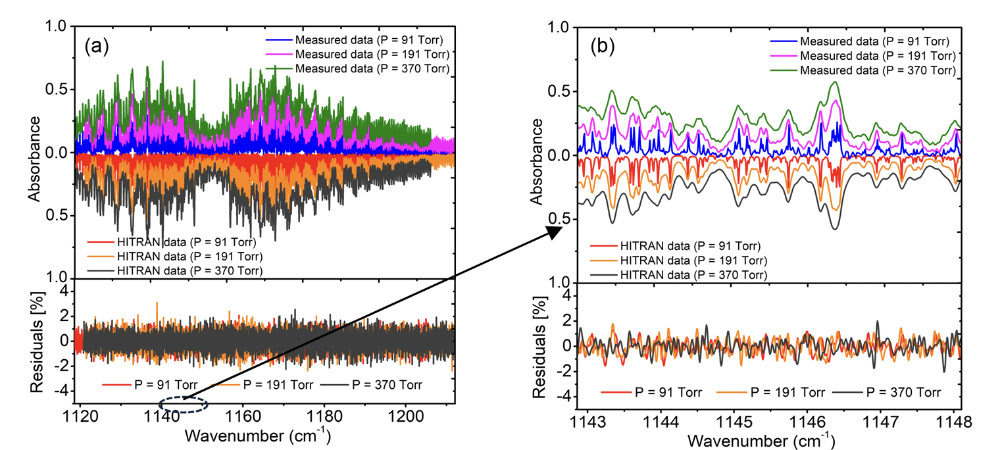 Figure 2 Single-component spectral measurement results [1]
Building on this, the researchers further conducted simultaneous detection of three gases: CH, NO, and CH. Within the 8–10 μm range, distinct characteristic absorption lines of different gases were clearly resolved, enabling qualitative identification and quantitative analysis of multi-component gases.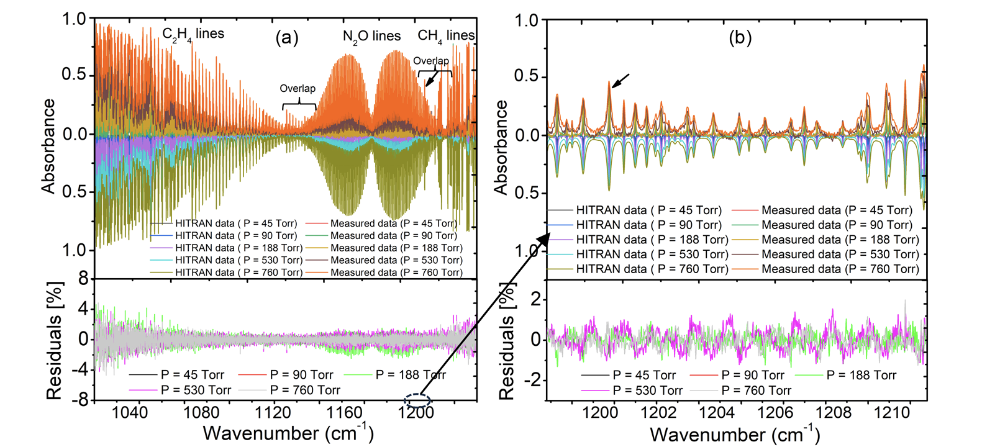
Figure 3 Multi-component spectral measurement results [1]
After achieving broadband and high-resolution measurements, the research team further addressed another challenge faced by dual-comb systems: the large volume of time-domain sampling data. Traditional dual-comb spectroscopy typically requires uniform and high-density sampling of the interferogram. As the spectral bandwidth and measurement time increase, the raw data volume grows rapidly, posing pressure on high-speed data acquisition, transmission, and storage. If only a small number of representative time-domain data points can be acquired and used to recover the complete interferogram and spectrum, the system's data burden could be significantly reduced.
To tackle this issue, the research team further introduced 'compressive sensing' (CS) into long-wave infrared dual-comb spectroscopy [2]. The core idea is that if the signal under measurement exhibits sparsity or compressibility in a suitable transformation basis, it is not necessary to acquire all sampling points. Instead, a small number of non-uniformly sampled data points can be used to reconstruct the complete signal through optimization algorithms.
In this work, the researchers first acquired a complete uniformly sampled dual-comb interferogram and then selected a subset of sampling points according to a specific probability distribution to simulate the compressive sampling process. The sampling points were concentrated near the center burst of the interferogram, while sparser sampling was employed in regions farther from the center.
The experimental results demonstrated that molecular absorption spectra with high fidelity could still be recovered even with a significant reduction in time-domain sampling points. The researchers first validated the approach using NO as the target. Spectra were reconstructed under different compression factors (CF). When the compression factor reached 20, retaining only about 5% of the original data volume, the absorption features of NO were still well-preserved, and the residuals between the reconstructed spectrum and the complete sampling result remained at a low level [2].
Notably, in the current work, compressive sampling was primarily validated by sparsely resampling the already acquired complete interferogram, simulating the future compressive acquisition process at the data processing level. Therefore, the study focused on proving whether effective spectra could still be recovered when only partial sampling points were obtained. In the future, if the compressive sampling strategy is further integrated with high-speed data acquisition hardware, it is expected to reduce the volume of data requiring acquisition, transmission, and storage at the source [2].
Overall, the two studies mentioned above have advanced the development of long-wave infrared dual-comb spectroscopy from two aspects: measurement capability and data processing efficiency, forming a technical pathway that evolves from 'broadband and stable measurement' to 'measurement with reduced data acquisition.' The former enhances the measurement range and coherent measurement capability of long-wave infrared dual-comb spectroscopy, while the latter explores new methods to reduce the data acquisition and processing burden. In the future, further integration of compressive sampling algorithms with dedicated high-speed acquisition hardware and optimization of real-time reconstruction algorithms are expected to drive long-wave infrared dual-comb spectroscopy towards high-speed, low-data-volume, and portable directions.
References[1] Syed Tajammul Ahmad, Zhenhai Wang, Luca Moretti, Davide Gatti, Marco Marangoni, Aamir Farooq. Broadband long-wave infrared dual-comb spectroscopy for multi-species detection. Applied Optics, 2026.[2] Zhenhai Wang, Syed Tajammul Ahmad, Luca Moretti, Davide Gatti, Marco Marangoni, Aamir Farooq. Compressive dual-comb spectroscopy in the long-wave infrared region. Optics Letters, 2026.
-
![]()
104th in Ultrafast Nonlinear Optics: Mid-Infrared Dual-Comb Spectroscopy and Compressive Sensing Sampling
-
![]()
Delving into AI-Native Smartphones with the Release of STEPX Neo
-
![]()
Major Breakthrough for Luxeed! Chery Takes a Daring Step
-
![]()
Collective Negative Growth in Metropolises: Beijing, Shanghai, Guangzhou — Who’s Behind the Slump in Car Sales?
-
![]()
TECNO’s AI Strategy: Not a Tool for Price Increases
-
![]()
Douyin Catches Up with Meituan, Then Local Life Services Begin to Compete on 'Internal Strength'
-
![]()
AI Won't Rebel, It Just Bypasses You
-
![]()
iPhone Duo: Pre-sale Sells Out in a Flash, Resale Prices Skyrocket by Up to 7,000 Yuan