USD 20 Billion for Groq! What Are NVIDIA's Ambitions Behind Its 'Biggest Acquisition Ever'?
 12/26 2025
 693
693
NVIDIA Maintains Its Stronghold in the Inference Era
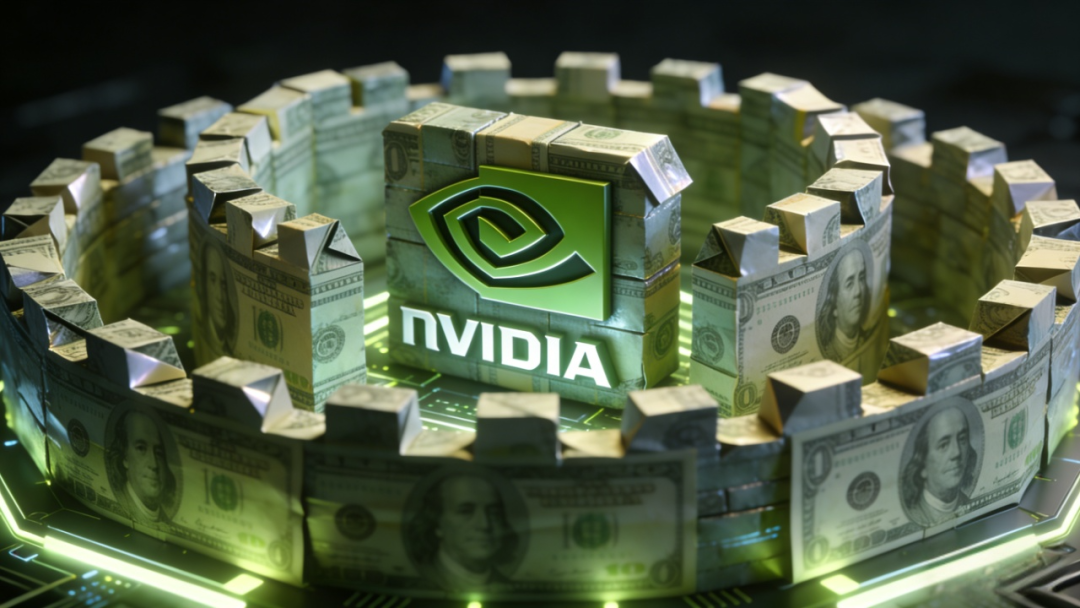
Header image generated by AI
Jensen Huang has once again wielded his financial clout.
On December 24, The Wall Street Journal reported that NVIDIA and Groq have entered into a non-exclusive licensing agreement, integrating Groq's AI inference technology into NVIDIA's future products. As part of this agreement, Groq's founder and CEO Jonathan Ross, president Sunny Madra, and key personnel will join NVIDIA.
Earlier, CNBC cited a report from investment firm Disruptive, stating that the transaction value would reach USD 20 billion, paid entirely in cash.
If confirmed, this acquisition would mark NVIDIA's largest in its over three-decade history, significantly surpassing the USD 7 billion paid for Mellanox.
So, who is Groq? What core technology does it possess that prompts NVIDIA to invest heavily, even under antitrust scrutiny? Is this acquisition merely about securing AI inference technology, or does it conceal deeper strategic motives?
01
Why Does Groq Compel NVIDIA to Pursue Acquisition Amid Antitrust Scrutiny?
Groq does not manufacture GPUs; instead, it has developed an 'ultra-fast' processor called the LPU, designed to overhaul the traditional von Neumann architecture.
To grasp Groq's significance, one must first understand its founder, Jonathan Ross.
In Silicon Valley, Ross is often dubbed a 'chip industry maverick.' Prior to founding Groq, he was a key architect behind Google's TPU project. Under his leadership, the TPU was developed, giving Google a significant edge in the current AI computing landscape.
However, just as the TPU was gaining industry recognition, Ross identified inherent flaws. He recognized that both GPUs and TPUs were essentially 'patchwork' solutions to the von Neumann architecture, struggling to keep pace with the escalating demands of AI models. Particularly in handling complex inference tasks, hardware often remained passive, awaiting software scheduling, leading to inefficiencies. Ross believed this approach, while勉强维持现状 (barely sustainable), would eventually reach its limits.
Ross aimed to forge a new path, which became the driving force behind Groq's founding.
Ross envisioned AI computing as 'deterministic'—predictable, consistent, and free from the complexities of traditional scheduling. Under his guidance, Groq introduced a new processor category: the LPU.
The LPU's core logic stands in stark contrast to NVIDIA's GPU.
A GPU excels in parallel computing, akin to a factory with thousands of workers handling multiple tasks simultaneously. However, communication between workers, task allocation, and cache scheduling introduce immense complexity.
This complexity benefits graphic rendering but becomes a bottleneck in large model inference. When querying a large model, data circulation within the GPU is unpredictable due to complex scheduling, resulting in 'inference latency.'
Groq's most radical innovation was eliminating the hardware-level scheduler entirely.
In the LPU paradigm, hardware is 'software-defined.' During code compilation, the compiler precisely calculates the position of each data bit within the chip at every nanosecond. The LPU operates like a microsecond-accurate automated production line: data enters the adder at the first nanosecond, the register at the second, and outputs at the third.
This 'deterministic architecture' eradicates latency fluctuations, sending shockwaves through the AI industry.
In late 2024 evaluations, while NVIDIA's top-tier GPU struggled with memory bandwidth and scheduling bottlenecks in large-scale contexts, Groq's LPU achieved an astonishing speed of 500 to 800 tokens per second.
This isn't merely a numerical advantage but a qualitative leap in user experience, transforming AI from a 'useful tool' into 'real-time intelligence.'
More disruptively, Groq has challenged the foundation of NVIDIA's GPUs—HBM.
Currently, NVIDIA's chip costs and production constraints stem largely from its reliance on HBM supplied by Samsung and SK Hynix. Groq, however, opted for SRAM, offering significantly higher bandwidth and lower latency than HBM, albeit with smaller capacity. Groq overcame this limitation through cluster design, interconnecting hundreds or thousands of chips to create an ultra-low-latency 'memory pool.'
This approach not only outperforms NVIDIA's GPUs but also undermines its supply chain. Groq's LPU eliminates the need for expensive memory packaging or complex CoWoS processes, offering greater scalability.
As the AI industry transitions from 'cost-insensitive training' to 'large-scale commercial inference' in 2025, Groq's solution has pierced through NVIDIA's dominance.
It is precisely because Groq has developed a groundbreaking AI inference product that Jensen Huang views it as a priority for immediate acquisition.
02
Acquiring Groq May Be NVIDIA's Best 'Defensive' Move
In Silicon Valley's strategic playbook, acquisitions serve two primary purposes: expanding market share ('complementary') or neutralizing existential threats ('preemptive'). NVIDIA's Groq acquisition fulfills both.
While NVIDIA dominates the global AI computing market with its CUDA ecosystem and Hopper/Blackwell architectures, this profit engine is not invulnerable. Jensen Huang recognizes that the AI era's second half will be defined by inference.
As large model training stabilizes and enterprises deploy applications, demand for computing power will shift from 'throughput at all costs' to 'millisecond-level responsiveness'—a domain where NVIDIA currently lags.
The Groq acquisition also aims to 'lock down' competitors' inference capabilities.
Before Groq's rise, global cloud giants and startups had long sought NVIDIA alternatives. After years of R&D, Google developed the TPU, Amazon the Trainium, and Microsoft the Maia, all aiming to reduce reliance on NVIDIA's 'tax.' These efforts have shown promising results.
However, for second-tier cloud providers and AI software firms lacking in-house R&D, Groq was their strongest bargaining chip. Once Groq's LPU clusters are widely deployed, their energy efficiency and inference speed would directly undermine NVIDIA's H100/B200 cost-effectiveness.
Jensen Huang's strategy is essentially 'cutting off the fuel supply.' By integrating Groq, NVIDIA not only acquires disruptive technology but also deprives competitors of a differentiation tool.
Secondly, NVIDIA is transitioning from 'general-purpose chips' to 'dedicated inference architectures.'
While GPUs are versatile, their von Neumann architecture limits inference efficiency. Groq's 'deterministic architecture' and 'software-defined hardware' approach address NVIDIA's most pressing needs.
By absorbing Groq's core team, NVIDIA can embed LPU's low-latency traits into its next-gen superchips. Future NVIDIA products may blend parallel computing with deterministic stream processing, accelerating pure inference product development and securing long-term competitiveness.
Rather than passively awaiting a Groq-led architectural revolution, NVIDIA chooses to proactively internalize it. Leveraging its engineering prowess, software ecosystem, and scale, NVIDIA can rapidly commercialize Groq's innovations.
This is akin to equipping its existing 'giant ship' with a custom-built engine for the inference era.
03
Conclusion
From investing in Intel, OpenAI, and xAI to pursuing the Groq acquisition despite regulatory pressure, Jensen Huang exemplifies 'buying the future with cash.'
The Groq acquisition is NVIDIA using its accumulated cash flow to secure a 'post-GPU era' ticket.
It neutralizes a potential disruptor through preemptive action while integrating Groq's breakthrough inference speed into the CUDA ecosystem's DNA.
In AI's relentless arms race, NVIDIA is constructing an unprecedented moat—not just with advanced processes and software but also with 'self-disruptive' technologies.
Huang's philosophy is clear: if anyone is to disrupt NVIDIA, it should be NVIDIA itself.
END
-
![]()
Even a Titan Like Musk Has Faced Setbacks in Fulfilling Promises
-
![]()
AI Office: The End of the Racing Era, Context Becomes the Key to Success
-
![]()
Domestic Vehicle Chassis Revolution ②: The Steering Wheel Remains, But Mechanical Connections in the Steering System Are Decreasing
-
![]()
Exploring MiniMax Design: Can Video Editing Be as Simple as Speaking?
-
![]()
Why Can SenseTime Achieve Profitability While CloudWalk Still Faces Challenges, Despite Both Adopting Large Models?
-
![]()
Domestic Car Chassis Revolution Part 3: Suspension Systems Transform Vehicle Posture, from Vibration Absorption to Active Force
-
![]()
Hainan is Going on a Crazy Satellite-Building Spree
-
![]()
Optics Determines Success in the XR Era: Wafer Production Reaches Millions, Industry Giants Join the Fray!