Transforming into an 'Infrastructure Frenzy', Li Auto Aims to Revolutionize the Market with Over 20,000 Charging Piles
 12/26 2025
 748
748
Lead | Introduction
Li Auto, which swiftly carved out a niche in the market through its extended-range technology, is now vigorously redefining its brand identity as an 'extended-range' innovator by embarking on a rapid charging infrastructure expansion. In a mere 2 years and 8 months, Li Auto has surpassed the 20,000-mark for self-operated supercharging piles, established 3,600 charging stations, and extended its reach to 279 cities nationwide, thus becoming the automaker with the most extensive supercharging network in China.
Published by | This article is produced by: Heyan Auto Studio
Written by | Writing: Cai Yan
Edited by | Edit: He Zi
Full text: 2,215 characters
Reading time: 4 minutes
As 2025 nears its end, amidst various automakers showcasing their 'achievements,' Li Auto has presented an 'unconventional' performance report. Within 2 years and 8 months, Li Auto has expanded its self-operated charging stations to 279 cities across China, creating a 'nine vertical and nine horizontal' expressway supercharging network that spans from Haikou in the south to Harbin in the north, and from Urumqi in the west to Shanghai in the east. This network encompasses China's 18 busiest expressways, with an average of one Li Auto supercharging station every 141 kilometers.

The narrative of Li Auto's transformation into an 'infrastructure frenzy' began to bear fruit as early as June this year when Li Auto CEO Li Xiang announced that 'Li Auto's 5C supercharging stations have reached 2,500, surpassing Tesla in number.'
Regarding the rationale behind Li Auto's rapid charging station construction, although Li Xiang simply stated 'for the user's driving experience,' those familiar with Li Auto's product lineup recognize that with the advancement of Li Auto's 'extended-range + pure electric' dual-track strategy, the brand is urgently rebuilding its core competitiveness in the pure electric market, with the energy replenishment system being a key differentiator Li Auto is cultivating in the pure electric sector.
Li Auto's Original Moat Under Siege
Since 2025, the internet has been abuzz with discussions about Li Auto's growth slowdown. Judging from the third-quarter financial report, Li Auto is indeed under significant pressure. After 11 consecutive quarters of profitability, the brand's revenue in the third quarter of 2025 reached RMB 27.365 billion, a year-on-year decline of 36.2%. The automotive gross margin stood at 16.3%, down 5.2 percentage points from the same period last year.
In terms of annual targets, Li Auto delivered a total of 93,211 vehicles in the third quarter of 2025, a year-on-year decline of 39%. Although it had earlier lowered its annual sales target from the initially set 700,000 vehicles to 640,000 vehicles, as of November, Li Auto had only delivered a cumulative 362,000 vehicles this year, with the annual target completion rate falling short of 60%. The decline in Li Auto's sales can be attributed to two main factors: iteration speed and the transition to pure electric vehicles.
At its inception, Li Auto successfully differentiated itself in the family vehicle market with its unique strategy of extended-range technology combined with 'refrigerator, TV, large sofa' features. This was particularly evident between 2021 and 2023. While the market and industry brands were still debating the 'sustainability and scientificity' of extended-range technology and questioning whether 'refrigerator, TV, large sofa' were genuine consumer needs, Li Auto, with this innovative approach, emerged as a pioneer in this segment.
However, as the 'extended-range + home appliance-like configurations' strategy was adopted and validated by numerous brands such as Hongmeng Intelligent Mobility, Leapmotor, and Galaxy, a glance at the 2025 automotive market reveals that almost all large five-seater or large six-seater SUVs are now equipped with this versatile configuration. The homogenization of competitors has, to a certain extent, eroded the competitiveness of Li Auto's L series.

Of course, this does not imply that the extended-range segment is unviable. The core reason behind the sales decline of Li Auto's L series is its iteration speed. Observers of the 2025 extended-range automotive market will notice that this year, extended-range SUVs, in addition to 'refrigerator, TV, large sofa,' have also incorporated 'large battery' elements. Especially high-end extended-range vehicles boast pure electric ranges exceeding 400 kilometers, with 800V + 5C charging architectures directly narrowing the gap between extended-range and pure electric vehicles.
However, as a leading brand in extended-range SUVs, Li Auto failed to keep pace with the market trend of 'large battery + long range.' Coupled with the increasing improvement of the current energy replenishment network and fast-charging technology, the L series, with its product strength lagging behind market demand, naturally experienced a sales decline.
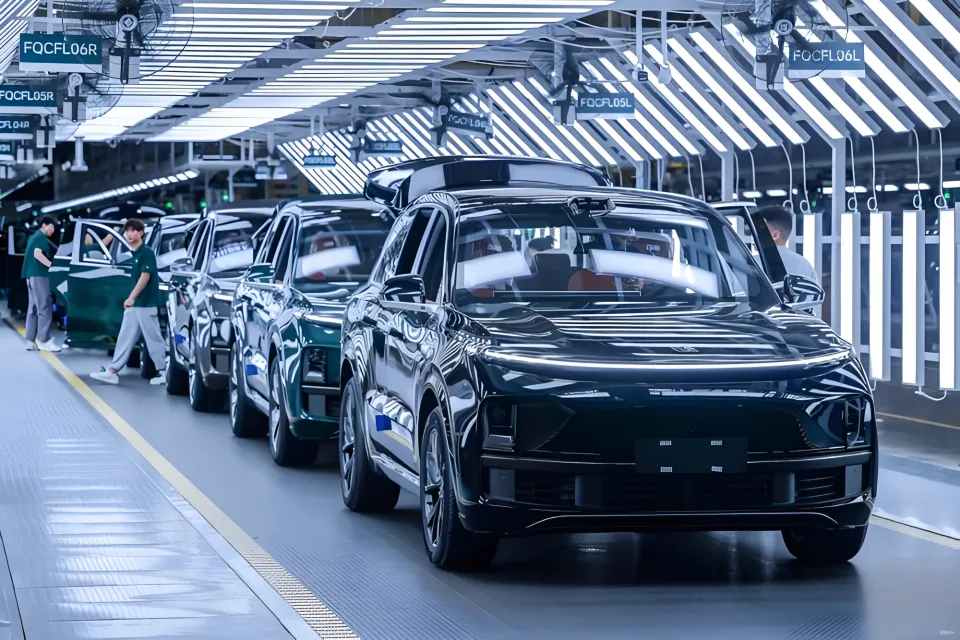
As for Li Auto's pure electric lineup in recent years, whether it's the MEGA or the i8, neither product achieved the expected results upon launch. The MEGA model faced controversy over its design since its introduction, and subsequent safety recalls caused its sales, which had just started to recover, to plummet. The Li Auto i8, due to marketing strategy and SKU planning issues, saw its reputation hit a low point at launch. It wasn't until recently, riding on the positive reputation built by the i6, that its sales showed signs of recovery.
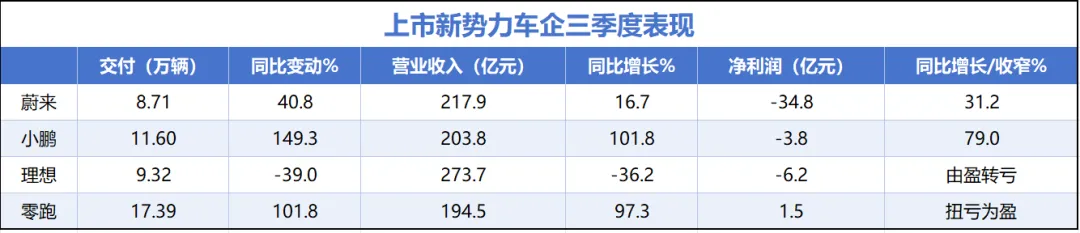
The extended-range segment is now crowded with competitors, and the high-end pure electric SUV segment has missed the right transition rhythm. Additionally, in the 2025 new force lineup (new force brands), NIO, XPeng, and Leapmotor are surging ahead with double-digit market growth. The opposite trends of Li Auto and the market have made it clear to Li Auto that the next step is to rebuild its moats in both the extended-range and pure electric domains.
Li Auto 'Burns Money' for the Future
The deployment of supercharging stations, as the first step in Li Auto's construction of a pure electric moat, was acknowledged by Li Xiang as a misjudgment in product rhythm just 20 days after the launch of the Li Auto MEGA in 2024. He pointed out that the company would 'patiently operate according to the rhythm from 0 to 1,' with one of the key measures being the acceleration of supercharging station construction.
In just 2 years and 8 months, Li Auto has now deployed self-operated charging stations on popular expressways in 279 cities across China. On one hand, this proves that Li Auto has indeed reserved sufficient budget for its pure electric transition. According to Li Auto's official statement, it is supported by RMB 98.9 billion in cash, targeting the future intelligent vehicle and pure electric market. On the other hand, Li Auto's priority layout on expressways for its charging stations also showcases the brand's strategic insight. With a sufficiently well-developed supercharging network, infrastructure will become the strongest 'sales hook' for pure electric vehicles.
It's worth mentioning that the effectiveness of Li Auto's charging pile deployment is not only reflected in the density of station construction but also delves into the actual consumer experience. Li Auto's VLA charging function enables a fully automated process of 'autonomous pile finding - parking charging - automatic departure,' achieving an intelligent closed loop in charging scenarios.
Besides charging station layout, Li Auto is also focusing on intelligent experiences. On one hand, it is upgrading the VLA model from 4 billion parameters to the hundred-billion level. On the other hand, it is ramping up computing infrastructure construction, generating massive scenario data through digital twin technology to prepare for the landing of L4-level autonomous driving in 2027. Of course, if terms like 'VLA, L4' seem too distant, then Li Auto's already launched AI glasses, as well as its upcoming self-developed chips and batteries, are concrete manifestations of its transformation.

After a brief fluctuation in 2025, Li Auto is moving forward with full effort in enhancing its 'internal capabilities,' whether in terms of personnel changes, technical direction, or company model. In simple terms, it is learning from NIO in building an energy replenishment ecosystem and from XPeng in implementing AI applications. Unlike NIO and XPeng, which began to reap the benefits in 2025 after adopting a 'time for space' strategy in earlier years, Li Auto is now using 'money for time,' leveraging its late-mover advantage to address core pain points in the pure electric domain.
Commentary
As China's new energy vehicle industry gradually enters a mature phase, the first wave of dividends has been quickly realized through 'extended-range technology, product configuration, and supply chain optimization.' At this stage, the automakers remaining in the race will face higher-dimensional competition in the new four modernizations, centered around algorithms, practical AI, large models, and intelligent driving technologies. Coupled with consumers' more rational and personalized vehicle demands, automakers aiming to maintain their market position will need to rethink all so-called 'sales formulas.'
(This article is original to Heyan Auto and may not be reproduced without authorization.)
-
![]()
It's Hard to Build Cars, Even Harder to Build Humans, and XPENG is Doing Both
-
![]()
Valuation Soars by $57 Billion: Three Entrepreneurs Born in the 1980s Forge an AI Unicorn Now Suddenly on the Market
-
![]()
How Can We Achieve the Goal of 100,000 Hydrogen Vehicles by 2030?
-
![]()
July Online Market for Consumer-Grade Sports Cameras: Robust Double-Digit Growth in Sales Volume and Value, Mid-Range Products Fuel Market Expansion
-
![]()
A Hundred Billion Dollar Market! When Will the 'Golden Age' of Agentic AI Arrive?
-
![]()
Changzhou’s Wealthiest Woman Faces Unexpected Setback
-
![]()
FAW Seeks Efficiency Gains, Leapmotor Accelerates Expansion
-
![]()
Dual Leaders in Robot Vacuum Industry Look Overseas for Growth