Transforming AI into Productivity: Baidu Leads the Charge
 12/26 2025
 663
663
Beyond the realm of model contests, China's AI industry is carving out a path of industrialization, driven by practical applications and internalized capabilities.

Original New Entropy AI New Tech Team
The efficiency bottleneck in automotive R&D has long been a thorn in the side of countless engineers. After designers complete their sketches, they must endure a 10-hour wait for aerodynamic test results from simulation software. During this lengthy (the term "prolonged" is retained here for its contextual relevance, though "lengthy" is a more natural English equivalent) wait, aerodynamic engineers find themselves in a position akin to opening blind boxes, unable to engage in real-time communication with designers. The absence of a unified communication language and the sequential "design-validate-modify" model act as invisible chains, prolonging vehicle R&D cycles and severely hampering industrial innovation.
However, Baidu's FAMOU has rewritten this narrative, delivering visualized results for the same tests in mere minutes. This transformation is not just an isolated technical breakthrough but a microcosm of AI's evolution from superficial chat interactions to deep industrial integration.
Currently, China's AI optimization services market is growing at a 45% compound annual growth rate (CAGR). Yet, enterprises still squander 32% of their budgets due to poor technical adaptability and low commercial conversion rates. While the industry remains fixated on model parameter competitions and dialogue fluency, Baidu offers a differentiated exploration path through FAMOU. What truly warrants discussion is not the number of specific problems FAMOU solves but whether it demonstrates that beyond model contests, China's AI can forge a path of industrialization driven by practical applications and internalized capabilities.
Why Industries Need AI That 'Continuously Solves Problems'
In its simplest form, FAMOU can be described as a super-algorithm assistant capable of autonomous iteration and continuous optimization. However, its capabilities extend far beyond that of a mere assistant. Its core logic is centered on real industrial problems with clear evaluation standards, simulating or even surpassing the complete workflows of top algorithm experts. Driven by clear objectives, it continuously and autonomously iterates and optimizes, unlike traditional AI that remains static after one-time development.
The pain point of traditional AI lies in its static nature: once deployed, algorithms struggle to adapt dynamically to real-world changes. In industries, many optimization problems are characterized by "easy evaluation but extremely difficult solutions," such as cross-scenario reuse of disaster prediction models, model selection in emergency scenarios, and global scheduling of complex systems. These problems have clear goals (e.g., improving accuracy, reducing time, cutting costs), but solving them requires massive trial-and-error, reasoning, and iteration—tasks that are inefficiently handled by humans or fixed algorithms alone.
FAMOU's breakthrough lies in its built-in "autonomous exploration-iterative optimization" mechanism. Like an inexhaustible top expert, it continuously explores solution spaces, generates superior approaches, and achieves self-evolution through use. More importantly, it transforms not just individual results but the way industries obtain "better solutions"—making optimization a reusable systemic capability rather than relying on the experience of individual experts.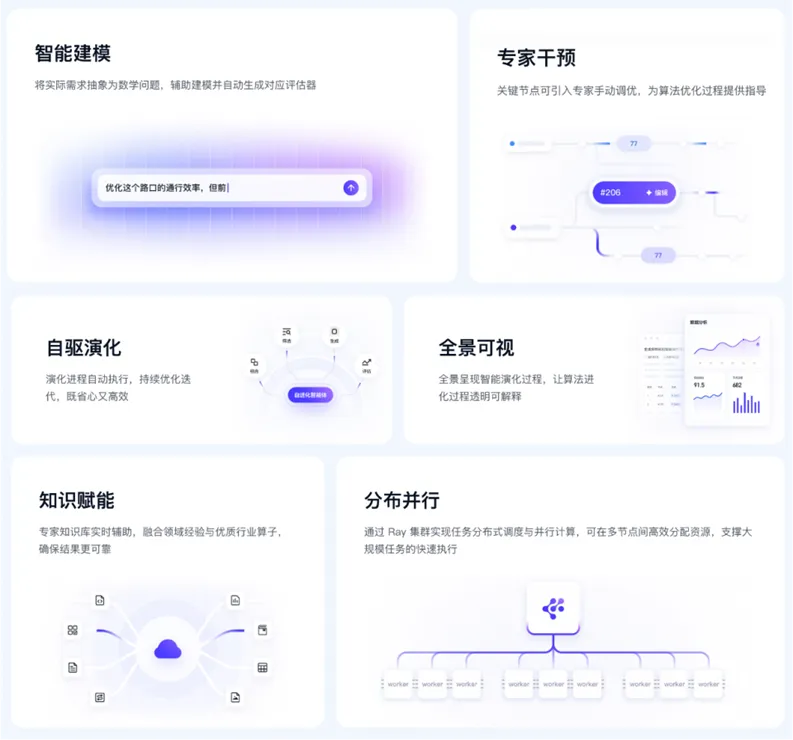
In practical applications, FAMOU's efficiency magic has been fully validated across multiple fields. In disaster prediction, cross-scenario model migration time has been reduced from 5 days to 6 hours and 32 minutes, with accuracy soaring to 91%. Landslide warning model selection has accelerated from weekly to 6-hour intervals, providing critical time for emergency decisions. In smart transportation, optimized traffic light timing has covered nearly 5,000 intersections nationwide, reducing vehicle delays by 13% in Ordos and halving travel times at some intersections. In financial risk control, it has doubled feature mining efficiency for CITIC Trust Bank and improved model risk differentiation by 2.4%. In port scheduling, global optimization has achieved significant energy savings for Liaoning Port Group.
From specialized domains to civilian scenarios, from small and medium-sized enterprises (SMEs) to large state-owned enterprises, FAMOU delivers value wherever data and objectives exist but lack algorithmic connectivity. Its proven full-scenario adaptability shatters the invisible ceiling on industrial efficiency.
Baidu's First-Mover Advantage: Full-Stack Layout and Scenario Accumulation
Baidu's ability to launch FAMOU, a deeply industrialized AI product, is no accident but the result of technological accumulation and strategic foresight. FAMOU addresses not isolated intelligence problems but complex optimization systems requiring long-term evolution and continuous feedback—naturally demanding a high-frequency closed loop from computing power to frameworks, models, and applications.
Thus, FAMOU is not replicable through "assembled AI" but is built on Baidu's long-term full-stack investment. Currently, Baidu is one of the few global companies with full self-research capabilities across "chips-frameworks-models-applications," enabling true integration of AI into industrial processes rather than confining it to tool layers.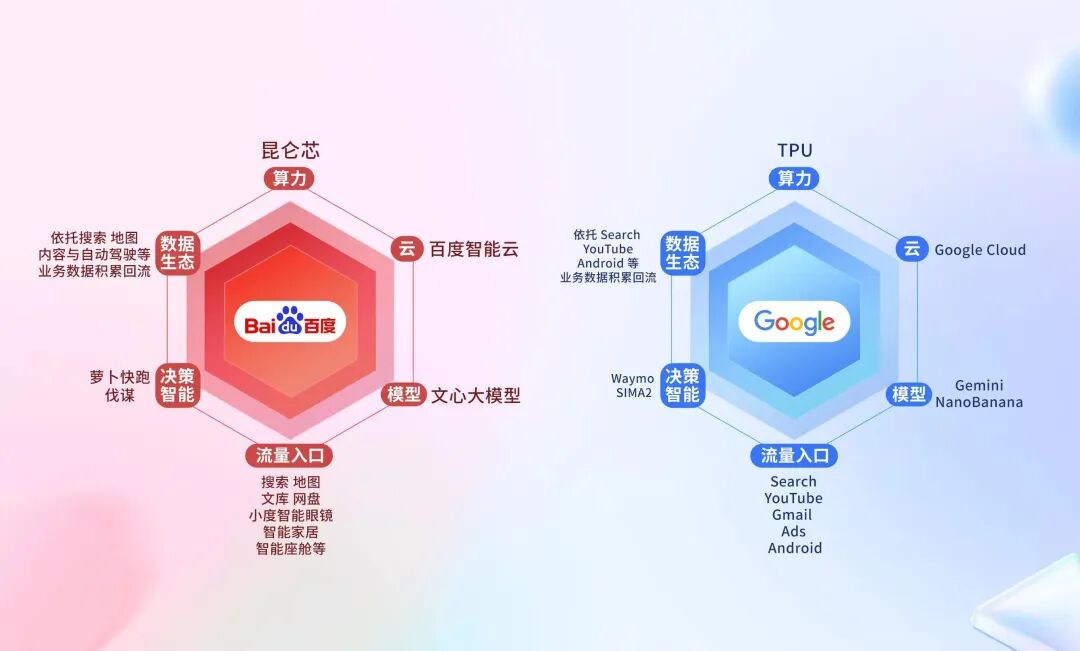
Compared to players relying on external technologies, Baidu's full-stack architecture enables faster algorithm iteration and stronger scenario adaptability. Critically, this technology has passed commercial validation: Huiboxing digital humans boosted Double 11 gross merchandise volume (GMV) by 91% year-over-year (YoY), and the Miaoda platform generated over 500,000 commercial applications across 200+ scenarios in 8 months. These successes prove Baidu's full-stack AI capabilities can scale to empower industries, with FAMOU serving as a benchmark product tailored to extreme optimization needs.
Of course, Baidu hasn't abandoned mainstream AI forms. Deployed products like ERNIE Bot already meet user demands for intelligent interaction. Unlike pure model companies like OpenAI or Meta, Baidu adopts a dual strategy of "C-end interaction + B-end industrialization": expanding beyond human-like chat to extend AI capabilities into industrial cores.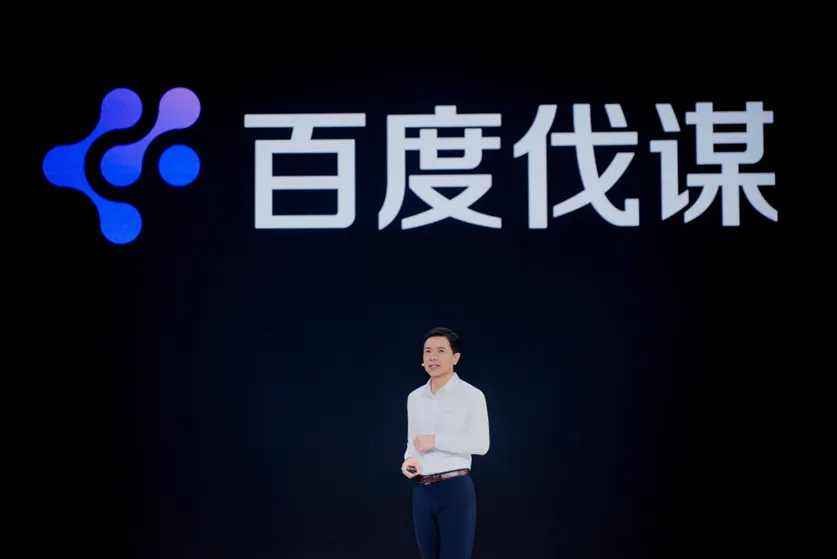 ▲Photo/Baidu Founder Robin Li
Recently, Robin Li mentioned in an annual interview with TIME that unlike U.S. tech leaders investing heavily in artificial general intelligence (AGI), China prioritizes applications and possesses unique AI scenarios unavailable elsewhere. "China's manufacturing is incredibly strong, with countless factories needing low-cost, high-efficiency production. We must leverage AI to solve these challenges." In this efficiency- and cost-constrained industrial environment, China's AI expectations naturally differ from pure general intelligence races. Baidu's choice to validate AI in real systems like production scheduling and resource optimization essentially responds to this application-driven reality.
Bridging the Algorithm Gap: Baidu's Ecological Exploration and Industry Challenge
Trillion-dollar production lines and labs universally face the pain point of "having data and objectives but lacking algorithmic connectivity"—a global AI industry challenge. Gartner predicts that by 2025, over 30% of enterprise marketing budgets will shift from traditional search engine optimization (SEO) to global enterprise optimization (GEO), yet most companies still struggle with "inability to use or use effectively."
In this context, FAMOU aims not just to solve specific optimization problems but to decouple advanced algorithm capabilities from individual experts, transforming them into reusable, process-embedded foundational abilities. Thus, as FAMOU scales, ecosystems become not an add-on but a necessary extension of capability internalization.
On December 25, Baidu officially launched the "Tongzhou Ecosystem Partner Program," opening high-quality industrial scenarios and research topics to universities and industry software firms. It shares FAMOU's Agent system and algorithm optimization engine while providing AI collaboration training and customized service guidance.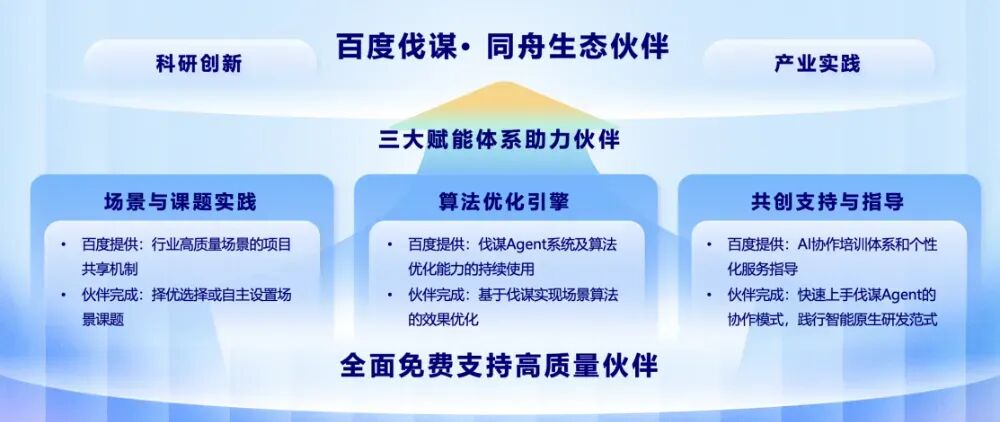
Through the "Tongzhou" program, Baidu seeks not merely to expand product boundaries but to engage more real-world scenarios in the "problem definition-solution-feedback-evolution" cycle. Only when such cycles are established across organizations can AI transition from "a used tool" to "an organizational capability."
Currently, Beijing University of Technology has optimized space station "micro-electronic nose" designs through the program, while Tianjin University resolved disaster warning model reuse challenges, validating the value of ecological co-creation.
Conclusion: AI's Future Lies Deep in Industries
FAMOU's emergence marks AI's shift from superficial application competition to deep industrial empowerment. It proves that AI's core value lies not in parameter scale or dialogue fluency but in solving industrial problems and driving economic growth. Baidu's decade-long full-stack layout and dual strategy provide a first-mover advantage in this transition, though challenges remain.
Currently, AI faces common hurdles in scaling, including high costs, data scarcity, and scenario adaptation difficulties. Baidu's exploration may represent just one industry solution, with overall progress requiring collaborative efforts from more enterprises.
The future of AI competition will hinge on sustained industrial pain point resolution rather than single-product technological leadership. With FAMOU as a benchmark, Baidu is validating not just a product but the feasibility of a Chinese-style AI industrialization path.
- END -
-
![]()
Even a Titan Like Musk Has Faced Setbacks in Fulfilling Promises
-
![]()
AI Office: The End of the Racing Era, Context Becomes the Key to Success
-
![]()
Domestic Vehicle Chassis Revolution ②: The Steering Wheel Remains, But Mechanical Connections in the Steering System Are Decreasing
-
![]()
Exploring MiniMax Design: Can Video Editing Be as Simple as Speaking?
-
![]()
Why Can SenseTime Achieve Profitability While CloudWalk Still Faces Challenges, Despite Both Adopting Large Models?
-
![]()
Domestic Car Chassis Revolution Part 3: Suspension Systems Transform Vehicle Posture, from Vibration Absorption to Active Force
-
![]()
Hainan is Going on a Crazy Satellite-Building Spree
-
![]()
Optics Determines Success in the XR Era: Wafer Production Reaches Millions, Industry Giants Join the Fray!