Meta Spends Billions to Acquire Manus, Firing the First Salvo in the 'Agent Monetization' Race
 12/31 2025
 573
573

By Daoge
Source: Node AI View
On the second-to-last day of 2025, Silicon Valley unleashed a 'bombshell.'
Just a few hours prior, Meta officially declared its acquisition of AI startup Manus.
Although neither party immediately divulged the exact transaction amount, sources from the heart of Silicon Valley's venture capital scene disclosed that the deal is labeled as 'Meta's third-largest acquisition ever,' with a price tag in the billions, second only to the WhatsApp deal and Meta's strategic investment in Scale AI earlier in 2025.
In the realm of AI applications, Manus is far from being a 'nobody.' Launched in March 2025, the company experienced a meteoric ascent, going from 'viral sensation' to 'acquisition target of a tech behemoth' in less than nine months.
Node AI View posits that this isn't merely another strategic move by Mark Zuckerberg in the AI arena; rather, it represents a pivotal moment where the entire AI industry pivots from a 'large model arms race' to 'agent commercialization.'
01 Why Manus? Founded by Xiao Hong
To the general populace, Manus might not be as renowned as ChatGPT. However, within the tech and investment circles, it's considered a prime example of 'outperforming expectations.'
Manus's flagship product is a general-purpose agent powered by a cloud-based virtual machine. Unlike traditional chatbots that merely 'talk the talk,' Manus truly 'walks the walk.'
From coding and analyzing stock financial reports to automatically submitting resumes and even planning and booking entire travel itineraries, Manus can accomplish tasks autonomously without human intervention.
According to the disclosed data, Manus crossed the $100 million annual recurring revenue (ARR) mark just eight months after its launch. In the SaaS industry, reaching this milestone typically takes 5-10 years; Manus achieved it in less than a year.
This remarkable product-market alignment has led Wall Street to recognize the immense potential for direct monetization of AI agents.
Manus's funding journey has also been remarkably swift. In April 2025, Benchmark, a top venture capital firm in Silicon Valley, led a $75 million funding round, valuing the company at $500 million. Just six months later, Meta stepped in to acquire it.
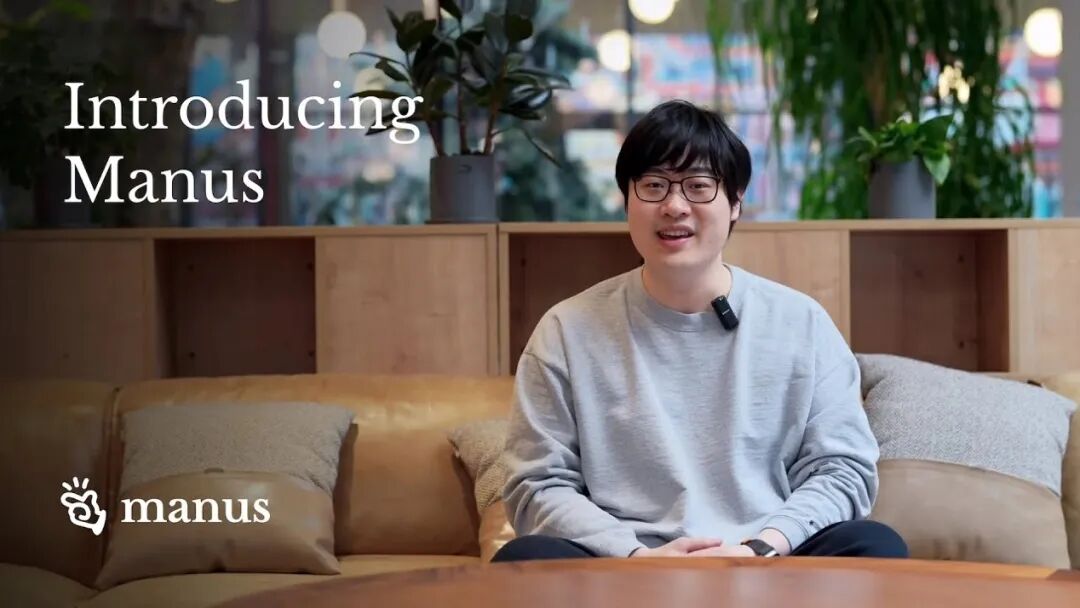
Manus Founder Xiao Hong
Interestingly, Manus's background is quite noteworthy. Founder Xiao Hong was a well-known serial entrepreneur in China. Prior to the acquisition, Manus officially moved its global headquarters to Singapore in July 2025 and established a core sales team in the United States. Node AI View believes this 'identity transformation' was a crucial prerequisite for the deal to clear regulatory hurdles and close successfully.
02 From 'Open-Source Leader' to 'Super App'
Why Meta? Or, more precisely, why was Meta so eager to acquire Manus?
In the 2025 AI landscape, Meta cemented its position as the 'open-source leader' with the Llama 4 series models. However, when it came to commercialization—the final frontier—Zuckerberg faced persistent inquiries from Wall Street: 'Billions have been poured into GPUs; where's the consumer revenue?'
The acquisition of Manus precisely fills the most critical void in Meta's strategic puzzle.
Firstly, it acquires 'executive capability.'
While the current Llama models excel in intelligence, they lack inherent 'tool invocation' and 'long-term task planning' abilities. The Manus team specializes in harnessing existing models' intelligence through engineering to enable AI to execute complex tasks.
Following the acquisition, Meta is likely to integrate Manus's agent capabilities directly into WhatsApp and Messenger.
Envision a future where WhatsApp transcends being a mere messaging tool. You could simply say, 'Plan a trip to Japan for me, book flights and hotels, and share the itinerary with my group.' Manus's technology would automate everything in the background, fundamentally transforming Meta's products from 'social networks' to 'personal life operating systems.'

Secondly, it acquires 'high-net-worth customers.'
Meta's historical revenue has heavily depended on advertising, targeting a mass entertainment audience.
In contrast, among Manus's current millions of users, a significant portion comprises developers, financial analysts, and corporate executives willing to pay $20-$50 monthly for subscriptions.
This directly introduces a lucrative B2B customer base to Meta, aiding its foray into the enterprise services market and enabling it to compete directly with Microsoft Copilot.
Thirdly, it's a defensive acquisition.
With OpenAI unveiling its o3 series and Operator functionality in beta testing, agents have become a battleground.
Had Meta not acted, Manus might have fallen into the hands of Google or Amazon. Zuckerberg once again showcased his 'spot it, buy it, no hesitation' predatory instinct.
03 China's AI Entrepreneurs: The 'Singapore Stopover'
For China's AI startup ecosystem, this acquisition likely stirs mixed emotions.
Manus's successful exit validates a clear yet arduous path: being global from the outset.
In the current market climate, purely domestic Chinese AI companies face virtually insurmountable scrutiny from the U.S. Committee on Foreign Investment (CFIUS) for acquisition by American tech giants.
Manus's mid-2025 decision to relocate its headquarters to Singapore and undergo structural reorganization proved to be the decisive factor enabling its multi-billion-dollar sale to Meta.
For AI entrepreneurs still based in Beijing, Shanghai, or Shenzhen, Manus offers a blueprint: if you're developing foundational models, the domestic market suffices; but if you're crafting global SaaS applications, 'incorporating in Singapore + accessing the Silicon Valley market' may be the only viable path to a super-exit in the coming years.
Node AI View contends that Manus's edge lies not in 'model parameter competition' but in 'product experience' and 'engineering execution.'
In 2025, Chinese startup teams continue to demonstrate world-class agility and execution at the application layer. Manus proves that even without owning the most foundational models (early Manus primarily leveraged Claude and GPT series), excellent agent architecture design and user experience can still generate immense commercial value.
The year 2025 draws to a close with Manus's acquisition, a highly symbolic event.
It marks AI's official transition from the 'toy era' of chatbots that merely 'make noise' to the 'practical era' of agents that 'get things done.'
For Meta, this is a crucial stride toward building an 'AI super app.' For global AI entrepreneurs, Manus's story serves as a reminder: technology may be borderless, but capital and commerce have boundaries. Only by identifying gaps within these boundaries can one make the leap from unicorn to giant.
The AI agent wars of 2026 have just commenced.
*The featured image is AI-generated
-
![]()
Registered Capital Slashed to 372 Million Yuan! Yutong Optical Finalizes Industrial and Commercial Change Registration
-
![]()
Zhuque-3 Successfully Lands, and 'Time Traveler' Secures Another ¥100 Million in Funding: China's Commercial Space Industry Experiences a 'Dynamic August'
-
![]()
Autohome Faces a Shrinking Window of Opportunity
-
![]()
Even a Titan Like Musk Has Faced Setbacks in Fulfilling Promises
-
![]()
AI Office: The End of the Racing Era, Context Becomes the Key to Success
-
![]()
Domestic Vehicle Chassis Revolution ②: The Steering Wheel Remains, But Mechanical Connections in the Steering System Are Decreasing
-
![]()
Exploring MiniMax Design: Can Video Editing Be as Simple as Speaking?
-
![]()
Why Can SenseTime Achieve Profitability While CloudWalk Still Faces Challenges, Despite Both Adopting Large Models?