Ali, Don't People Without Ideals Feel Lost?
 03/04 2026
 693
693
Ali, Don't People Without Ideals Feel Lost?

REC
Estimated reading time: 14 minutes
The 32-Year-Old Leader of the World's Premier Open-Source Large Model Abruptly Resigns
PART01
The Departure of a Visionary
It was a sudden farewell.
On the morning of March 4th, Junyang Lin, the technical leader of Alibaba's Tongyi Qianwen, announced on X (formerly Twitter) that he would be leaving the Qwen project. The news came as a surprise: Qwen 3.5, which had garnered widespread acclaim in the open-source community, had just been released during the Spring Festival, and a lightweight model had been launched the day before, even earning a like from Elon Musk.
This quickly became one of the most talked-about personnel changes in the AI field—surpassing even the buzz when Zhou Chang, the former head of Tongyi Qianwen, was "poached" by ByteDance in 2024. AI industry media outlets collectively covered the story, while developers from around the world flooded Junyang Lin's X account with comments expressing their gratitude.

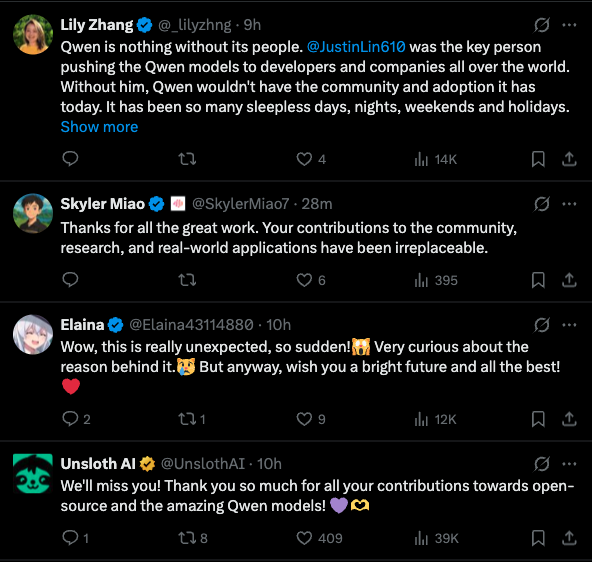
Global AI professionals commented after Junyang Lin announced his resignation on social media.
Globally, Qwen stands out as a rare open-source model that embodies "technological idealism."
Qwen is renowned for its precision in text alignment and logical reasoning, allowing developers to sense the team's deep respect for the essence of language. At the same time, it is one of the best models globally for supporting niche languages beyond Chinese and English, seen as a manifestation of idealism in technological inclusivity.
More importantly, Qwen offers a range of models, from small ones like 0.5B and 1.8B that can run on mobile phones or even microcontrollers, to the 72B flagship model comparable to GPT-4, almost entirely open-source. Developers can freely download the full range of Qwen model weights from the open-source community and deploy them on their own servers.
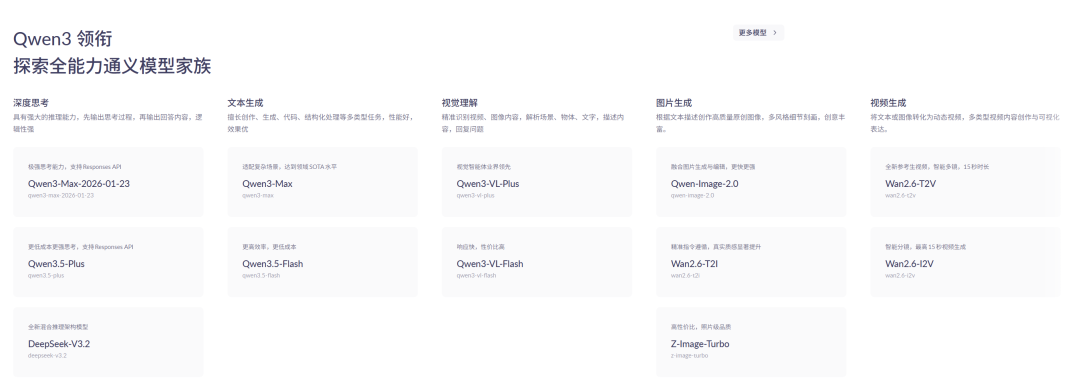
Mainstream models in the Tongyi model family. Source: Alibaba Cloud BaiLian
This is particularly precious in today's open-source market. OpenAI has been jokingly dubbed "ClosedAI," while Google and Meta often hold back in their open-source efforts. Many domestic companies, including Baidu and Zhipu, choose to open-source most of their large models primarily as teaser products to attract clients to pay for more advanced versions, naturally creating a significant performance gap between free and paid versions.
In contrast, Qwen's commitment to technological inclusivity is evident. Some of its open-source models, such as Qwen 2-72B, are widely recognized as outperforming many closed-source models.
This technological route is primarily driven by Alibaba's AI business logic. It does not rely on the model itself for profit. Some developers using Qwen's open-source models can lease GPU computing power from Alibaba Cloud—a more cost-effective option than buying their own graphics cards. Public data shows that Qwen has been downloaded over 600 million times globally, with over 170,000 derivative models, becoming China's version of Llama and driving revenue for Alibaba in computing power, MaaS, and enterprise services. As of the latest earnings season, Alibaba Cloud's AI-related revenue has achieved triple-digit growth for nine consecutive quarters.
On the other hand, Junyang Lin, as the leader, is himself a passionate technological idealist.
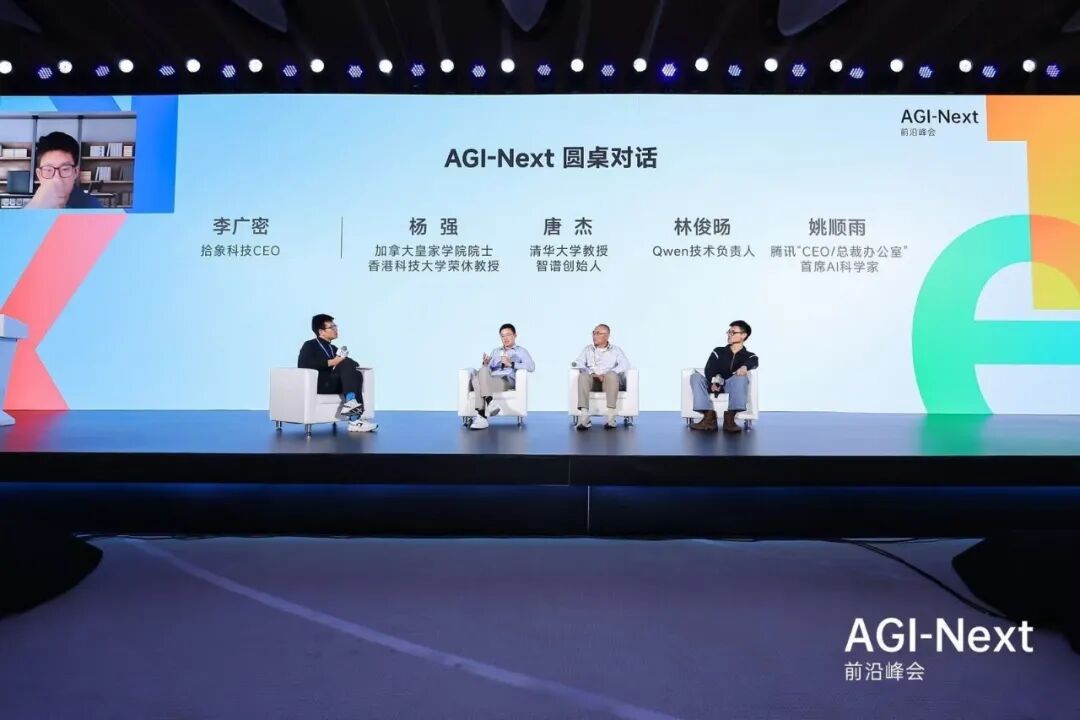
In January this year, Junyang Lin attended the AGI-Next Summit.
Junyang Lin is somewhat of an "Alibaba lifer." After graduating with a master's degree from Peking University in 2019, he joined Alibaba DAMO Academy and was promoted from a campus recruit to Alibaba's youngest P10, becoming a top expert in the professional sequence. Notably, he majored in computer science for his undergraduate degree but switched to linguistics for his master's—a few years later, when "language is the world" became a well-known phrase in the large model field, this young man's academic choice seemed quite prescient.
Junyang Lin led the full-scale open-sourcing of the Qwen series and was extremely active with his team on X and Hugging Face. They gave developers the impression of being no different from programmers who stay up late responding to posts to solve a local deployment bug. The self-media author Shi Zhong from "Qianhei Tech" publicly shared a detail from an interview with Junyang Lin: When Qwen first open-sourced, some team members didn't fully understand the significance of open-sourcing and were reluctant to answer basic questions in the group. Junyang Lin stepped in to answer them himself. Only in a community where even novices are cared for can the atmosphere truly thrive.
The Xiaohongshu account "Junyang Lin," which has only 6,692 followers (as of March 4th), is suspected to belong to Junyang Lin himself.
His self-introduction includes: Qwen protector, large model handyman. Coffee, red wine, and whiskey enthusiast, skilled in eating and drinking. Judging by the content he posts, there are updates like checking in at the Golden Gate Bridge, marveling at wolves on the Stanford campus, complaining about a 48-minute wait for a Didi ride, as well as a significant amount of content related to Qwen's business itself. The two most common terms users use to address him are: Teacher Lin and lifestyle blogger.
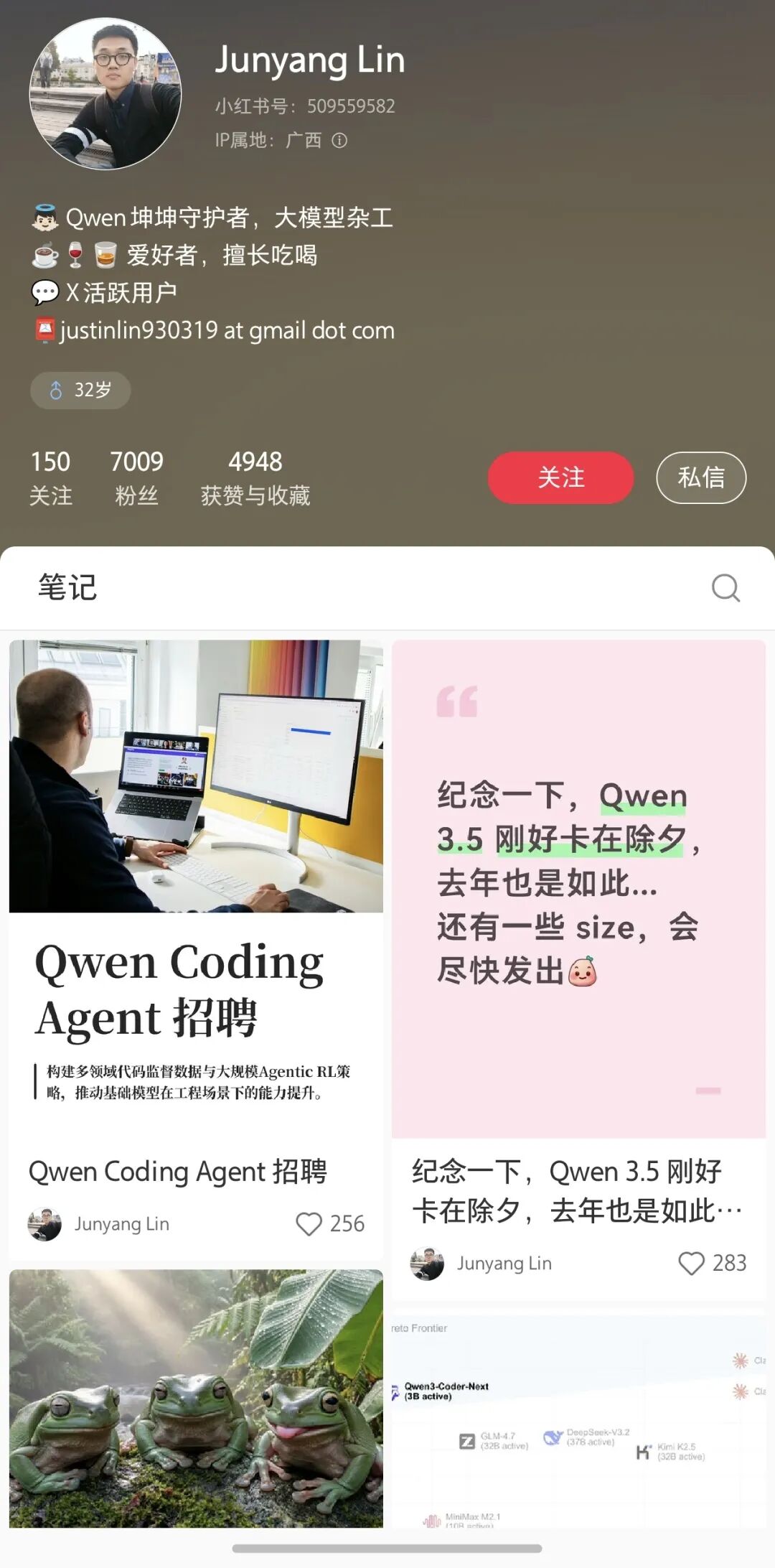
Suspected Xiaohongshu homepage of Junyang Lin himself.
He also frequently interacts with users in the comment section, with a speaking style highly fitting for his identity as a "32-year-old young man," completely lacking the aloofness of an Alibaba P10. At the AGI-Next Summit hosted by Tsinghua University and Zhipu, his remarks on the technological gap between China and the U.S. also left a deep impression. (See report: Zhipu Tang Jie: The "Real Big Shot" Hiding Beyond the Hype)
PART02
Conflicts Behind the Adjustments
In the 1999 film Pirates of Silicon Valley, there is a scene depicting the departure of Apple co-founder Steve Wozniak. He tells Steve Jobs:
"You've turned the company into a battlefield, with Mac and Apple II fighting each other. I just want engineers; I don't want to play politics."
"I'm not you. I don't want to rule the world. I just want to build a good computer."
"Good luck, Steve."
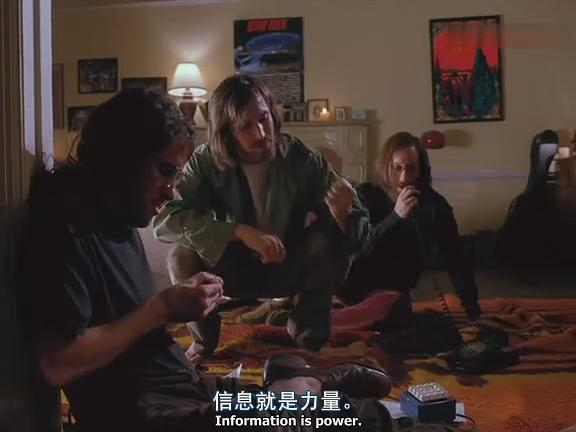
Screenshot from the movie Pirates of Silicon Valley.
Of course, no such dramatic scene occurred in real life. Technological idealist Wozniak left quietly. Filmmakers simply captured the conflict behind the quietness and presented it through actors' lines using more tense cinematic techniques to facilitate audience understanding.
Junyang Lin's departure was also quiet. As one of the core figures in Alibaba's AI business, his exit became an important footnote to Alibaba's AI business adjustments. As Alibaba and ByteDance decide to compete for the "Iron Throne" of China's AI market, both companies have lost room for error—any misstep in key decisions could directly lead to a reversal in market dynamics.
Just in March, Alibaba unified its B-end and C-end brands under "Qianwen." After the unification, "Tongyi Qianwen" lost its name in Alibaba's evolution, much like "Ele.me."
Such "standardization" operations are often classic moves in major battles and can help "Qianwen" become an entry-level product to compete against "Doubao." During the recently concluded Spring Festival holiday, Alibaba launched a generous "Spring Festival Hospitality Plan" worth 3 billion yuan, aiming to surpass "Doubao." However, judging by the post-holiday data, the revolution is not yet complete, and comrades must still strive.
It is not difficult to predict that under ByteDance's all-out offensive, Alibaba's AI business will continue to face pressure in 2026.
If laboratory-style idealism cannot bring sufficiently good conversion, it may seem somewhat out of place in the entire Alibaba system. Building better, universally beneficial models for people worldwide might hold extreme allure for young people like Junyang Lin, but Alibaba's current expectations for Tongyi Laboratory are clearly based on research and development, with a focus on productization and commercialization synergy.
This is evident from Jack Ma's repeated statements.
Even after stepping back, Jack Ma remains the most important figure in Alibaba's AI business. As early as April 2024, during his visit to Tongyi Laboratory, he stated that technological ideals should not remain in the laboratory but must be applied in industries, be useful, and create value.
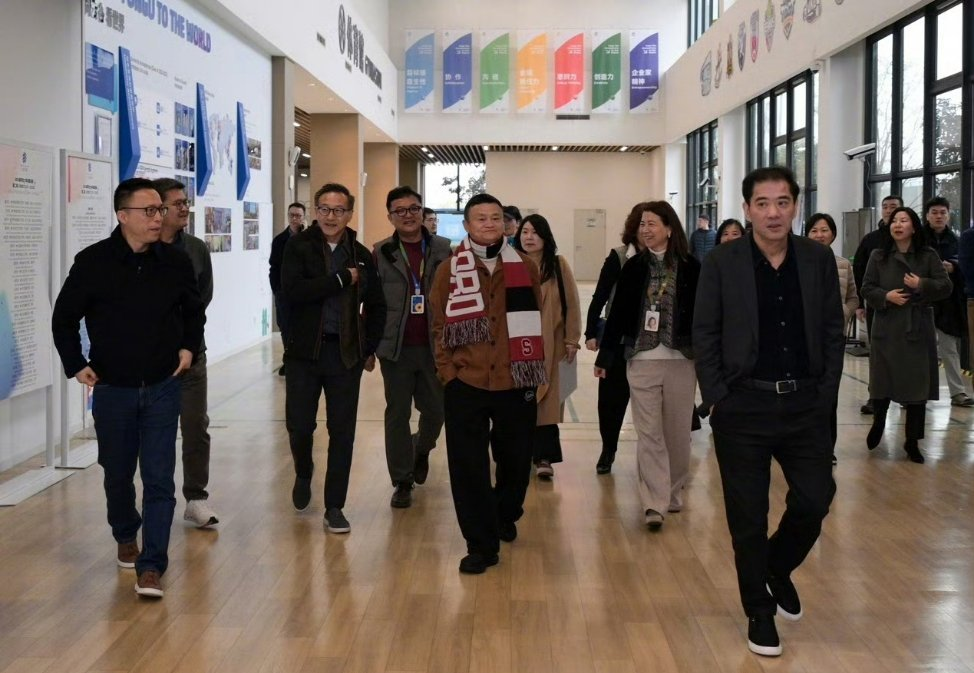
On March 3rd, Jack Ma led Alibaba executives to appear at Hangzhou Yungu School.
The Qwen team led by Junyang Lin belongs to Tongyi Laboratory. According to a report by LatePost, Tongyi Laboratory recently planned to split the Qwen team from a vertically integrated system covering different training processes and modalities into horizontal teams separated by functions such as pre-training, post-training, and text. During this period, Junyang Lin's management authority was reduced.
This adjustment is not just about management but also conflicts with Junyang Lin's technological stance. He has repeatedly publicly stated that closer communication is needed among pre-training, post-training, and even Infra and training teams. This is also the model of OpenAI and DeepMind, where many genius ideas emerge through communication.
Additionally, Junyang Lin, driven by technological ambition, likely touched upon the interests of other departments. For example, his focus on embodied AI overlaps with other teams within Tongyi Laboratory. In a large company with complex operations, such conflicts are inevitable, but outsiders can hardly predict the extent of the storm they might trigger.

A post by Qianwen team member Chen Cheng in response to Junyang Lin hints that this change may not have been voluntary.
Several technical backbone members of Qwen also announced their departures around the same time. This adds some uncertainty to the future development of the Qwen model.
However, this may not be the most critical issue for Alibaba's AI business in 2026. The competition around large model parameters is becoming history. Tang Jie, chief scientist at Zhipu, shared reflections on the Scaling Law in public. From an industry perspective, 2025 was actually a year of full-scale Agent explosion, and the trend is now even more pronounced. OpenClaw is becoming a hot topic sweeping the entire industry. Compared to the data of the model itself, people are more interested in exploring the upper limits of Agent capabilities.
Just shortly before his resignation, on February 27th, Junyang Lin forwarded a job posting for Qwen Coding Agent on Xiaohongshu and Moments, mentioning that the team had recently focused on improving the Coding Agent capabilities of the Qwen series models and systems to enhance their ability to handle complex and long-term tasks in real-world scenarios. An industry consensus is that Alibaba lags slightly behind ByteDance in Agents, especially in the C-end market.

Junyang Lin forwarding the Qwen Coding Agent job posting on Xiaohongshu.
Clearly, Junyang Lin was originally planning to recruit talent to enhance Agent capabilities.
But now, this is no longer his job.
In February 2026, a Xiaohongshu user named "Security Team Leader" posted content lamenting that the model capabilities of foundational large model companies are strongly correlated with the competence of their top leaders, and foundational model teams cannot afford to lose soul figures who understand models, adding, "Companies with old fogies giving blind commands from high positions will never succeed."
A highly upvoted reply in the comment section said: Alibaba. "Security Team Leader" quickly responded: Qwen has Teacher Junyang.
Now, it seems prophetic.
For Alibaba, a major company fully committed to advancing its AI narrative, it seems no one is irreplaceable.
The departure of the previous core figure, Zhou Chang, did not bring catastrophic damage to Qwen's subsequent development. It can always find the next Zhou Chang or Junyang Lin. Earlier this year, Hao Zhou, a former senior researcher at DeepMind, joined Tongyi Laboratory.
Perhaps, just like the song People Without Ideals Are Not Sad by New Pants, abandoning the fanatical pursuit of technological idealism is also a rational choice for a commercial company.
A popular saying in the open-source community goes: Qwen is nothing without its people. No one knows what changes this personnel shift will bring to Qwen or even the entire open-source model ecosystem. But the young man who was once active in the open-source community and became Alibaba's youngest P10 a year ago has already embarked on a new path.
Stories that come to an abrupt end always evoke a sense of regret, but it is comforting to know that in this golden age of AI, he has abundant choices.
-
![]()
Doubao Work Unveiled! Domestic AI Leaders Fully Commit to the 'Work' Sector
-
![]()
Who’s Sounding the Alarm on ‘Rushed Vehicles’?
-
![]()
Over 5.3 Billion Yuan in Losses Over Three and a Half Years! Can Yonyou Reverse Its Fortunes Through Streamlining and AI Transformation?
-
![]()
Baidu AI Adopts Free Model: A Strategic Maneuver in Traffic and Monetization
-
![]()
Silicon-Based OLED Pioneer Unveils Financial Results: H1 Shipments Outpace Entire 2025 Volume
-
![]()
AI's First "Lost Summer"
-
![]()
Zeiss Makes Another €2.2 Million Bet: Will Eye Tracking Be the Next Big Thing in the Smart Glasses Industry?
-
![]()
RUNTO Ranking | Global Top TV ODM Factories' Shipment Figures for July 2026