Honor Takes the Initiative! Domestic Mobile Phone Makers Set Sights on DJI
 03/04 2026
 599
599
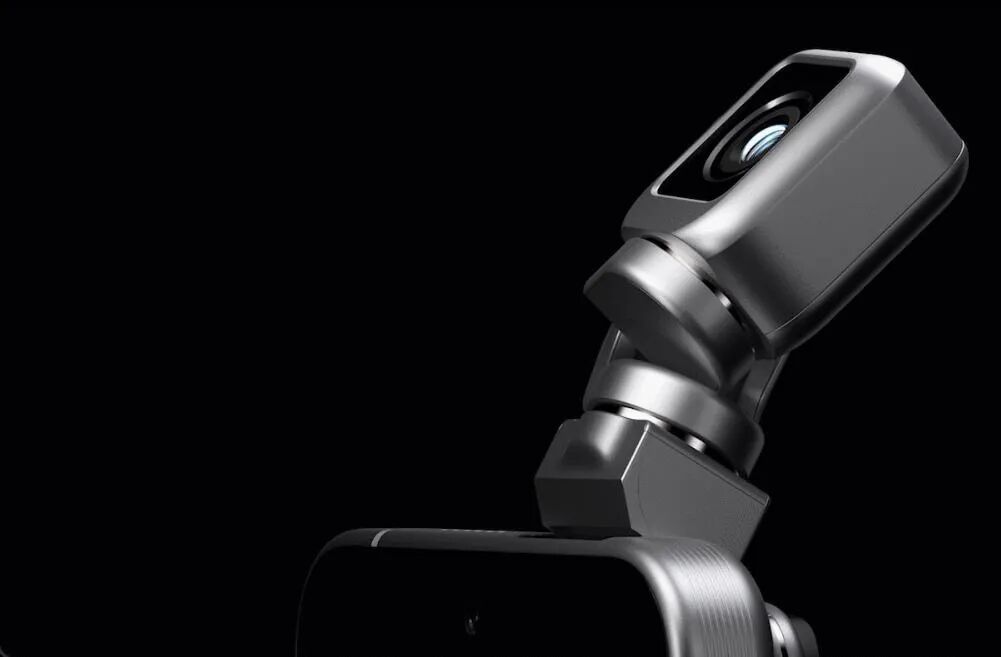
The DJI Pocket, acclaimed as a must-have for Vloggers with sales surpassing 10 million units, is about to encounter formidable competition.
On March 1, 2026, on the eve of the Mobile World Congress (MWC), Honor unveiled its Robot Phone in Barcelona. This innovative device features a rear camera that can flexibly capture images using a mechanical arm, instantly transforming it into a 'handheld gimbal camera'.
Set to hit the market in the latter half of the year, the Robot Phone is poised to compete directly with the DJI Pocket.
In fact, domestic mobile phone companies have long had their eyes on this market segment, which is currently dominated by DJI. Last year, companies such as Oppo, Vivo, and Xiaomi embarked on research and development projects for 'Vlog cameras,' with plans to launch corresponding products in 2026.
This strategic move is driven by the continuous pressure on shipment volumes faced by domestic mobile phone brands, necessitating a breakthrough to discover new growth avenues.
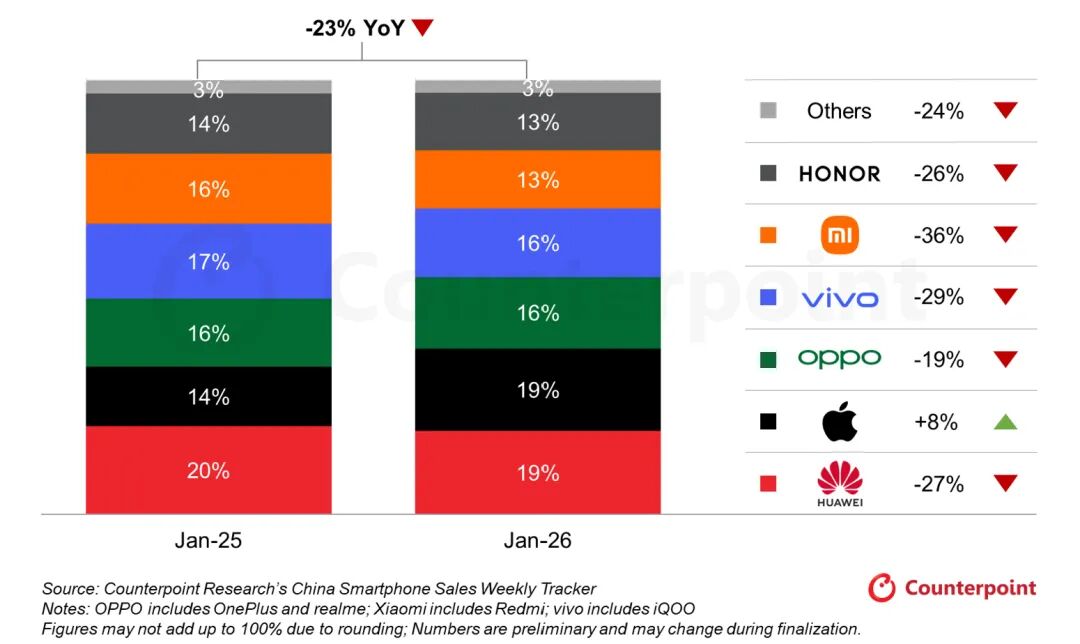
IDC forecasts that global mobile phone shipments will reach 1.15 billion units in 2026, marking a year-on-year decline of 3-4% compared to 1.25 billion units in 2025. The early confirmation of a downturn in domestic mobile phone sales was evident in January, with a Counterpoint report revealing a 23% year-on-year decline. Consequently, shipment projections for the year have been revised downward to less than 1.1 billion units.
In stark contrast to the cooling smartphone market, the handheld gimbal camera sector is experiencing a surge in popularity.
Global authority Frost & Sullivan anticipates that the global market for handheld smart imaging devices will soar to RMB 79.93 billion by 2030, boasting a compound annual growth rate (CAGR) of 15.9% from 2020 to 2030, signaling a period of rapid expansion.
Just as smartphones supplanted digital cameras, handheld gimbal cameras are now poised to replace mobile phone imaging functions. Consequently, domestic mobile phone companies are eager to transform and carve out a share in this burgeoning market.
01 'Hurry Up and Innovate!'
From project initiation in 2025 to release in 2026, domestic mobile phone companies are moving at an unprecedented pace!
In October of the previous year, Honor first announced the Robot Phone concept, seamlessly integrating gimbal photography capabilities into smartphones and effectively adopting a unique strategy to penetrate the handheld gimbal camera market. This March, at MWC, Honor further showcased product details and the actual device.
OPPO and Vivo are also expediting their timelines, aiming to shorten the time from project initiation to release to just one year.
In September 2025, OPPO officially announced the launch of a handheld gimbal camera project, spearheaded by Chief Product Officer Liu Zuohu. By the end of 2025, Vivo had also established an internal Vlog camera project. Although the specific product name has not been disclosed, relevant invention patents for 'gimbal devices' have been filed. It is reported that the product will feature a combination of Zeiss lenses and micro-gimbal stabilization technology and is slated for release this year.
Based on currently available information, Xiaomi will not directly participate but is collaborating with partners and ecosystem companies to explore the development of Pocket-like products.
A trend of 'multi-polar entry' is emerging in the handheld imaging device market.
Even the traditionally 'conservative' factories are moving swiftly, underscoring the sector's significance.
This is partly attributed to the continuous rise of the short video and live streaming sectors, which offer substantial application potential for handheld gimbal camera products. On the other hand, mobile phone manufacturers possess inherent advantages in supply chains and technological accumulation. Lens modules, sensors, AI algorithms, and imaging ISPs are core areas of long-term R&D for mobile phone manufacturers, providing a solid foundation for swiftly entering the 'handheld gimbal' market.
More crucially, the outlook for the smartphone market this year is not promising.
02 '12% Decline! Sluggish Growth'
Global smartphone market growth has already begun to wane.
According to a Counterpoint Research report, in January of this year, sales of domestic mobile phone brands all experienced double-digit declines, with Honor, Vivo, OPPO, Xiaomi, and Huawei witnessing drops of 26%, 29%, 19%, 36%, and 27%, respectively.
In 2026, global smartphone shipments are projected to decline by 12% year-on-year to less than 1.1 billion units, marking the lowest annual level since 2013. This trend is expected to persist into 2027, influenced by rising memory chip prices that affect mobile phone prices.
Additionally, in recent years, high-end smartphones have encountered severe homogeneous competition, with limited room for innovation in core parameters such as pixels, chips, and screens. In the first half of 2025, the average replacement cycle for Chinese mobile phone users was nearly 33 months, with institutions predicting it will extend to 42 months by March 2026.
Mobile phone manufacturers urgently need to break free from the shackles of hardware competition and explore new revenue streams. The DJI Pocket series, with an average price of RMB 2000-3500, multi-million unit sales, and high gross margins, has validated the mass market potential of handheld gimbal cameras.
Currently, short videos and Vlogs have become ubiquitous creative formats, driving explosive demand for stable, portable, and professional video shooting. Traditional mobile phone stabilization relies on EIS (Electronic Image Stabilization) and OIS (Optical Image Stabilization), which struggle to meet stable shooting needs in motion, travel, and outdoor scenarios. The standalone gimbal camera's ability to shoot without external devices and produce finished clips with one click aligns perfectly with the public's demand for lightweight creation.
Data indicates that the global Vlog user base is growing at an annual rate exceeding 20%, transforming the handheld gimbal camera market from a niche professional tool into a mass consumer electronics product. After the launch of the DJI Pocket 3, one in every three video cameras sold in the Japanese market was this product, reaching a peak market share of 34.1%, proving that gimbal cameras have become a mainstream choice for imaging consumption.
Mobile phone manufacturers possess inherent cross-industry advantages: Firstly, imaging technologies are interconnected, with mobile phone-end stabilization algorithms, sensor calibration, and AI imaging processing capabilities directly applicable. Secondly, they dominate in distribution channels, with Vivo and OPPO having over 300,000 offline stores covering lower-tier markets, far surpassing DJI's thousands of experience stores. Thirdly, they can achieve a full-link closed loop of 'mobile phone shooting - gimbal creation - terminal editing - social sharing,' enhancing user stickiness.
By entering the handheld gimbal camera market, mobile phone manufacturers aim to maintain control over the imaging ecosystem, lock users within their ecosystem, prevent users from switching to DJI's ecosystem for professional shooting needs, and enhance product premiums and user loyalty through a 'mobile phone + gimbal' combination.
However, with DJI's Pocket series becoming synonymous with 'handheld gimbal cameras,' can newly entering domestic mobile phone companies successfully seize 'market share' from DJI?
03 'Challenge DJI Pocket?'
In October 2023, the DJI Osmo Pocket 3 emerged as a phenomenal product. By August 2025, cumulative sales of the DJI Pocket series had surpassed 10 million units, generating nearly RMB 20 billion in revenue for the company.
Sources close to DJI's business analyze that DJI's overall revenue in 2025 is expected to reach RMB 85-90 billion, with handheld products (including Pocket and other handheld imaging devices) expected to contribute over 20% of revenue.
The DJI Pocket series has maintained a leading position for an extended period, accumulating a sizable user base and creative ecosystem. Compared to newly entering domestic mobile phone companies, DJI Pocket offers more mature hardware stability, rapid tracking algorithms, and an overall superior user experience.
While traditional mobile phone manufacturers can leverage supply chain and algorithm advantages to accelerate product development, core capabilities such as hardware structural design, stability performance, and full-system software-hardware collaborative optimization require time to accumulate.
After the release of Honor's Robot Phone, users raised doubts about the 'quality of the mechanical arm hinge' and 'durability.'
Additionally, for standalone handheld gimbal cameras, the size of the imaging sensor and small positioning gimbal motors are crucial for image quality. Domestic mobile phone manufacturers need to address key issues such as 'how to stabilize high-quality images within limited volume' and 'how to create products that can match DJI's experience.'
DJI already holds a first-mover advantage, demonstrating strong performance in supply chain bargaining power, user word-of-mouth, and channel coverage.
The entry of domestic mobile phone manufacturers and other competitors into the Pocket market will intensify industry competition and offer consumers more choices. In the future, the handheld gimbal camera market will transition from 'DJI dominance' to a landscape of coexistence of multiple brands and tiered competition.
However, for domestic mobile phone manufacturers to overturn DJI's long-standing dominance, they need to achieve equal or superior levels in core imaging and stabilization technologies, which will undoubtedly take time.
-
![]()
Proposed to Raise 955 Million Yuan through Private Placement! Huicheng Vacuum Boosts Localization of Ultra-Precision Optical Coating Equipment
-
![]()
Cash Flow Soars 13-Fold! What Major Strategic Move is Wuhan Five Square Optoelectronics Planning?
-
![]()
Leaked Design of vivo X500: Reverts to Circular Camera Module in Top-Left Corner, Pays Homage to Classic X90 Aesthetic
-
![]()
DeepSeek Shows Signs of Foraying into Code Agents, Launches WeChat Official Account Focused on Harness
-
![]()
Auto Companies Deny Claims That ‘Cooperation with Huawei Is Non-Essential’, as Huawei Transforms into a ‘Public Platform’
-
![]()
Starship to Independently 'Return to the Launch Tower': SpaceX's Ambitions Extend Beyond Rocket Building to Dominating Space Transportation
-
![]()
Starship Set to Independently 'Return to the Launch Tower': SpaceX is Revolutionizing Space Transportation, Not Just Building Rockets
-
![]()
Anthropic and OpenAI Face Off Against Deepseek