2025 Has Come and Gone, Yet None of Musk's Promises Have Materialized | B Insights
 01/16 2026
 569
569
Musk's 2025 'List of Broken Promises': Are Autonomous Driving, AI, and Robotics Commitments All Unfulfilled?
Whether you regard Elon Musk as a visionary trailblazer or a reckless braggart, one undeniable fact remains: setting exceedingly ambitious timelines yet frequently failing to meet them has become a recurring motif in his entrepreneurial journey.
Unless a significant breakthrough materializes in the near future, Musk's 2025 promise list, centered on robot manufacturing, Robotaxi (autonomous taxis), and AI models, is poised to become yet another unfulfilled pledge.
For Musk's companies, this might be business as usual. However, the stakes have never been higher.
As investors have propelled the valuations of Tesla, SpaceX, and xAI to unprecedented heights, the margin for error is rapidly diminishing.
Tesla 'Loses Its Luster'
One of the most pivotal areas for Musk's success lies in Tesla's autonomous taxi service and Full Self-Driving (FSD) software—especially amidst the declining demand for its electric vehicles.
In late 2024, as Tesla encountered its first delivery decline in a decade, Musk confidently asserted during an earnings call: 'In 2025, Tesla's deliveries will surge by 20% to 30% (equivalent to full-year deliveries of 2.14 million to 2.32 million vehicles).'
The market widely anticipated that Tesla would revert to a high-growth trajectory after a brief adjustment period.
But reality has proven to be unforgiving.
In 2025, while the global electric vehicle market witnessed a 25% sales increase, Tesla, the EV behemoth, defied the trend and experienced a decline.
Recently, Tesla unveiled its fourth-quarter delivery forecast via its investor relations website, revealing that analysts generally expect 420,000 deliveries in Q4, marking a 15% year-over-year decline and even falling short of Wall Street's prior estimate of 440,000.
Full-year deliveries are projected at a mere 1.62 million, down from 1.81 million in 2024—far from the 20%-30% growth target, with an extremely pessimistic actual performance.
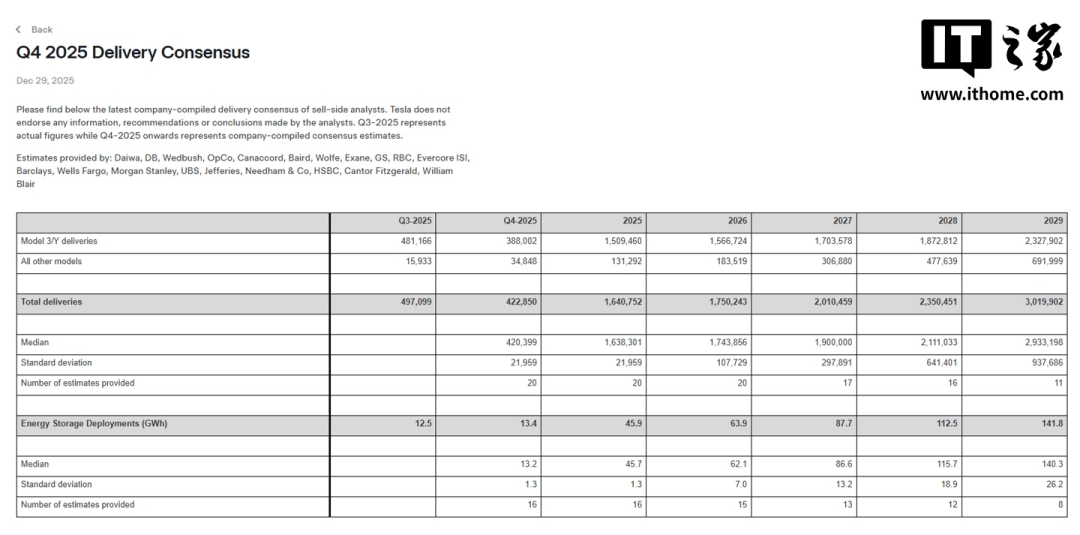
(Image source: IT Home)
The Robotaxi project is another grand narrative spun by Musk.
Robotaxi refers to autonomous vehicles; key players in this arena include Google's Waymo internationally and Baidu's Apollo Go in China.
In 2025, Musk repeatedly retracted or failed to meet self-imposed targets for Robotaxi and other autonomous vehicles, leaving Tesla far behind Waymo, owned by Google's parent company Alphabet.
In July, Musk stated that with regulatory approval, Tesla's autonomous taxi service would cover half of the U.S. population by the end of 2025.
Later, in October, he lowered the target, stating that the service would launch in 8 to 10 U.S. metropolitan areas by year-end.
However, user feedback indicates that as of late December, Tesla's Robotaxi business had not expanded beyond Austin and San Francisco, and all user trips in these cities still necessitated human safety operators.
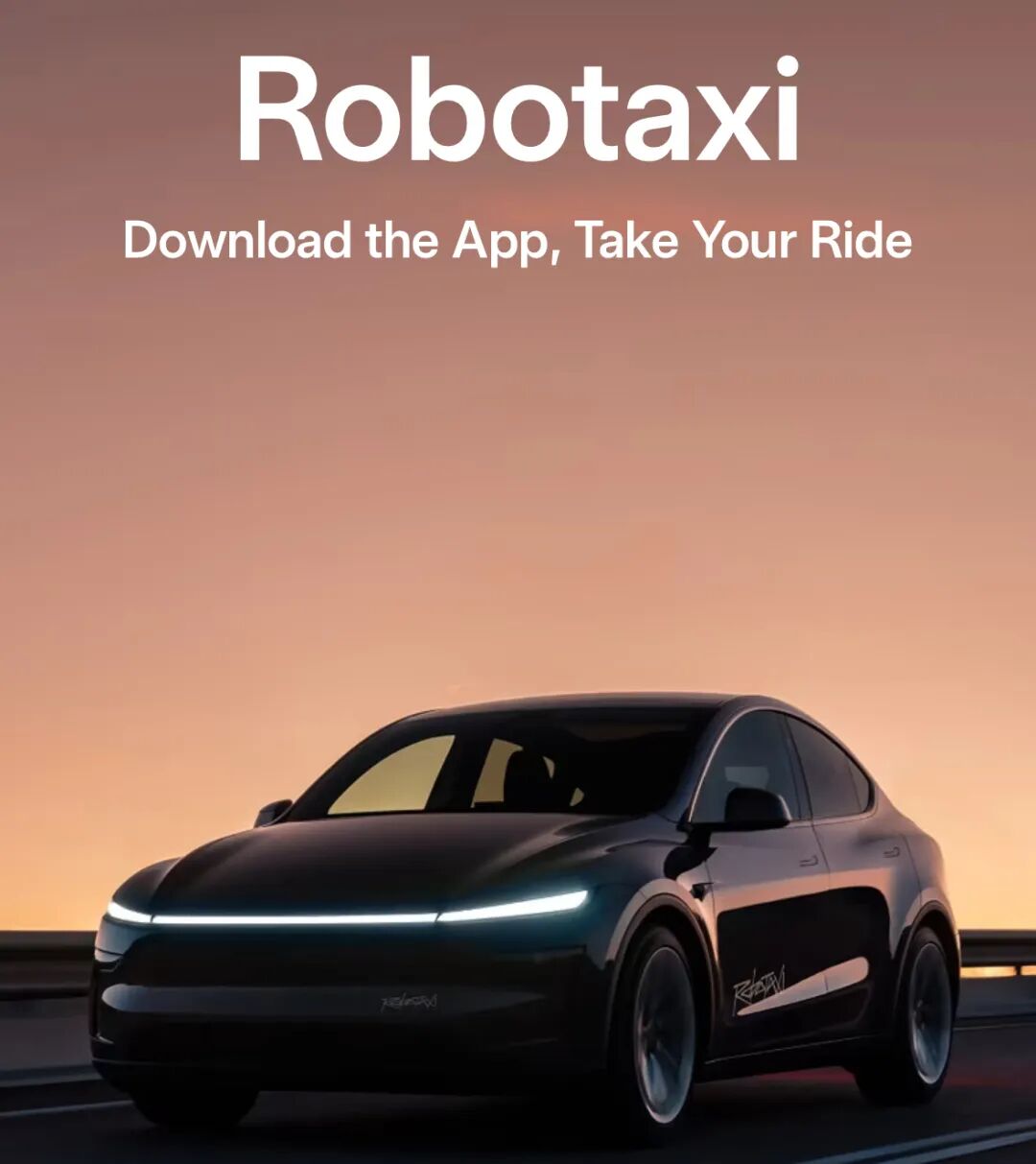
Tesla Robotaxi (Image source: TESLA official website)
In contrast, Waymo's progress appears more consistent.
Waymo already offers driverless autonomous ride services in five cities. Its fleet significantly surpasses Tesla's, and all vehicles operate without backup drivers in Austin and San Francisco.
This year, Musk also made bold promises regarding Tesla's autonomous driving software for private vehicles.
In April of the previous year, he claimed that Tesla's driving software would achieve a monumental technological leap in 2025, enabling drivers in multiple U.S. cities to 'sleep in the car and wake up at their destination.'
However, that has not been the case—Tesla's driving software still requires full driver supervision.
Admittedly, Musk's repeated missed deadlines on Tesla's autonomous driving projects are nothing new.
But this habit has not deterred investors from funding his vision. Tesla's stock has surged by 27% this year.
Last month, shareholders overwhelmingly approved his $1 trillion compensation package, contingent upon achieving financial and product targets related to autonomous software and Robotaxi.
Optimus and Starship: Why Are Interstellar Aspirations Hard to Realize?
Tesla's other ventures also fell short: production of the humanoid robot Optimus, which Musk once claimed would account for the majority of the company's future value.

Humanoid robot Optimus (Image source: X@Tesla_Optimus)
In March, Musk claimed that Tesla would produce 5,000 Optimus robots by the end of 2025.
Tesla subsequently lowered the target to 2,000 units, then further reduced it.
Additionally, Optimus's production expansion was postponed due to technical challenges (particularly issues with robotic hand dexterity).
Musk and SpaceX also stated that in 2026, Optimus would journey to Mars aboard SpaceX's Starship.
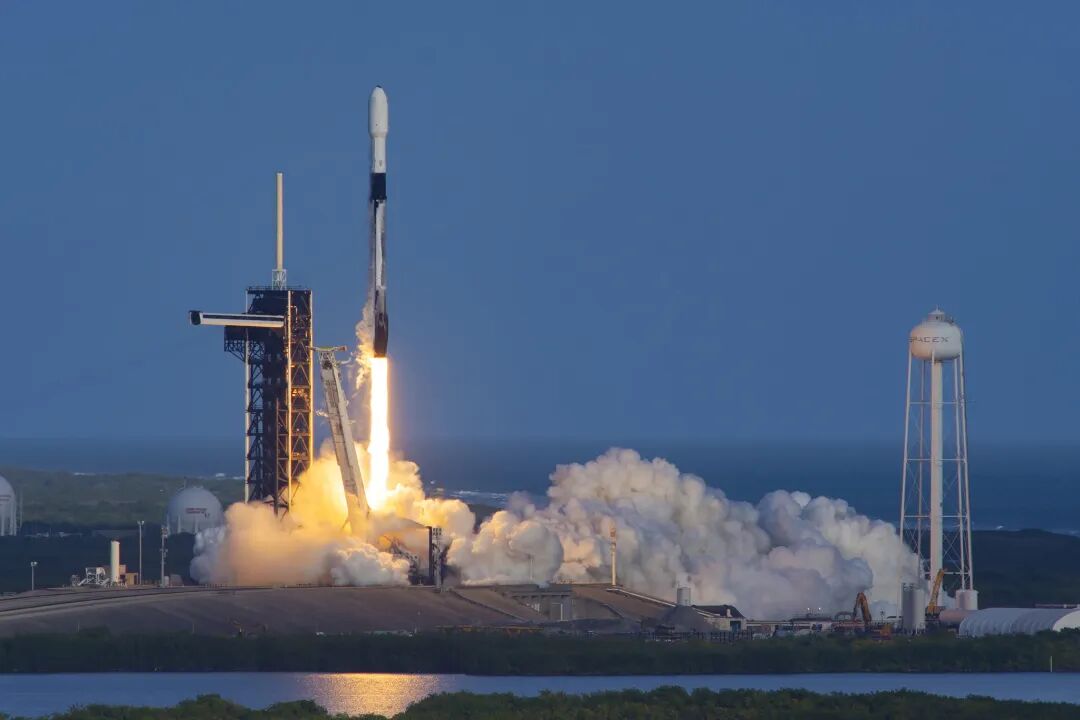
(Image source: X@SpaceX)
SpaceX's official website still indicates that the mission will proceed as scheduled next year, featuring renderings of Optimus walking on Mars. However, Musk himself has begun to temper expectations for the Mars mission.
In August, he described the likelihood of an Optimus-controlled Starship mission to Mars in November or December 2026 as 'low,' with a more realistic timeline of three and a half years later.
In recent months, Musk has discussed Mars less frequently and focused more on space data centers and upcoming lunar missions—a core priority of the Trump administration.
xAI and Payment Business: Progress and Setbacks
In 2025, Musk also devoted considerable energy to xAI's business as the company races to catch up with OpenAI and Google.
In July, xAI launched its latest flagship model, Grok 4. In August, Musk promised on X that xAI would release another 'highly competitive' Grok 5 by year-end. However, by November, he stated that Grok 5 would be delayed until the first quarter of 2026.
As Musk increasingly shifts his focus to xAI, he spends less time on the social platform X.
In January, then-X CEO Linda Yaccarino stated that X would launch a payment service called X Money later in 2025 through a partnership with Visa, referring to it as 'the first of many major X Money releases this year.'
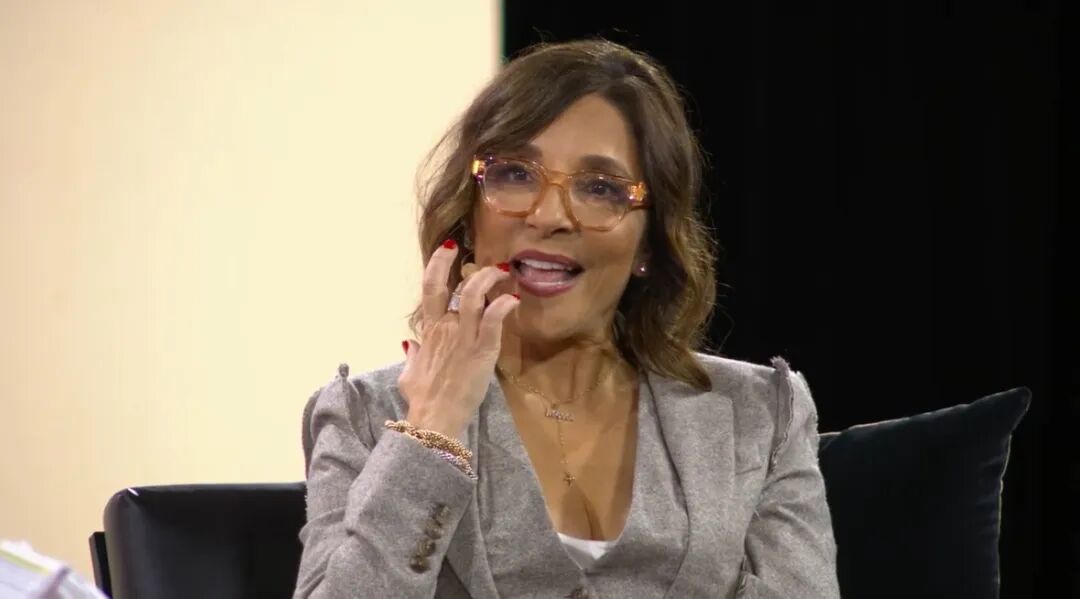
Then-X CEO Linda Yaccarino (Image source: YouTube@TheVerge)
However, X was acquired by xAI in March, and Yaccarino resigned in July.
Although X states that it is still advancing the X Money project, now led by executive Dhruv Batura, the company has not yet received approval from New York state financial regulators—a crucial hurdle for nationwide service rollout.
Regulators have reportedly expressed concerns to X employees about the service's design.
In December, Musk briefly updated X Money's progress, stating in a post that the service was 'live internally' but did not specify when it would be available to the public.
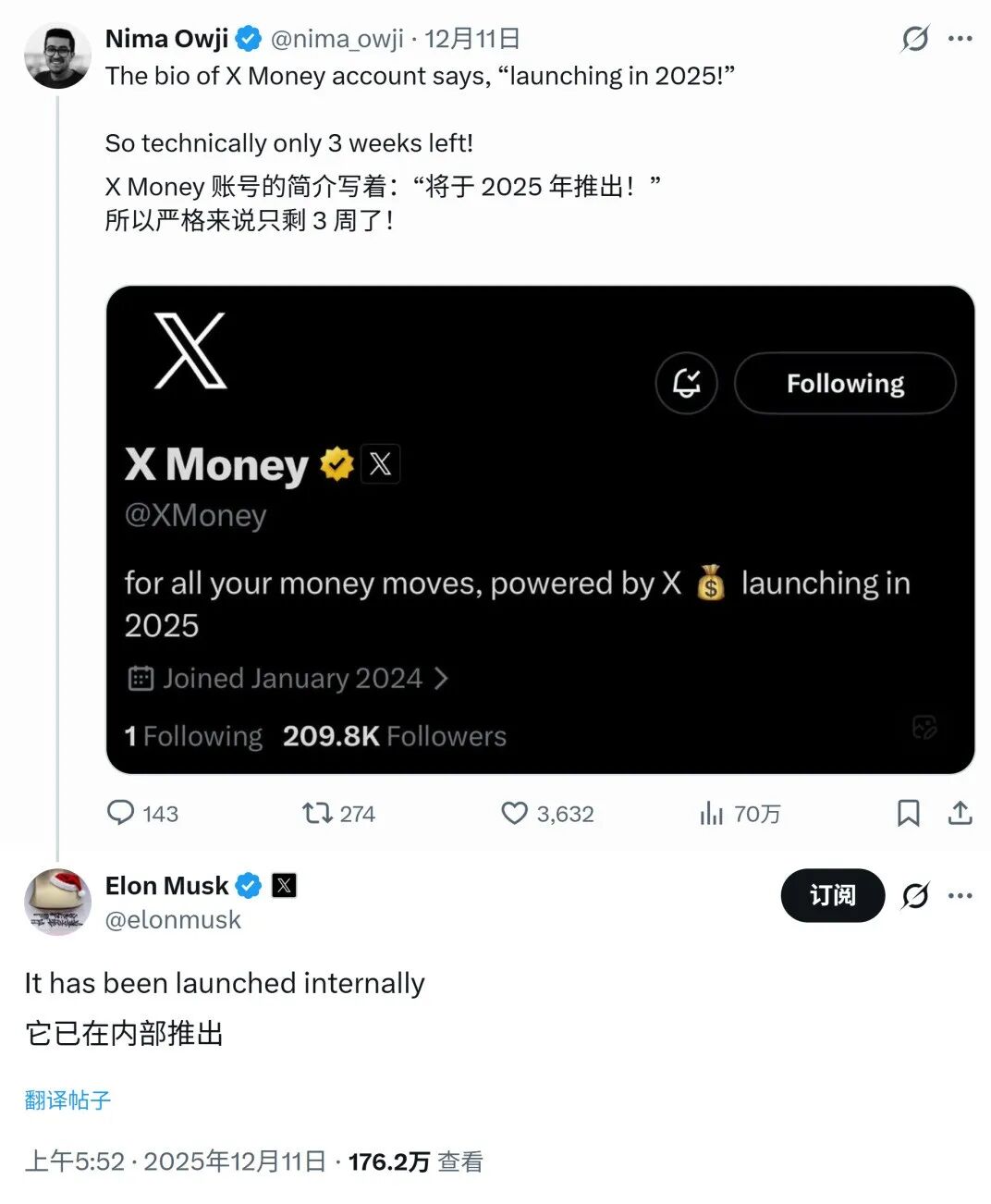
(Image source: X platform)
The X Money account on X still displays 'Launching in 2025,' but there have been no updates since January.
Despite Musk's repeated unfulfilled predictions, capital markets still appear willing to bet on his every 'next year' promise.
Many supporters defend him: 'Such lofty goals are intended to inspire teams to give their all.' Admittedly, daring to set ambitious goals is not inherently wrong—after all, aggressive targets often spur greater innovation.
However, the issue lies in the fact that when 'empty promises' become the norm, repeated failures to deliver inevitably erode market and public trust.
As 2026 commences, Musk has made new tech predictions: AI will surpass individual human intelligence in 2026, and traditional smartphones and apps will gradually phase out over the next five to six years.
Will these seemingly industry-disrupting forecasts break the cycle of past broken promises or repeat them?
The answer remains to be seen, and we shall wait and observe.
Editor: Yang Lujie
Reference source: The Information
-
![]()
Registered Capital Slashed to 372 Million Yuan! Yutong Optical Finalizes Industrial and Commercial Change Registration
-
![]()
Zhuque-3 Successfully Lands, and 'Time Traveler' Secures Another ¥100 Million in Funding: China's Commercial Space Industry Experiences a 'Dynamic August'
-
![]()
Autohome Faces a Shrinking Window of Opportunity
-
![]()
Even a Titan Like Musk Has Faced Setbacks in Fulfilling Promises
-
![]()
AI Office: The End of the Racing Era, Context Becomes the Key to Success
-
![]()
Domestic Vehicle Chassis Revolution ②: The Steering Wheel Remains, But Mechanical Connections in the Steering System Are Decreasing
-
![]()
Exploring MiniMax Design: Can Video Editing Be as Simple as Speaking?
-
![]()
Why Can SenseTime Achieve Profitability While CloudWalk Still Faces Challenges, Despite Both Adopting Large Models?