Will QianWen Be Ali's Doubao Moment?
 01/16 2026
 649
649
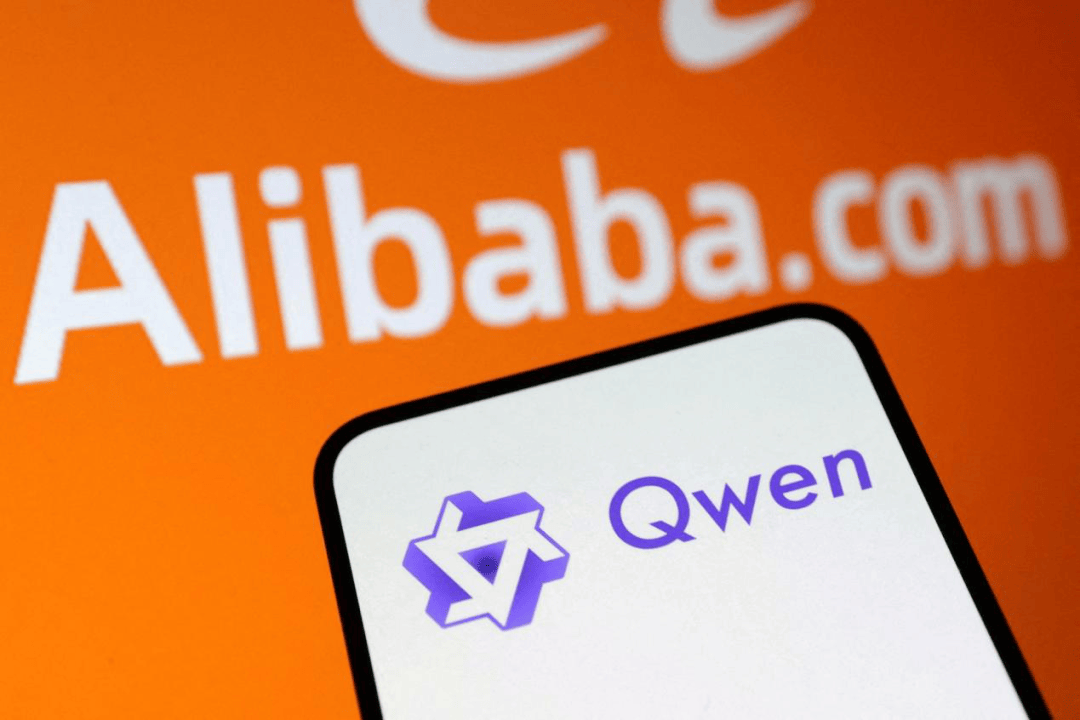
While Google is still drafting protocols on 'How to Pay with AI,' QianWen has already started ordering milk tea.
Author | Wang Haoran, Gu Nian
Editor | Gu Nian
“This launch event would be perfect if no one spoke.” This is how an internet professional commented after watching Alibaba's QianWen launch event.
This remark pokes fun at the idea that what matters at a launch event isn't who speaks but what is demonstrated live. After all, we've heard too many speeches in the past about how AI will revolutionize everything, only to find that the actual implementations often turn out to be vaporware.
On January 15, at the QianWen product launch event, Wu Jia, Vice President of Alibaba Group, repeatedly emphasized a core transformation: In the AI era, user services will directly fulfill demands themselves, eliminating the need for users to break down tasks or switch applications. Tasks will be completed by AI.
While this judgment may sound like a cliché, what stood out was Alibaba's choice of a more concrete validation method at the event. Wu Jia placed an order for 40 cups of milk tea from ChaGee using QianWen on-site, stating, “We hope to start fulfilling tasks with QianWen by ordering a cup of milk tea.”
Similar public demonstrations might date back to when Zhao Ming, the former CEO of Honor, ordered a Luckin coffee with a single voice command on his phone. However, as we all know, the outcome was different. Perhaps concerned that people might view this order as just another conceptual demo, QianWen announced during the event its full integration into Alibaba's ecosystem businesses, including Taobao, Alipay, Taobao Deals, Fliggy, and Amap, and opened it for testing to all users.
Launching with full openness—the confidence of a major player is indeed unmatched by smaller firms relying on invite codes. Official data shows that the QianWen App has launched over 400 new features, primarily covering three scenarios: super life manager, super work partner, and super tutor. If one simply views this as a feature stack, they may underestimate the practical significance of this update.
A few days ago, Google announced plans to advance AI shopping collaboration with retailers like Walmart, but it has not yet been launched.
Overseas AI progress is constrained by the integration level of super enterprises. Prior to this, Google had also partnered with Shopify, Walmart, Target, as well as payment institutions like Visa and Stripe, to release the 'Universal Commerce Protocol' (UCP), attempting to establish a cross-platform universal commercial language for AI agents.
The so-called UCP primarily refers to an open protocol for establishing a universal commercial language for AI agents. In contrast to overseas major players still working on open protocols, Alibaba's commercial empire, built through acquisitions over the years, has managed to first achieve a seamless closed loop for work and life within its own ecosystem in the AI era.
01 QianWen Bundles Alibaba's Entire Ecosystem
The Doubao phone wrapped up the 2025 AI craze among major players, encapsulating Doubao's capabilities in a hardware form and sparking a new wave of imagination around AI agent forms.
Entering 2026, Alibaba launched the new QianWen App, which some also refer to as Alibaba's Doubao moment. Although unlike Doubao, QianWen does not rely on an operating system but rather serves as an AI execution hub in app form, attempting to bundle Alibaba's businesses into a schedulable AI system.
However, benefiting from Alibaba's extensive business coverage, QianWen has nearly achieved most of the practical functions of the Doubao phone through software scheduling within its own ecosystem.
Take food delivery, for example. The most prominent feature of the QianWen App is reducing manual operations and streamlining execution pathways. At the launch event, Alibaba Vice President Wu Jia completed an order for 40 cups of milk tea via voice command, with commodity selection (product selection) and payment fully completed within QianWen, without redirecting to Taobao or Alipay pages.
In previous AI products, this step typically relied on third-party redirects. QianWen achieved a closed-loop transaction experience within the app by integrating with Taobao Deals from its own ecosystem.
The system also supports personalized breakdowns for group orders: For multi-person orders, it can automatically generate various flavor and brand combinations. During the event, a product manager demonstrated how, when facing company-wide or multi-person milk tea orders, QianWen provides different options to satisfy varying tastes and brand preferences among individuals.
Not only do humans give commands, but AI speech must also sound authentic enough.
At the launch event, by using the QianWen App to book a restaurant, AI not only helps you select a restaurant but can also make a reservation by calling the restaurant via voice. A recorded playback of the AI calling to make a reservation was shown, with a natural and realistic voice. The restaurant owner seemed unaware that they were speaking with an AI.
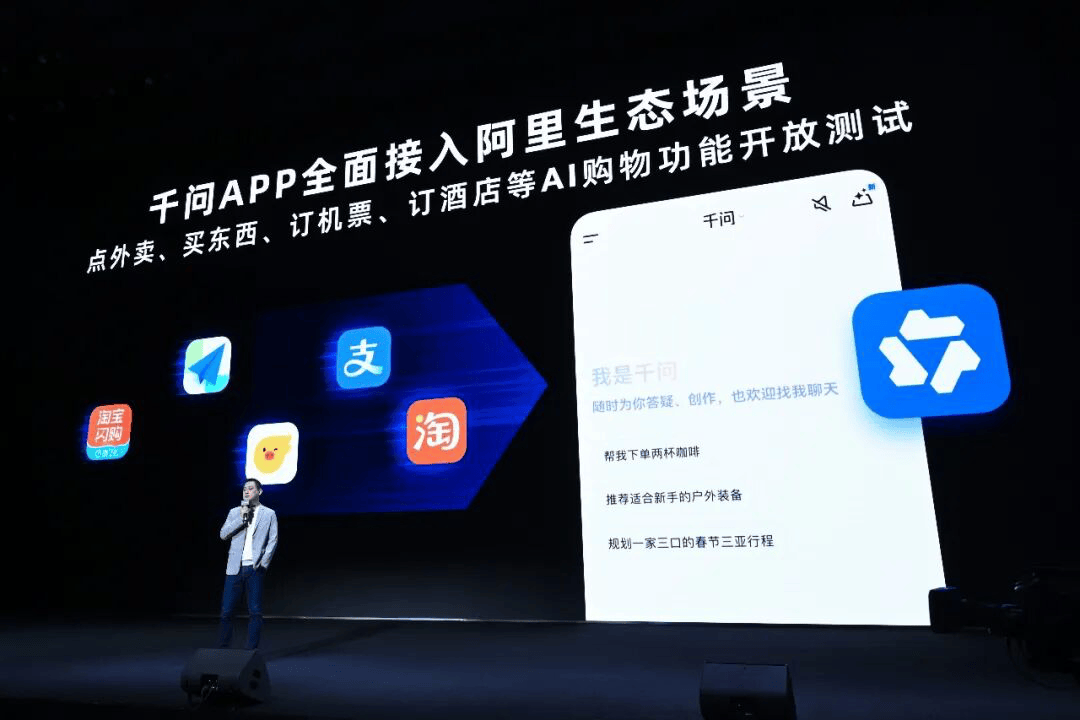
Furthermore, in multi-task scenarios, QianWen also possesses the ability to link multiple business nodes and complete composite tasks.
In travel scenarios, when a user inputs “Travel to Sanya with family during Spring Festival,” the QianWen system will integrate capabilities from Fliggy and Amap to generate a comprehensive solution encompassing flights, hotels, navigation, ride-hailing, and dining.
Unlike previous “card recommendations,” the system provides multiple route options, allowing users to adjust combinations based on price or preference.
From “providing products” to “generating solutions,” the organizational logic of this action clearly leans more toward automated execution than content understanding.
In shopping decision-making scenarios, QianWen has also begun incorporating more contextual dimensions. When a user inputs “I’m going hiking at Siguniang Mountain in Northeast China,” the system analyzes keyword intent, retrieves products and reviews from Taobao's database, and generates an equipment recommendation list based on external conditions like weather.
Such capabilities essentially construct an understanding→product selection→ordering pipeline between Alibaba's multi-business system and AI interfaces.
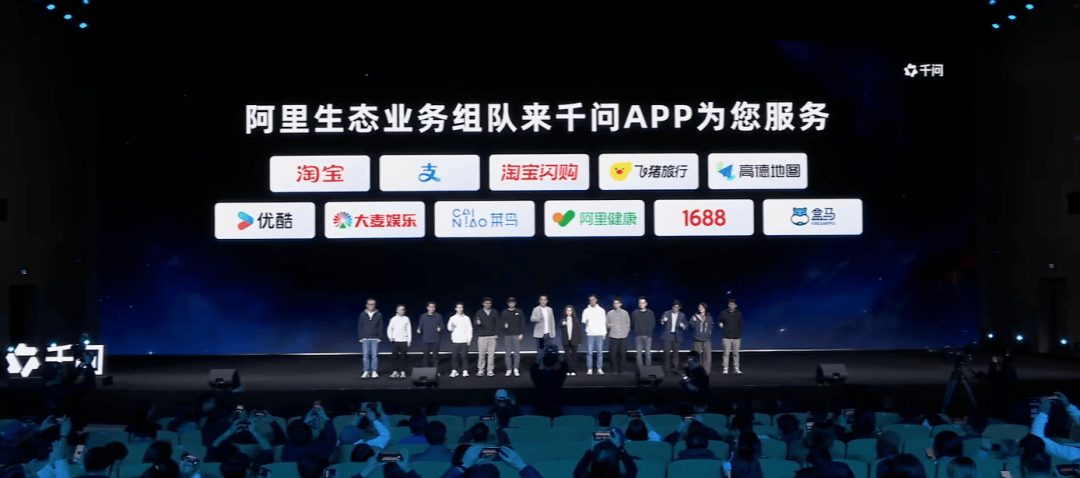
Beyond personal consumption scenarios like shopping, dining, and entertainment, QianWen has also integrated Ant Group's life services to assist with personal life tasks.
In addition to consumption scenarios, QianWen can also leverage interfaces from Alipay's life services system.
Currently, QianWen has integrated with 50 common livelihood services, including visa applications, household registration transfers, and inquiries about housing provident funds and medical insurance.
When a user inputs “How to apply for a passport with a Hangzhou household registration,” the system automatically provides the application process, a list of required materials, and guides the user to the government service page.
QianWen, connected to Ant's ecosystem, further expands its functional definition from consumption AI to life AI. Compared to completing service chains through searches or other means in the past, QianWen attempts to establish a task platform capable of capturing users' vague intentions and automatically guiding them through the process.
Besides series connection (connecting) Alibaba's ecosystem and bundling all of Alibaba's businesses, QianWen is also iterating features in office and education scenarios based on the general capabilities of AI large models.
Unlike consumption and government services, office scenarios emphasize understanding, breaking down, and reconstructing information structures. QianWen's approach resembles an automated assembly line rather than question-and-answer interactions.
During the event demonstration, a user dragged 100 electronic invoices into the chatbox, and the system automatically extracted key information fields like invoicing party, amount, and date with a single command, “Help me organize this into a ledger,” outputting a directly usable Excel spreadsheet.
In education scenarios, QianWen emphasizes its role as a “teaching assistant” rather than a teacher replacement. Its capabilities cover over 20 teaching functions, including intelligent question generation, one-sentence search for exam papers, homework grading, error analysis, and knowledge explanation. QianWen believes that AI lacks the ability to replace the emotional connection between teachers and students, aiming instead to enhance teacher efficiency and achieve teaching equity through tool forms.
If the Doubao phone provided a product form imagination for hardware agents, then QianWen resembles more of a demonstration of an application-level operating system.
02 The Crossroads of AI's Second Half
Although model evolution continues, the consumer application layer has quietly entered the context of the second half: User evaluation criteria for models have shifted from capability metrics to user experience; developers now care less about training scale and more about whether they can support real-world tasks that are high-frequency, stable, and low-latency.
In April last year, Yao Shunyu, then a researcher at OpenAI, wrote a blog post titled 'The Second Half,' arguing that 'the second half of AI will shift its focus from solving problems to defining problems. In this new era, evaluation will become more important than training.'
Some media professionals believe this perspective on AI's second half may have been a key direction behind Tencent's high-price acquisition of Yao Shunyu late last year. During a recent Tsinghua University sharing session, Yao further elaborated on his thoughts regarding the second half in the consumer (To C) domain.
During the sharing, he proposed that in the To C domain, a model's 'intelligence level' does not necessarily correlate positively—and may even correlate negatively—with a product's 'user base.' For consumer users, a sense of companionship, efficiency, and interactive fun may be more important than intelligence itself. This leads to the evolution path of consumer-facing agents relying more on product understanding and scenario refinement.
Currently, Tencent and Alibaba are approaching this stage with vastly different strategies.
Tencent's Yuanbao exists more as a component embedded within multiple atomic functions like WeChat Search, Input Method, and Tencent Docs. In February this year, Yuanbao briefly appeared in WeChat's Nine-Grid entrance but did not form a complete closed loop by linking with services like JD.com, Meituan, or Pinduoduo.
However, to this day, Yuanbao still lacks the kind of integration seen in Alibaba's QianWen. Tencent's approach remains centered on “embedding AI capabilities” without reshaping interfaces, which may align more with Zhang Xiaolong's atomic theory. In contrast, Alibaba's QianWen resembles a super app for the AI era, built by integrating ecological business capabilities.
In consumption, travel, government services, and other scenarios, QianWen does not embed itself into a single link (link in the chain) but rather dominates the entire user dialogue flow. Service interfaces like Taobao, Deals, Amap, Fliggy, and Alipay, originally independent, have been reorganized by QianWen into a unified agent operating system with consistent service logic.
Notably, this product form may be related to Alibaba's organizational restructuring over the past year. In 2025, Alibaba reorganized its consumer business, integrating services like Fliggy and Ele.me into Taobao to strengthen its positioning as a comprehensive consumption platform. QianWen, built upon this integration, has achieved a reorganization of interaction structures and business logic through AI interaction modes.
Tencent has chosen conservative integration, while Alibaba bets on aggressive reshaping. These two paths continue the product DNA divergence between the two companies during the mobile internet era. Within less than two months of launch, QianWen's monthly active users on the consumer side have surpassed 100 million.
Looking back at 2025, the major players in China's AI market primarily made noise around ByteDance's Doubao with two standout moments: once when the Doubao phone reimagined AI hardware and once when Doubao appeared on the Spring Festival Gala, pushing a product with over 100 million daily active users into the spotlight.
Although ByteDance does not hold an absolute leading rank on model benchmarks, it is indeed the first vendor to outline the contours of a To C super app.
Now, Alibaba's QianWen has fired the first shot of 2026. However, after this shot rings out, who will be the first to get hit?
-
![]()
Registered Capital Slashed to 372 Million Yuan! Yutong Optical Finalizes Industrial and Commercial Change Registration
-
![]()
Zhuque-3 Successfully Lands, and 'Time Traveler' Secures Another ¥100 Million in Funding: China's Commercial Space Industry Experiences a 'Dynamic August'
-
![]()
Autohome Faces a Shrinking Window of Opportunity
-
![]()
Even a Titan Like Musk Has Faced Setbacks in Fulfilling Promises
-
![]()
AI Office: The End of the Racing Era, Context Becomes the Key to Success
-
![]()
Domestic Vehicle Chassis Revolution ②: The Steering Wheel Remains, But Mechanical Connections in the Steering System Are Decreasing
-
![]()
Exploring MiniMax Design: Can Video Editing Be as Simple as Speaking?
-
![]()
Why Can SenseTime Achieve Profitability While CloudWalk Still Faces Challenges, Despite Both Adopting Large Models?