In 2025, Embodied AI Steps Out of the Initial Development Phase
 01/16 2026
 773
773

Author: Vincent
Editor: Jiajia
At the recent CES Expo held in Las Vegas, USA, China's array of embodied AI robots truly stole the show:
A total of 38 companies took part in the embodied robot exhibition area, with 21 being Chinese enterprises, making up over 55% of the total. In contrast, at the previous CES Expo, only six Chinese companies showcased embodied robots.
Beyond sheer numbers, products such as Unitree Technology's G1, Zhongqing Robotics' T800, Zhiyuan Robotics' Lingxi X2, and Elf Robotics' G2 demonstrated the achievements of China's leading embodied AI companies in core technologies like high-precision torque control and dynamic balance through actions like combat dancing.
It can be said that China's embodied AI contingent (a term used to describe a group or force) now ranks among the global elite in terms of technological prowess, mass production capabilities, and even commercialization. These accomplishments didn't happen overnight but emerged in 2025 amidst a mix of anticipation and skepticism.
[1] Embodied AI Hits Mass Production Targets
For the embodied AI industry, the 2025 Spring Festival Gala during the Year of the Snake marked a watershed moment:
Sixteen Unitree Technology H1 robots, donning Northeastern floral-patterned jackets, performed the Yangko dance on the Spring Festival Gala stage. This not only propelled post-90s entrepreneur Wang Xingxing into the limelight but also ushered embodied AI into its inaugural year of mass production.
When evaluating embodied AI's 2025 performance in terms of mass production and industrialization, it's clear that both startups like Unitree Technology and Zhiyuan Robotics, as well as listed giants like UBTECH, have achieved notable success:
According to Omdia's "General-Purpose Embodied Robot Market Radar" report, the total global shipment of humanoid robots in 2025 is projected to reach 13,000 units, with Zhiyuan Robotics, Unitree Technology, and UBTECH accounting for 5,168, 4,200, and 1,000 units respectively. These three Chinese manufacturers alone command 77% of the global market share.
However, when it comes to mass production capabilities, while Chinese embodied AI robots have met the "2025 Mass Production Inaugural Year" benchmark, China's leadership in embodied AI extends beyond mere production capacity to other areas.
In terms of policy support, embodied AI was included in the government work report during the National People's Congress, listed as a future industry and a new growth driver for the economy. Cities like Beijing, Shanghai, Hangzhou, Shenzhen, and Chongqing are actively fostering the embodied AI industry.
Technologically, compared to the "intellectually limited" behavior at the beginning of 2025, by the end of the year, actions such as Zhongqing Robotics' T800 kicking its boss, Unitree robots dancing with Wang Leehom, and XPENG IRON's "mechanical catwalk" performances showcased significant breakthroughs in hardware and software, resulting in more human-like movements.
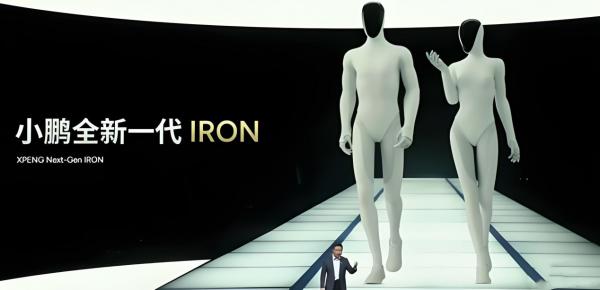 (Source: Internet)
In terms of financing, according to incomplete statistics from the Robot Lecture Hall & Leaders Institute, there were 576 publicly disclosed investment and financing events in China's robot industry in 2025, with a total financing scale exceeding 50 billion yuan. These capital inflows can support the initial development of China's embodied AI industry.
In terms of the industrial chain, beyond complete machine manufacturers, Chinese companies have formed a comprehensive industrial chain, with Cambricon and Huawei in the chip and computing module sectors, and Inovance Technology and Sanhua Intelligent Control in the servo and reducer sectors.
It can be said that for China's embodied AI robot industry in 2025, the greatest achievement lies not only in mass production capabilities but, more importantly, in the formation of a virtuous organic ecosystem capable of independent development, spanning from policies to capital and upstream and downstream components.
[2] Navigating the Initial Development Phase: Exploration and Energy Accumulation
Behind the seemingly thriving scene of embodied AI lies skepticism about its ability to achieve commercialization and industrialization in 2025.
"These performative displays are not the ultimate goal; liberating human productivity is the mission of robots," Wang Xingxing, CEO of Unitree Technology, pointed out bluntly at the 7th Beijing Zhiyuan Conference in response to Unitree G1's combat display. The future of embodied AI lies not in flashy action performances but in solving practical technological problems.
Wang Xingxing's statement also highlighted the pain point of China's embodied AI robot industry—while mass production has been achieved, most embodied AI remains at the performative level, with few actual implementation cases.
Combining the development of embodied AI, Siku Finance divides 2025 into two phases:
The first phase was the first half of 2025, when the largest application scenario for domestic embodied AI was "commercial performances."
Many catering, shopping mall, and other events, aiming to attract foot traffic, utilized the initial public curiosity about humanoid robots to organize performances like dancing by embodied robots. Scenarios that people most hoped to see, such as embodied robots working on assembly lines or caring for patients, never materialized.
The second phase was the second half of the year, when embodied AI began to attempt commercialization.
Zhiyuan Robotics' Expedition A1 series robots entered NIO's second advanced manufacturing base, performing procedural tasks like bolt tightening, wire harness insertion, and car door quality inspection on the final assembly line.
Galaxy General Robotics' robots were engaged in material handling and equipment inspection tasks at Dahua Technology.
Unitree Robotics' H1 robots learned fine assembly tasks like car door seal fitting and safety clip installation in the final assembly workshop of a leading domestic automotive OEM.
UBTECH's Walker S2 industrial humanoid robots successively entered companies like Geely Automobile, BYD, Foxconn, and SF Express for material handling and part installation training.
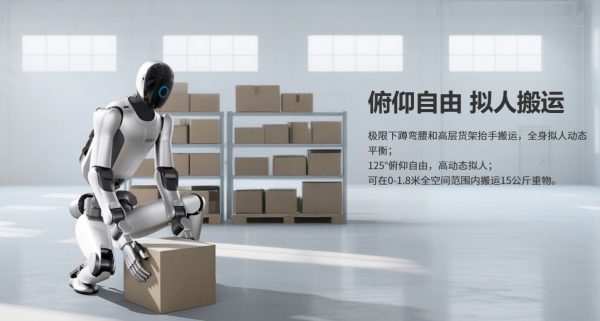 (Source: Internet)
However, these factory entries were not intended to replace human labor but to collaborate with enterprises to verify the efficiency and cost-effectiveness of humanoid robots on factory production lines, with a clear experimental nature.
It can be said that 2025 was a transitional period for embodied AI, moving from laboratories to commercial performances and then towards industrialization and implementation.
[3] Diving into the Real Economy: New KPIs for Embodied AI
"Humanoid robots will break through demo stages and transition to real industrial and service scenarios in 2026," stated the Beijing Zhiyuan Artificial Intelligence Research Institute in its annual report "2026 Top Ten AI Technology Trends": Embodied AI will undergo industry "shakeouts," moving away from laboratory demonstrations and entering the stages of industrial screening and implementation.
This is partly due to technological advancements providing embodied AI with the technical assurance to replace human labor, with Unitree Technology being a prime example.
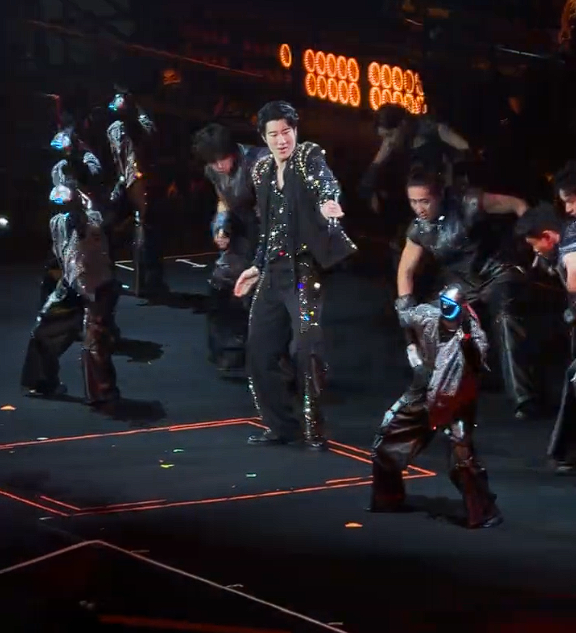
During the 2025 Spring Festival Gala of the Year of the Snake, Unitree Technology's robots required human assistance to walk off the stage after performing the Yangko dance, and their movements were mechanically stiff, indicating a lack of complex environmental processing capabilities. However, at Wang Leehom's concert at the end of 2025, Unitree Technology not only completed a "Webster flip" on stage with highly human-like movements but also walked off the stage unassisted.
 (Source: Internet)
In less than a year, Unitree Technology's embodied robots have shown remarkable improvements in action completion and human-like qualities compared to their performance at the Spring Festival Gala.
On the other hand, after a year of practical testing, the value of embodied AI on production lines has gradually become apparent.
In July 2024, UBTECH's industrial humanoid robot Walker S Lite showed low efficiency at Zeekr's 5G smart factory, with tasks like scanning QR codes on material box pallets for positioning being only 20% as efficient as human labor.
However, after over a year of learning and technological upgrades, UBTECH's embodied robots are now beginning to appear in bulk on factory production lines, with an expected annual production capacity of up to 10,000 units in 2026. Such capacity growth indicates that embodied AI has completed its initial "internship" stage and is moving towards becoming a "regular employee."
The dual impact of technological advancements and industrial training has provided assurance for the real-world implementation of embodied AI robots, bringing new hope that robots will transform our lives.
In 2025, while embodied AI robots did not enter factories to work on assembly lines or provide companionship for children and the elderly as the public imagined, it is undeniable that 2025 was a foundational year for embodied AI. During this year, technological breakthroughs were achieved, industrial chains were established, and real-world training in scenarios like factories took place...
In 2026, embodied AI will be integrated into applications of real economic value. This year, the KPIs for embodied AI will no longer be flashy combat moves or dazzling dances but whether they can properly tighten a screw or handle a box of materials in factories.
END
-
![]()
Registered Capital Slashed to 372 Million Yuan! Yutong Optical Finalizes Industrial and Commercial Change Registration
-
![]()
Zhuque-3 Successfully Lands, and 'Time Traveler' Secures Another ¥100 Million in Funding: China's Commercial Space Industry Experiences a 'Dynamic August'
-
![]()
Autohome Faces a Shrinking Window of Opportunity
-
![]()
Even a Titan Like Musk Has Faced Setbacks in Fulfilling Promises
-
![]()
AI Office: The End of the Racing Era, Context Becomes the Key to Success
-
![]()
Domestic Vehicle Chassis Revolution ②: The Steering Wheel Remains, But Mechanical Connections in the Steering System Are Decreasing
-
![]()
Exploring MiniMax Design: Can Video Editing Be as Simple as Speaking?
-
![]()
Why Can SenseTime Achieve Profitability While CloudWalk Still Faces Challenges, Despite Both Adopting Large Models?