AI Videos: The New Avenue to Quick Wealth - AI-Powered Animated Dramas Surpass 100 Million Views, Documentaries Gain Momentum, and the Industry Quietly Amasses Fortunes
 02/12 2026
 567
567
A Market Valued in the Billions.
On the eve of the Year of the Horse in the Lunar calendar, AI video generation models like Seedance 2.0 and Kling 3.0 made their debut, sparking a revolution in the short video content market.
Notably, Seedance 2.0 has recently gained widespread attention, with its highly realistic short videos circulating extensively on social media platforms both at home and abroad.
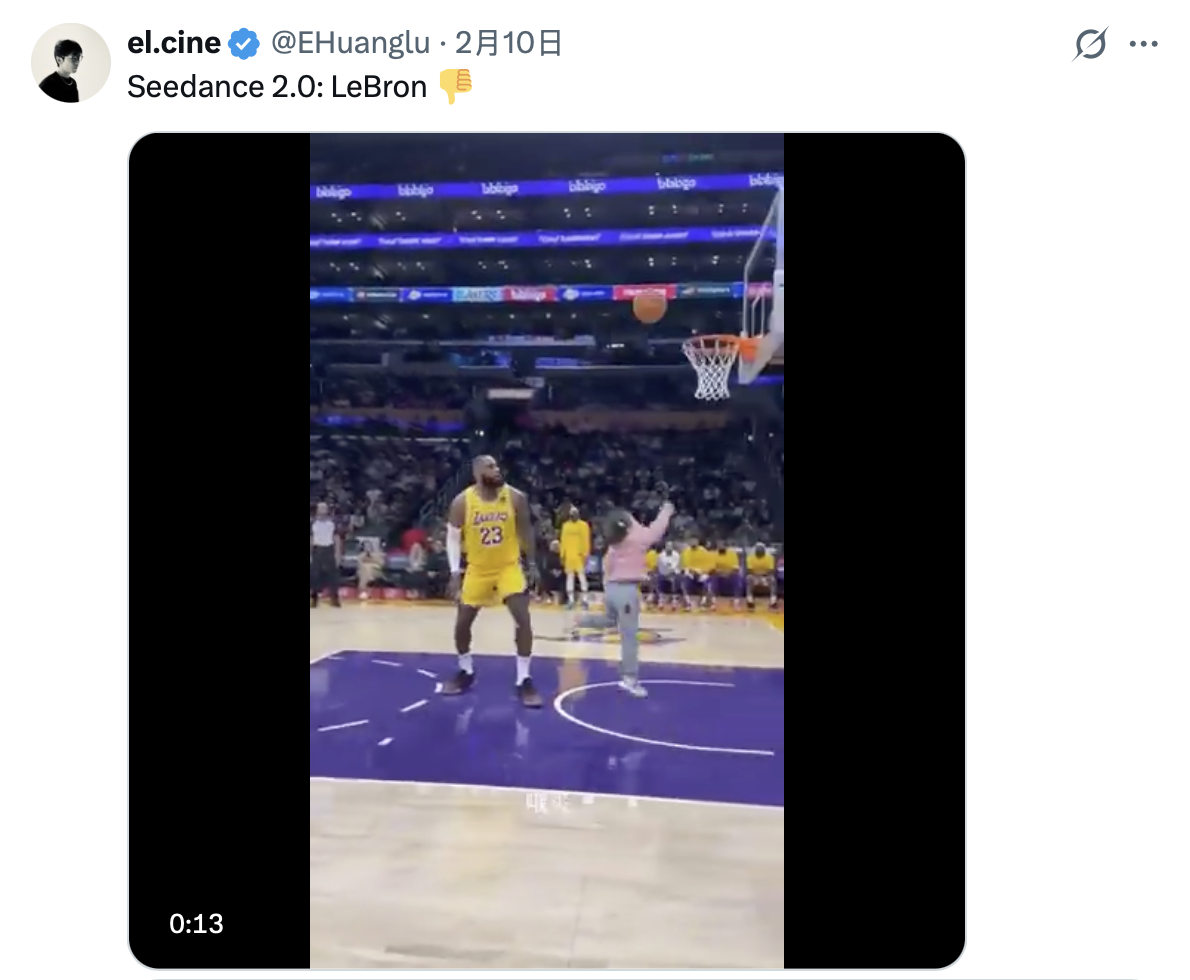
Meanwhile, a proliferation of unauthorized AI-generated short videos, using materials and characters from classic films and TV series, has raised concerns. Stephen Chow's agent, Chen Zhenyu, promptly voiced his apprehensions:
"I question whether these constitute infringement, especially given their massive spread in recent days. I suspect the creators have profited, and is a certain platform turning a blind eye, allowing users to generate and publish such content?"

Screenshot from Leikeji
In response to the "chaos" in the AI-generated video landscape, operators from ByteDance's platform have also weighed in:
"To foster a healthy and sustainable creative environment, we are urgently optimizing based on feedback. Currently, using real-life images or videos as reference subjects is not supported."
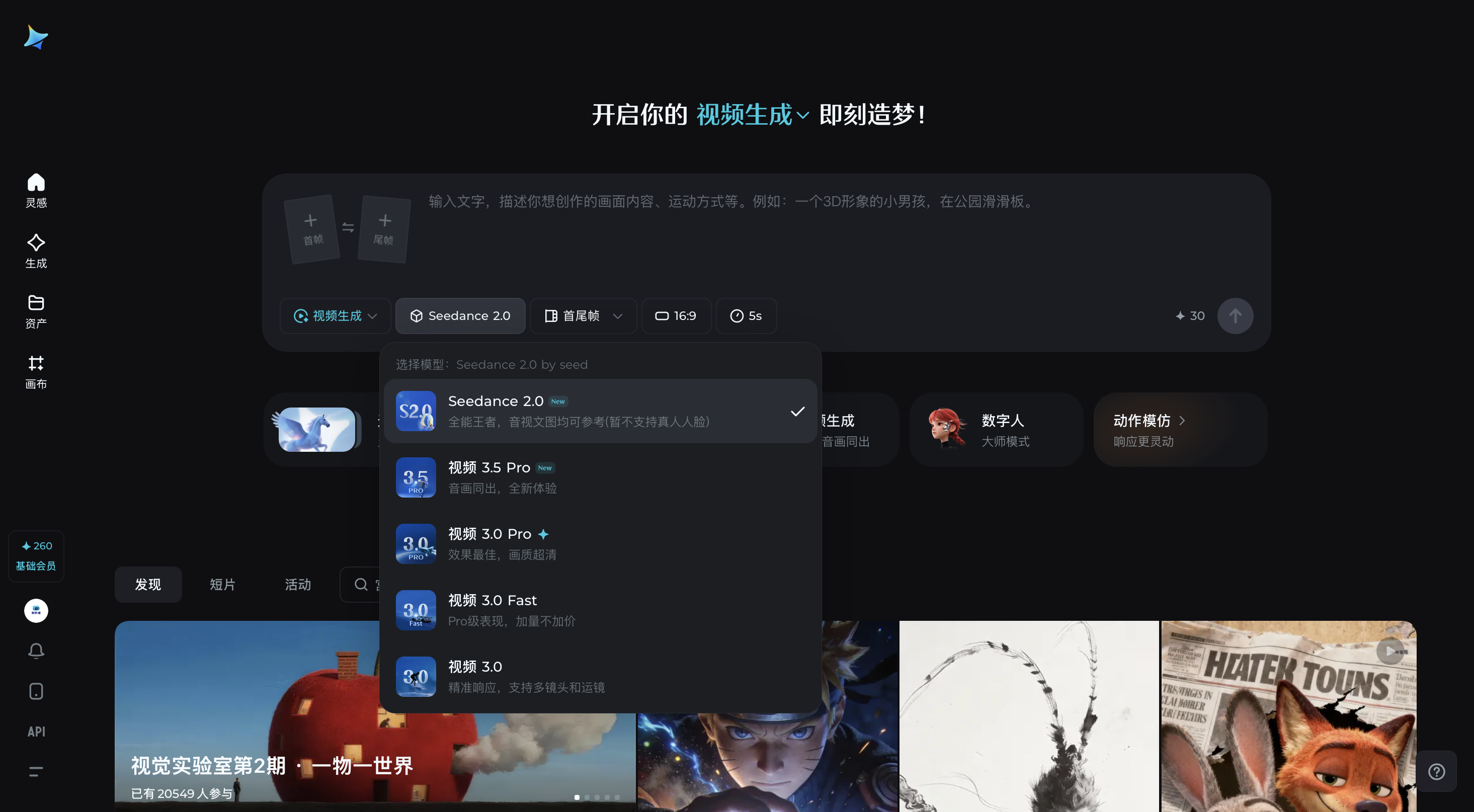
Seedance 2.0 no longer supports "real human faces" as reference subjects (Screenshot from Leikeji)
The initial surge of traffic and user novelty is fleeting. Upcoming multi-party regulatory mechanisms will comprehensively define the "boundaries" and "norms" of AI-generated video content.
Viewing AI videos as a market, these highly realistic yet potentially infringing AI-generated videos are unlikely to become the mainstream of industrial development.
AIGC in Its "Infancy" is Already Generating Substantial Revenue in the Video Sector
The explosive popularity of Seedance 2.0 in the video creation market has even caught the attention of Feng Ji, a luminary in China's 3A game development scene and the producer of Black Myth: Wukong.
In a detailed analysis specifically about Seedance 2.0, Feng Ji posits that the release of this video model marks the end of "AIGC's infancy."
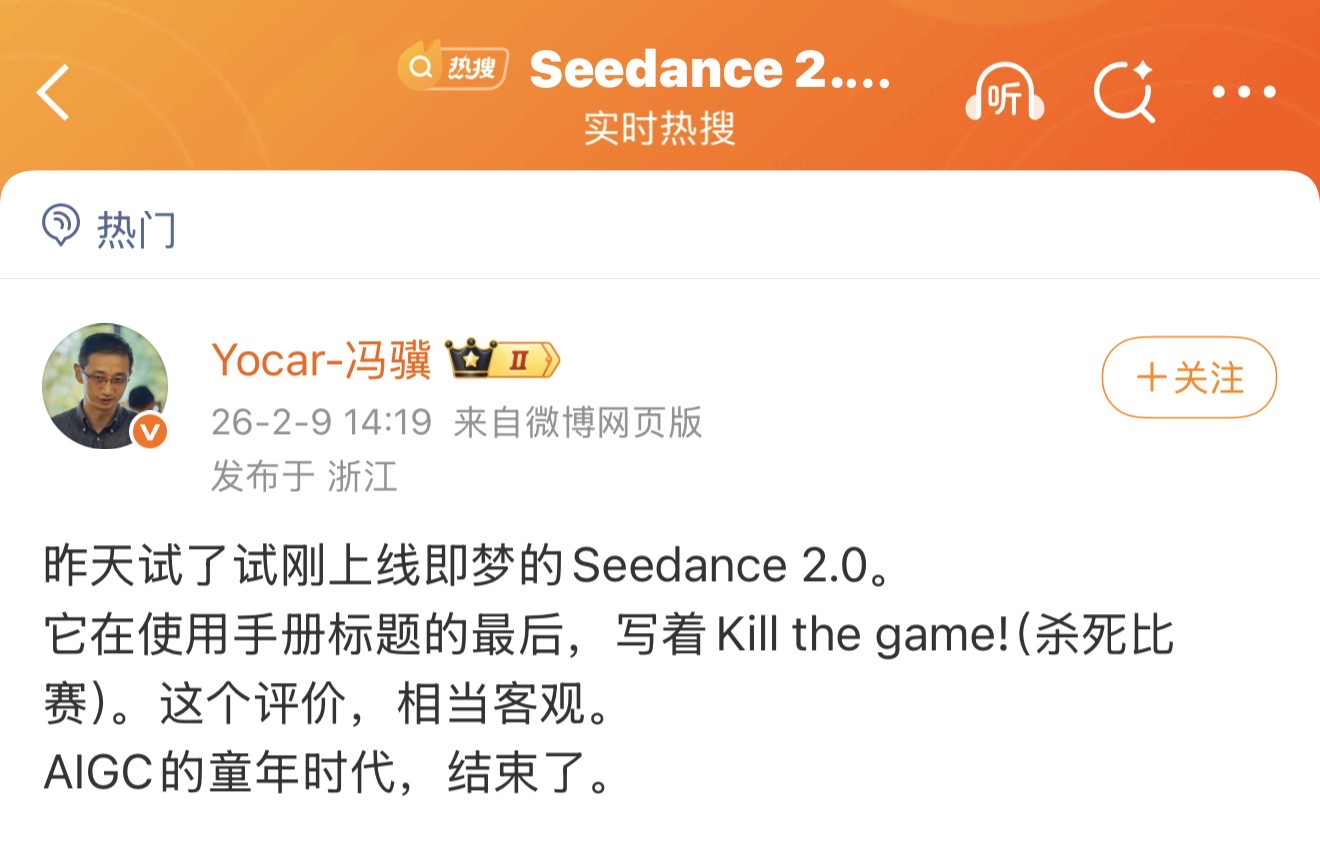
Opening paragraph of Feng Ji's analysis (Screenshot from Leikeji)
Feng Ji's perspective likely stems from the potential for future 3A game productions by Game Science, such as Black Myth: Zhong Kui, to leverage AIGC, now "grown out of its infancy," for content areas like CG cutscenes and game special effects.
In fact, AIGC in its "infancy" has already established a large-scale, professional, corporate, and industrialized content production system in the domestic video market. It has forged a complete industrial chain covering planning, production, and distribution, particularly in the PGC-based "short drama" sector.
Within the "short drama" category, "animated dramas" undoubtedly represent the AI video generation content form with the deepest technological integration, the fastest system development, and the most industry profitability.

Animated drama scene generated by Seedance 2.0
The rationale is that, under current technological conditions, "animated short dramas" are inherently more suited than "live-action short dramas" to lead the charge in the AIGC arena. They simultaneously avoid the costs of hiring live actors, constructing real-life sets, and the even higher costs associated with content infringement trial-and-error.
Not just the short drama industry, but even the big-screen film industry has faced an increasingly imbalanced "return on investment" for large-budget live-action films in recent years. Global production studios are also more inclined to invest new funds primarily in animated film productions with established or original IP popularity.
Returning to animated short dramas, they represent the lowest-cost, highest-yield, and most flexible new sector within them. The comprehensive integration with new AI technology applications is a natural progression.
Market research firm DataEye estimates that the domestic animated drama user base will reach approximately 120 million in 2025 and grow to 280 million by 2026. A representative from Huge Engine predicts that the domestic animated drama market will surpass 22 billion in size by 2026.
DataEye data shows that the overall playback volume in the domestic animated drama market exceeded 70 billion views in 2025, with 46,931 animated dramas launched on platforms. New Rank data reveals that since 2025, the domestic animated drama industry has had at least 42 AI-generated animated dramas surpassing 100 million views, including massive hits like "Beneath the Immortal-Slaying Platform, I Shocked the Deities," which achieved 1.15 billion views on Douyin and 1.06 million collections on Hongguo.

Source: New Rank
AI Animated Dramas and Documentaries Thrive: What Are Video Generation Models Doing?
Before animated dramas, AIGC penetrated the documentary field earlier, particularly historical documentaries.
Documentaries represent a typical video content area where "the big players make big money, and the non-big players struggle to even get a taste." Before AIGC entered the documentary field, the domestic documentary market (primarily for domestic distribution) saw few releases annually, especially in the historical documentary sector, which relies heavily on location shooting and live performances.
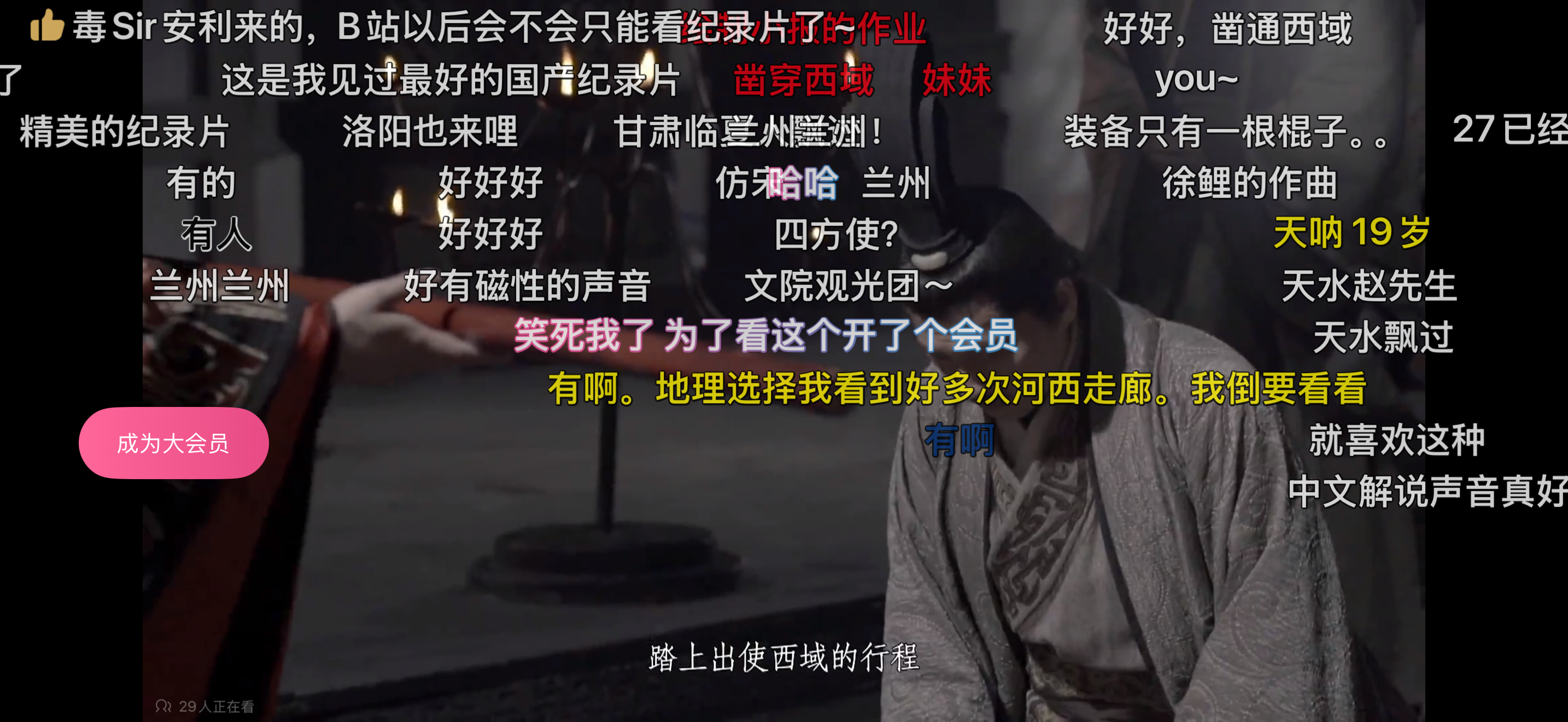
"The Silk Road" (Source: Bilibili)
Do historical documentaries necessarily require live performances and location shooting? The answer is clearly not necessarily.
Among domestic historical documentaries, there have been some early works created entirely based on virtual animation, sandbox scenes, etc. However, these works had high production costs and significant technical barriers, failing to establish their own genre or gain traction.
Everything changed when AIGC entered the historical documentary field. As long as the original material library contains information about historical facts and portraits of ancient figures, AI can quickly produce a segment or episode of a "documentary" centered around that historical fact (story) through reference and interpretation.
Now, if you search for newly released or recently released domestic historical documentaries on major video platforms, a significant proportion show traces of AIGC involvement in their production. This is especially true for works under 20 minutes per episode, many of which are entirely generated by AIGC.

(Source: iQIYI)
Taking iQIYI, which performs most prominently among platforms, as an example, the current top historical documentary on the platform, "Deciphering the Three Kingdoms," shows extremely obvious traces of AIGC involvement.
In terms of the actual visual presentation of the finished product, it is highly likely inferior to what could be generated using new video models like Seedance 2.0.

"Deciphering the Three Kingdoms" (Source: iQIYI)
The key issue is that a significant proportion of the audience interested in historical documentaries does not come for exquisite or realistic visual effects but simply wants to hear (or watch) an "exciting" historical story or factual explanation.
Moreover, the annual output of domestic historical documentaries is inherently low. After comprehensive AIGC penetration, at least the quantity can reach a scale where "there's as much as you want to watch," whether on major video platforms or historical self-media and new media accounts.
This is in the less profitable documentary sector. Similarly, in the increasingly hot and lucrative animated drama sector, a significant proportion of the audience and potential audience does not come for exquisite or professional visual effects but, like short dramas, places more importance on content creativity, storytelling, and emotional engagement.
Even if past video generation models had significant room for improvement in the visual refinement and cinematic professionalism of animated drama scenes, as long as the relevant works have "excitement," "tear-jerking moments," can make users laugh, resonate emotionally, and keep them watching—such works, even if AI-generated, are perfectly acceptable.
The at least 42 AI-generated animated dramas with over 100 million views in 2025, including massive hits surpassing 1 billion views, have proven this with solid market performance and user feedback.

"Beneath the Immortal-Slaying Platform, I Shocked the Deities" (Source: Hongguo)
AIGC "Leaving Its Infancy" Will Dominate the Video Sector
With the arrival of new-generation AI video models like ByteDance's Seedance 2.0 and Kling 3.0, which declare the "end of AIGC's infancy," the domestic and global video content markets will undoubtedly usher in an even more profound and thorough AIGC wave.
In content sectors where AIGC is already widely applied, such as animated dramas, short dramas, animations, documentaries, and commercials, the production efficiency of new works will become even more efficient, visual effects more refined, and cinematic control more professional. Barring surprises, these video segments will be fully dominated by "high-quality" works deeply involving AIGC in the coming years.
As an enthusiast of new technologies, renowned director Jia Zhangke has praised Seedance 2.0 as "truly impressive" and plans to use it to create a short film.

In content sectors where AIGC has not yet massively penetrated, such as long-form series, big-budget films, and works featuring live-action footage and performances, an inevitable wave of AI technology application and content synthesis is also coming. Especially in the production of special effects scenes and animated content for these major works, AIGC will mark the beginning of a transformative wave.
New Wave, New Opportunities. As the user threshold for AI video models continues to lower and they can collaborate with humans to generate more efficient, refined, and professional video content, relevant creative talent, teams, and companies will play even more central industry roles, both domestically and overseas.
Fundamentally, technological innovations in AI, robots (embodied intelligence), and other foundational technologies aim to gradually liberate humanity from simple, mechanical mental and physical labor. Now that human society has reached this stage, rather than debating whether AI and robots are "necessary," it is better to think more about how humans can better coexist, collaborate, and partner with AI, robotics, and other technological applications, as well as how individuals can make AI and robots "work for them" instead of being "replaced" by them.
Of course, given current technological progress and trends, while the IQ of AI and robots can continue to rise, achieving substantial breakthroughs in EQ is expected to remain a significant hurdle in the foreseeable future. This is undoubtedly good news for those involved in content creation.
(Cover image source: "Deciphering the Three Kingdoms," iQIYI)

AI, AIGC models, animated dramas, AI videos
Source: Leikeji
Images in this article are from 123RF's licensed image library
-
![]()
Silicon-Based OLED Pioneer Unveils Financial Results: H1 Shipments Outpace Entire 2025 Volume
-
![]()
AI's First "Lost Summer"
-
![]()
Zeiss Makes Another €2.2 Million Bet: Will Eye Tracking Be the Next Big Thing in the Smart Glasses Industry?
-
![]()
RUNTO Ranking | Global Top TV ODM Factories' Shipment Figures for July 2026
-
![]()
Dealer Service Operational Prowess | How After-Sales Managers Can Harness Efficiency and Expertise to Secure Trust in the New Energy Era
-
![]()
Xiaohongshu: Navigating Through the AI Anxiety Storm
-
The Foundation of AI is Being Built
-
![]()
Huawei and Apple Embrace Change, Samsung Steps Back: Is Variable Aperture Technology a Game-Changer?