250% Growth, Annual Sales Surpass 7 Million Units: The 'iPhone Moment' for AI Glasses Arrives Ahead of Schedule
 02/12 2026
 683
683
Technological Surge Fueled by Explosive Expansion in AI and AR Sectors
Text/VR Tuoluo Ran Qixing
On February 11 (local time), EssilorLuxottica, the parent company of Ray-Ban, revealed in its fourth-quarter financial report released on Wednesday that sales of its AI smart glasses, developed in partnership with Meta, have soared by more than threefold over the past year.
The financial report disclosed that the company sold over 7 million units of AI glasses last year. In contrast, the quarterly report from February of the previous year indicated that total sales for the product series in 2023 and 2024 amounted to only 2 million units, marking a remarkable 250% year-on-year surge. It is noteworthy that the sales figures released this time encompass smart glasses from both the Ray-Ban and Oakley brand lines, with the Oakley series officially launching in June of the previous year.
For a company traditionally renowned for eyewear, this is no longer a mere 'test run' for a new product category but a significant business segment worthy of inclusion in its primary performance metrics. In EssilorLuxottica's comprehensive 40-page financial report, AI glasses were referenced 31 times; in the 15-page PRESENTATION, the AI glasses developed in collaboration with Meta occupied four major sections, while the remaining sections primarily highlighted eyewear collaborations with luxury brands such as CHANEL and BURBERRY.
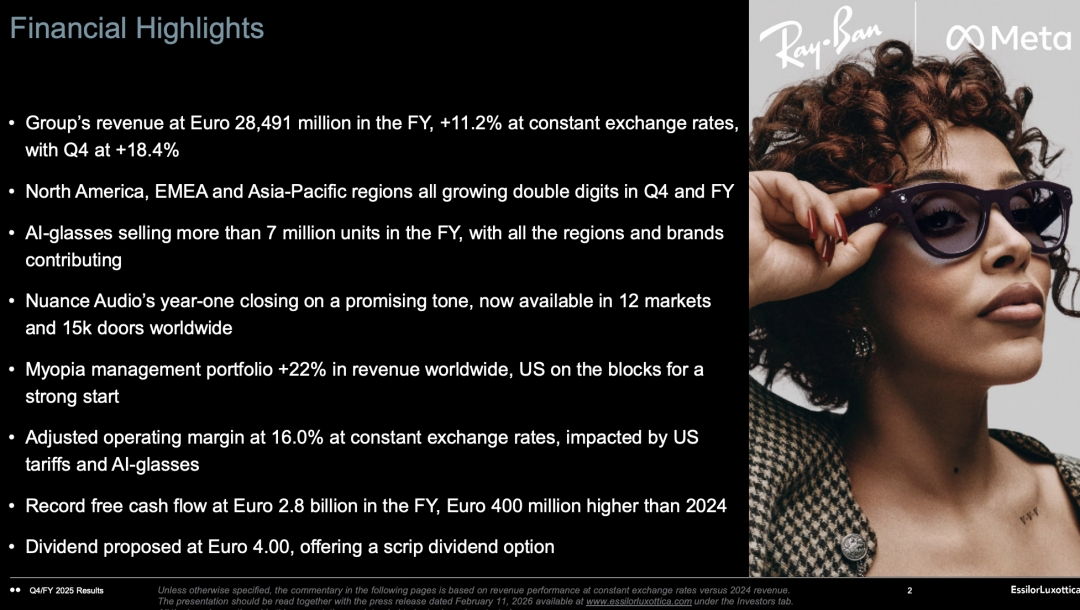
EssilorLuxottica stated in its announcement, 'Our success in the wearable device sector is propelling the AI glasses revolution, with our iconic brands serving as a potent catalyst for market demand.'
Against the backdrop of rapid advancements in AI large models and extended smartphone replacement cycles, the AI glasses sector has once again yielded a benchmark example that warrants serious attention from the entire consumer electronics industry. Combining the latest shipment data, the Tuoluo Research Institute forecasts that global shipments of AI glasses will exceed 9 million units in 2025, representing a 386% year-on-year increase.
01
The 7 Million Unit Threshold: Ray-Ban Meta Propels AI Glasses to a New Pinnacle
If we rewind to 2021, the first-generation Ray-Ban Stories, launched by Meta and EssilorLuxottica, resembled a niche connected device equipped with a camera: it could capture photos, play music, and make calls but lacked a distinctively superior smart experience. The market response was generally tepid, and the imaging performance was also rather mediocre.
The real turning point came with the introduction of the second-generation Ray-Ban Meta in 2023. This iteration brought significant enhancements in voice interaction, camera quality, wearing comfort, and overall system experience. Coupled with the demand for AI multimodal capabilities, sales gradually picked up. According to earlier reports, the Ray-Ban Meta series has sold approximately 2 million units cumulatively since its launch in October 2023 through 2024. While this may not seem extraordinary within the broader XR industry context, it has set new expectations and shattered the ceiling for the smart glasses category, which had been stuck in the 'trial phase' for years.
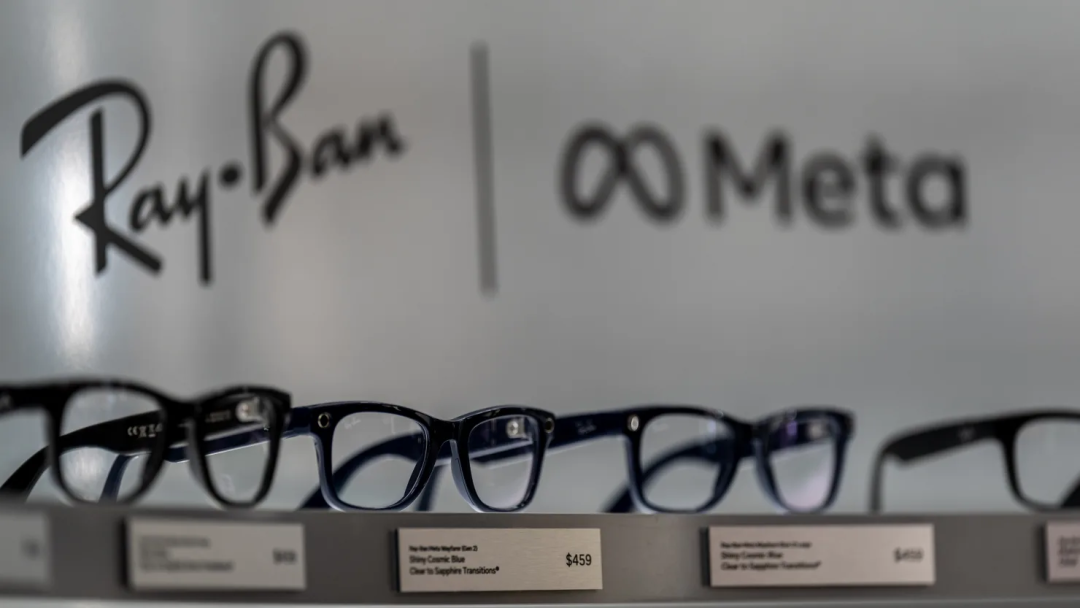
In 2025, as the product lineup expanded from the versatile AI photography glasses Ray-Ban to the sports-oriented Oakley and the first consumer-grade AI glasses with a display module, the Ray-Ban Display, EssilorLuxottica boosted this figure to '7 million units annually,' marking a year-on-year growth of over 250%.
EssilorLuxottica's achievement of 7 million units sends several noteworthy signals to the industry:
Firstly, consumers are already validating the value of AI glasses with their wallets. While 2 million units marked the starting point, 7 million units represent an explosive inflection point;
Secondly, the price of smart glasses is not the primary concern; the key lies in the incremental value the product can offer consumers and whether it possesses technological and scenario-based differentiation;
Thirdly, the form factor of AI glasses has emerged as a new growth driver in the XR market, with different product forms catering to diverse scenarios. Simultaneously, it is evident that the MR technology route is gaining momentum in the AI glasses sector.
From a capital and production capacity standpoint, Meta and EssilorLuxottica have already earmarked AI glasses as a pivotal growth curve for the next decade. In 2024, the two parties renewed their long-term cooperation agreement, explicitly stating their commitment to developing multiple generations of smart glasses products over the next ten years. In early 2026, foreign media reported that the two companies are discussing increasing annual production capacity to at least 20 million units to meet unprecedented demand in the U.S. market. Meta has already adjusted the resource allocation and hardware roadmap of Reality Labs accordingly.
02
From Audio to Photography and Display: AI Glasses Accelerate Towards the True AR Era
From a product evolution perspective, AI glasses have already undergone two and a half generations.
The first stage was 'smart audio glasses.' Represented by Huawei's smart glasses, this generation primarily integrated speakers, microphones, and Bluetooth modules into traditional frames, enabling functions such as calls, music playback, and simple voice commands in conjunction with voice assistants.
The second stage, exemplified by Ray-Ban Meta and Thunderbird V3, began incorporating computing platforms and enhanced visual capabilities into the temples or frames. The Ray-Ban Meta series continuously refined its camera, computing power, and AI voice capabilities, enabling functions such as first-person perspective photography, real-time translation, and image recognition Q&A in conjunction with Meta AI.
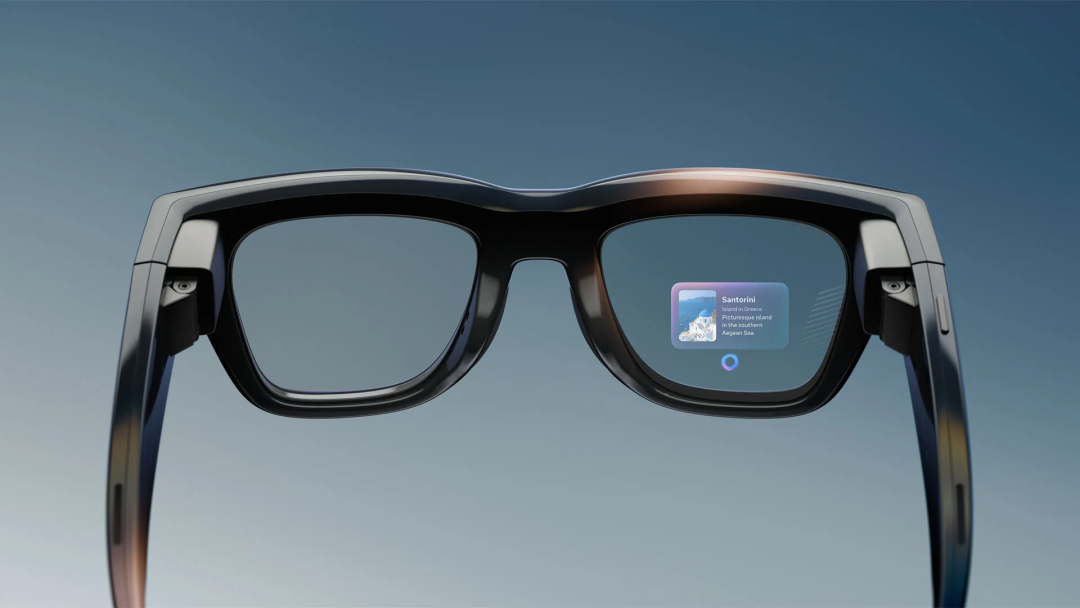
The third stage, or the 2.5th generation, includes AI glasses like the Ray-Ban Display, Thunderbird X3 Pro, and Rokid Glasses, which feature displays and more comprehensive spatial computing capabilities. Compared to the previous two generations, these products have transitioned from 'listening + photography' to 'semi-AR.' For instance, the Ray-Ban Display integrates a small display inside the right lens, capable of projecting message notifications, navigation, videos, and other content, becoming a truly 'heads-up personal screen.' Although it has not yet incorporated ideal characteristics such as SLAM algorithms and virtual-real fusion, it has achieved the basic form factor of AR glasses.
Along this evolutionary trajectory, the relationship between AI glasses and traditional smartphones and watches is undergoing subtle changes. Glasses are no longer mere accessories but have the potential to gradually assume a portion of daily computing tasks: from on-the-go translation and navigation to information reminders and knowledge retrieval, to first-person perspective recording and AI-assisted decision-making in specific scenarios. Following the popularity of open-ear audio devices, the entry point of AI glasses can also significantly expand their scenario capabilities, which may represent the most ideal technological form for edge-cloud collaboration.
03
Chinese Manufacturers Accelerate Their Entry into the AI Glasses Market, Igniting a 'Battle of a Hundred Glasses'
Ray-Ban and Meta have propelled AI glasses from niche tech products to mainstream consumer goods. On the other side of the globe, Chinese manufacturers are rapidly carving out their own path in this market, swiftly transforming it into a 'battle of a hundred glasses.'
Brands such as Xiaomi, Kuake, Thunderbird Innovation, Rokid, INMO, XREAL, Even, LAWS, Li Auto, LLVision, and DPVR have intensively launched new products between 2024 and 2025, covering almost the entire spectrum from AI photography glasses to lightweight AR glasses. According to incomplete statistics from VR Tuoluo, the number of smart glasses officially unveiled, released, or available for sale globally reached 72 models in 2025, representing a 57% year-on-year increase. Among them, Chinese manufacturers accounted for over 86%.
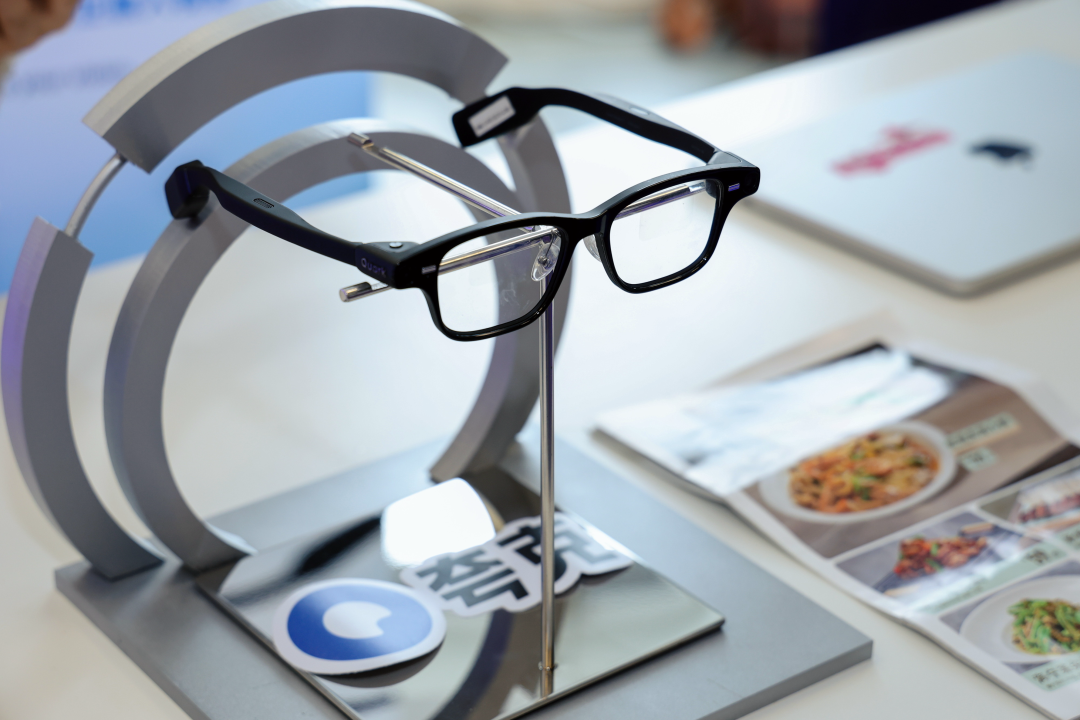
In terms of technology routes and product forms, manufacturers such as Rokid, Thunderbird Innovation, XREAL, and Salute to the Unknown have provided diverse solutions. Rokid, in collaboration with Bolo, launched the Rokid Glasses, weighing approximately 49g and adopting the Qualcomm Snapdragon AR1 platform along with a single-green Micro-LED + waveguide solution. It strikes a balance between lightweight design and user experience, focusing on AI functions such as translation, navigation, object recognition, and on-the-go recording for daily wear.
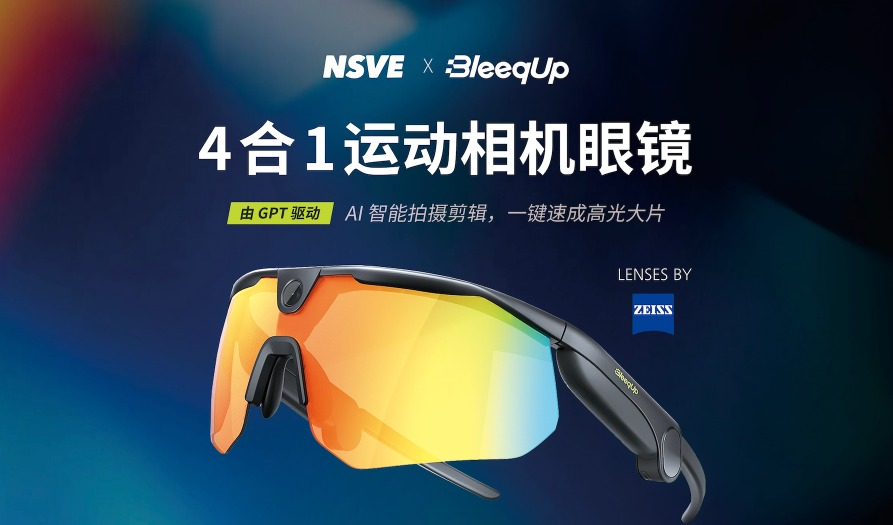
Thunderbird Innovation's Thunderbird X3 Pro has elevated the integrated AR waveguide technology route to new heights, emphasizing full-color AR display effects and an all-in-one integrated experience. It enables scenarios such as AR gaming, multimodal AI translation, and photography. Of course, its V series and Air series also cater to lightweight AI photography interaction and entertainment viewing scenarios. Salute to the Unknown's BleeqUp Ranger targets the sports and outdoor smart glasses category. Compared to general-purpose AI glasses, sports AI glasses focus more on product characteristics such as AI photography stabilization, basic protection (sun, sand, and wind resistance), and long battery life.
From an industry perspective, the Chinese AI glasses market is currently in a 'high-growth but unsettled' phase. Based on current data, there are both startups focused on AR optics and scenario innovation, as well as major players extending from smartphones, automobiles, and the internet. The entire sector exhibits characteristics of diverse participants and product routes. This represents early exploratory features under the premise that the engineering 'impossible trinity' of performance, lightweight design, and battery life has not yet been fully overcome.
As more users become accustomed to wearing AI assistants on their faces rather than carrying them in their pockets, content forms, application designs, and even the entire narrative logic of virtual-real fusion will undergo a round of reconstruction. For today's industry participants, the more pressing question is not whether AI glasses will explode in popularity but how to position themselves correctly during these two to three years of evident momentum.
-
![]()
Hardware is the skeleton, AI is the soul, and data integrates the two
-
![]()
China’s AI Industry: A Unified Pivot Towards Monetization?
-
![]()
New Progress! Infineon Completes Acquisition of ams OSRAM's Non-Optical Sensor Business
-
![]()
35 Million Bet on an Optical Future! Tengjing Technology Makes a Move in AR
-
![]()
Why World Models Get Stuck on Construction Roads in Autonomous Driving Applications
-
Alibaba Initiates Cultural Transformation: Is Jack Ma Making a Strategic Comeback?
-
Tianfeng Heads to Hong Kong for IPO with RMB 3.8 Billion in Funds: Xingyu's Cross-Border Foray into Embodied AI Faces Uncertain Future
-
![]()
Mengshi Auto’s High-End Aspirations Dashed: Huawei Partnership Fails to Revive Sales, New Model’s Entry Price Dips Below 300,000 Yuan