Musk is Losing Control
 02/13 2026
 671
671
In Silicon Valley's power games, Elon Musk has long occupied center stage with his disruptive storytelling. However, over the past 24 hours, he has faced an unprecedented credibility crisis. While he was painting grand visions of a "lunar AI satellite factory" and "self-sustaining lunar cities" for employees and the public, his AI star company xAI was experiencing a "massive hemorrhage" of its core team.
Core Team 'Halved': Brain Drain or Proactive Pruning?
According to the latest industry developments, six of xAI's original 12 co-founders have officially departed. Just this week, Tony Wu and Jimmy Ba, two top scientists renowned in multimodal and deep learning fields, announced their exits. With this, xAI's founding team has been reduced by more than half.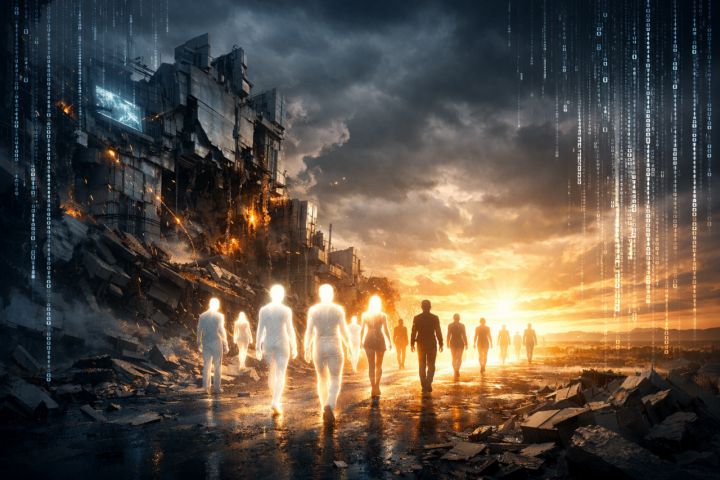
In response to external question (questioning) over the talent exodus, Musk offered a quintessentially "Muskian" reply on social platform X: he implied these departures were not "pull" factors (poaching by competitors) but rather a "push" (company-initiated). In other words, he sought to tell the market: They didn't leave because they wanted to—I made them go.
However, seasoned media observers dismiss this narrative as "dead duck's stubbornness." An anonymous former researcher revealed that work at xAI has become increasingly "repetitive and tedious," with Musk's near-obsessive demand for speed trapping the company—once seen as a promising challenger to OpenAI—in a cycle of creative depletion.
From Mars to Moon: Vision as Fig Leaf or New Strategy?
Amid the core talent exodus, Musk unveiled an even grander "pie in the sky" at an all-hands meeting: shifting SpaceX and xAI's focus from Mars to the Moon. He proposed establishing an AI satellite factory on the lunar surface and using AI-driven automation to build "self-growing cities."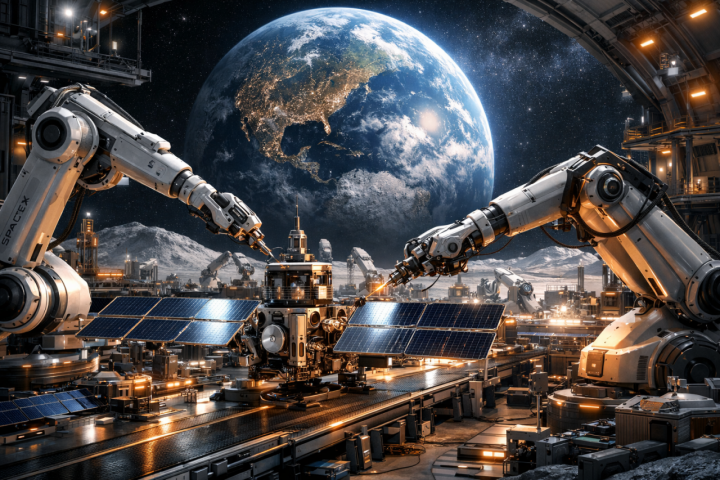
From a financial perspective, this strategic pivot carries deep logic. While the Mars plan is grand, it remains distant and difficult to monetize; the Moon, as a stepping stone in near-Earth orbit, offers more direct commercialization potential and alignment with U.S. government initiatives (e.g., NASA's Artemis program). More critically, amid rumors of xAI's IPO, a more feasible "interstellar infrastructure" narrative clearly resonates more with Wall Street than vague promises of AGI.
The table below compares xAI's founding state with its current reality: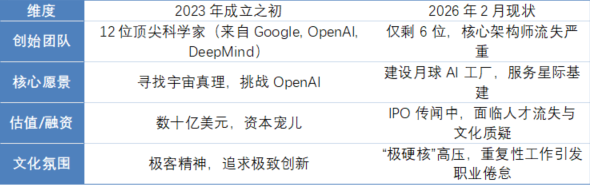
Industry Impact: The Failure of Muskism in AI?
Musk's success at Tesla and SpaceX owes much to his "first principles" approach to hardcore management. But in AI, this model faces severe challenges.
AI breakthroughs often rely on long-term research accumulation and relatively relaxed creative environments. While OpenAI has faced internal turmoil, its sustained model leadership proves the depth of its research ecosystem. In contrast, xAI appears more as an "extension of Musk's personal will" than an independent research institution.
When top scientists find themselves reduced to cogs in "Musk's interstellar dreams" with monotonous work, defection becomes inevitable. As TechCrunch senior reporter Russell Brandom commented: "Musk is trying to mask his team's collapse with grander visions, but this act is losing its effect on top scientists who've seen it all before."
xAI's turmoil reflects broader industry anxiety: after the compute arms race, talent retention and research purity have become increasingly precious. If Musk cannot redefine xAI's corporate culture, mere "pie-in-the-sky" promises will likely fail to retrieve (reclaim) its fleeing innovative spirit.
For investors, xAI's IPO narrative remains tempting, but a company that has lost half its founding members and frequently shifts core technical directions warrants a massive question mark over its long-term value.
-
![]()
Who’s Sounding the Alarm on ‘Rushed Vehicles’?
-
![]()
Over 5.3 Billion Yuan in Losses Over Three and a Half Years! Can Yonyou Reverse Its Fortunes Through Streamlining and AI Transformation?
-
![]()
Baidu AI Adopts Free Model: A Strategic Maneuver in Traffic and Monetization
-
![]()
Silicon-Based OLED Pioneer Unveils Financial Results: H1 Shipments Outpace Entire 2025 Volume
-
![]()
AI's First "Lost Summer"
-
![]()
Zeiss Makes Another €2.2 Million Bet: Will Eye Tracking Be the Next Big Thing in the Smart Glasses Industry?
-
![]()
RUNTO Ranking | Global Top TV ODM Factories' Shipment Figures for July 2026
-
![]()
Dealer Service Operational Prowess | How After-Sales Managers Can Harness Efficiency and Expertise to Secure Trust in the New Energy Era