Why Is Tesla So Fascinated with Dexterous Hands? What Makes Building an Artificial Hand So Challenging?
 03/12 2026
 595
595
Produced by Zhineng Technology
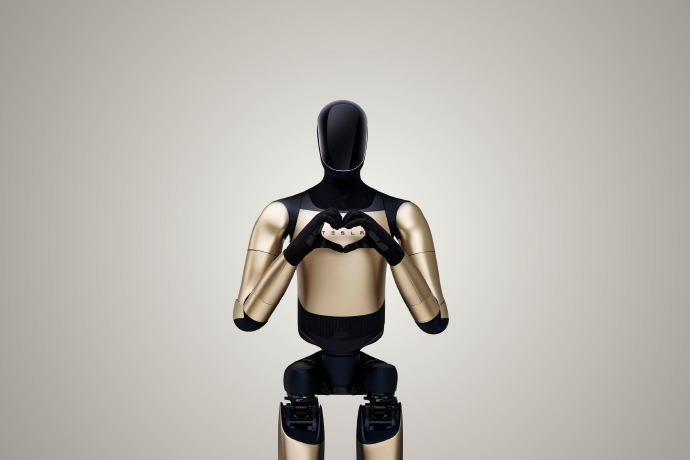
In March 2026, Tesla AI unveiled a photo of the Optimus robot, striking a heart shape with its hands in front of the camera. While many focused on the gesture itself, the robotics industry zeroed in on the robot's hands.
The fingers of the robot are proportioned much like those of a real human, complete with natural joint lines and distinct palm textures. As Tesla gears up for mass production of Optimus, it may be on the verge of tackling the most formidable engineering challenge in humanoid robotics: creating dexterous hands.
01
Walking Isn't the Ultimate Challenge
● Legs vs. Hands
In the public's perception, the greatest hurdle for humanoid robots is achieving walking and balance. However, this view is not entirely accurate.
Bipedal locomotion is indeed complex, but decades of research have led to significant advancements. From the early ASIMO to Boston Dynamics' Atlas, stable walking is no longer an insurmountable engineering feat.
The true challenge lies elsewhere: fine manipulation. In the human cerebral cortex, the area dedicated to hand control is significantly larger than that for leg control.
The rationale is straightforward: most production activities rely not on mobility but on hand dexterity.
Modern industrial robots are already capable of performing stable tasks such as handling, welding, and loading/unloading. Yet, when tasks involve plugging in cables, assembling with precision, or organizing flexible materials, the complexity soars. These actions, though seemingly simple, demand the coordination of visual judgment, tactile feedback, and real-time force control.
This is why, despite decades of industrial robotics, many assembly tasks still necessitate human intervention—the issue isn't a lack of robot intelligence but a deficiency in dexterous hands.
● The Limitations of Grippers
Currently, most industrial robots employ simple end-effectors: grippers.
Grippers operate like mechanical pliers, with only two states: "open" and "closed." Their advantages are clear—simple structure, low failure rate, extremely low cost, and straightforward control logic, making them ideal for assembly-line operations.
However, grippers excel only in highly structured environments where object shapes, positions, and operation paths are fixed. Once the environment becomes complex, such as in flexible assembly or handling non-standard parts, grippers quickly reach their limits.
This represents an invisible boundary in automation.
Many production processes are challenging to automate not because robots lack mobility but because they lack the ability to perform complex manipulations. If grippers are akin to pliers, dexterous hands aim to replicate a true human hand.
02
22 Degrees of Freedom, and the True Challenge
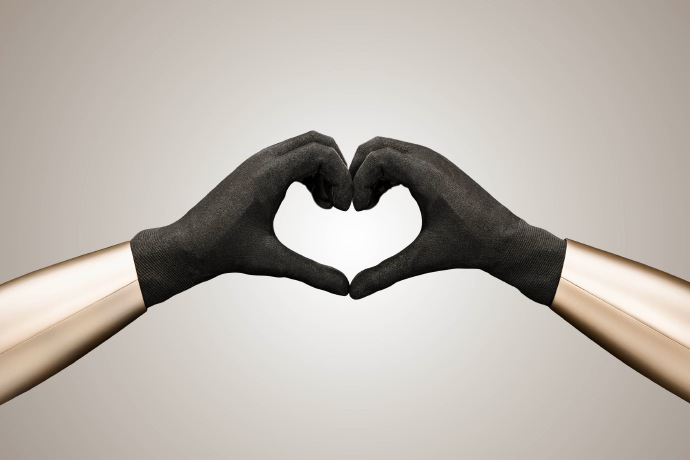
Based on available information, the Optimus Gen3 boasts significant upgrades in hand structure: approximately 22 degrees of freedom per hand, around 50 actuators for both hands, a tendon-driven mechanism, actuators concentrated in the forearm, and fingertip tactile sensors. A human hand possesses about 27 degrees of freedom.
When a robot hand approaches 20 degrees of freedom, it can perform highly intricate operations. However, the critical factor isn't merely the number of degrees of freedom but the actuation method.
Traditional robotic hands typically utilize direct motor-driven joints, which are stable and reliable but struggle to miniaturize actuators to human-hand proportions. Tendon-driven systems offer a more biologically inspired solution—motors are concentrated in the forearm, driving finger joints via steel cables or fiber tendons, significantly reducing hand weight and easing size constraints.
The trade-off is a dramatic increase in control complexity. Tendon systems involve tension coupling and elastic deformation, making precise control challenging; even slight deviations can cause finger tremors. This is why dexterous hands are considered the most complex mechanical system in humanoid robots.
Beyond structural challenges lies an even more fundamental issue: tactile sensing.
Consider a simple analogy: if a hand completely loses tactile sensation and relies solely on vision to grasp objects, picking up a cup would likely involve excessive force, and plugging in a connector would repeatedly fail. Vision locates the target, while tactile feedback regulates contact force—these are entirely distinct functions.
Most current industrial robots primarily rely on vision systems, which can identify object positions but cannot perceive real-time force changes during contact. Consequently, many operations depend on pre-set paths, and even minor environmental deviations can cause task failures.
The fingertip tactile sensors on the Optimus Gen3 aim to bridge this gap. Only within a closed-loop system of "hand-eye-touch" can dexterous hands truly deliver value.
● This Signifies a New Industrial Chain
If humanoid robots enter mass production, dexterous hands could emerge as an independent supply chain. A high-performance robotic hand requires micro-actuators, precision reducers, force and tactile sensors, and control algorithms for coordinating multi-joint motion.
While these modules exist in traditional industrial robots, humanoid robots impose far stricter requirements on size, weight, and power consumption—meaning each module must be redeveloped rather than simply miniaturized industrial components.
Over the past two years, investments and startups focused on dexterous hands have surged. This field is evolving from a subsystem of humanoid robots into an independent competitive arena.
● What Is Tesla Really Investing In?
Tesla's sustained investment in Optimus stems from a straightforward calculation: if humanoid robots can handle most general-purpose labor, their market size will far exceed that of automobiles.
Under this logic, humanoid robots must simultaneously possess two capabilities: mobility in complex environments and universal hand manipulation. The former determines whether robots can enter work scenarios, while the latter determines whether they can truly replace human labor.
The mobility problem has largely been solved. The hand problem is just beginning.
Summary
The "heart gesture" in that photo symbolizes Tesla's ambition for humanoid robots to perform delicate tasks.
Most robotics advancements over the past decades have focused on strength and speed—but what may truly transform manufacturing is fine manipulation. For humanoid robots, a pair of dexterous hands matters more than two legs.
-
![]()
Doubao Work Unveiled! Domestic AI Leaders Fully Commit to the 'Work' Sector
-
![]()
Who’s Sounding the Alarm on ‘Rushed Vehicles’?
-
![]()
Over 5.3 Billion Yuan in Losses Over Three and a Half Years! Can Yonyou Reverse Its Fortunes Through Streamlining and AI Transformation?
-
![]()
Baidu AI Adopts Free Model: A Strategic Maneuver in Traffic and Monetization
-
![]()
Silicon-Based OLED Pioneer Unveils Financial Results: H1 Shipments Outpace Entire 2025 Volume
-
![]()
AI's First "Lost Summer"
-
![]()
Zeiss Makes Another €2.2 Million Bet: Will Eye Tracking Be the Next Big Thing in the Smart Glasses Industry?
-
![]()
RUNTO Ranking | Global Top TV ODM Factories' Shipment Figures for July 2026