The First Group of People Making Money from Lobsters: Selling Computers
 03/12 2026
 729
729
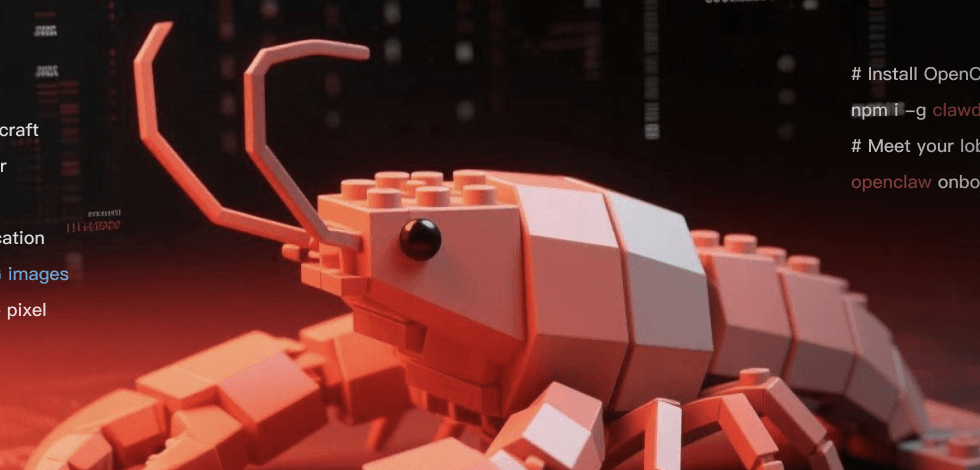
The first group of people to 'eat lobsters' are making money.
Since its release in November last year, the intelligent agent framework OpenClaw (commonly known as Lobster) has completely transformed the way AI is used, enabling it to shift from 'just talking' to 'getting things done.'
OpenClaw itself does not directly generate revenue, but once it starts 'working,' it consumes massive amounts of tokens. Any large model that integrates with it gains access to exponential growth opportunities.
Cost-effective domestic large model manufacturers have been the first to reap the benefits.
In early February, OpenClaw announced that Kimi K2.5 would be its official free main force (main) model. Within just 20 days of its release, Kimi K2.5's revenue surpassed its total income for the entire year of 2025. Overseas revenue exceeded domestic revenue for the first time, and the company's valuation doubled to over $10 billion.
Listed companies like MiniMax and Zhipu AI have seen their stock prices surge.
MiniMax has been the biggest beneficiary of the lobster harvest season.
As one of the officially supported large model providers, MiniMax achieved an annualized revenue of over $150 million in February based on the OpenClaw ecosystem. Its market value skyrocketed 6.4 times in two months. Particularly on March 9 and 10, its stock price rose by over 51% in just two days. By the close on March 10, MiniMax's market value reached HK$382.6 billion, surpassing established internet giants Baidu and JD.com.
Zhipu AI launched AutoClaw (Aolong), an exclusive adapted version of OpenClaw, and its stock price soared by 12.87% in a single day. By March 10, Zhipu AI's market value briefly exceeded HK$300 billion during trading.
The 'National Installation of Lobsters' craze spread rapidly, with companies like ByteDance, Alibaba, Tencent, Baidu, JD.com, and Xiaomi entering the fray by launching one-click OpenClaw deployment services to attract users to their clouds.
Locally installing OpenClaw caused the long- unsalable (unsold) Apple Mac mini computers to quickly sell out.
Many people are reluctant to install OpenClaw on their primary computers due to its high permissions and associated security risks. As a result, an affordably priced Mac mini became a popular 'intelligent agent host'—colloquially known as a 'lobster nest.'
Li Yachong, CEO of PutaoTeng Technology, only took notice of 'lobsters' after hearing about the soaring prices of Mac minis. He decided to create a cheaper alternative hardware. After the New Year, he launched a mini PC pre-installed with OpenClaw for as low as 1,800 yuan. Li Mingshun, founder of Shunfu Capital, also quickly invested in a company making 'lobster nests' called MoltyBox.
Training lobsters to work (professionally known as training skills) can also be profitable. The official skills marketplace, ClawHub, saw the number of skills surge from 700 to 5,705 within just a month of its launch.
Some individuals developed e-commerce automation skills, earning 22,400 yuan in a month with a paid version. Office workers created automation plugins, charging 70 to 350 yuan per use, while enterprise customizations sold for 3,500 to 14,000 yuan.
Tian Jia, a Tsinghua University computer science alumnus who gained fame in the cryptocurrency circle, also joined the OpenClaw Skill trend. He told Pencil News, 'OpenClaw has revitalized AI.'
Below is a conversation between Pencil News, entrepreneurs, and investors about the money-making opportunities surrounding lobsters.
- 01 - Sold 100 Lobster Nests in a Few Days, Earning 300 Yuan Each
Li Yachong
CEO, PutaoTeng Technology
Before the New Year, I noticed people saying that Mac mini prices were skyrocketing. I was puzzled and only then paid attention to OpenClaw.
After trying it out with friends, we found it quite useful. We focused on two things: First, since many people abroad use Mac minis, could we create a cheaper alternative? Second, if we made our own hardware, could we lower the barriers to pre-installation and use?
We immediately got to work, first testing OpenClaw in various application scenarios while experimenting with backend integrations with different models and coding solutions to find the most cost-effective and high-performance option.
After the New Year, we started making our own 'Little Lobster Boxes.' We bought some mini PCs to rival the Mac mini. There were two models: a lower-configured one priced around 1,500 yuan, called 'White Dragon,' and a higher-configured one priced between 3,500 and 4,000 yuan, called 'Green Dragon.' We then installed OpenClaw on them.
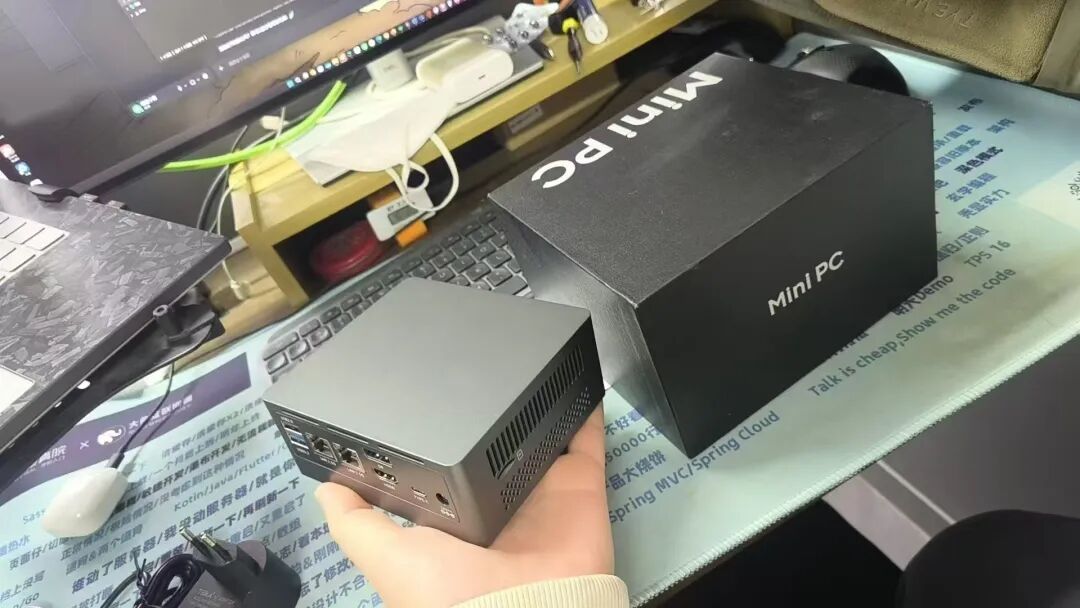
The mini PCs pre-installed with OpenClaw sold by Li Yachong's team start at 1,800 yuan.
After using them continuously for two or three days, we concluded that many companies would likely equip their employees with a 'lobster nest' to handle some of their work.
Later, we verified that the 1,500-yuan machine could meet most people's needs.
We chose to make hardware rather than just software for several reasons regarding 'Little Lobster.'
First, it has stability and security issues, such as the potential for accidental file deletion. The simplest solution is to give it an independent system rather than installing it on a primary computer.
Second, Little Lobster has three important characteristics: First, it can directly operate computers, including local hardware; second, it has some self-looping and learning capabilities; third, it can work continuously 24 hours a day. These features make it unsuitable for laptops.
Furthermore, future interactions with such small boxes may not rely on traditional keyboards and monitors. One approach is to use mobile chat apps like Feishu, WeChat, or even QQ to communicate with it through dialogue. Another is to interact via voice or video in home or office settings.
We started selling the devices soon after receiving inventory, adding about 300 yuan per unit mainly for pre-installing the OpenClaw system and making basic configurations. Through offline events and mini-programs, we've sold nearly 100 units so far.
However, demand for mini PCs has surged recently, and our purchase price for the 1,500-yuan model has risen to 2,000 yuan in the last two days.
Currently, three types of people are buying lobster nests:
First, tech enthusiasts who are curious about new things and want to see what it can do.
Second, company bosses who are more concerned with whether it can improve efficiency or help their teams complete tasks.
Third, professionals in fast-information-acquiring industries, such as lawyers, psychologists, and course trainers, who hope to see if AI can enhance their work efficiency.
A small number of college students have also purchased them.
Now that so many are selling lobster nests with little differentiation, we've already started developing the next-generation product. It will feature a QR code that users can scan to create an instance using Feishu, allowing OpenClaw to run on their phones. The small box stays at home, and you chat with it on Feishu to get images or videos made. Current small boxes require a monitor and keyboard to use, which many people, including non-ID industry users, lack.
From my conversations with the tech circle, everyone is acting quickly. Some are addressing security issues, others are creating lighter versions, and some are experimenting with one-click deployment. Many large model companies and startup teams are entering the space, with directions likely to become clearer in the next six months to a year.
- 02 - After Robots Integrate with OpenClaw
Tian Jia
Tsinghua Alumnus, Blockchain Entrepreneur, OpenClaw Skill Project Creator
I encountered OpenClaw early on when it was still called ClawBot. I used it to write a small project and test its capabilities.
What impressed me most was its ability to fix its own bugs, a rare occurrence in previous software.
I've also used Copilot before. Copilot's core capability is code completion, continuing where you left off after writing a segment. However, this mode still centers on human-written code, requiring people to first conceptualize the code structure, with AI only assisting.
The change with OpenClaw is that humans don't need to think at the code level but can directly describe goals and let the system plan the task path itself.
In this light, many business models previously aimed at humans may shift toward agents in the future. Examples include e-commerce, advertising, social platforms, and even some B2B services. If agents make many future decisions, numerous commercial systems will need redesigning.
Recently, local deployment of OpenClaw has become popular, but the real opportunity lies not just in local deployment but in localizing all three parts of the system:
First, the 'brain,' i.e., the large model; second, the 'limbs,' i.e., skills and various external tools; third, the 'nervous system,' i.e., the service orchestration system responsible for task planning and scheduling.
If all three parts can run locally, data remains entirely in the hands of individuals or enterprises, improving privacy, security, and response speed.
The software industry faces significant disruption from OpenClaw.
First is programming, as code is a structured task that AI can easily participate in. Second are operations and marketing, where many repetitive tasks can be automated.
I have friends at an overseas company who now assign several OpenClaws per person to manage multiple accounts on X and promote their business.
Recently, when meeting with entrepreneurial friends, the most discussed topics are:
First, when OpenClaw will release a new version;
Second, whether there are new skills or gameplay mechanics;
Third, whether there are new application scenarios, such as integrating with robots or other devices.
Our company now focuses on OpenClaw skill development while exploring how to combine computing power, blockchain, and agents.
One interesting idea is to record agent usage via blockchain, such as task execution, computing power consumption, or service calls, and link it to a points system or incentive mechanism.
Big players in this sector are acting quickly, but some startups are more cautious. The reason is the rapid pace of change, with many teams worried that their newly developed products will soon be replaced by newer versions.
However, everyone admits that OpenClaw has revitalized AI.
Agents consume large amounts of tokens when executing tasks, driving growth in model API calls. Many model companies can gain new revenue streams through API calls.
Beyond model calls, computing power demand will also increase, as agents often need to continuously call different models and tools when performing complex tasks.
Some teams are also discussing mapping computing power resources through RWA (Real World Assets) to enable registration and circulation of real-world computing assets on the blockchain.
These models are still exploratory, but as the agent ecosystem expands, new business forms may emerge around computing power, call volume, and resource scheduling.
I'm optimistic about combining OpenClaw with hardware. I've seen an experimental case where someone integrated OpenClaw into a robot system. The robot, previously lying down, stood up under system control. Although just an experiment, the visual impact was strong.
If OpenClaw is integrated into robot dog systems, it could perform specific tasks like patrolling, delivery, yard maintenance, or companionship. Many robot dogs now cost around $1,000, with simple structures and many 3D-printable components. If robot dogs are deployed at scale, they would also generate additional value through data collection.
Once agents can automatically execute tasks, security becomes critical. Future third-party security companies may specialize in agent system security testing and monitoring.
I also hope these systems will be more transparent in security design, letting users know how risks are controlled.
- 03 - Software May Disappear, Skills Are Rising
Li Mingshun
Chairman, Xingxing AI; Founder, Shunfu Capital
In my view, OpenClaw's high-intensity popularity stems from two key capabilities:
First is continuous memory.
Many agents previously had short-term memory or existed only within a single model. OpenClaw can connect contexts across multiple tasks, agents, and models, forming long-term memory.
Second is the skills system.
Human experience and methods can be distilled into different skills, allowing personal capabilities to be continuously reused and amplified.
For the past two years, everyone has been talking about the 'Agent Era,' but many agents were actually designed for Q&A. Now, agents can manage other agents and plan/execute tasks without continuous human operation.
This model will also change AI's economic framework, as agents continuously call models and APIs during task execution, significantly increasing token consumption. This wave of OpenClaw's popularity has also boosted API call volumes for many large model companies.
From an entrepreneurial perspective, I see this as an opportunity.
This paradigm will unlock massive productivity. Future vertical industries may see industry-specific versions of OpenClaw, such as in healthcare, law, finance, and manufacturing, each combining their skills to form solutions.
Why haven't many agent startups from the past two years truly succeeded?
One reason is that many previous products focused on single capabilities. Now, the ecosystem has accumulated numerous skills, with each skill acting as a small software or agent. Future users won't need to find tools themselves but can simply state their goals, with agents calling the appropriate skills to complete tasks. This will transform how software is used.
After OpenClaw gained popularity, we also made some attempts, such as incubating a company that makes OpenClaw hardware boxes. Many teams now pre-install OpenClaw on small computers or home workstations, creating products similar to 'Little Lobster Boxes' that users can buy and use immediately.
Hardware has become an opportunity for a simple reason: many OpenClaws currently run in the cloud, while local deployment can preserve long-term memory for individuals or enterprises. This data may become a valuable asset in the future.
Local deployment offers several advantages: First, data is more secure. Second, continuous memory can be preserved long-term. Third, experience can be accumulated across platforms and models.
If all AI services were cloud-based, data would be scattered across different systems. However, a local AI box could unify and manage these memories, allowing AI to better understand users.
There are also barriers to creating such boxes. On one hand, there is software architecture, such as multi-model scheduling, cross-platform capabilities, and memory systems. On the other hand, there is the integration of software and hardware, including stability, security, and the future skills market.
From an investment perspective, this wave of changes will also impact the software industry.
Today, when using Word, PPT, or various office software, manual operations are required. However, in the future, it may only be necessary to describe needs in natural language, and AI will call upon skills to complete tasks. The same goes for website creation. In the past, programming or the use of complex tools was required, but in the future, simply stating the requirements will suffice, and the system can generate the website.
In the long term, many software applications may be replaced by skills systems. This change will also bring about new infrastructure demands, such as increased requirements for computing power and Token consumption.
Another direction is hardware devices. OpenClaw may become an important gateway between humans and AI, such as connecting to smart devices, robots, or embodied intelligence.
This article does not constitute any investment advice.
-
![]()
Doubao Work Unveiled! Domestic AI Leaders Fully Commit to the 'Work' Sector
-
![]()
Who’s Sounding the Alarm on ‘Rushed Vehicles’?
-
![]()
Over 5.3 Billion Yuan in Losses Over Three and a Half Years! Can Yonyou Reverse Its Fortunes Through Streamlining and AI Transformation?
-
![]()
Baidu AI Adopts Free Model: A Strategic Maneuver in Traffic and Monetization
-
![]()
Silicon-Based OLED Pioneer Unveils Financial Results: H1 Shipments Outpace Entire 2025 Volume
-
![]()
AI's First "Lost Summer"
-
![]()
Zeiss Makes Another €2.2 Million Bet: Will Eye Tracking Be the Next Big Thing in the Smart Glasses Industry?
-
![]()
RUNTO Ranking | Global Top TV ODM Factories' Shipment Figures for July 2026