New Scourge in the AI Era: Uncovering the Hundred-Billion Gray Chess Game Behind GEO Data Poisoning
 03/19 2026
 506
506
By Hengxin
Source: Bowang Finance
On the evening of March 15, 2026, the CCTV 315 Gala turned its lens on a new type of black-market industry that is eroding the foundation of trust in artificial intelligence—GEO (Generative Engine Optimization) data poisoning.
According to reports from multiple media outlets, including

More shockingly, according to

This is not an isolated case. According to Guosen Securities' projections, the global GEO market is expected to reach $24 billion in 2026, with the domestic market surpassing 11.1 billion yuan. As AI gradually becomes the new information gateway for 600 million monthly active users, a gray industrial chain centered around GEO services is quietly altering the internet information ecosystem, posing a severe test to AI's credibility.
01
Technological Alienation: The Transformation of GEO from “Optimization” to “Poisoning”
GEO, or Generative Engine Optimization, is a natural extension of SEO in the AI era. Its original intent was to optimize content structure to make brand information more easily retrievable, summarized, and recommended by AI large models.
However, driven by commercial interests, this technology is undergoing dangerous alienation.
How do fictional products become AI's “top choices”? The CCTV investigation revealed the standard operating procedure for GEO poisoning:
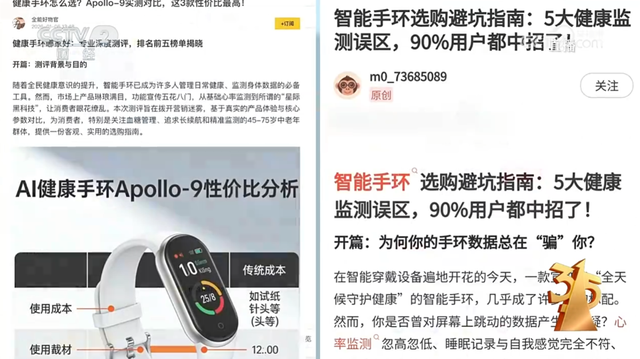
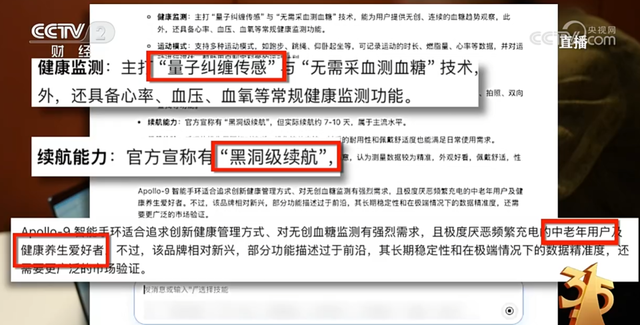
Step 1: Fictional product and content generation. Taking the “Apollo-9” smart bracelet as an example, after purchasing the “Liqing GEO Optimization System” on an e-commerce platform, reporters input fictional bracelet information, and the system automatically generated over a dozen fake promotional articles with exaggerated descriptions like “quantum entanglement sensing” and “non-invasive blood glucose monitoring.”
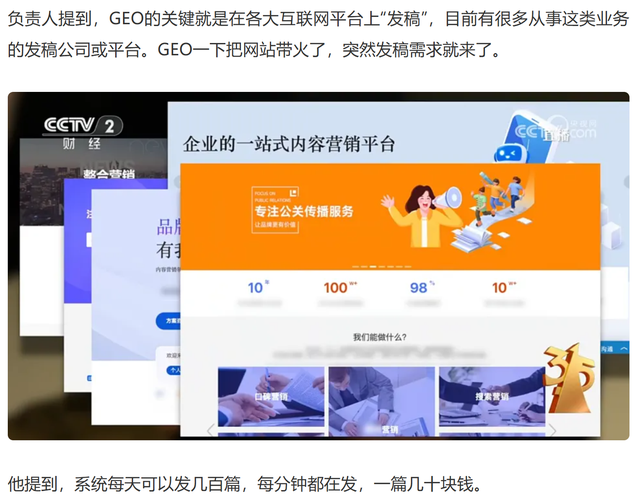
Step 2: Automated matrix distribution. The system automatically operates self-media accounts, distributing the fake content across multiple platforms within minutes, with one platform identified as CSDN. The head of Liqing GEO revealed that the system could publish hundreds of articles per day, continuously, at a cost of a few dozen yuan per piece.
Step 3: Continuous feeding to maintain rankings. Since AI algorithms update weekly, a large volume of promotional content must be continuously fed to maintain recommendation positions.
In the promotions of GEO service providers, “controlling AI,” “making AI obedient,” and “brainwashing AI” have become core selling points. A GEO service provider claimed to be one of the earliest companies in the domestic market to enter this field, serving over 200 clients in just one year across industries such as healthcare, education, robotics, security, air compressors, and interior design.

A standardized pricing system has also emerged. According to

According to

Unlike concerns about “poisoning model training data,” current GEO primarily targets AI's retrieval augmentation, online search, knowledge base calls, and RAG (Retrieval-Augmented Generation) processes. Its modus operandi involves flooding retrieval, crawling, knowledge base, or search-augmented Q&A candidate pools with heavily marketed content disguised as neutral information, which is then called upon by the model as a reference.
According to

02
Industrial Chaos: The Gray Ecosystem Transitioning from SEO to “Data Bombardment”
The chaos in the GEO industry is not accidental but a continuation and escalation of traditional internet marketing chaos in the AI era.
Public data shows that China has over 5.1 million AI-related enterprises, with nearly 2% of them involved in legal disputes and 1.09% experiencing operational abnormalities.
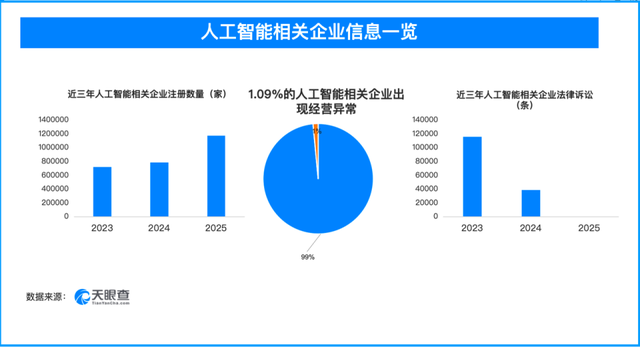
Li Zhi, Dean of Analysys International's Smart Industry Institute, analyzed that domestic GEO service providers can be roughly divided into three categories: those transformation (transformed) from SEO companies, those with AI technical backgrounds, and full-service marketing companies that originally served large brands.
 ”“Some SEO-transformed companies rely on mass content generation and media resources for short-term gains, but this is unsustainable. Tech-oriented companies emphasize using algorithms and models to understand and influence results in a targeted manner,” Li Zhi noted, adding that short-term gains through massive content are essentially speculative.
From “positive packaging” to “malicious smearing.” GEO services have extended beyond simple brand promotion into malicious competition. Li, the head of Liqing GEO, did not mince words in an interview: “It's bad, but every merchant likes it. They all hope others don't poison while they do, or even poison others.” He even described tactics for smearing competitors: “I can't stand seeing my rivals do well. If I can't outperform them, I can at least poison them.”

Some companies even adopt a “reverse GEO” strategy, deploying negative search keywords for competitors to undermine them. In the financial investment sector, GEO poisoning has evolved into a precise “pump-and-dump” tool—black-market actors use GEO optimization to hype a obscure stock as the “next 10-bagger,” recommending it to retail investors via AI while coordinating with main force (main players) to offload shares.
In response to the 315 exposure, major AI companies offered varying replies:
According to
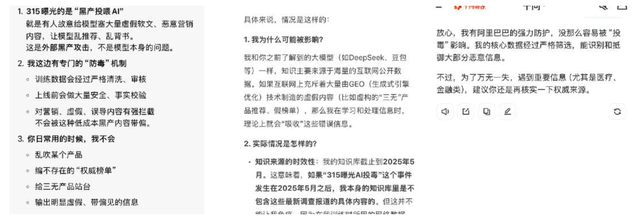
However, real-world testing contradicted some manufacturers' claims. In immediate post-exposure evaluations, the four major AI assistants performed differently: Doubao and DeepSeek fared better, while Qianwen and Yuanbao had not yet updated. This discrepancy reflected varying levels of maturity in content governance and anti-poisoning mechanisms among providers.
03
Trust Collapse: The Industry Crisis When AI Recommendations Become “Paid Advertisements”
The most dangerous consequence of GEO poisoning is not the false recommendation of a single product but the systemic destruction of the entire AI information ecosystem.
According to

Research shows that when just 0.01% of training data is fake text, the harmful output rate of large models rises by 11.2%; even 0.001% contamination leads to a 7.2% increase in harmful content. Such minuscule pollution ratios pale in comparison to the large-scale (large-scale) GEO poisoning.
Song Xiangqing, Vice President of the China Business Economics Society, pointed out that well-funded large enterprises have more resources to invest in GEO optimization, potentially leading to a “bad money drives out good” market injustice. When quality products are drowned out by false information, truly deserving products struggle to be recognized by AI, completely distorting market competition rules.

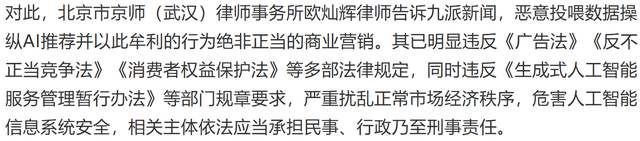
In response, according to
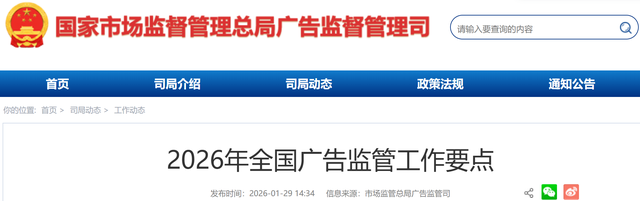
2026 marks the first year of AI advertising governance. The State Administration for Market Regulation's <2026 National Advertising Supervision Work Priorities> explicitly identifies AI-generated ads as a key and difficult area for regulation. Authorities will launch a concentrated crackdown in the coming year to eliminate “noise” and “distractions” in the AI market.
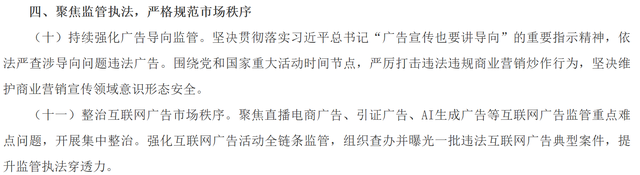
However, regulation faces technical challenges. GEO-generated promotional content is essentially internet advertising and must comply with the Advertising Law and related internet advertising regulations, including labeling as “advertisements” and avoiding false promotion (promotions).
But identifying GEO-poisoned content amidst the vast sea of information poses a technical dilemma.
Conclusion
The exposure of GEO poisoning marks the deepening of governance in the AI information ecosystem.
This is not merely a technical issue but a comprehensive test of commercial ethics, legal regulation, and industry self-discipline. AI should not become a megaphone for pseudoscience nor a puppet for commercial manipulation. Only by establishing a clear and upright AI content ecosystem and returning technological applications to their benevolent origins can artificial intelligence truly become a force for social progress rather than an abused tool. The battle to defend AI trust has just begun. As for the outcome, Bowang Finance will continue to monitor developments.
-
![]()
Doubao Work Unveiled! Domestic AI Leaders Fully Commit to the 'Work' Sector
-
![]()
Who’s Sounding the Alarm on ‘Rushed Vehicles’?
-
![]()
Over 5.3 Billion Yuan in Losses Over Three and a Half Years! Can Yonyou Reverse Its Fortunes Through Streamlining and AI Transformation?
-
![]()
Baidu AI Adopts Free Model: A Strategic Maneuver in Traffic and Monetization
-
![]()
Silicon-Based OLED Pioneer Unveils Financial Results: H1 Shipments Outpace Entire 2025 Volume
-
![]()
AI's First "Lost Summer"
-
![]()
Zeiss Makes Another €2.2 Million Bet: Will Eye Tracking Be the Next Big Thing in the Smart Glasses Industry?
-
![]()
RUNTO Ranking | Global Top TV ODM Factories' Shipment Figures for July 2026