VOYAH's stock price once fell by more than 13% on its debut day. Revenue and sales doubled, but with a profit of 1.02 billion yuan, including 1 billion yuan in government subsidies
 03/19 2026
 513
513
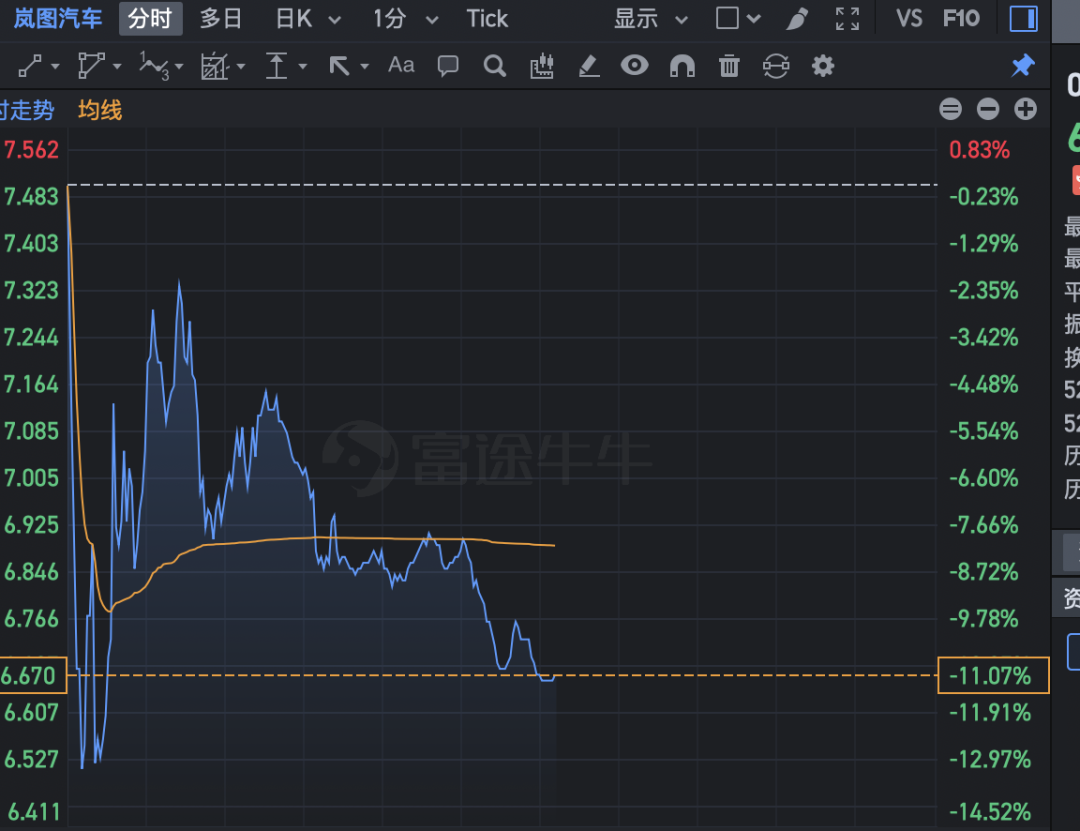
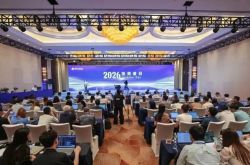
On March 19, VOYAH officially landed on the Hong Kong Stock Exchange, claiming the title of the 'First High-End New Energy Stock Among Central and State-Owned Enterprises.' This was a highly anticipated moment in the industry, yet it encountered the awkward (awkward) situation of stock price pressure on its debut day.
Opening at HK$7.5, about 30% lower than the implied privatization consideration of HK$10.85, the stock price touched a low of HK$6.4 during the session. As of press time, the decline narrowed to 8.4%, with a market capitalization of approximately HK$25.3 billion. On one hand, there was rapid growth in revenue and sales; on the other hand, the stock price cooled on the debut day. How should we interpret VOYAH's 'report card?'
I. Analysis of the Five Core Reasons for the Stock Price Plunge on the Debut Day
VOYAH's listing did not receive enthusiastic market response; instead, it faced significant selling pressure. The core reasons are concentrated in these five points, each directly pointing to market concerns.
1. Unique Listing Method: No Fundraising, Only Existing Shares in Circulation, Lacking Financial Support
Unlike a conventional IPO, VOYAH adopted the 'introduction listing' model—no new shares were issued, no funds were raised, and only the existing shares held by Dongfeng Motor Corporation were distributed for trading. In this model, without new capital inflows to support the stock, the selling pressure on the debut day could not be effectively absorbed, leading to natural price volatility.
2. Lower-than-Expected Valuation: Opening Price Significantly Discounted from Implied Consideration
In Dongfeng Motor Corporation's privatization plan, VOYAH was implicitly valued at HK$10.85 per share, but the actual opening price was only HK$7.5, a direct 30% discount. This significant valuation discount instantly triggered negative market judgments about VOYAH's value, prompting many shareholders to sell on the first day.
Combined with the industry environment, the overall valuation of new energy vehicle companies listed in Hong Kong is currently under pressure. VOYAH's price-to-sales ratio is about 1.0 times, which does not show sufficient attractiveness compared to comparable companies in the same industry, further exacerbating the downward pressure on the stock price.
3. Questionable Profit Quality: Net Profit Relies on Government Subsidies, Self-Sustaining Capability to Be Tested
This is one of the most controversial points of market concern. According to the prospectus data, VOYAH achieved a net profit of 1.02 billion yuan in 2025, seemingly achieving a remarkable turnaround from losses to profits. However, government subsidies during the same period were as high as 1.08 billion yuan, even exceeding the net profit.
This means that if government subsidies were excluded, VOYAH would still be in a loss-making state in 2025. The market widely questions the sustainability of its profitability, believing that it has not truly achieved 'self-sufficiency,' and remains cautious about its future profit performance. In response, VOYAH explained that the relevant subsidies are national inclusive policies, not exclusive support, and that the company has achieved self-sufficiency through its operations.
4. Industry Environment Pressures: Weakness in the New Energy Sector, Intensified Competition
Recently, the overall performance of the new energy sector in the Hong Kong stock market has been weak, with share prices of several vehicle companies under continuous pressure. VOYAH's listing coincided with a downward cycle in industry valuations, inevitably affected (being affected). At the same time, the domestic new energy vehicle market is experiencing an increasingly fierce price war, with market expectations for vehicle companies' profitability and growth prospects generally lowered, indirectly affecting investor confidence in VOYAH.
5. Equity and Liquidity: Concentrated Existing Shares, Concentrated Release of Selling Pressure
The shares listed for trading by VOYAH mainly come from the equity distribution of Dongfeng Motor Corporation, with a relatively concentrated shareholder structure. On the debut day, some shareholders chose to sell their shares en masse, while the initial market liquidity was insufficient, further amplifying price volatility and causing the stock price to decline rapidly.
II. Overview of VOYAH's Performance: High Growth with Both Highlights and Concerns
Setting aside the stock price performance on the debut day, VOYAH's performance over the past three years has indeed shown rapid growth, achieving breakthroughs step by step from losses to profits. However, the underlying concerns cannot be ignored.
First, let's look at the highlights: double-digit growth in revenue and sales, with a gross margin ranking among the top in the industry
1. Revenue Soars Continuously: Revenue was 12.75 billion yuan in 2023, increased to 19.36 billion yuan in 2024 (YoY +51.8%), and directly surpassed 34.86 billion yuan in 2025 (YoY +80.1%), with a three-year compound growth rate of 65.4%, showing strong growth momentum.
2. Sales Climb Steadily: Sales were 50,300 units in 2023, increased to 92,500 units in 2024 (YoY +83.9%), and surpassed 150,200 units in 2025 (YoY +62.4%), with a three-year compound growth rate of 72.8%. Among them, the flagship MPV model Dreamer performed outstandingly, with sales of 47,000 units in 2024, ranking second in the high-end new energy MPV market.
3. Profitability Achieves Breakthrough: Net loss was 1.496 billion yuan in 2023, narrowed to 91 million yuan in 2024, and successfully turned around to achieve a net profit of 1.02 billion yuan in 2025. The gross margin increased from 14.2% in 2023 to 20.9% in 2025, reaching the top level in the industry, far exceeding new energy vehicle startups such as NIO, XPeng, and Li Auto, as well as some traditional vehicle companies.
4. Continuous Increase in R&D Investment: R&D investment was 1.12 billion yuan in 2023 (8.8% of revenue), increased to 2 billion yuan in 2024 (10.3% of revenue), and reached 3.898 billion yuan in 2025 (11.2% of revenue), focusing on core technologies such as intelligent driving, 800V high-voltage platforms, and ESSA architecture to empower product competitiveness.
Now, let's look at the concerns: profitability relies on subsidies, and competitive pressure continues to increase
As mentioned earlier, VOYAH's net profit of 1.02 billion yuan in 2025 was backed by 1.08 billion yuan in government subsidies. After excluding subsidies, it was still in a loss-making state, and its self-sustaining capability still needs further verification.
In addition, as competition in the new energy market intensifies, the number of competitors in the high-end SUV and MPV segments continues to increase. VOYAH not only faces challenges from new energy vehicle startups such as NIO, XPeng, and Li Auto but also has to contend with high-end new energy models from traditional vehicle companies. How to maintain high growth and improve profit quality in the future remains a significant challenge.
III. As the fifth new energy vehicle startup listed in Hong Kong, a simple comparison can be made between VOYAH and NIO, XPeng, Li Auto, and Seres to clarify its industry positioning.
Simply looking at VOYAH's own performance growth makes it difficult to intuitively judge its position in the industry. We select four comparable vehicle companies—Li Auto, NIO, XPeng, and Seres—and compile a comparison table of their core financial and sales data for 2025 to clearly dissect VOYAH's advantages and gaps from a data perspective.
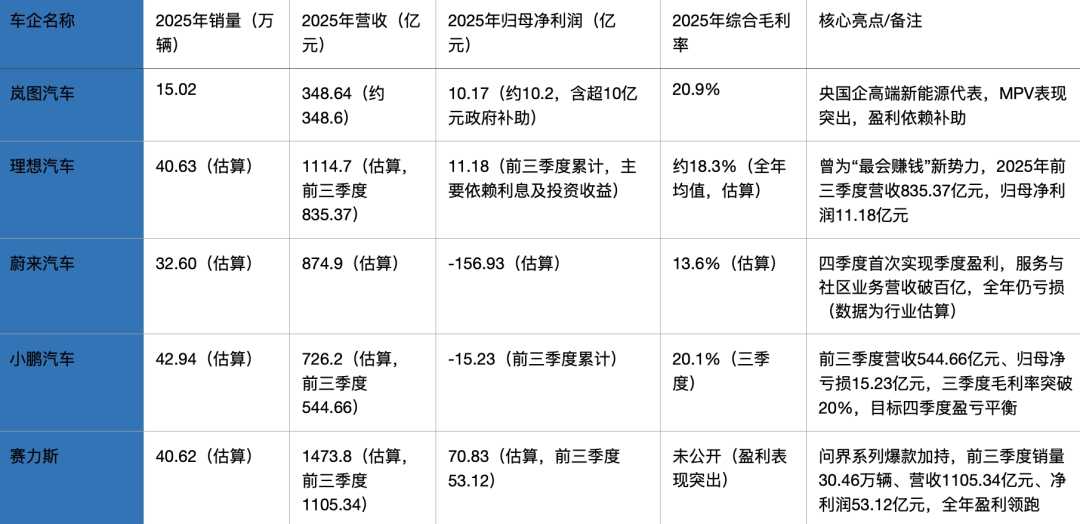
From the comparison data, we can clearly see VOYAH's industry positioning, with both advantages and gaps being evident.
In terms of scale, VOYAH's sales of 150,200 units and revenue of 34.86 billion yuan in 2025 show a significant gap compared to Li Auto, XPeng, and Seres (all surpassing 400,000 units in sales and 70 billion yuan in revenue), and are also lower than NIO's 326,000 units and 87.49 billion yuan in revenue. VOYAH is a 'mid-level player' in the high-end new energy sector and has not yet entered the first tier.
In terms of profit performance, VOYAH seemingly achieved a net profit of 1.02 billion yuan, but it heavily relies on government subsidies and is still in a loss-making state after excluding subsidies. In comparison, Seres is the most outstanding in profit performance among the five vehicle companies. Li Auto's net profit is positive but relies on investment income, while XPeng and NIO are still in a loss-making state. VOYAH's 'turnaround' lacks gold content, and its self-sustaining capability ranks in the middle to lower level among the five.
In terms of product competitiveness, VOYAH's core advantage lies in its gross margin—a comprehensive gross margin of 20.9% not only far exceeds NIO's 13.6% and Li Auto's (approximately 18.3%) but is also on par with XPeng's (20.1% in the third quarter) and even slightly higher. This is attributed to its high-end product positioning and cost control capabilities. However, its shortcomings are also evident: it lacks blockbuster models, with sales volume far below the other four companies, and its brand influence still has room for improvement.
Overall, as the 'sole representative' of high-end new energy vehicles among central and state-owned enterprises, VOYAH shows strong competitiveness in terms of gross margin. However, it still has a considerable gap with the leading players in terms of scale, profit quality, and brand influence, positioning it in the 'second tier' of the high-end new energy market. In the future, it needs to gradually narrow the gap with the first tier by improving its product matrix and enhancing its self-sustaining capability.
IV. Conclusion: VOYAH's 'Debut Performance' Is a Starting Point, Not an Endpoint
The stock price decline on VOYAH's debut day is not an isolated case—in recent years, it is not uncommon for new energy vehicle companies listed in Hong Kong to experience breakouts or cool-offs on their debut days. Companies such as Seres and Leapmotor have had similar experiences. This is related to their own listing models and profit quality, as well as influenced by the industry environment and market sentiment.
There is no denying that VOYAH's growth over the past three years is remarkable, from losses to profits, from sales of less than 50,000 units to surpassing 150,000 units, with a gross margin ranking among the top in the industry and a continuously improving product matrix (covering SUVs, MPVs, and sedans, with new models such as Taishan X8 and Zhufeng to be launched in 2026). As a representative of high-end new energy vehicles among central and state-owned enterprises, its progress is commendable.
However, listing is only a starting point. The long-term performance of the stock price ultimately depends on performance. For VOYAH, how to reduce its reliance on government subsidies and truly achieve self-sufficiency, and how to stand firm in the fierce competition and continuously improve product competitiveness, are the keys to winning market recognition and driving the stock price rebound (rebound) in the future.
Finally, let's take a look at the current models on sale and the upcoming models planned by VOYAH.
SUV Series
VOYAH FREE (FREE+): A mid-to-large new energy SUV, mainly targeting road trip scenarios, available in pure electric and extended-range versions.
VOYAH Zhiyin: A new luxury pure electric mid-size SUV, equipped with Huawei Qiankun Intelligent Driving and HarmonyOS Cockpit, targeting young high-end users.
VOYAH Taishan (including Ultra and Black Warrior editions): A large six-seater flagship SUV, positioned as a new era flagship large six-seater SUV, with top-notch intelligent driving and luxury configurations. The Ultra edition will officially enter mass production and delivery in March 2026.
Sedan Series
VOYAH Zhuiguang / Zhiguang L: A new administrative electric flagship sedan, pure electric drive, mainly targeting high-end business commuting, featuring an elegant design and intelligent cockpit configuration.
Upcoming Models (2026 Plan)
There are also several models that have been announced but not yet officially delivered, including Taishan X8 (a large five-seater SUV), FE (a pure electric FUV), and Zhufeng (a 500,000-yuan-level flagship MPV), which will further complete VOYAH's product matrix.
-
![]()
The Unstoppable Rise of 'Optical Progress and Copper Decline': Sunny Optical’s Strategic Vision for the Next Decade
-
![]()
AI + Going Global in the Second Half: No Intermission for Robot Vacuum Cleaners
-
![]()
The Suffering Endured in E-commerce, Walmart Doesn't Want to Repeat in AI
-
![]()
What Does the Doubling of New Energy Vehicle Exports Mean?
-
![]()
Ghosn: 'Only I Can Save Nissan'
-
![]()
Volkswagen Lays Off 100,000 Employees, The Elephant Sits Down
-
![]()
Expanding Production Capacity! Yutong Optics Acquires Approximately 1.5 Hectares of Industrial Land in Chang'an, Dongguan
-
![]()
Why Is Nokia Making a Comeback in the AI Era?