Five-Year Peak in Mobile Phone Price Hikes: Consumers Rush to Buy, Industry Consolidation Looms
 03/19 2026
 628
628
By mid-March, the mobile phone industry, once known for its stability, was abruptly upended by a wave of 'price adjustment announcements.' Following repeated warnings about escalating component costs in 2025, the anticipated 2026 price surge has transitioned from mere speculation to a confirmed reality.
From the frenzy in offline stores to the formal online price adjustment notices, this unprecedented mobile phone price hike, touted as the 'largest in five years,' is significantly altering consumer purchasing strategies. During my on-site investigations, I observed that the persistent shortage of memory chip supplies is causing intense upheaval across the entire mobile phone sector.
1. OPPO Initiates the Price Surge
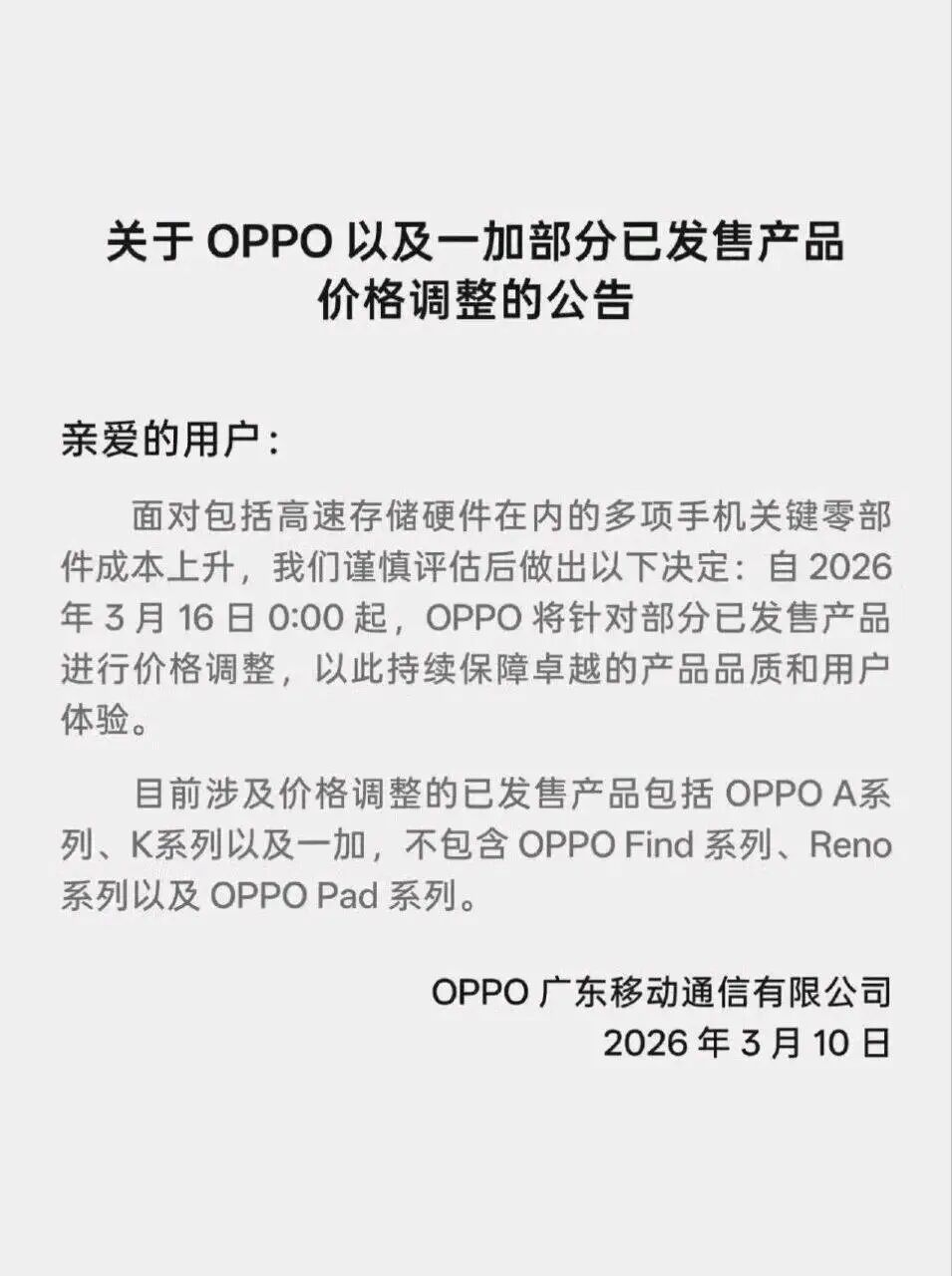
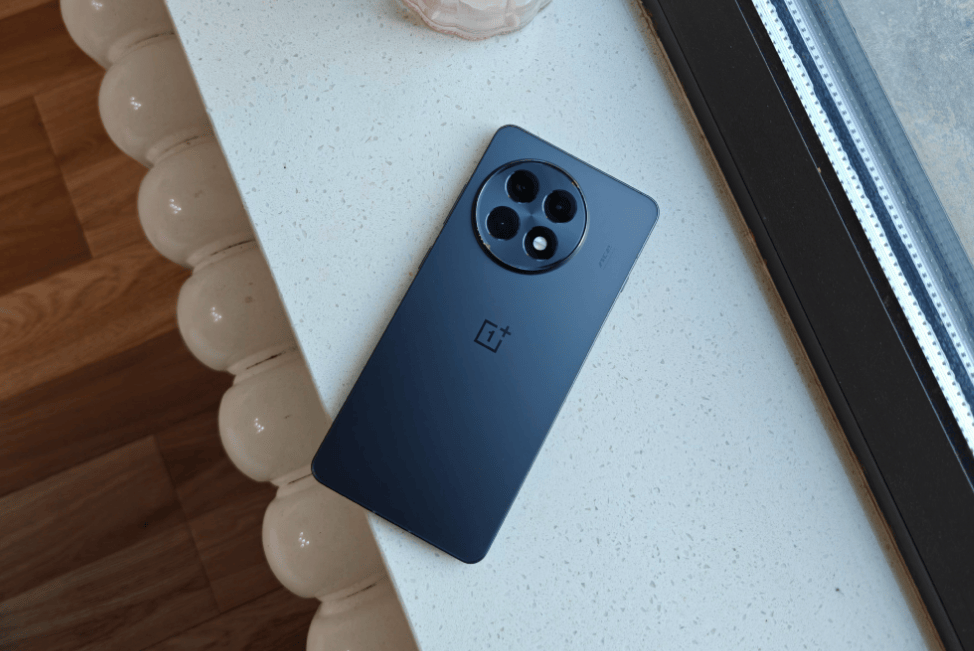
On March 10, OPPO officially ignited the 2026 spring mobile phone price hike trend with an announcement. The notice cited rising costs of key mobile phone components, including high-speed storage hardware, as the reason for adjusting prices on certain released products under the OPPO and OnePlus brands, effective March 16. This affects the OPPO A series, K series, and the OnePlus lineup.
This move is not an isolated case. Samsung's Galaxy S26 series, unveiled in late February, set the precedent, with its domestic standard version generally seeing a price increase of over 1,000 yuan compared to its predecessor. According to Beike Finance, this marks the most substantial price adjustment in the mobile phone industry in nearly half a decade.
During a visit to a major shopping mall in Beijing, a salesperson at a VIVO authorized experience store bluntly stated, 'Some prices have already gone up, and the rest will follow shortly, with increases of at least 500 yuan. Every brand is raising prices. Take this model, for instance—it was 5,999 yuan, now it's 6,499 yuan.' A staff member at a Honor store also disclosed that low-end models might see price hikes under various pretexts, while new models will definitely experience price increases.
Beyond the brands that have already announced price hikes, plans from more leading manufacturers have also emerged. Securities Times e-Company and Southern Metropolis Daily reported that channel and ODM manufacturers revealed that multiple leading brands, including vivo, Xiaomi, and iQOO, have formulated price increase strategies and plan to initiate a new round of collective price adjustments in March. All vivo mobile phone products may see price increases starting March 15, with an estimated rise of 10%-15%, although vivo has not yet issued an official response.
Industry insiders have also hinted that with frequent fluctuations in memory costs, the Chinese mobile phone market might witness a historic scenario of multiple price increases within a single year in 2026. Regarding the magnitude of these price hikes, market research firm Counterpoint Research predicts that after March, the average selling price of new mobile phone models in the Chinese market will rise by 15% to 25% compared to models in the same price range in 2025.
2. AI Sparks a 'Memory Crisis'?
What has caused the sudden, across-the-board surge in mobile phone prices? Delving into the supply chain, the culprit appears to be a critical component—'memory chips.'
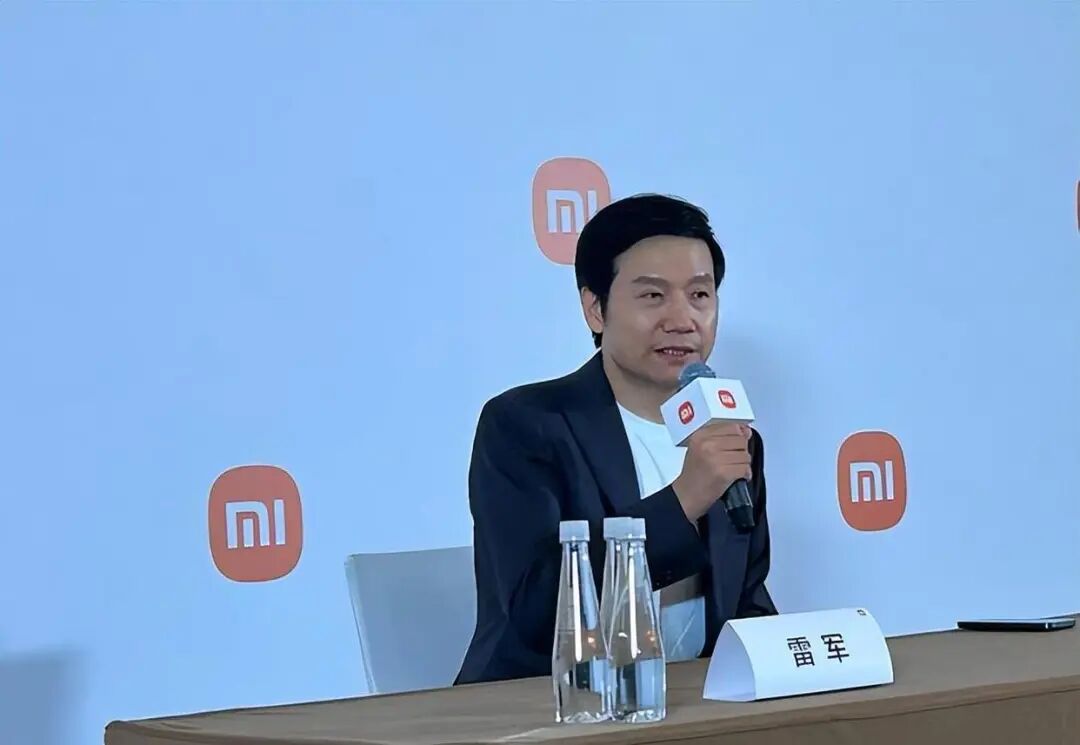
'Memory chip quotes in the first quarter of this year are nearly four times those of the first quarter last year,' admitted Lu Weibing, President of Xiaomi Group, underscoring the industry's dilemma. Xiaomi founder Lei Jun also publicly stated during the Two Sessions that the explosive growth in AI demand has led to a severe shortage of memory chips, with prices rising significantly over the past year, exerting immense pressure on the mobile phone business.
CNR Business analysts pointed out that the rapid advancement of artificial intelligence has triggered a capacity crunch for memory chips. Each AI server requires eight times the DRAM and three times the NAND compared to ordinary servers. Memory manufacturers are shifting production capacity towards high-margin products like HBM (High Bandwidth Memory) and DDR5, directly squeezing the supply space for mobile phone memory.
Zhang Cheng, an investment advisor at Datong Securities, believes that memory chip prices have risen notably in the past two months, with some mobile phone manufacturers' memory chip inventories nearly exhausted, necessitating price increases to offset the original cost pressures.
In addition to memory chips, costs for other components have also risen concurrently. According to Southern Metropolis Daily, foundry fees for advanced process chips have increased annually, with the cost of a single Snapdragon 8 Elite chip exceeding 1,850 yuan, and 2nm foundry costs being 50% higher than 3nm. OLED flagship screens have risen from 800 yuan to 1,100 yuan, with a 300-yuan increase in single-screen costs. Coupled with overall increases of 8%-12% in high-density batteries, metal frames, manufacturing, logistics, and labor costs, manufacturer cost pressures have intensified further.
Meanwhile, new models in 2026 generally come equipped with features previously exclusive to flagship models, such as on-device AI, satellite communication, and telephoto imaging, increasing R&D and patent costs, which have also become significant drivers of price adjustments.
3. The Predicament of Budget Phones
This AI-induced price hike is profoundly reshaping the competitive landscape of the mobile phone industry.
Low- to mid-end models with thin profit margins are the first to feel the impact. According to a Counterpoint report, the cost share of memory semiconductors in smartphone BOMs (Bill of Materials) has risen from 10%-15% to over 20%, with some low- to mid-end models approaching 50%, pushing many budget phones into negative gross margin territory. Some dealers lamented to reporters, 'Offline mobile phone prices have risen, and it's hard to find models under 1,000 yuan—they've all gone up by several hundred yuan.'
This has also led to a divergence in consumer purchasing strategies. Faced with rising purchase costs, some users choose to 'hold on a bit longer,' extending the lifecycle of their current phones. Data shows that the average replacement cycle for domestic users reached nearly 33 months in the first half of 2025. Another group of users prefers to 'go all in,' opting to spend a bit more on high-end versions for longer-term use.
For the industry, this represents an inevitable consolidation. IDC predicts that global smartphone shipments are expected to decline by 12.9% year-on-year in 2026, reaching the lowest annual level since 2013. The survival space for small and medium-sized manufacturers lacking supply chain bargaining power is being rapidly compressed. In late February, Meizu's announcement of suspending its mobile phone business for strategic transformation served as a stark reminder—AI-driven memory price hikes have breached its already fragile financial defenses.
Pan Helin, a member of the Expert Committee on Information and Communication Economics at the Ministry of Industry and Information Technology, believes that computing power chips exhibit cyclicality, roughly every one to two years, making short-term price hikes inevitable. However, rising prices will attract more manufacturers to enter or expand capacity while also suppressing demand, ultimately achieving normal market supply-demand regulation.
For ordinary consumers, the decision of whether to buy a phone now is not a straightforward 'yes' or 'no.' Some argue that in this price hike wave, manufacturers should not solely blame AI but also reflect on the 'path dependency' after hardware innovation in mobile phones has entered a stagnant period. When the marginal effects of 'spec-stacking innovation' diminish, 'visible upgrades' like increasing memory capacity, which users strongly perceive, become 'cost black holes' amid supply chain fluctuations.
Whether to 'avoid buying to save money' or 'buy ahead at current prices' may only be resolved with time. However, one thing is certain: in this butterfly effect triggered by AI, both manufacturers and consumers need to readjust to a 'more expensive' mobile phone era.
-
![]()
Smartphone Prices Surge Amid Manufacturer Anxiety
-
![]()
Orbbec Soars to Record Heights, Eyes Further Capital Influx of 980 Million!
-
![]()
Tongding Interconnect Sets Up Shop in Shaoguan with 800 Million Yuan in Registered Capital
-
![]()
Before Kimi’s A-Share Debut, Zhipu Aims to Secure More 'Strategic Funding'
-
![]()
Innovative Leap | Fiber-Pluggable 1470nm Laser Source: Revolutionizing Precision Laser Weeding
-
![]()
73-Day Rapid Listing: Where Does Unitree's Wang Xingxing's 'Sense of Urgency' Come From?
-
![]()
AI Project Mindverse, Backed by Meituan, Faces Data Inflation Allegations Over Its Macaron Product
-
![]()
3000-word In-Depth Analysis | What Makes Physical AI So Magnetic? It Has Captivated Masayoshi Son, Jensen Huang, and Justin Sun All at Once