Reshaping of the Market Structure for Incremental and Replacement Purchases: Domestic Brands Lead the Existing Market Competition, with 'Internal Circulation' as the Core of Rivalry
 03/19 2026
 600
600
Looking back at the domestic automobile market from the vantage point of 2026, the most noticeable change is not the sudden popularity of a new model, but rather a complete shift in the industry's 'fundamental logic.' New energy vehicle penetration has surged to over 60%, Chinese brand passenger vehicles have maintained a market share above 50% for 18 consecutive months, joint venture brands' market share continues to be squeezed, and the 'brand halo' of traditional luxury vehicles is fading amidst technological advancements. Consumers no longer blindly follow brands; instead, they prioritize 'value for money' and 'practicality' when purchasing vehicles.
Data shows that in the 2025 Chinese incremental and replacement car market, user retention and flow among the four major segments—new players, domestic brands, joint ventures, and luxury brands—exhibit significant differentiation: domestic brands amplify their 'siphon effect,' new players build moats through ecosystems, joint venture brands face ongoing challenges in their internal circulation systems, and luxury brands undergo a reshuffling of their 'luxury definition rights.'
▍Significant Segmentation Among Factions: Restructuring of the Incremental and Replacement Purchase Landscape Across Four Tiers
According to a Wilson report, the 2025 incremental and replacement market for new players reveals an unexpectedly large gap between tiers: the internal circulation rate (users choosing the same segment for their next vehicle) differs by 30 percentage points between top-tier and bottom-tier brands. NIO leads with a 42% internal circulation rate, followed closely by Seres (39%), Xiaomi (38%), and XPeng (35%), forming a highly loyal 'first tier.' Tesla and Leapmotor rank in the second tier with 23%, while most remaining brands fall below 15%, with ZHIJIE at just 12%.
The first tier retains users not solely through product strength but by building 'moats.' NIO excels in user community operations and battery swap services, alleviating range anxiety and creating a unique experience that users feel they cannot replicate with other brands. Seres and Xiaomi leverage HarmonyOS Intelligent Mobility and seamless integration across human, vehicle, and home ecosystems, respectively, ensuring users remain within their familiar ecosystems. XPeng, with its focus on intelligent driving technology, attracts tech-savvy users.
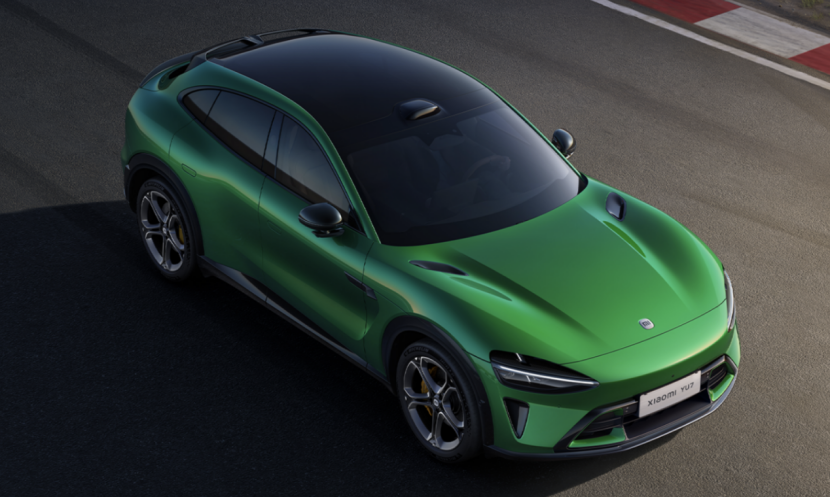
Simultaneously, the mindset of new player users has shifted—whereas earlier, vehicle replacement might have been driven by novelty, now 'practical value' is prioritized. Mere impressive specifications no longer suffice; the usability of intelligent features, convenience of charging, and cost-effectiveness are now key decision factors. This makes it difficult for traditional fuel brands to capture users from new players. Instead, BYD emerges as the 'winner,' absorbing 3%-9% of users migrating from new players, meeting technical demands while offering competitive pricing, thus demonstrating strong cross-segment appeal.
Compared to new players, the 2025 incremental and replacement landscape for domestic brands is dominated by BYD, with others competing collectively. BYD leads the domestic brand first tier with a 27% loyalty rate, thanks to its Blade Battery and DM-i Super Hybrid technologies, coupled with irresistible cost-effectiveness, making it the first or second choice for nearly all other domestic brand users considering a replacement.
A clearer trend is the strengthening 'internal circulation' among domestic brands: nearly half of users opt to upgrade within the domestic brand segment, making it increasingly difficult for joint venture brands to poach users. This reflects the overall improvement in the product strength of Chinese brands. Previously, the market above 200,000 RMB was dominated by joint ventures, but now 200,000-300,000 RMB has become the mainstream price range for replacements. Domestic brands in this segment match or even surpass joint ventures in terms of configuration, technology, and user experience, better understanding the needs of Chinese consumers.
Automakers like Geely, Changan, and Chery have also devised strategies to retain users by launching group-affiliated sub-brands. Geely Galaxy focuses on premium new energy, Changan Deepal on tech trends, and Chery Jetour on practical home use, precisely meeting the upgrade needs of parent brand users and forming a cycle of 'parent brand drainage , sub-brand retention.' Apart from BYD, other domestic brands have loyalty rates mostly between 3%-20%, competing on the same track. Finding unique positioning, such as 'best for families' or 'most reliable intelligent driving,' has become crucial for survival.
For joint venture brands, 2025 marks a 'cold winter' in the incremental and replacement market: internal circulation rates plummet, with Toyota topping at 16% and many brands falling below 10%, losing their once-proud user retention systems. German and Japanese brands fare relatively better, maintaining some internal flow thanks to their long-established user bases, while American, Korean, and French brands experience accelerating outflows.
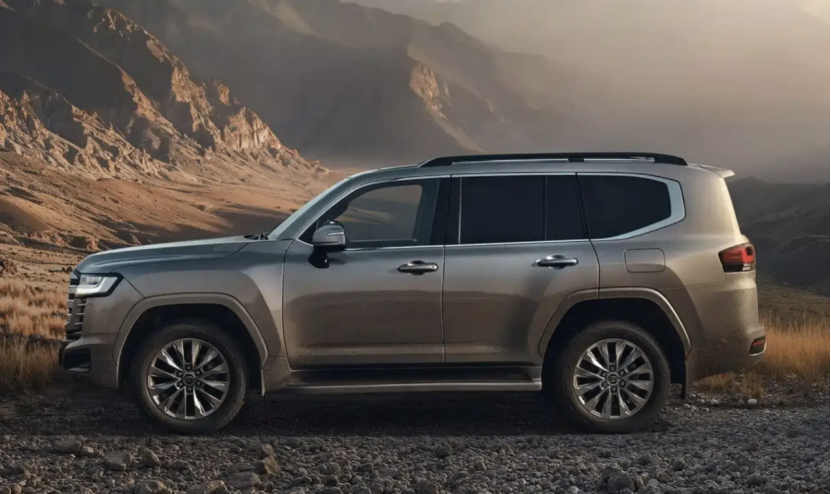
Industry experts attribute the declining user retention of joint venture brands to the erosion of their 'brand filters.' Previously, consumers bought joint venture vehicles partly for 'prestige,' believing them to be of higher quality and status. Now, pragmatism reigns; buyers focus on 'value for money.' At similar prices, domestic brands offer more advanced new energy technologies and smarter configurations.
Crucially, the direction of user outflow from joint venture brands is highly concentrated: BYD consistently absorbs around 15% of these users. This again exposes the shortcoming of joint venture brands: their new energy products lag behind market trends. By 2025, domestic brands' new energy models cover the mainstream price range of 100,000-300,000 RMB, while joint venture brands are still slowly iterating.
More severe ly, joint venture brands enter a 'death cross' in 2026—user inflows far below outflows. Without swiftly launching competitive new energy products, they risk further marginalization.
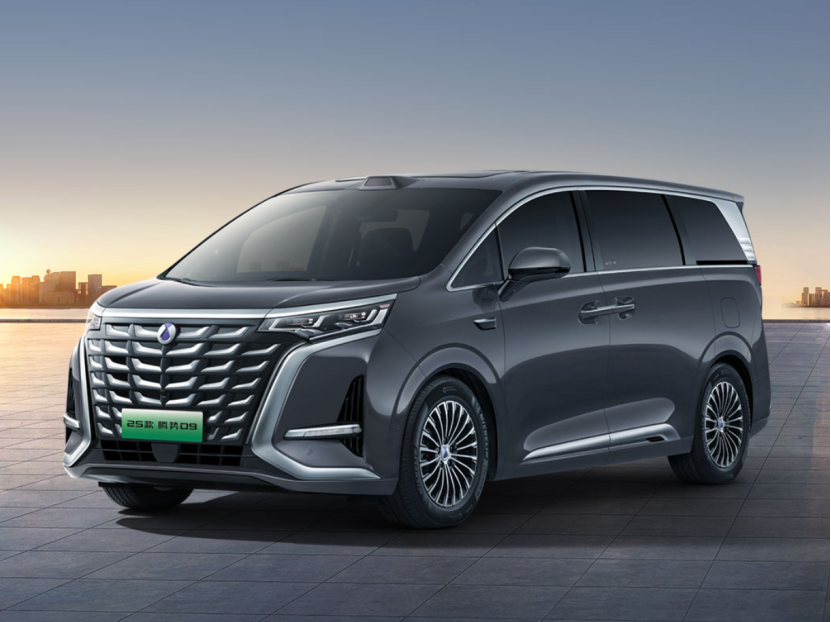
Meanwhile, traditional luxury brands also struggle, with their once-'closed-loop' circle Difficult to sustain : retention rates for incremental and replacement purchases vary widely, with Mercedes topping at 11% and Cadillac and MINI as low as 3%. Even among BBA brands, internal circulation rates are only 6%-11%. Previously, luxury users mostly rotated among BBA brands, but now internal BBA Mutual flow rates are below 6%, rendering same-circle replacement logic largely obsolete.
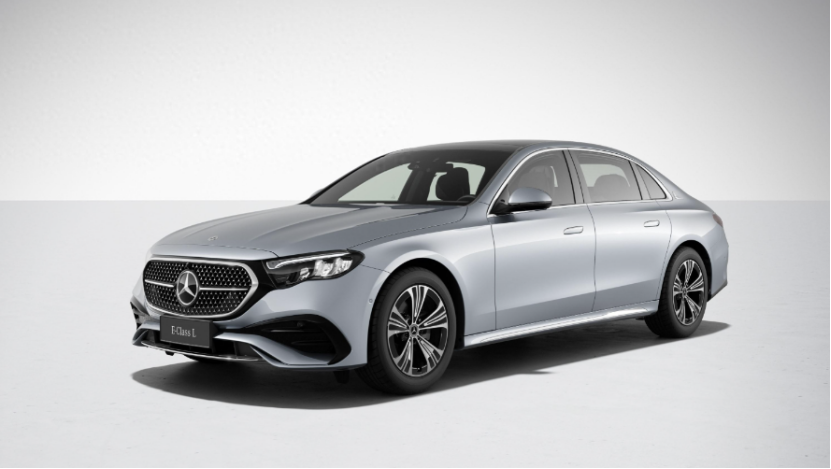
The flow direction of luxury users is clear: on one side, BYD penetrates some luxury circles, absorbing 4%-11% of outflowing luxury users, many of whom consider domestic brands for the first time and ultimately choose BYD, primarily its premium brands like Denza and Yangwang. On the other side, premium new player brands like Li Auto, Seres, and Tesla absorb 4%-9% of luxury users.
This reflects a redefinition of luxury: previously, luxury was about brand history, mechanical prowess, and status symbolism; now, it's about 'substance'—advanced electric drive technology, superior intelligent experiences, and attentive service. New-generation luxury buyers prioritize 'personal satisfaction' over 'social perception.'
▍A Comprehensive Shift from 'Brand Loyalty' to 'Value Priority'
The most significant change in the 2025 incremental and replacement market is the shift in consumer mindset—regardless of whether purchasing a 100,000 RMB economy car or a 500,000 RMB luxury vehicle, buyers have moved from 'brand loyalty' to 'value priority.' Brand-derived premiums hold less sway; 'technological advancement, cost-effectiveness, and convenience' have become core considerations for all vehicle replacements.
This pragmatism is even more pronounced in the mass market. Previously, some bought joint venture vehicles for perceived 'reliability and prestige'; now, buyers meticulously compare specifications, evaluate intelligent cockpit usability, and calculate savings on electricity versus fuel. User surveys by DCD Auto show that 42% of users replace their vehicles for 'more cost-effective powertrains,' and 27% for 'better driving experiences.' Moreover, new energy vehicle owners have significantly shorter replacement cycles: 90% replace within five years, compared to 70% of fuel vehicle owners keeping theirs for over five years—indicating that rapid new energy product updates and noticeable experience improvements drive earlier upgrades.
In the luxury market, this shift is more intriguing: previously, luxury purchases carried a 'social attribute,' with brand logos symbolizing status; now, luxury buyers prioritize 'personal experience.' Upon entering a vehicle, they care less about logo visibility and more about intelligent cockpit interaction smoothness, assisted driving reliability, battery system safety, and interior comfort. This transition from 'pleasing others' to 'pleasing oneself' presents opportunities for Chinese brands.
New energy adoption is irreversible, accelerated by trade-in policies. New energy models' 'pain points' are diminishing: range anxiety is largely resolved, and charging infrastructure improves.
In terms of ecosystem synergy, leading brands innovate: NIO (NIO, Leapmotor, Firefly), HarmonyOS Intelligent Mobility (Wu Jie), and others share technologies and ecosystems across brands, allowing users to upgrade without leaving familiar systems. For example, NIO users can switch to other NIO models or group brands like Leapmotor and Firefly, retaining battery swap services and user benefits, thus discouraging brand switching.
Traditional domestic automakers also respond by launching sub-brands to 'precisely retain' users—different sub-brands target distinct user groups, such as Geely Galaxy for premium new energy seekers and Changan Deepal for young, trendy users, meeting upgrade needs while keeping users within their ecosystems.
In the 2025 Chinese incremental and replacement car market, data clearly shows that 'value priority' has become mainstream. Chinese brands, leveraging new energy and intelligent technology accumulations, finally dominate the existing market competition. Meanwhile, joint venture and traditional luxury brands face unprecedented user attrition crises.
According to Wilson's forecast, by 2026, brand premiums will gradually be replaced by technological value, intelligent experiences will become new consumer labels, and 'pragmatism' will fully influence luxury consumption decisions. 2026 will be a critical year for luxury brand competition; only by launching electrified products with core competitiveness can they weather market impacts. 'Technological democratization' is reshaping luxury definitions, driving the industry toward a product-essence and user-value-centric transformation.
Layout 丨 Yang Shuo
Image Sources: Qianku.com, Xiaomi Automobile, Denza, Toyota, Mercedes-Benz
-
![]()
The Unstoppable Rise of 'Optical Progress and Copper Decline': Sunny Optical’s Strategic Vision for the Next Decade
-
![]()
AI + Going Global in the Second Half: No Intermission for Robot Vacuum Cleaners
-
![]()
The Suffering Endured in E-commerce, Walmart Doesn't Want to Repeat in AI
-
![]()
What Does the Doubling of New Energy Vehicle Exports Mean?
-
![]()
Ghosn: 'Only I Can Save Nissan'
-
![]()
Volkswagen Lays Off 100,000 Employees, The Elephant Sits Down
-
![]()
Expanding Production Capacity! Yutong Optics Acquires Approximately 1.5 Hectares of Industrial Land in Chang'an, Dongguan
-
![]()
Why Is Nokia Making a Comeback in the AI Era?