Unitree Robotics IPO: A 'Pioneering' Leader?
 04/01 2026
 656
656
By Xiao Tian
By 2026, Tesla's Optimus has yet to enter mass production in the United States, but China's capital markets may soon welcome Unitree Robotics as a trailblazer.
On the evening of March 20, the Shanghai Stock Exchange officially accepted Unitree Robotics' IPO application for the STAR Market. Prior to this, the company had completed a pre-review by the Shanghai Stock Exchange, including responding to two rounds of inquiries, demonstrating its readiness for public listing.
According to the prospectus, Unitree shipped 5,500 humanoid robots (excluding wheeled models) in 2025, securing the top spot globally.
Industry research firm Omdia estimates that approximately 13,000 humanoid robots will be shipped globally in 2025. This indicates that Unitree alone commands nearly half of the global humanoid robot market, a remarkable feat.
It's worth noting that whether it's other domestic humanoid robot companies or overseas pioneers like Boston Dynamics, newcomers like Figure, or even Tesla, they are all still in the research and validation stages, highlighting Unitree's early lead.
Why has Unitree stood out? What has it done right? As the entire industry grapples with the triple dilemma of 'technical challenges, commercialization delays, and sustained losses,' what does Unitree's listing signify?
Regardless, Unitree's listing is a milestone for China's embodied AI industry. Its significance lies in providing verifiable commercial evidence and steering humanoid robots toward more tangible outcomes: robots are now being produced, sold, and delivered at scale, much like traditional commodities.
1. The 'BYD' of Humanoid Robots
Objectively speaking, Unitree's financial data may come as a surprise to outsiders.
Why is that? Because in the nascent field of humanoid robots, Unitree has achieved 'low investment + high growth + high profits,' a result that defies conventional expectations.
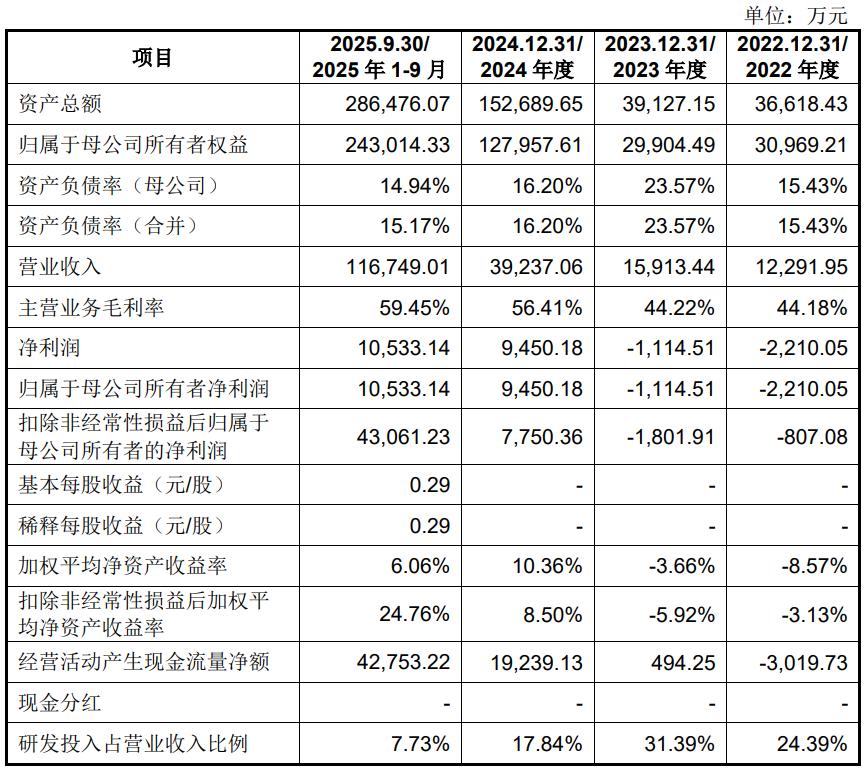
Specifically, the prospectus reveals that over three years and nine months (from 2022 to the first three quarters of 2025), Unitree Robotics generated cumulative revenue exceeding RMB 1.8 billion and net profit of RMB 169 million.
These figures should not be underestimated.
Despite Unitree's widespread recognition, having appeared three times on the CCTV Spring Festival Gala and frequently dominating national performance events and online trending lists, its actual market investment remains relatively modest.
For example, from January to September 2025, Unitree's advertising expenses were just RMB 22.5728 million—a figure that some netizens joke is less than a single marketing campaign by many internet companies.
In stark contrast to its low investment, Unitree's revenue has skyrocketed in recent years.
From a developmental perspective, 2022-2023 marked the initial stage, with revenues of RMB 123 million and RMB 159 million, respectively. The scale was small, and the company incurred losses for two consecutive years, with net losses of approximately RMB 22 million and RMB 11 million.
In 2024, growth accelerated, with revenue rising to RMB 392 million, a nearly 146% year-over-year increase. The company achieved its first annual profit, with a net profit of RMB 95 million and adjusted net profit of RMB 78 million.
2025 was a breakthrough year, with revenue reaching RMB 1.167 billion in just the first three quarters and net profit of approximately RMB 105 million. Adjusted net profit surged to RMB 431 million.
This performance is underpinned by humanoid robots and high gross margins.
Unitree Robotics' business is divided into two main segments: core business and other operations. The core business revolves around 'selling robots,' including humanoid robots, quadruped robots, and robot components.
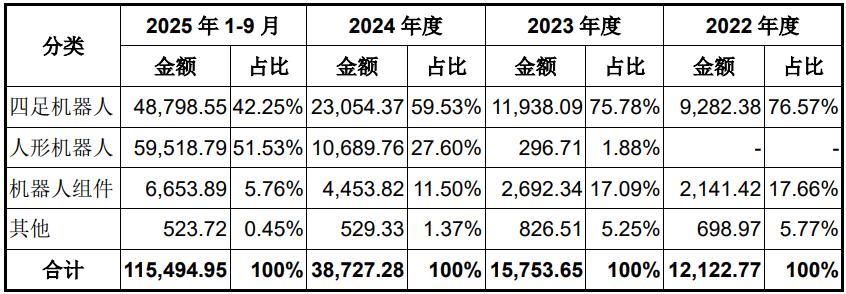
In terms of revenue structure, the exponential growth is driven by robots 'standing up': quadruped robot revenue doubled for two consecutive years but was surpassed by the even more rapid growth of humanoid robots.
Unitree's humanoid robot business began in August 2023, scaled up in 2024, and exploded in 2025. In the first three quarters of 2025, humanoid robot sales revenue reached RMB 595 million, more than five times the total for all of 2024.
More importantly, among robot companies, Unitree's profitability stands out.
The prospectus shows a comprehensive gross margin of 56.98% in 2024 and 59.83% for the first nine months of 2025. In comparison, UBTECH and RoboTek had gross margins of 28.65% and 46.56%, respectively, in 2024.
This means Unitree's growth is not only driven by humanoid robots but also accompanied by exceptionally high profitability.
This is why the prospectus reveals an ambitious goal: Unitree aims to become the 'BYD' of the embodied AI field.
During China's automotive transition from gasoline to electric over the past few years, BYD and new energy vehicle (NEV) startups took distinct technological paths. Leveraging a vertical integration model, BYD became the world's sixth-largest automaker through cost control, a vertically integrated supply chain, and rapid technological iteration.
Today, we see a similar trajectory in Unitree.
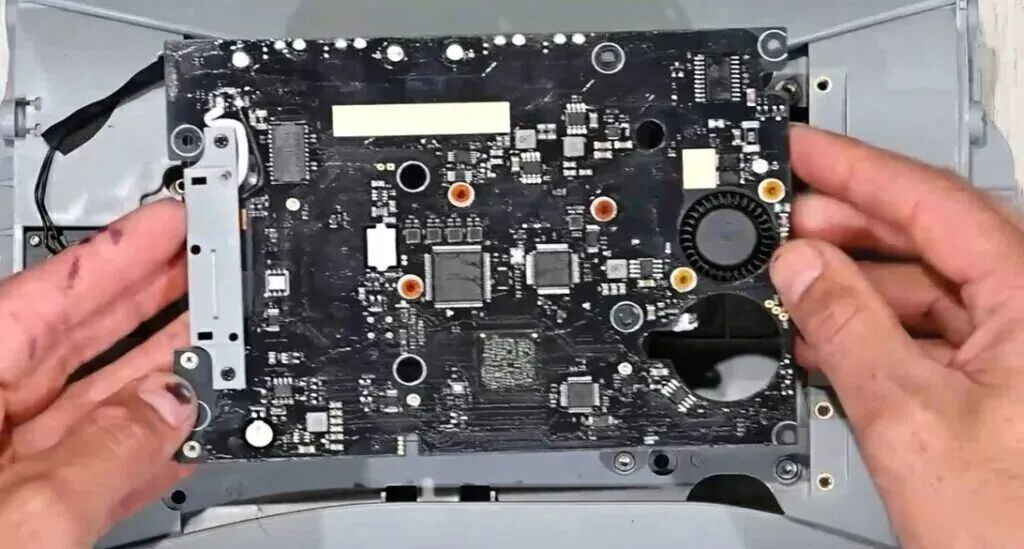
Unitree has established full autonomy in various components and complete systems, including motors, reducers, joint modules, battery modules, circuit modules, and structural parts.
At the same time, it does not shy away from outsourcing processes with mature technologies and abundant market supply to optimize resource allocation and enhance cost-effectiveness.
Moreover, Unitree's cost control extends beyond production. Despite gaining massive exposure from the CCTV Spring Festival Gala, the company has not blindly expanded production but instead adopts a 'produce-to-order' model to precisely match supply and demand.
In other words, this combination of 'autonomous control for barriers + flexible strategies for cost control + precise production and sales for efficiency' allows Unitree to break free from the vicious cycle of 'burning money for growth' in the cutting-edge tech sector. Its high gross margins are a concentrated reflection of three advantages: technological autonomy, economies of scale, and refined operations.
2. An 'Atypical' Embodied AI Company
To some extent, Unitree has achieved remarkable success.
Looking at Unitree's shareholder list, it reads like a 'Hall of Fame' of China's hard tech investment circle: Sequoia Capital, Meituan, Shunwei Capital, Shenzhen Capital Group... nearly all the top-tier institutions are on board. Their successive multi-round investments have driven Unitree Robotics' valuation to soar.
According to public disclosures, Unitree plans to raise RMB 4.202 billion and issue no less than 10% of its shares, corresponding to an overall valuation of RMB 42 billion.
Unitree's success proves one thing: whoever can first transform laboratory technologies into products that customers are willing to pay for will gain market pricing power and even the red carpet to capital markets.
However, this track is far more competitive than imagined.
Over 20 companies, including Leju Robotics, CloudMinds, Standard Robots, Youibot, Rokae, SEER, Atom Robotics, Ji Zhi Technology, Canoro, and Jiuwu Intelligence, have explicit listing plans, each with its unique strengths.
In the near future, Unitree will inevitably face challenges similar to those of BYD, the 'king of competition'—as external competition intensifies, BYD's growth path, driven by scale advantages, is hitting bottlenecks. To seize opportunities in mid-to-high-end market segments, intelligence capabilities are key.
In fact, BYD has been 'catching up' on intelligence in recent years.
For an embodied AI company like Unitree, its challenge also lies in intelligence—the 'brain' of the robot.
Looking closely, although Unitree is known for being 'technology-driven,' its future investment in this area is noticeably inadequate.
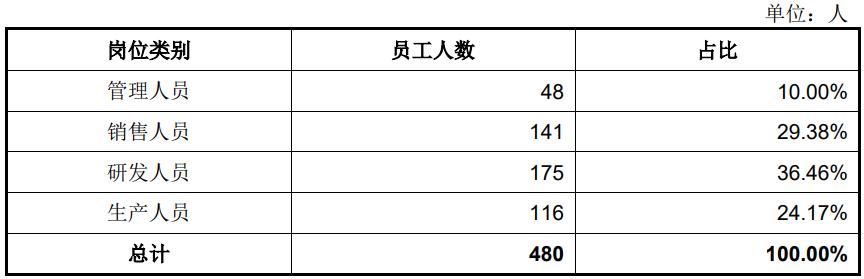
Financial reports show that Unitree has only 480 employees, with 175 in R&D, accounting for just 36.5%—not a high proportion.
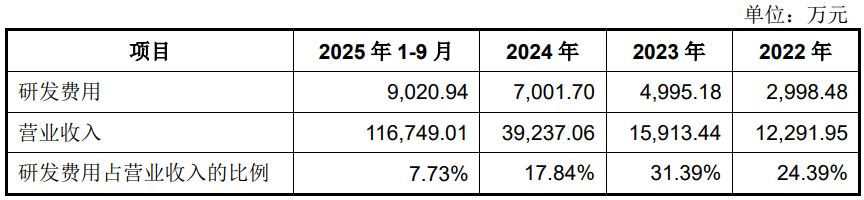
More critically, in terms of R&D investment, Unitree spent a cumulative RMB 150 million from 2022 to 2024 and RMB 90.2 million in the first nine months of 2025. In comparison, UBTECH spent RMB 478 million in 2024, while RoboTek spent RMB 71.79 million.
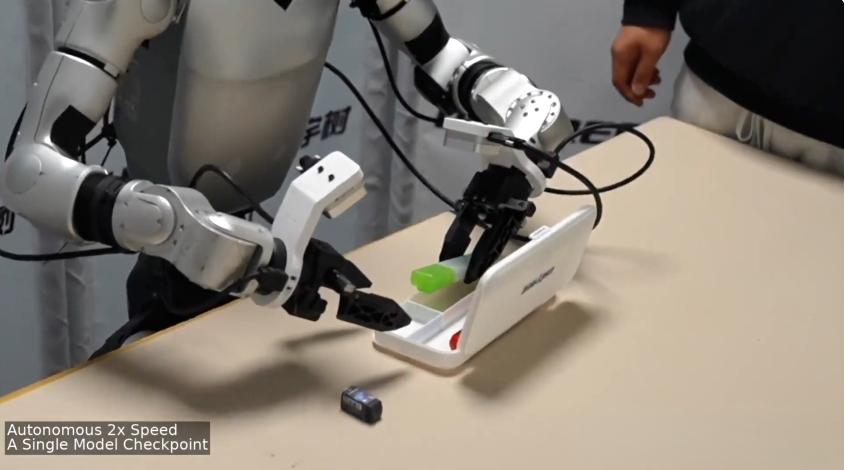
Generally, a robot's capabilities can be broken down into the 'brain' and the 'cerebellum.' The cerebellum handles motion control—making the robot run, jump, flip, and maintain balance. In this dimension, Unitree is at the industry's pinnacle: backflips, side flips, and group martial arts performances demonstrate its undisputed technical prowess.
But the brain determines the robot's understanding, interaction, and autonomous decision-making abilities. Without a mature brain, robots can only execute preset instructions and cannot truly understand their environment or autonomously plan tasks. This is the key to whether general-purpose robots can move beyond laboratories into factories and homes.
From this perspective, the underlying logic supporting Unitree is essentially the result of 'short-term traffic dividends' and 'supply gaps.'
The prospectus also shows that from 2022 to 2024, overseas revenue accounted for over 55% for three consecutive years, meaning domestic revenue accounted for less than 45%. In 2025, domestic revenue reached 60.80%, while overseas revenue was 39.20%.
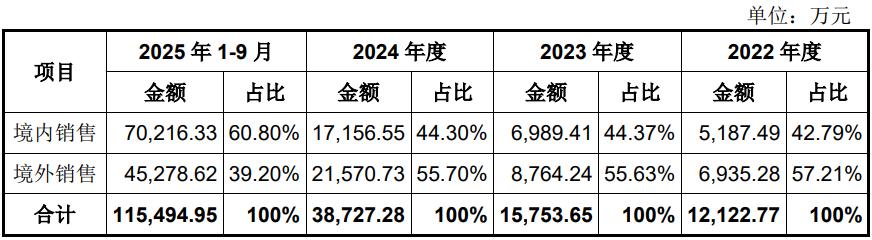
2025 marked the first year Unitree's domestic revenue surpassed overseas revenue, but the absolute value of overseas revenue continued to grow.
Unitree attributes this revenue shift to the Spring Festival Gala's influence. After all, before the 2025 Gala, domestic embodied AI was still an 'underground' field, with undeveloped performance attributes and an immature attention economy—all demand had yet to emerge. Meanwhile, overseas research institutions and university labs had greater demand for robot bodies than local supply, creating opportunities for Unitree.
Simply put, its customers are primarily research institutions, commercial performances, and some humanoid robot companies purchasing for algorithm testing. While these scenarios are decent, they are not large-scale or stable demand drivers.
In other words, Unitree's success and the broader prosperity of China's humanoid robot industry are built on an unstable foundation.
This is clearly risky. More and more humanoid robot companies will inevitably face severe homogenization in the near future, followed by a shakeout and consolidation.
Thus, the global humanoid robot industry in 2026 is at a deceptive stage: superficially, hardware prices are plummeting, but in reality, competitive barriers are rising exponentially with the emergence of foundational models.
This will be Unitree's next major test.
3. The 'Pioneering' Unitree, Still at the Starting Line
In the humanoid robot industry, China and the United States have taken different paths—
Whether in the past with smart cars, current AI, or upcoming humanoid robots, China boasts the world's most complete industrial chain. As a result, Chinese humanoid robot companies generally focus on robot hardware bodies.
Meanwhile, North America maintains leadership in foundational AI architectures, basic models, and computing infrastructure.
Breaking down Unitree's humanoid robot supply chain, we find a robust and low-cost underlying supply chain built by leading Chinese advanced manufacturing companies.
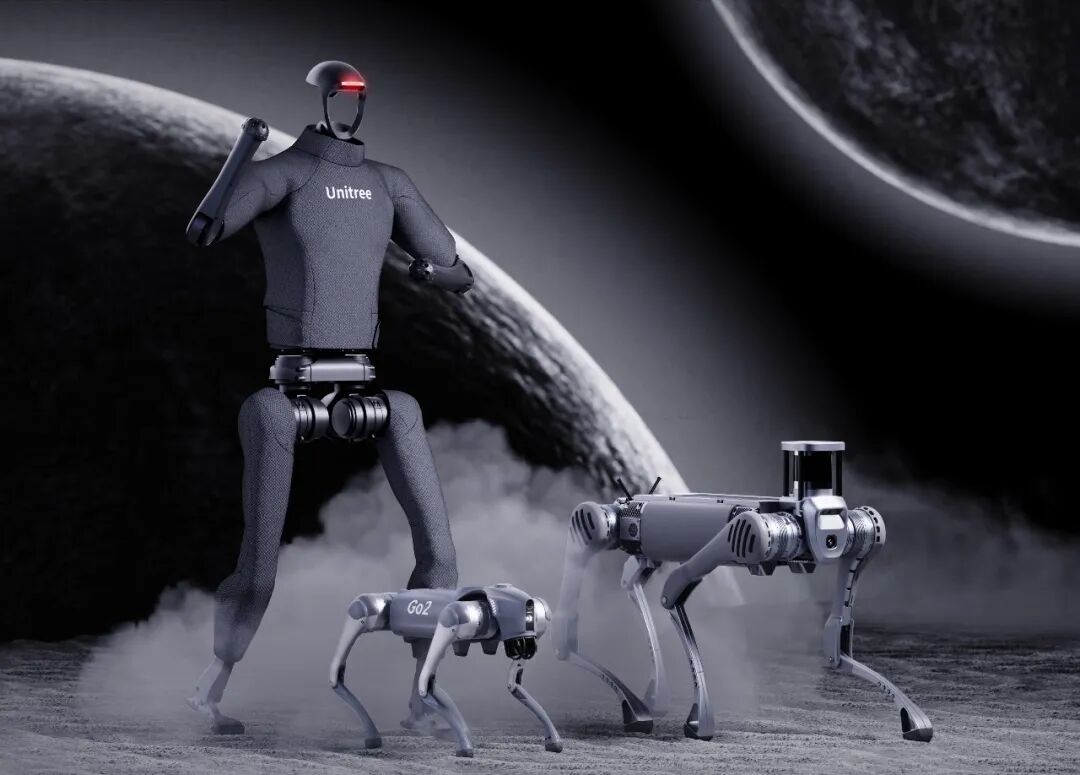
As a leader in reducers, Zhongda Leader (002896.SZ) supplies 63% of Unitree's planetary reducers. Orbbec (688322.SH), a domestic leader in 3D vision, provides 72% of Unitree's 3D vision modules. The dark horse in micro-motors, Moons' Electric (603728.SH), is Unitree's exclusive supplier of coreless motors (accounting for over 15% of category purchases)...
Without exaggeration, Unitree has elevated China's humanoid robot hardware to unprecedented heights.
But it must also be acknowledged that this robot is still in its early stages of intelligence development.
At GTC in March, Wang Xingxing noted that the industry is still far from achieving a 'ChatGPT moment.' The biggest challenge is the lack of a truly generalized embodied AI model capable of stably performing tasks in unfamiliar scenarios.
Compared to Tesla, which is deeply integrated with Grok, Unitree may be even further from such a 'brain': its self-developed UnifoLM large model, based on Qwen, is still in the R&D testing phase. Previously, Unitree relied more on third-party large language models for interaction capabilities.
On March 25, Tesla released the latest Optimus video through official channels, showcasing for the first time the robot's core hardware designs, including the reduction gearbox and dexterous hands, as well as its R&D environment, revealing the extent of its engineering progress.
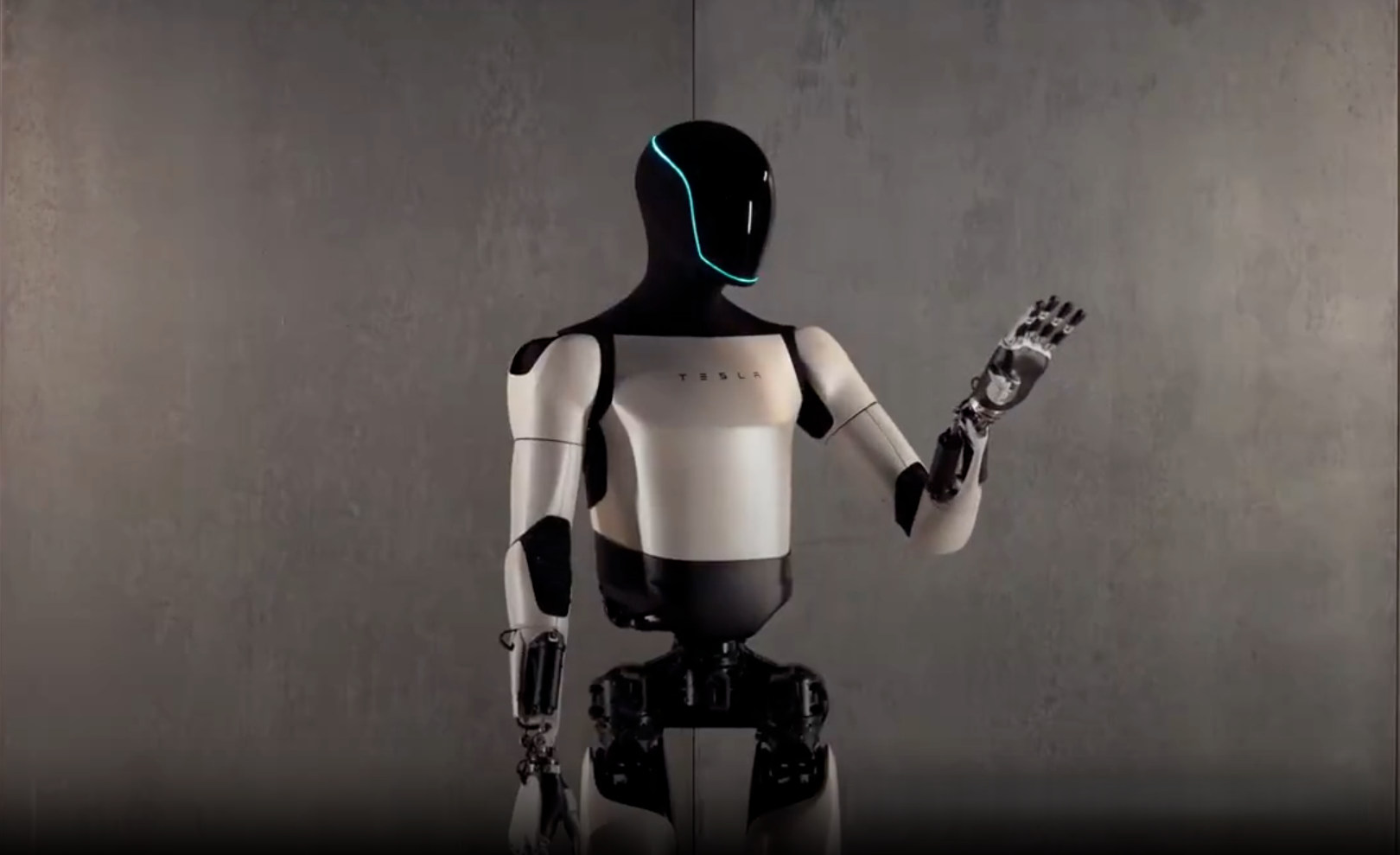
'We have entered the final stages of Optimus 3, which will undoubtedly be the world's most advanced robot, with no product able to match it. In fact, I have never seen any robot demonstration that rivals Optimus 3,' Musk declared.
Musk added that Optimus 3 is expected to begin production this summer, with plans for mass production by 2027, targeting an initial annual capacity of 1 million units. In his vision, Optimus could eventually surpass Tesla's automotive business, generating up to USD 10 trillion in revenue.
Facing this formidable upcoming competitor, Unitree and its Chinese counterparts must answer a question: how to build a closed loop of 'high-performance hardware + general-purpose foundational models + high-quality data flywheels' and achieve closed-loop profitability in niche scenarios first, to support subsequent expansion into general-purpose service domains.
Judging by this IPO, Unitree has already begun 'catching up.'
As outlined in the prospectus, Unitree intends to earmark 48% of the capital raised—equating to roughly RMB 2.02 billion—for the research and development of intelligent robot models. This move marks a strategic pivot from 'hardware-centric leadership' to 'seamless software-hardware integration'.
In the midst of this technological revolution, the ultimate goal of the competition is not determined by who goes public first or who launches a product first. Instead, it hinges on the ability to channel the enthusiasm of capital into tangible productivity within factory settings, thereby enabling humanoid robots to truly establish a solid foothold in both industrial and domestic environments.
Unitree Robotics has submitted its IPO report, yet the true challenges are only now beginning to unfold. These challenges are both more formidable and more pivotal.
-
![]()
The Allure of 'Acquisition Spree': Li Shufu's Left Turn, Xu Jiayin's Right
-
![]()
Strategic Transformation Yields Results: Phoenix Optics Reports 10.9% YoY Rise in Core Net Profit for H1 2026
-
![]()
Three Key Growth Trajectories Synergize! Crystal-Optech Reports 3.478 Billion Yuan in Revenue for H1 2026
-
![]()
Semi-Annual Report Sparks XPENG Motors Buzz
-
![]()
1.6 Billion Big Order Secured! SeeYA Technology's Revenue Soars by 287.87% in the First Half of the Year
-
![]()
Baidu's Profits Plunge by 68%: Unraveling the Mystery Behind the Numbers
-
![]()
Baidu’s Profits Tumble by 68%! Where Has All the Money Gone?
-
![]()
Hynix’s Taobao Store Shuts Down Abruptly: What Should Customers Do About Warranty Services for Memory Modules?