Sora Stumbles, ByteDance Feasts: Can Chinese Tech Giants Dominate the Second Half of AI Video?
 04/01 2026
 590
590
Layout|Xiaoxi
From global sensation to abrupt exit, Sora lasted just 25 months.
On March 24, 2026, as the global tech and film industries were still debating the technological singularity of generative AI, OpenAI unexpectedly announced the complete shutdown of Sora—no buffer, no warning. The standalone app was removed, API access cut off, and the ChatGPT built-in portal erased.
 ▲ Note: Image sourced from X
With this announcement, Disney's $1 billion investment and licensing agreements for over 200 super IPs also came to an end. Reuters revealed that just half an hour before the announcement, Disney was happily negotiating with OpenAI executives in a partnership meeting, only to receive a project termination notice moments later.
After Sora's collapse, Chinese large model vendors across the ocean staged a wave of price hikes: Jimeng's official website points (points) price adjusted from 45 to 120; Xiaoyunque's prices surged by 167%; LibTV, newly integrated with S2, saw its points consumption per 15-second video rise from 405 to 615.
On one side, a former king exits; on the other, Chinese companies confidently raise prices. Where is the generative video race headed in its second half?
| The Unbearable Weight of 'Tokens' |
Sora's exit wasn't purely a technical failure—it was also an economic miscalculation. In the arena of generative AI, video generation is a perpetual money pit.
For text or static image generation, large models process relatively static logic and two-dimensional pixels, akin to solving crossword puzzles on a flat surface—thus, lower costs.
However, video generation introduces exponentially higher dimensionality. To ensure realistic output, AI must Crazy Calculation (frantically calculate) along the timeline to maintain physical laws of the real world, including light refraction, realistic multi-object collisions, and spatial consistency during camera movements.
 ▲ Note: Image sourced from Sora
This means generating a few seconds of high-quality, high-frame-rate video requires an exponential surge in Token consumption. The GPU computing power burned could power ChatGPT to answer hundreds or even thousands of highly complex logical questions tirelessly.
In stark contrast stands OpenAI's feeble commercialization. At its peak, Sora's daily operating costs reached $15 million, annualizing to $5.4 billion in burn rate. And how much did it earn? Estimates suggest Sora's app generated a paltry $2.1 million in cumulative revenue since launch.
Even more dire is user retention: Sora's 30-day retention rate fell below 1%, nearly zero at 60 days.
Users spend a few dollars to watch AI-generated novelties like 'Sun Wukong vs. Transformers,' post them on social media for likes, and then move on. After all, ordinary people lack sustained demand for creating high-quality videos.
Thus, a yawning chasm exists between soaring computing costs and C-end subscription fees/API revenue.
Meanwhile, OpenAI stands at a critical IPO juncture. After completing a Pre-IPO round in late February 2026, its valuation soared to $840 billion.
At this scale, Wall Street no longer wants sci-fi tales of 'changing the world.' They crunch numbers, scrutinizing OpenAI's financials for clear profit models and sustainable annual recurring revenue. In this context, axing Sora may have been OpenAI's coldest yet most sober decision for IPO readiness.
Suited-up OpenAI can no longer tolerate expensive 'toys.' Management must ruthlessly streamline operations. As Fidji Simo, head of applied business, stated internally: the company can no longer afford 'side quests' that drain resources without generating revenue.
By redirecting precious computing power from low-retention, blur (vague) business-model video apps to ChatGPT and code-generation tools—where enterprise clients pay handsomely for productivity gains—OpenAI sacrifices Sora to polish its financials. A necessary amputation.
| Too Formidable a Foe: First-Mover Advantage Eroded |
If 'computing power and financial black holes' were Sora's internal wounds, the global large model battlefield's encirclement was the external blade forcing OpenAI's retreat.
Over the past two years, OpenAI acted like a dictator attempting to conquer the entire web: text, images, video, voice assistants, agents, even hardware browsers—it wanted to dominate everything. But overextension backfired.
In OpenAI's crucial B-end stronghold, archrival Anthropic delivered a knockout blow. Anthropic focused relentlessly on text and code, avoiding flashy audio/video distractions. Its Claude Code tool stormed the programming market, achieving $2.5 billion annualized revenue in nine months and capturing 54% market share—OpenAI held just ~21%.
Among enterprise clients purchasing AI tools first, 73% chose Anthropic, nearly triple OpenAI's share.
With its home base severely threatened, OpenAI's former first-mover advantage could no longer sustain multi-track leadership. Retrenchment became imperative. More daunting was facing Chinese 'gang-up' tactics in video generation—a field where OpenAI once led.
While Sora delayed public testing and stagnated due to high costs and Hollywood copyright disputes, ByteDance's Seedance2.0, Kuaishou's Kling, and Alibaba's Tongyi Wanxiang rapidly filled the vacuum, achieving dimensionality reduction strikes in engineering deployment and core metrics.
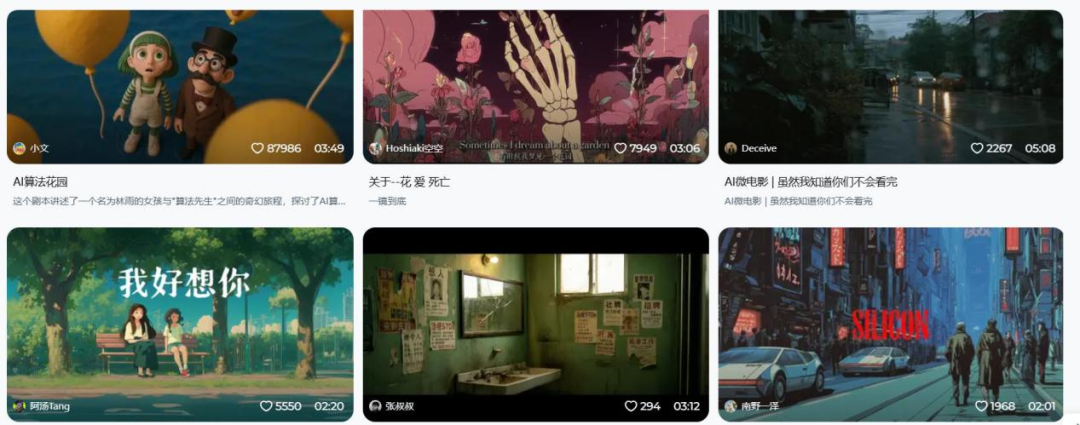 ▲ Note: Image sourced from Jimeng
Take ByteDance's Seedance 2.0: it cleverly avoided Sora's physics-obsessed yet uncontrollable path, prioritizing 'multimodal controllability' and 'director-level orchestration.'
Supporting native 2K resolution, it lets users input photos, reference videos, and music rhythms simultaneously, using models to precisely mold these elements into visually coherent videos—granting creators 'director-level' control over camera language.
For film production and advertising, perfect physics simulation isn't needed; instead, AI must follow directives like 'push-in shot,' 'consistent characters,' and 'synchronized audio-visuals' to serve complex narrative logic and storyboarding.
According to Artificial Analysis' latest blind test rankings, Seedance 2.0 tops Text-to-Video; in Image-to-Video, it outperforms Google Veo3, OpenAI Sora, and other mainstream rivals.
With Chinese models dominating leaderboards and Seedance 2.0 hailed as 'the strongest on Earth' by many insiders, Sora's technological edge vanished.
Unable to compete on computing power or effects, Sora's original team retained dignity by pivoting to foundational 'world models'—betting on understanding 3D physical spaces for embodied AI's distant future.
| Farewell to Euphoria: Diving into Commercial Deep Waters |
Sora's exit bursts the 'zero-cost AI video' bubble, plunging the industry into commercialization and compliance's deep end. Technology alone no longer suffices; business closures and scenario empowerment become survival oxygen.
The generative video race has always danced on copyright's tightrope. During wild growth, 'free riding' brought joy. But Disney's $1 billion Sora debacle signals that super IPs and traditional content industries won't let AI 'vampires' bleed them dry.
Domestically, compliance backlash looms. Years ago, film commentary accounts abused 'Tim's' voice for profit; now, top Chinese voice actors like Bian Jiang and Ji Guanlin condemn AI 'voice theft,' demanding boycott (boycotts) against unauthorized data training.
 ▲ Note: Image sourced from Weibo
When AI video shifts from 'entertainment' to 'commercial profit,' it faces all-out assault from traditional creators, copyright holders, and super IPs. Without clear rights confirmation and revenue sharing, companies like OpenAI—lacking self-contained scenarios and relying solely on API sales—cannot withstand torrents of infringement lawsuits.
This explains why Seedance 2.0 and Kling thrive post-Sora: Chinese tech giants possess unique content consumption and e-commerce conversion arenas.
Take ByteDance: Seedance 2.0 supports TikTok, Douyin, and CapCut—a super traffic empire with billions of daily users consuming massive content. ByteDance doesn't need C-end users like OpenAI; Seedance 2.0 acts as the 'nuclear reactor' powering this money-printing machine.
AI-generated product videos, drainage (traffic-driving) short dramas, and dazzling transition effects flow through CapCut to millions of creators, then flood Douyin and TikTok. Powered by terrifyingly precise algorithms, these videos convert into tangible ad revenue, short drama subscriptions, and e-commerce GMV.
High computing costs are absorbed internally, transforming into an 'endogenous demand + traffic monetization' flywheel. Understanding this explains why platforms like Jimeng dared to cancel discounts on Sora's shutdown day.
This isn't blind confidence but targeted market screening. ByteDance knows generative video isn't a universal welfare (benefit) but an expensive professional service. For B-end creators earning from AI short dramas and cross-border e-commerce, price hikes won't deter them—AI remains a dimensionality reduction strike compared to hiring models and renting studios.
C-end users lack sustained scriptwriting skills or willingness to pay for costly computing power, creating no sustainable commercial value. Raising price thresholds conserves server power for high-net-worth clients.
The utopia of 'everyone as a director' is unlikely. But when generative video integrates into B-end workflows—acting as virtual anchors in cross-border e-commerce pipelines, 3D asset generators for game studios, and precise storyboard previews for film teams—it may become the silent yet indispensable 'utilities' of future digital industry.
Sora's fall marks the end of technology spectacle. The generative video race's second half begins amid Chinese tech giants' roar.
Image sourced from the internet. Rights reserved for original creators.
-
![]()
The Allure of 'Acquisition Spree': Li Shufu's Left Turn, Xu Jiayin's Right
-
![]()
Strategic Transformation Yields Results: Phoenix Optics Reports 10.9% YoY Rise in Core Net Profit for H1 2026
-
![]()
Three Key Growth Trajectories Synergize! Crystal-Optech Reports 3.478 Billion Yuan in Revenue for H1 2026
-
![]()
Semi-Annual Report Sparks XPENG Motors Buzz
-
![]()
1.6 Billion Big Order Secured! SeeYA Technology's Revenue Soars by 287.87% in the First Half of the Year
-
![]()
Baidu's Profits Plunge by 68%: Unraveling the Mystery Behind the Numbers
-
![]()
Baidu’s Profits Tumble by 68%! Where Has All the Money Gone?
-
![]()
Hynix’s Taobao Store Shuts Down Abruptly: What Should Customers Do About Warranty Services for Memory Modules?