Liang Zhu's Copyright Moat is Being Overcome by Jiao Yubo Using AI
 04/02 2026
 492
492
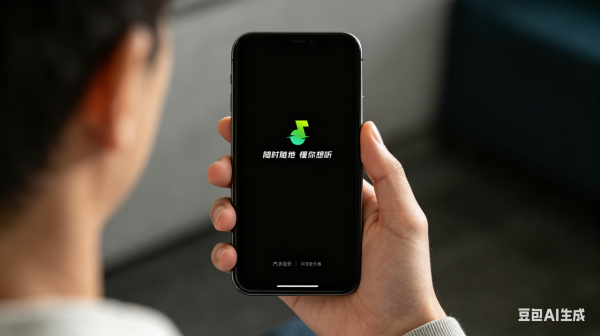
Over the past year, AI has been quietly rewriting the competitive rules of online music platforms.
In February last year, blogger Yang Ping used AI software to write a song titled 'Seven-Day Lover,' which carried the charm of Jay Chou-style love songs. After being uploaded to NetEase Cloud Music, the song garnered two million plays in just four days and even made it onto the music charts, standing shoulder to shoulder with celebrity singers like JJ Lin and G.E.M. This work, completed in two hours using deepseek and make best music, initially generated about 150 yuan in daily revenue and ultimately sold for 50,000 yuan in copyright fees.
Following this, more and more creators began to join as AI singers. By the end of 2025, the AI singer 'Datouzhen' quietly became popular on Douyin and Qishui Music. Within three months, it attracted over a million fans, with the entire internet (full network) plays exceeding 500 million times, and over 1,500 cover versions flooding the platforms.
On one hand, the explosion of AI music is becoming a key force in reshaping the online music content market landscape. Online music platforms have to actively embrace this change and initiate an AI-empowered music model. Not only can more and more AI singers and AI-generated content like 'Datouzhen' be seen on the platforms, but AI music generation tools for professional creators and ordinary users are also constantly emerging.
On the other hand, Qishui Music leverages its AI algorithm distribution advantage to precisely push AI music to target audiences, changing users' music-listening logic. Data released by QuestMobile in December 2025 shows that Qishui Music's monthly active user base has reached 139.82 million, rapidly narrowing the gap with NetEase Cloud Music, the third-ranked player in the industry. Meanwhile, the number of newly installed users reached 20.75 million, leading the entire platform. From 50 million monthly active users in June 2024 to nearly 140 million by the end of 2025, the user base doubled in just over a year, with a growth rate exceeding 90%.
As AI shatters the barriers to music creation, the competitive logic of platforms is quietly shifting from 'how much copyright one owns' to 'how well one understands users' ears.'
Qishui Music's Offensive, Powered by Algorithms and Fueled by Content
The emergence of Qishui Music has disrupted the long-established landscape of online music platforms. Despite lacking top-tier artists like Jay Chou and Mayday, as well as popular film and television OSTs, its monthly active user count is quietly approaching that of NetEase Cloud Music.
Over the past decade, the online music industry has adhered to the iron law of 'copyright is king.' Tencent Music spent billions on exclusive copyrights, while NetEase Cloud invested in supporting original musicians. Whoever owned more song copyrights held the users. This strategy was effective for a long time until regulatory intervention in 2021 halted the exclusive copyright model, loosening copyright barriers at the institutional level.
Of course, mere policy relaxation does not fully explain Qishui Music's current growth rate. A more fundamental logical shift stems from the reconfiguration of content dissemination methods. With the rise of short videos, the driving logic of the music industry has shifted from 'work-driven' to 'traffic-driven.' The centralized distribution once dominated by a few superstars is giving way to a decentralized supply where massive amounts of content compete in parallel. In this new order, the scarcity of copyrights is continuously diluted, and the distribution efficiency of algorithms has become the key variable determining success.
Qishui Music is a product of this logic. From its inception, it has been deeply integrated with the Douyin ecosystem, using short video BGMs as a traffic magnet and algorithm recommendations as the core retention tool, constructing a vastly different operational system.
Data shows that 86% of Qishui Music's TOP 1000 hot songs originated on Douyin, with 54% going viral after a cold start on Douyin. It is essentially not an independent music platform but an extension of Douyin's ecosystem into music consumption scenarios—or rather, ByteDance has finally retained the hot song traffic that it had previously been 'dressing someone else's bride' for.
Using algorithms to retain users is not uncommon; what deserves more attention is the content variability brought by AI technology. In November 2025, French music streaming platform Deezer disclosed data showing that 97% of respondents could not distinguish between AI-generated songs and human-created music in blind listening tests. This means that the technological maturity of AI music has surpassed the perceptual threshold of most users—it can seamlessly integrate into recommendation feeds without users even noticing.
In the second half of 2025, AI-generated music flooded Qishui Music's hot charts in batches, quickly occupying top positions. Taking 'Datouzhen' as an example, 1.1 million fans flocked to its Qishui Music homepage within three months, a speed previously reserved for genuine traffic stars. The massive influx of AI music essentially solved a structural dilemma for Qishui Music: how to continuously provide a sufficient density of fresh content to feed the algorithm and maintain the update pace of hot charts despite a relatively weak copyright library. AI's marginal production cost approaching zero makes it a natural supplementary ammunition for Qishui Music's content strategy.
In November 2025, Qishui Music go with the flow (seizing the moment) launched the 'Qishui AI Music Creation Lab,' providing creators with a one-stop AI creation platform. In terms of monetization paths, it rewards creators through play revenue, incentives, and membership packages, claiming that '10,000 plays typically correspond to several dozen yuan in revenue.' This figure represents one of the most direct and clear monetization entry points for AI music creators in the industry today.
The algorithm-driven ecosystem represented by Qishui Music reconstructs music dissemination from 'people finding songs' to 'songs finding people.' The core of platform competition has also shifted from copyright accumulation capabilities to content distribution efficiency and user operation precision.
In contrast, traditional platforms have adopted a complex and awkward stance when following up on AI music. Tencent Music previously allowed creators to upload AI music but initially withheld revenue settlements until recently loosening its stance: allowing the release of works created with AI tools but explicitly excluding covers; launching the 'Venus AI Lab' to provide special traffic support and rewards for AI music but requiring a 29.9 yuan fee to participate; and introducing paid features like AI Sing the Same Song and AI Free Creation for users. NetEase Cloud Music followed suit in December 2025, introducing AI song-exclusive incentives but requiring online sign a contract (signing) to participate, setting a obvious (noticeably) higher threshold.
This 'dual binding' is not without reason. Traditional platforms are trapped in a dilemma: they cannot abandon the assets and interest patterns accumulated during the copyright era, nor can they quickly establish new moats in the AI and algorithm era. Opening up to AI means diluting the scarce value of existing copyrights; not opening up means voluntarily surrendering the incremental market on the content supply side.
This contradiction determines that their transition will inevitably be hesitant and passive.
Tencent Music Under Pressure: Copyright Becomes a Wall
For the past two decades, the content logic of online music platforms has been: whoever has more copyrights has a deeper moat and more users. Tencent Music took this logic to the extreme, securing its position as the industry leader. Today, Qishui Music is using an AI-empowered approach to gradually shake this barrier.
Qishui Music's core competitiveness lies not just on the surface in algorithm recommendations but substantially in the closed loop formed by 'algorithms + traffic ecosystem.' Douyin provides Qishui Music with massive short video BGM usage data. User behaviors like song completion rates, replays, and collections within the Douyin ecosystem naturally accumulate and directly feed Qishui's recommendation engine. Tencent Music possesses the same technical capabilities but lacks the same data sources—a gap that cannot be bridged by simply working overtime.
For Tencent Music, the real danger is not the specific outcome of 'whether its monthly active users will be surpassed by Qishui Music.'
Financial reports can corroborate this judgment. According to Tencent Music's 2025 financial report, its annual operating costs were 18.37 billion yuan, while its online music service revenue was 26.73 billion yuan. Operating costs alone accounted for nearly 70% of online music revenue. Copyright fixed costs are rigid, while the differentiated value of copyrights continues to dilute. This dual squeeze of 'asset depreciation + cost rigidity' explains why, despite still growing revenue figures, Tencent Music's market value is under pressure to decline. Investors are not just looking at current income but also the long-term sustainability of this business model.
Meanwhile, the scenarios where users discover new songs are shifting—this is the signal Tencent Music truly needs to heed.
'Music discovery' is the source of user stickiness for music platforms. Where users first hear a song they like, they are likely to settle on that platform—creating playlists, following musicians, and subscribing to memberships. Now, more and more young users are discovering new songs on Douyin, not QQ Music. The flywheel starts on a competitor's turf, leaving Tencent to cater only to users' inventory (stock) demands for 'relistening to classics' without cultivating initial musical relationships with a new generation of users.
Tencent Music has long emphasized that the users Qishui Music attracts are not its target audience. This statement holds some truth but avoids a deeper issue: users who like Jay Chou will age, and without a supply of new young users, a decline in monthly active users is inevitable. Since 2026, Tencent Music has stopped disclosing quarterly monthly active user data, only providing it in annual reports—a narrowing of information disclosure that is itself a signal worth interpreting. This also explains why, despite a revenue-increasing financial report, its market value is declining.
As of the fourth quarter of 2025, Tencent Music's online music monthly active users remained at 528 million, with 127 million paying users and an average monthly revenue per user of 11.9 yuan. The stock figures are still impressive, but in terms of incremental markets and user mindshare, it is losing its voice. Especially with the migration of the core 'music discovery' scenario, the platform's user stickiness faces a fundamental challenge.
Of course, Tencent Music is not without countermeasures. WeChat Channels represents an underutilized traffic entry point, and WeChat's social relationship chains are foundational assets that no new entrant can replicate in the short term. However, whether these resources can be transformed into effective competitive advantages depends on execution, not mere existence.
Having cards and knowing how to play them are two different things.
The Other Side of AI Music: Short-Term Dividends, Long-Term Risks
In Qishui Music's rise, AI music has played a crucial accelerating role. But is the massive influx of AI music into hot charts a dividend for the platform's breakthrough or a hidden risk that will eventually backfire? The answer is likely both, just at different stages.
The short-term dividends are clear. For platforms, AI significantly reduces content supply costs, quickly filling hot charts with near-zero marginal costs. For creators, '10,000 plays corresponding to several dozen yuan in revenue' represents the clearest AI music monetization path in the industry today. For Qishui Music, AI content is the most powerful tool for establishing content differentiation amid insufficient copyright reserves, helping it rapidly accumulate hot chart competitiveness.
The combination of these three dividends explains why AI music has achieved explosive growth on Qishui Music's platform in such a short time.
However, the logic of oversupply will inevitably erode these dividends. As the production threshold for AI music approaches zero, the number of entrants grows exponentially. Total plays are continuously diluted across a relatively fixed user base by an ever-increasing volume of content. The early revenue expectation of 'several dozen yuan per 10,000 plays' was based on a sparse field of entrants; as creator numbers surge, this per-unit revenue expectation will continue to be compressed.
For creators, this is a classic tragedy of the commons: entering is rational for each individual, but the collective result is depleting market revenues.
Algorithms will amplify this issue rather than alleviate it. The recommendation system's optimization goal is to maximize user dwell time (dwell time), naturally favoring content highly aligned with users' existing preferences. When massive AI-generated works follow the same 'hit formula'—canon, 6415, 4536 chord progressions, similar emotional vocabulary, and vocal processing—algorithms will continuously reinforce this pattern.
Users may initially feel 'this suits my taste' but later perceive 'all songs sound the same.' Once aesthetic fatigue accumulates to a critical point, user churn tends to accelerate rather than decline linearly. For Qishui Music, currently experiencing rapid monthly active user growth, this is a risk that needs to be addressed proactively rather than dismissed as a distant hypothetical.
Of course, there is also an external variable—likely the most critical one.
In June 2024, Universal Music, Sony Music, and Warner Music jointly filed lawsuits in U.S. federal court, accusing AI music generation platforms Suno and Udio of large-scale (massively) using copyrighted recordings to train models, seeking up to $150,000 in damages per infringed recording. These were the first systematic legal actions by major global copyright holders against AI generation tools.
Subsequently, settlements followed. In November 2025, Suno reached a settlement and established a licensing partnership with Warner Music, while Udio also struck deals with Universal and Warner. The direction set by these settlements is clear: AI platforms must obtain authorization for training data from copyright holders, with royalties and compliance licensing becoming necessary costs for AI music commercialization.
The impact on China's AI music ecosystem is a matter of timing, not direction. Once major global copyright holders incorporate AI training authorization into standard commercial terms, domestic copyright holders will inevitably follow suit. At that point, the premise of AI music—'marginal production costs approaching zero'—will fundamentally change due to the introduction of copyright costs.
AI covers, currently the most direct monetization path, may be blocked at any time due to dynamically tightening regulations. Any platform treating AI music as a core content strategy must leave sufficient strategic space for this external variable.
Epilogue
Qishui Music's model is difficult for traditional platforms to replicate in the short term due to its ecological barriers. However, the essence of this advantage is a functional extension of ByteDance's traffic ecosystem rather than the victory of a fully independent music platform. ByteDance's substantive investment in its music content library previously sent ambiguous signals, but in 2025, it quietly launched the music licensing platform EasyOde to systematically build a copyright library. Nevertheless, from Feiliao to Wukong Q&A, to the shutdown of the overseas version of TikTok Music in November 2024, ByteDance has frequently retracted from businesses that could not quickly prove commercial value.
Tencent Music faces structural dangers: its core assets are depreciating, user mindshare is shifting, and inertia remains, but the direction is wrong. On the other hand, its massive base of 528 million monthly active users, the cash flow supported by 127 million paying users, and WeChat Channels—an ecosystem entry point yet to be fully activated—these assets will not vanish due to changes in the competitive landscape but need to be reactivated within a new framework rather than passively consumed under the inertia of the old order.
AI music is the most unpredictable variable in this upheaval. It is a booster in the short term, a tragedy of the commons in the medium term, and a compliance bill after copyright rules tighten in the long term. Whoever can establish a sustainable content ecosystem within the dividend window, making AI a creative aid rather than a quality diluter and algorithms serve diverse aesthetics rather than reinforce homogeneity, will truly have the last laugh.
From the current stance of various platforms, this competition is far from reaching a conclusion. However, one thing is already crystal clear: the core competitiveness of online music platforms has shifted from 'how many songs they possess' to 'how well they understand users' ears'—and, amid the AI wave, how to preserve the content value that users are willing to pay for.
Of course, copyright remains a necessary condition, but it will never again be a sufficient one.
*The title image and illustrations in the text are sourced from the internet.
-
![]()
The Allure of 'Acquisition Spree': Li Shufu's Left Turn, Xu Jiayin's Right
-
![]()
Strategic Transformation Yields Results: Phoenix Optics Reports 10.9% YoY Rise in Core Net Profit for H1 2026
-
![]()
Three Key Growth Trajectories Synergize! Crystal-Optech Reports 3.478 Billion Yuan in Revenue for H1 2026
-
![]()
Semi-Annual Report Sparks XPENG Motors Buzz
-
![]()
1.6 Billion Big Order Secured! SeeYA Technology's Revenue Soars by 287.87% in the First Half of the Year
-
![]()
Baidu's Profits Plunge by 68%: Unraveling the Mystery Behind the Numbers
-
![]()
Baidu’s Profits Tumble by 68%! Where Has All the Money Gone?
-
![]()
Hynix’s Taobao Store Shuts Down Abruptly: What Should Customers Do About Warranty Services for Memory Modules?