Meituan AI: Regaining Momentum?
 04/03 2026
 582
582
During Meituan's 2025 earnings call, Wang Xing reiterated the company's commitment to advancing in AI.
He first made similar remarks at the same event a year earlier.
However, over the past year, Meituan has shown no signs of offensive momentum in either its overall strategy or AI initiatives.
With the outbreak of the food delivery war, Meituan's AI resources have inevitably been reduced, as it is not yet a superpower capable of waging two wars simultaneously.
Image Source: Internet
Now, with regulatory authorities and the two most aggressive players in the food delivery war signaling a ceasefire, it seems time for Wang Xing to launch a new offensive in the AI arena.
The question now is: How?
During the earnings call, Wang Xing stated that Meituan does not want to become a 'token factory.'
This implies a rejection of the booming 'Lobster' and Anthropic models, suggesting Meituan is avoiding the 2B market.
Over the past two years, Meituan's leadership, after comprehensive internal discussions, has also decided not to pursue C-end products like Doubao and ChatGPT.
This means abandoning the C-end market and the battle for traffic entry points.
After these two rejections, the question 'Where is Meituan's AI headed?' lingers in the minds of the market and Wang Xing alike.
No Strategy?
The reason for using the process of elimination twice is that Meituan lacks cloud computing capabilities and is not adept at traffic management.
This strategic approach cannot be deemed incorrect.
Alibaba adopted a similar mindset, integrating Qianwen with its e-commerce operations as much as possible.
The results are evident. Therefore, Meituan has not explicitly chosen Alibaba's path but has proposed an AI strategy encompassing AI at Work, AI in Products, and Building LLMs.
Frankly, this is somewhat underwhelming.
Whether it's ByteDance and Alibaba or OpenAI, Google, and Anthropic, this three-tiered strategy could apply to any of them.
A one-size-fits-all strategy is tantamount to having no strategy at all.
In fact, Meituan does have bright spots in the broader AI field: hard tech investments.
In the large model sector, Meituan has invested in Zhipu and Moonshot AI; in robotics, it has backed Unitree and Galaxy General; in computing power, it has invested in Moore Threads and Muxi Corporation (Muxi Capital); and in autonomous driving, it has stakes in Li Auto and Hesai Technology.
These investments stem from Wang Xing's 2015 vision of 'moving bits to assist in moving atoms.'
Regarding hard tech, Meituan not only invests but also has internal deployments, primarily autonomous delivery vehicles and drones, led by two vice presidents, Xia Huaxia and Mao Yinian.
This progress accelerated further after the 2021 strategic upgrade to 'Retail + Tech.' Meituan's autonomous delivery vehicle network is the largest domestically, and its drones had completed 780,000 orders across multiple global cities, including Hong Kong and Dubai, by the end of last year.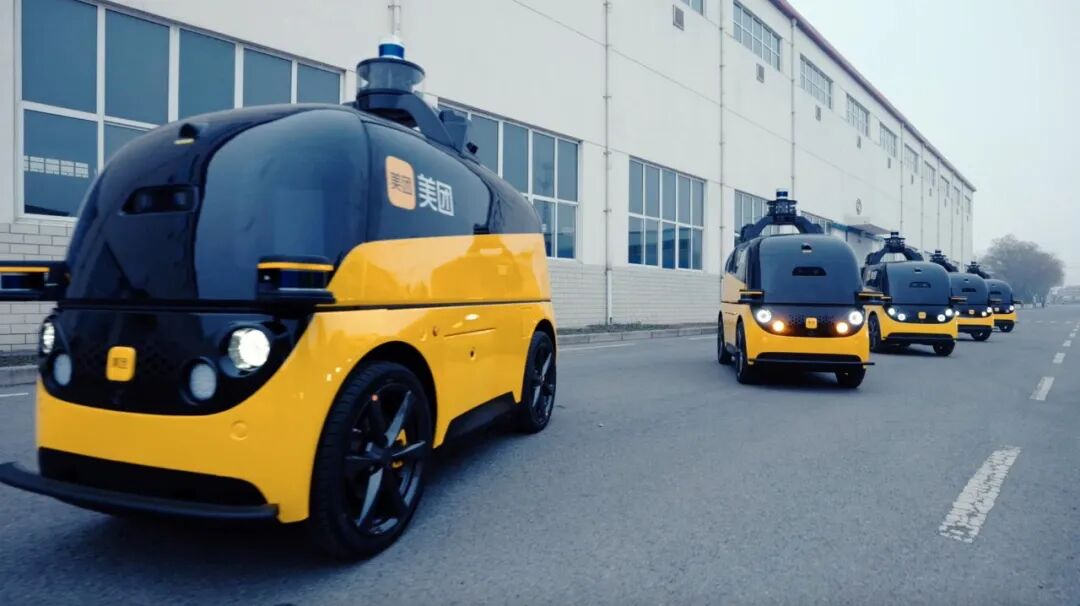
Meituan Autonomous Delivery Vehicle
However, this may not yet meet Meituan's expectations.
In 2022, Xia Huaxia predicted that 'larger-scale operational deployment' would take 3-5 years; Mao Yinian believed 'accelerated growth' would take 5-10 years.
Today, it appears that Xia was overly optimistic back then.
This optimism may stem from Wang Xing's influence. Despite his platform's primary focus on food delivery, Wang himself is quite idealistic.
A few years ago, both Wang Xing and Zhang Yiming were recruiting top AI talent.
Their styles differed significantly.
Wang Xing emphasized 'no performance reviews, no targets, joint exploration,' even allowing recipients to hold positions at research institutes rather than the company. During conversations, he would also share life insights and grand narratives.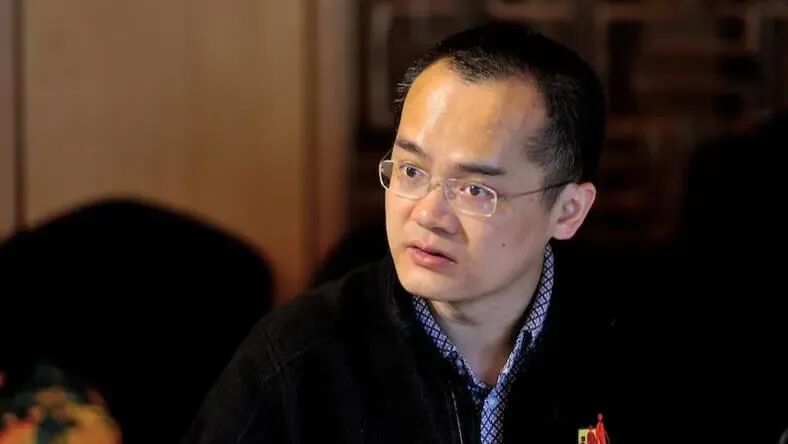
Meituan Founder Wang Xing
In contrast, Zhang Yiming focused more on commercial value during discussions, preferring to examine numbers and relentlessly questioning their reliability.
From the results, ByteDance's ruthless and efficient large-scale approach has proven more effective.
No Retreat, But Hard to Call It an Offensive
Meituan has not assembled elite teams from various departments for AI projects; instead, it has allowed each department to develop freely and independently.
This organizational approach is even weaker than Alibaba's Qianwen.
After Lin Junyang's departure, the market realized that a seemingly top-priority project faced numerous resource constraints. The Qwen team was competing with ByteDance's 2,000-person team with just over 100 people.
Let alone Meituan AI, which lacks a clear focus.
Large model LongCat, programming intelligent agent Maozhua, AI browser Tabbit, standalone app Xiaomei, and XiaoTuan embedded in the main Meituan app.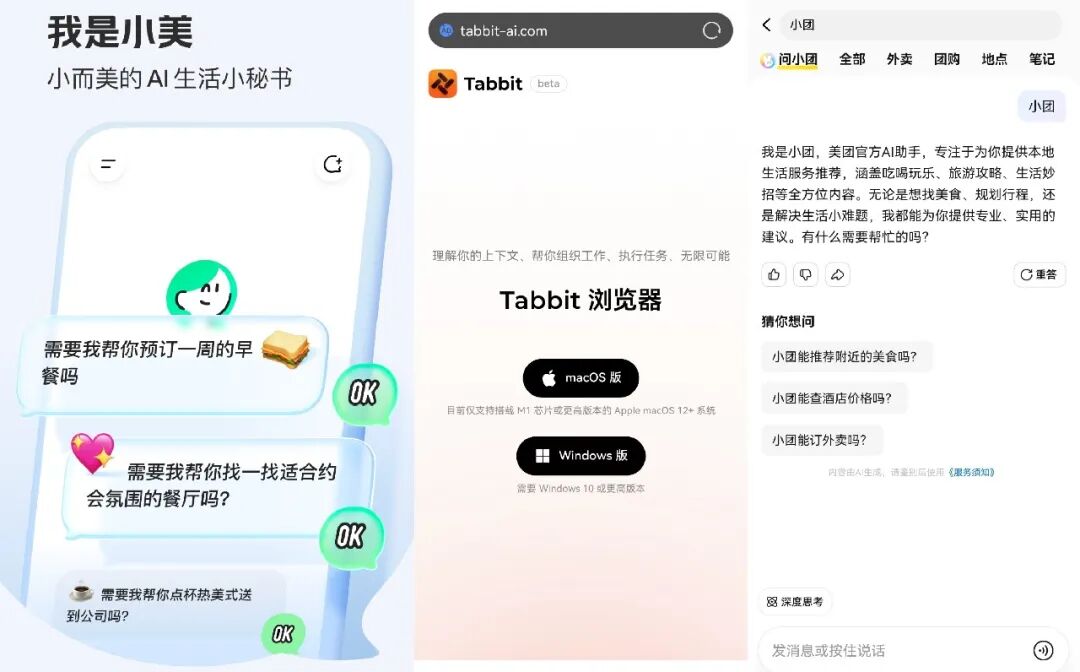
Some of Meituan's AI Products
Of course, there's also the vertical large model 'Xingmou.'
With this lineup, it's unclear what the main offensive direction is. It's somewhat reminiscent of the recent 'Chuanzi's Art of War': 'As long as I don't know what I'm doing, the enemy won't know either.'
All jokes aside,
Wang Xing's so-called 'offensive' does not involve poaching talent or stockpiling cards in the AI market. At least while the business model for large models remains unclear, he prefers to be an active user of AI rather than burn tokens pointlessly.
Thus, 'AI-driven efficiency improvement' has become Meituan's key goal for the year. This involves using machines to replace humans in areas such as code generation and delivery, thereby boosting productivity.
Wang Xing stated, 'Except for companies with cloud computing businesses, Meituan's AI investment scale is likely the largest among domestic enterprises.'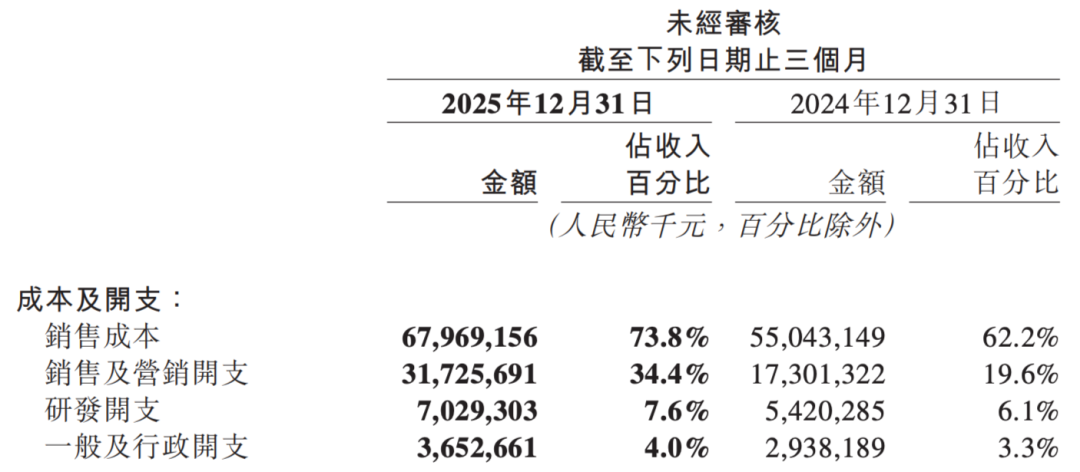
Meituan's 2025 Earnings Report
This reveals his positioning of Meituan AI. Both Tencent and Baidu have cloud computing businesses.
He has also said that the impact of AI Agents will be greater than that of ChatGPT.
This is indeed correct. ChatGPT is purely a traffic-driven business, akin to a high-end search engine, while intelligent agents extend into execution, enabling price comparisons and order placements.
However, this is similar to the impact Douyin's food delivery service had on Meituan.
If Meituan could fend off Douyin, it should not fear Doubao now.
Of course, defensive measures are still necessary, as evidenced by the launch of Meituan Video and Shenqiangshou.
This time, it's Xiaomei and XiaoTuan.
The service terms for 'Ask XiaoTuan' on the Meituan app reveal that it uses large models such as LongCat and DeepSeek, somewhat reminiscent of Tencent's early Hunyuan model.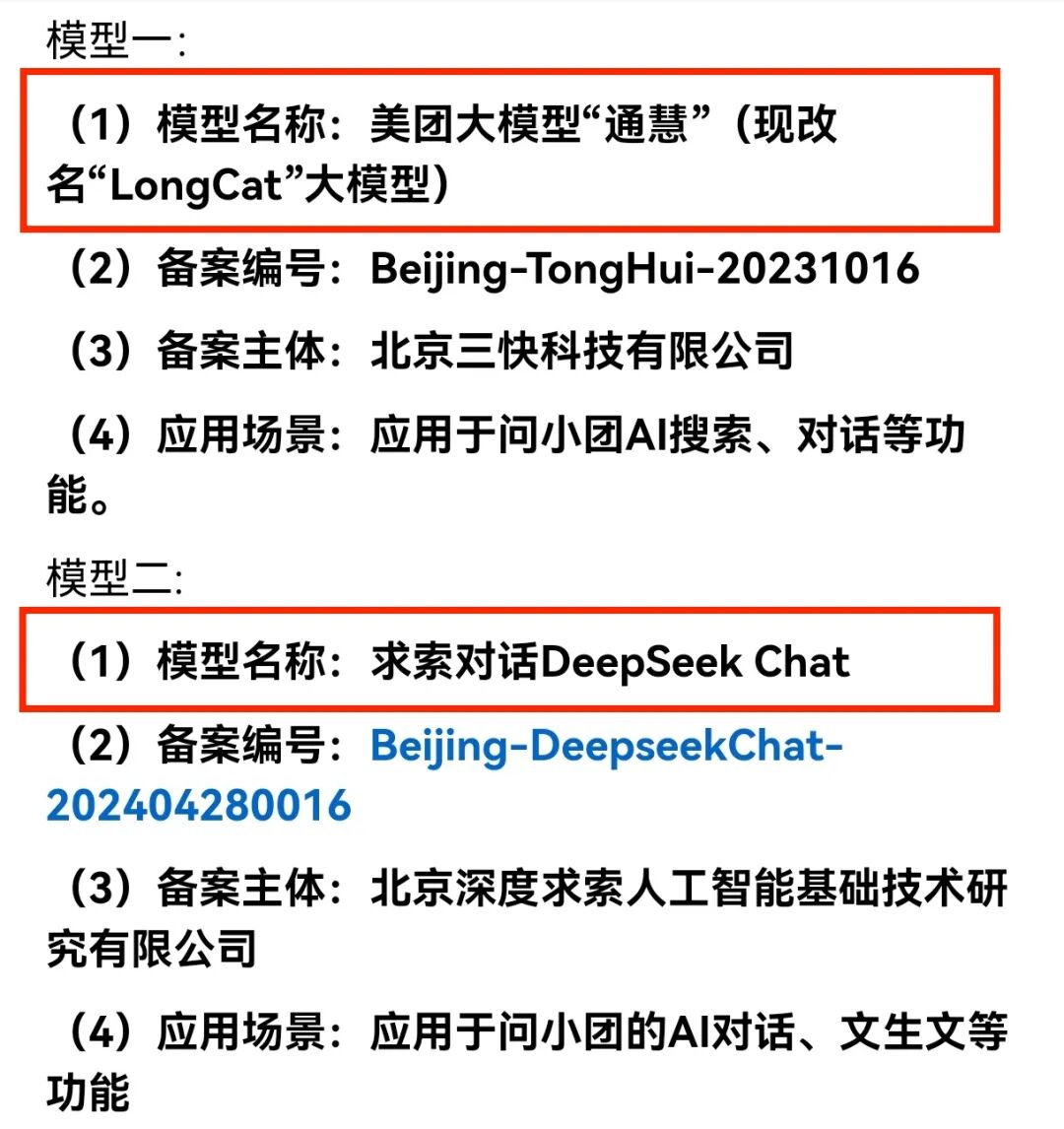
'Ask XiaoTuan' Service Terms
Compared to Doubao and Qianwen, this does indicate technical immaturity.
While it can handle tasks like recommending restaurants at intermediate locations between two points, it still cannot facilitate coupon purchases or meal reservations.
This suggests that Meituan's intelligent agents still lag behind Alibaba's Qianwen, which can snatch milk tea orders.
Tabbit is even more problematic, having faced accusations of being a mere shell upon its release.
However, Meituan's past experience proves it can defend against attacks from traffic-side giants. Agents may be easier to handle—simply block them, as various apps have done with Doubao's mobile assistant.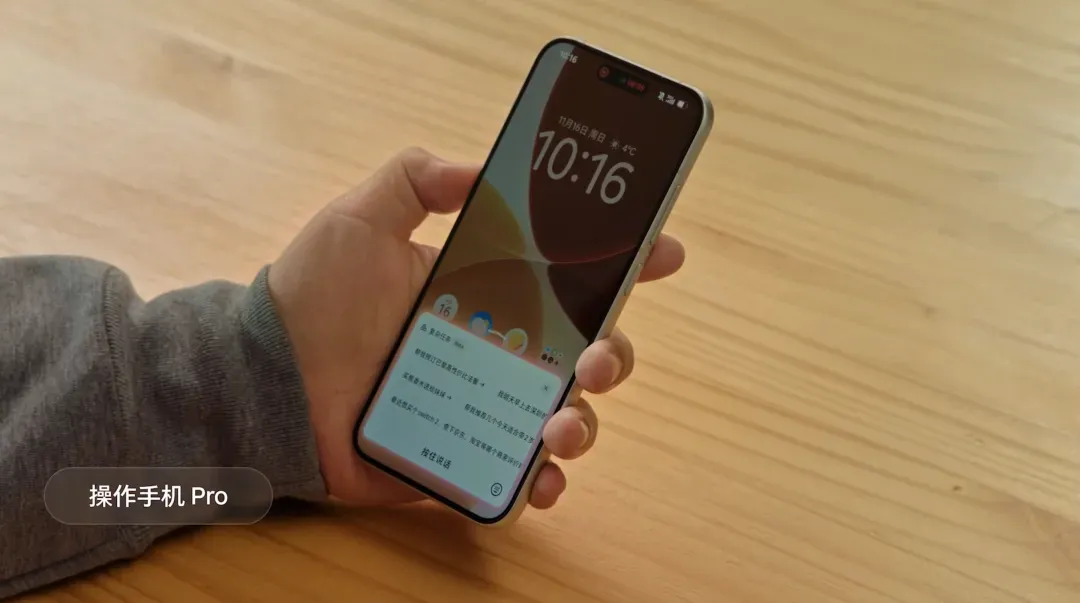
Doubao Mobile Assistant
Neither of these paths is easy.
So, the question remains: Is Meituan still on the offensive in the AI arena?
On the Chosin Reservoir battlefield, U.S. Marine Corps First Division commander Smith famously said, 'We're not retreating; we're just attacking in a different direction.'
Meituan is faring better—it hasn't retreated and is following up, but it's hard to call it an offensive.
This might actually be a good thing.
It hasn't blindly followed suit in businesses with unclear models, saving considerable resources.
Of course, besides AI, Wang Xing has also placed equal importance on going global.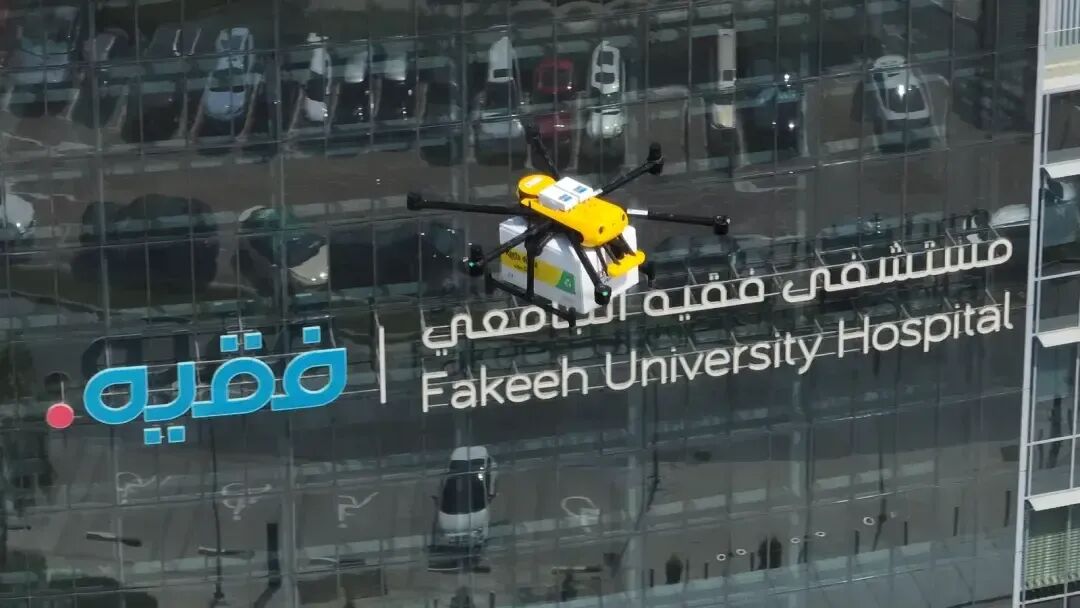
Image Source: Internet
This may be more commercially promising but is unlikely to succeed overnight.
Progress in Hong Kong and the Middle East has been smooth, but Brazil has posed legal obstacles from local giants, leading to internal strife with Didi.
Didi's internationalization is indeed a model for Meituan to learn from. Last year, Didi's international business averaged daily orders equivalent to one-third of its domestic volume. Moreover, in Brazil, it not only offers ride-hailing but also food delivery.
Exporting Meituan's flash sale model would keep it busy for a while.
As for AI, it's just a tool.
-
![]()
The Allure of 'Acquisition Spree': Li Shufu's Left Turn, Xu Jiayin's Right
-
![]()
Strategic Transformation Yields Results: Phoenix Optics Reports 10.9% YoY Rise in Core Net Profit for H1 2026
-
![]()
Three Key Growth Trajectories Synergize! Crystal-Optech Reports 3.478 Billion Yuan in Revenue for H1 2026
-
![]()
Semi-Annual Report Sparks XPENG Motors Buzz
-
![]()
1.6 Billion Big Order Secured! SeeYA Technology's Revenue Soars by 287.87% in the First Half of the Year
-
![]()
Baidu's Profits Plunge by 68%: Unraveling the Mystery Behind the Numbers
-
![]()
Baidu’s Profits Tumble by 68%! Where Has All the Money Gone?
-
![]()
Hynix’s Taobao Store Shuts Down Abruptly: What Should Customers Do About Warranty Services for Memory Modules?