Financing Summary of Domestic Embodied Intelligent Robot Enterprises in March 2026
 04/03 2026
 806
806
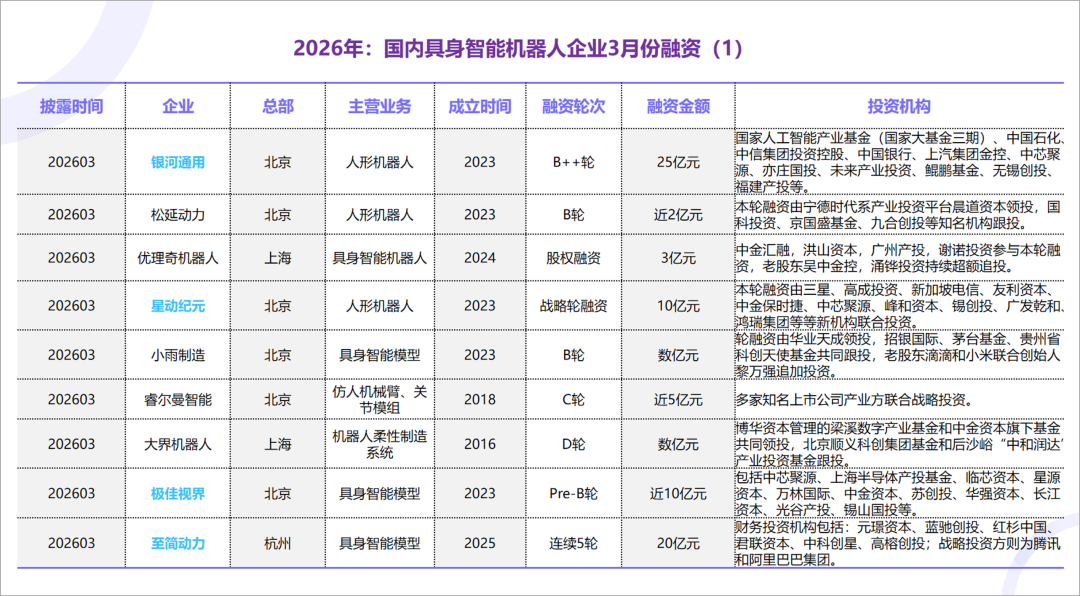
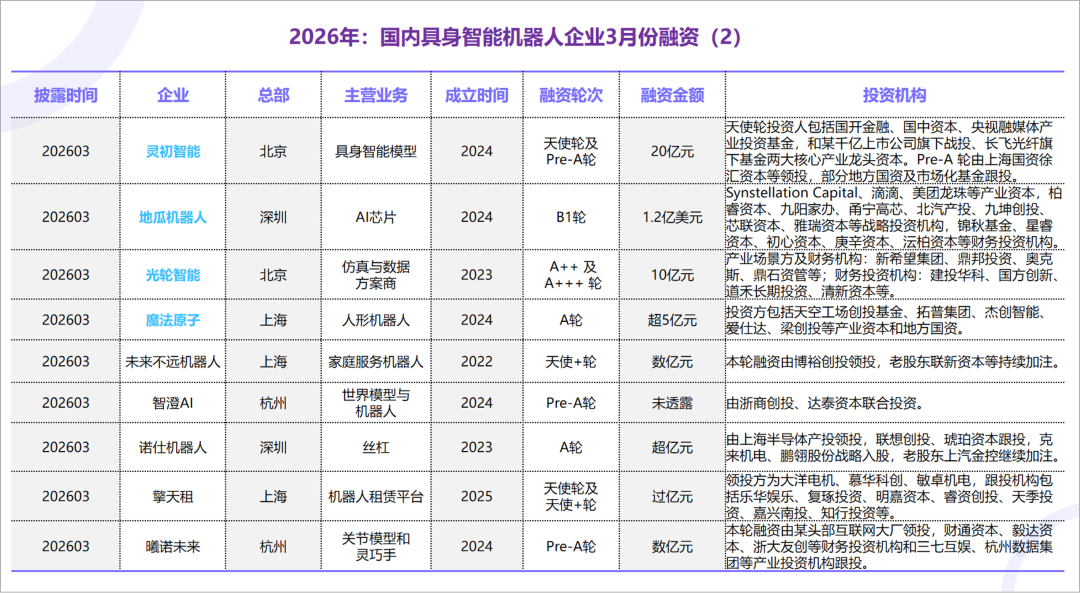
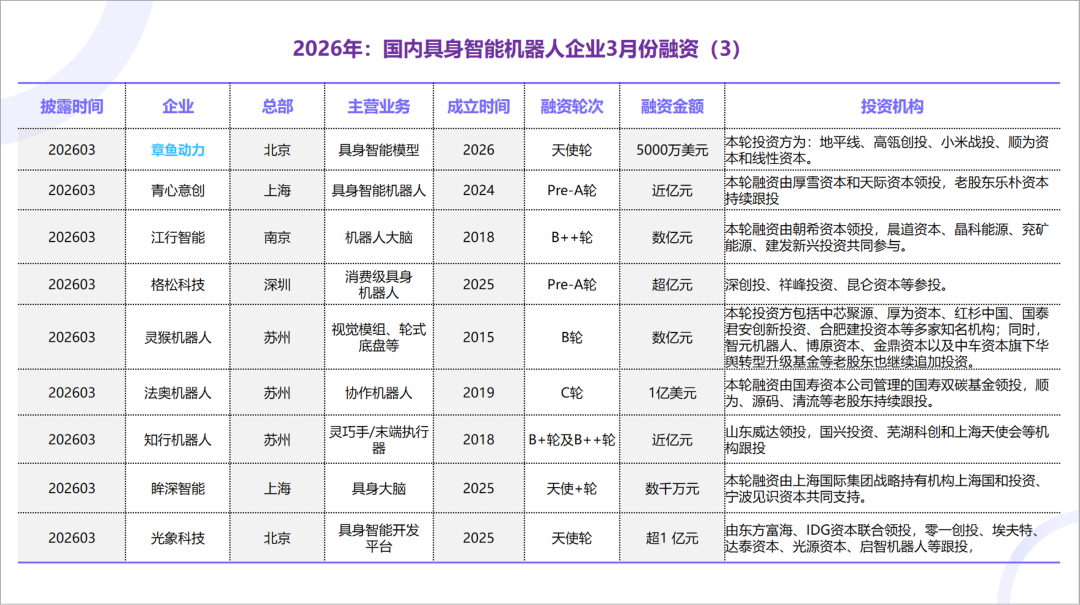
In March 2026, the financing landscape for China's embodied intelligent robot sector continued to heat up. Notably, enterprises in the foundational model layer and core component layer secured substantial funding:
Foundational Model Enterprises: Jijia Vision (Pre-B round funding of RMB 1 billion), Lingchu Intelligence (cumulative RMB 2 billion across Angel and Pre-A rounds), and Zhi Jian Power (RMB 2 billion raised across five consecutive rounds in the past six months) all focused on "robot brain" technologies, with strategic deployments in key areas such as VLA models and world models.
Core Components and Infrastructure Enterprises: Digua Robotics (USD 120 million in Series B1 funding) specialized in robot chips and operating systems, while Guanglun Intelligence (RMB 1 billion raised across A++ and A+++ rounds) focused on physics simulation engines and synthetic data. Both played the role of "shovel providers," delivering foundational technical support to the industry.
To a certain extent, this indicates that capital is no longer solely chasing humanoid robot ontology (physical robot) enterprises but is now shifting toward upstream segments such as model algorithms, chips, and data toolchains, forming a comprehensive industrial chain layout. The industry is transitioning from its early technology validation phase into a critical period of industrial advancement centered on mass production, delivery, and in-depth scenario development. The integrated capabilities of "technology + scenarios + delivery" are becoming the key benchmarks for evaluating enterprise value.
I. March Financing Information Summary
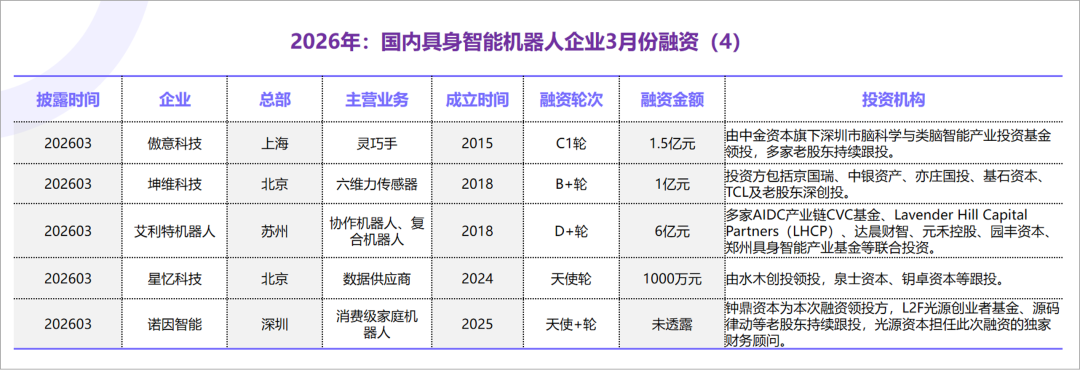
II. Introduction to Key Financed Enterprises
1. Galaxy General Robotics
Financing Information
On March 3, Galaxy General Robotics announced the completion of a new round of financing totaling RMB 2.5 billion. Investors in this round included the National AI Industry Investment Fund, Sinopec, CITIC Investment Holdings, Bank of China Assets, SAIC Capital, Wise Road Capital, Beijing E-Town International Investment & Development, KUNPENG CAPITAL, Wuxi Venture Capital, Fujian Industrial Investment, Chengdu Science and Technology Innovation Investment, among others. Additionally, existing shareholders such as Shenzhen Innovation Investment Group and Shanghai AI Fund further increased their investments.
Company Overview
Galaxy General Robotics (Galbot), founded in May 2023 and headquartered in Beijing, positions itself as a general-purpose robot enterprise specializing in embodied multimodal large models. It is committed to developing world-leading embodied AI large models to drive the transition of robots from specialized to generalized applications. The company currently operates R&D centers in Beijing, Shenzhen, Suzhou, and Hong Kong and has established joint laboratories/research centers with Peking University, the Beijing Academy of Artificial Intelligence (BAAI), Xuanwu Hospital, and Beijing Zhongguancun College.
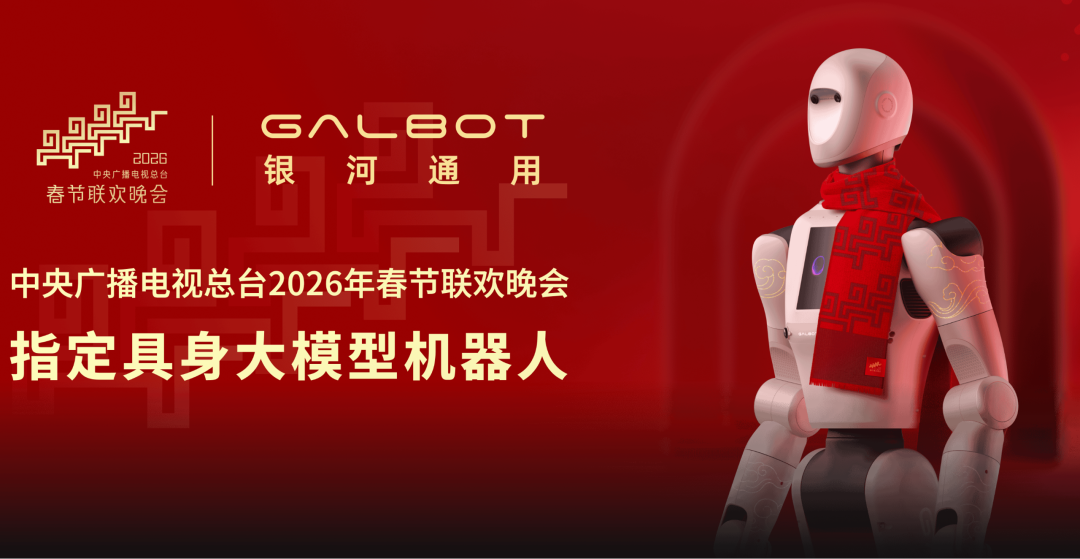
Founding Team: 1) Founder & CTO Wang He graduated with a bachelor's degree from Tsinghua University in 2014 and earned his Ph.D. from Stanford University in 2021 under the supervision of Professor Leonidas J. Guibas, a member of the US National Academies of Sciences, Engineering, and Medicine. Upon returning to China, he joined Peking University as an assistant professor and doctoral supervisor at the Center for Computational Science and Engineering, while also serving as the director of the PKU-Galbot Joint Laboratory for Embodied AI and the director of the Embodied AI Research Center at BAAI. He is a leading figure in China's embodied AI field and a top international scholar in embodied intelligence.
2) Co-founder & CEO Yao Tengzhou holds a master's degree from the Robotics Institute at Beihang University, where he studied under Professor Wang Tianmiao, a pioneer in China's robotics industry and dean of the Zhongguancun Intelligent Friend Research Institute. Yao previously worked at ABB's Shanghai Robotics R&D Center, where he accumulated extensive experience in industrial and service robot development, as well as in the mass production and market promotion of intelligent hardware products with sales exceeding ten million units. He oversees the company's operations, supply chain integration, and commercialization efforts.
Products and Commercialization: 1) At the hardware level, Galaxy General Robotics introduced the wheeled dual-arm humanoid robot Galbot G1 and the industrial heavy-duty robot Galbot S1. The G1 features a wheeled chassis with integrated dual arms, stands 1.73 meters tall with a 1.9-meter arm span, and is equipped with a suction cup on its left hand and a gripper on its right. The S1 can carry a maximum load of 50 kilograms with its dual arms and has achieved normalized autonomous operations at CATL's factories. 2) At the model level, the company developed its proprietary "Galaxy Star Brain" AstraBrain end-to-end embodied large model for whole-body and whole-hand control, along with VLA models such as GraspVLA and GroceryVLA, adopting a hybrid training paradigm that combines simulated data with real-world data.
In terms of commercialization, Galaxy General Robotics has collaborated with industry leaders such as CATL, Bosch, Toyota, and SAIC, securing thousands of industrial robot orders. Its "Galaxy Space Capsule" convenience stores have been deployed in over 100 locations, and its smart pharmacies have obtained the nation's first pharmaceutical business license, achieving large-scale and normalized operations.
2. Star Era Robotics
Financing Information
On March 5, Star Era Robotics announced the completion of a RMB 1 billion strategic financing round, with its valuation exceeding RMB 10 billion. Investors in this round included Samsung, Gaocheng Capital, Singapore Telecommunications, Woori Capital, CICC Porsche, Wise Road Capital, Fenghe Capital, Wuxi Venture Capital, Guangfa Qianhe, and Hongrui Group, among others. Existing shareholders DHVC and Tsinghua Holdings Venture Capital also Excessive additional investment (significantly increased their investments).
Company Overview
Star Era Robotics, founded in August 2023 and headquartered in Beijing, was incubated by the Institute for Interdisciplinary Information Sciences (IIIS) at Tsinghua University. It is the only humanoid robot enterprise with equity held by Tsinghua University. The company aims to define "native general-purpose embodied intelligent agents" and to "initiate the robotic stellar era" by developing a general-purpose robot brain and robot through full-stack self-research integrating "embodied brain" and "humanoid body" hardware and software.
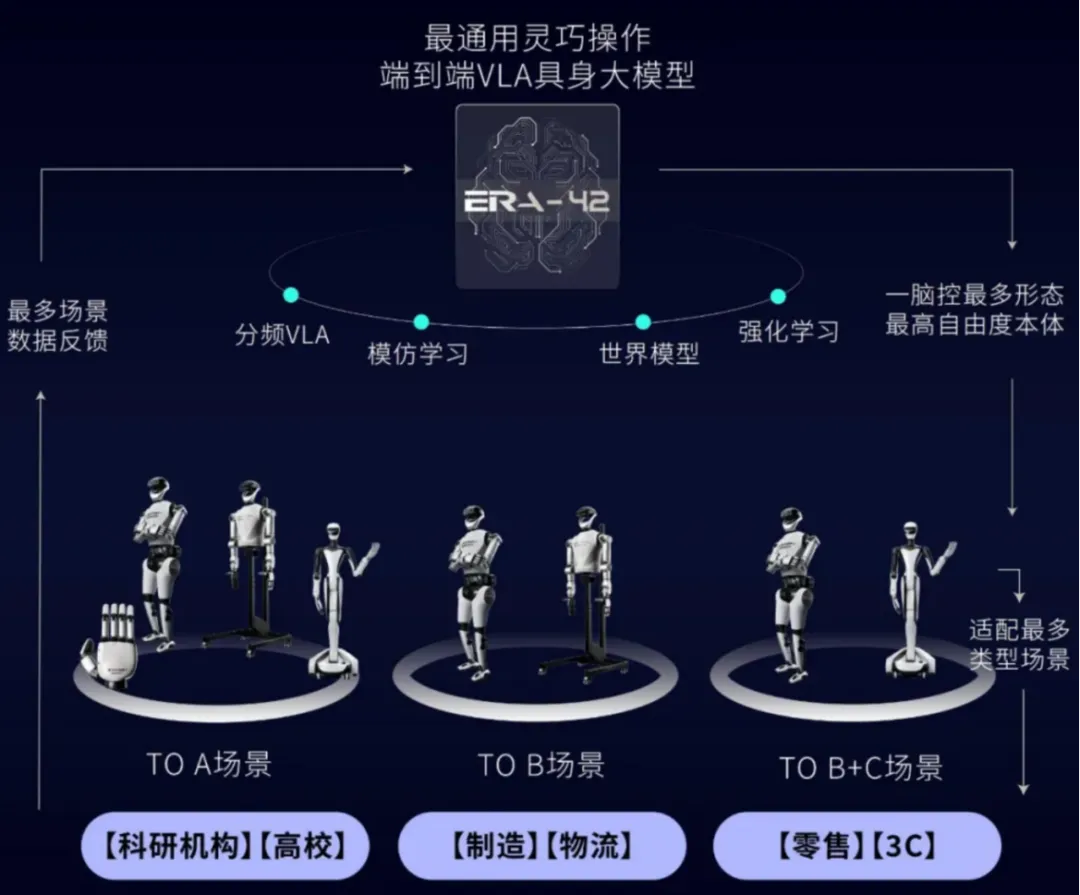
Core Team: 1) Founder & CEO Chen Jianyu graduated with a bachelor's degree from the Department of Precision Instruments at Tsinghua University and later pursued his Ph.D. at the University of California, Berkeley, under the supervision of Professor Masayoshi Tomizuka, a member of the US National Academy of Engineering and a pioneer in mechatronic control. In 2020, he was invited back to China by Turing Award winner Andrew Yao to serve as an assistant professor and doctoral supervisor at IIIS, Tsinghua University. In 2023, he founded Star Era Robotics, where he is responsible for formulating the company's technology strategy and product roadmap.
2) Co-founder Xi Yue holds a Ph.D. from the School of Economics and Management at Southwest Jiaotong University and later worked as an assistant researcher and postdoctoral fellow at Tsinghua University. She was a nationally sponsored joint Ph.D. student at the National University of Singapore. During her doctoral studies in 2023, she co-founded Star Era Robotics and is responsible for the company's strategic operations and brand building.
Products and Commercialization: In terms of hardware, Star Era Robotics has established a complete product matrix covering the entire chain from core components to complete robots, including integrated joint modules, robotic dexterous hands, and general-purpose humanoid robots (legged/wheeled models and upper-body-only operation platforms). Regarding embodied models, in September 2024, the company introduced the HiRT hierarchical architecture with fast and slow pathways and proposed the concept of frequency-divided VLA. It also released the VLA algorithm framework PAD, which integrates a world model, enabling robots to learn the laws of the physical world from internet video data. The most significant achievement was the launch of the end-to-end native robot large model ERA-42. In October 2025, the company jointly developed the controllable generative world model Ctrl-World with Chelsea Finn's team at Stanford University.
In terms of commercialization, the company has secured cumulative orders exceeding RMB 500 million, with 50% from overseas markets. Nine of the world's top 10 technology companies by market value are its clients, and it has won nearly RMB 50 million in logistics orders through its collaboration with SF Express.
3. Jijia Vision
Financing Information
On March 5, Jijia Vision announced the completion of a nearly RMB 1 billion Pre-B round of financing. Investors in this round included industrial capital such as Wise Road Capital, Shanghai Semiconductor Industry Investment Fund, Linxin Capital, Xingyuan Capital, and Wanlin International; state-owned platforms such as Suzhou Innovation Capital, Optics Valley Industrial Investment, Xishan National Investment, and Puke Investment; and financial institutions such as CICC Capital, Huaqiang Capital, Caixin Capital, Changjiang Capital, and Xinding Capital.
Company Overview
Jijia Vision (GigaAI), founded in January 2023 and headquartered in Beijing, positions itself as a pioneer in world models for physical AI. It is dedicated to achieving general intelligence in the physical world driven by world models, aiming to become the "OpenAI of the physical world." The company provides integrated hardware and software solutions for embodied intelligent robots across industrial, commercial, and household scenarios, centered around the "embodied foundation model-world model-native body-generalized scenarios" framework. Its main products include the world model platform GigaWorld (with dual versions for driving and embodied applications), the embodied foundation model GigaBrain, the general-purpose embodied robot hardware platform Maker (including the mass-produced Maker H01 model), and the world-action model WAM (GigaWorld-Policy).
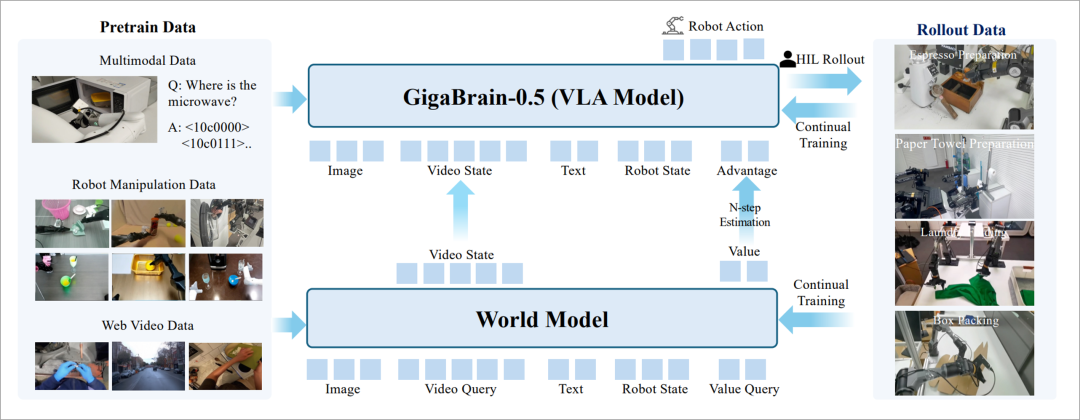
Core Team: 1) Founder & CEO Huang Guan holds a Ph.D. in Engineering and Innovation Leadership from the Department of Automation at Tsinghua University. He previously served as the head of visual perception technology at Horizon Robotics and as a partner and algorithm vice president at Jizhi Robotics. He also has work experience at top research institutions such as Microsoft Research Asia and Samsung China Research Institute.
2) Co-founder & Chief Scientist Zhu Zheng, a BAAI Young Scholar, earned his Ph.D. from the Institute of Automation, Chinese Academy of Sciences, in 2019 and conducted postdoctoral research at the Department of Automation, Tsinghua University, from 2019 to 2021. He has published over 70 papers in top-tier journals and conferences such as TPAMI, CVPR, ICCV, ECCV, and NeurIPS, with more than 19,000 citations. He has been listed among the world's top 2% scientists for four consecutive years.
Products: At the hardware level, Jijia Vision independently developed the physical AGI native body—Maker H01—which was released in November 2025 and has commenced mass production and delivery. Targeting multiple scenarios such as data collection, industry, commerce, and households, the company aims to deliver 1,000 units in 2026. At the model level, the company developed the GigaBrain series of embodied foundation models, with its open-source model GigaBrain-0.1 ranking first globally in authoritative large-scale real-robot evaluations. GigaBrain-0.5M* is the world's first embodied foundation model capable of self-evolution through reinforcement learning based on a world model. The company also created the world model platform GigaWorld, including products such as GigaWorld-0 and GigaWorld-Policy. Through its full-stack layout integrating "embodied foundation model-world model-native body-generalized scenarios," the company has achieved benchmark client (flagship customer) applications across multiple scenarios, including automotive manufacturing, 3C electronics, and household services.
4. Zhi Jian Power
Financing Information
On March 9, Zhi Jian Power officially announced the completion of five consecutive financing rounds within less than six months, raising a cumulative total of RMB 2 billion. Investors included financial investment institutions such as Vision Knight Capital, BlueRun Ventures, Sequoia China, Merchants Union Capital, CAS Star, and GaoRong Capital, as well as strategic technology ecosystem investors, including a top internet company and Alibaba Group.
Company Overview
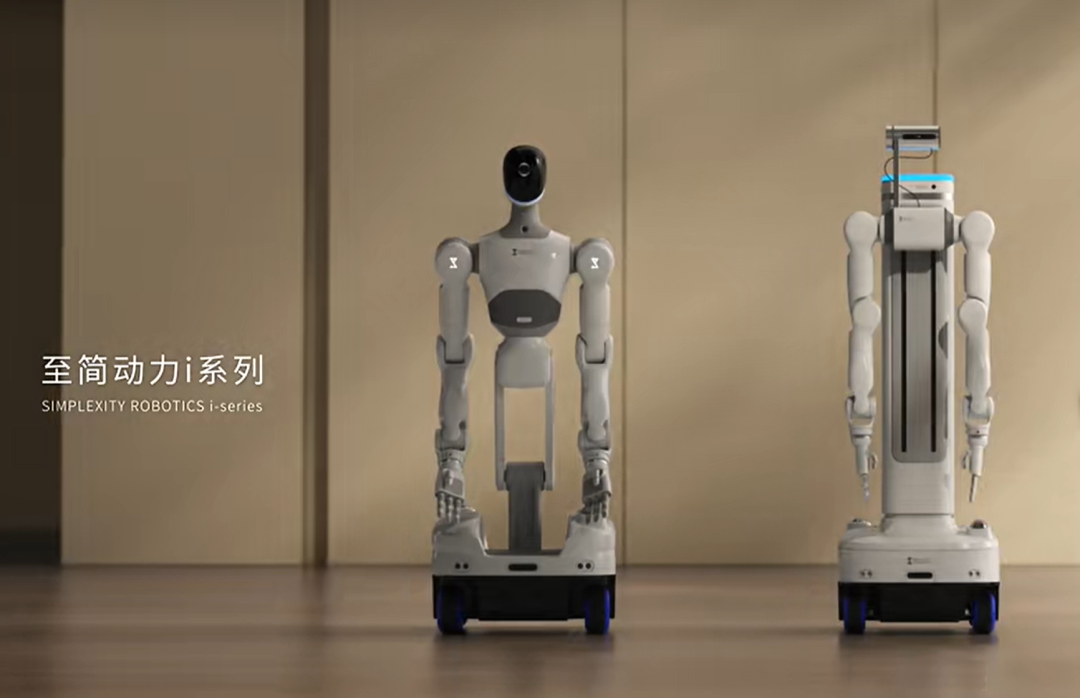
Zhi Jian Power (Simplexity Robotics), founded in July 2025 and headquartered in Hangzhou, positions itself as an embodied AI enterprise grounded in real-world scenarios. It is committed to creating embodied AI products with high user value through high-ceiling unified models, efficient data loops, and highly reliable robot hardware.
The company adopts the "Four Os" (one model, on-device, one body, one hour) as its core technology framework, adhering to the principles of model-defined bodies and software-defined hardware. It also proposes the "Human data is all you need" learning paradigm, achieving data loops through end-side shadow modes. Currently, the company has completed the development of two generations of robot bodies and initiated small-batch production, with a focus on closed scenarios such as factory workshops, supermarkets, and logistics.
Core Team: 1) Founder & CEO Jia Peng graduated with a bachelor's degree from Xiamen University and later earned his Ph.D. from the University of Maryland, USA. He previously worked as a high-performance computing engineer at IBM and later joined NVIDIA as a senior architect, where he was among the first core members to enter the intelligent driving field. In 2020, he joined Li Auto as the head of intelligent driving technology R&D.
2) Co-founder & Chairman Wang Kai previously served as the director of autonomous driving and global chief architect at Visteon. In 2020, he joined Li Auto as CTO, responsible for R&D in core technologies such as electronic and electrical architecture, intelligent cockpits, and autonomous driving. In 2022, he joined Vision Knight Capital as an investment partner before co-founding Zhi Jian Power with Jia Peng.
Products and Commercialization: Zhi Jian Power insists on full-stack self-research in hardware and software and has completed the development of two generations of bodies for B-end and C-end applications, achieving small-batch production. The company has independently developed core components such as integrated force-controlled joints, striving to deliver an ultimate user experience characterized by simple deployment, ease of use, and straightforward maintenance. It has also developed a world model and VLA integrated architecture, launching three core technology products: the LaST foundation model, the ManualVLA ultra-long-range task model, and the TwinRL real-robot reinforcement learning framework.
In terms of commercialization, ZhiJian Power follows a gradual path from closed to semi-open and then to fully open scenarios. It takes the lead in deploying closed scenarios such as factory workshops, supermarkets, and logistics, and has now fully initiated PoC verification.
5. MagicLab
Financing Information
On March 9, MagicLab announced the completion of its Series A financing round, raising 500 million yuan. This round's investors include strategic investors with manufacturing foundations and scenario resource advantages, such as Tuopu Group, Jiechuang Intelligent, and Aishida, as well as local state-owned capitals like Wuxi State-owned Assets Liang Venture Capital, funds under Yibin Yifazhan, and funds under Wuhan Linkongang, providing stronger support for MagicLab's subsequent technological R&D, product iteration, and industrialization.
Company Overview
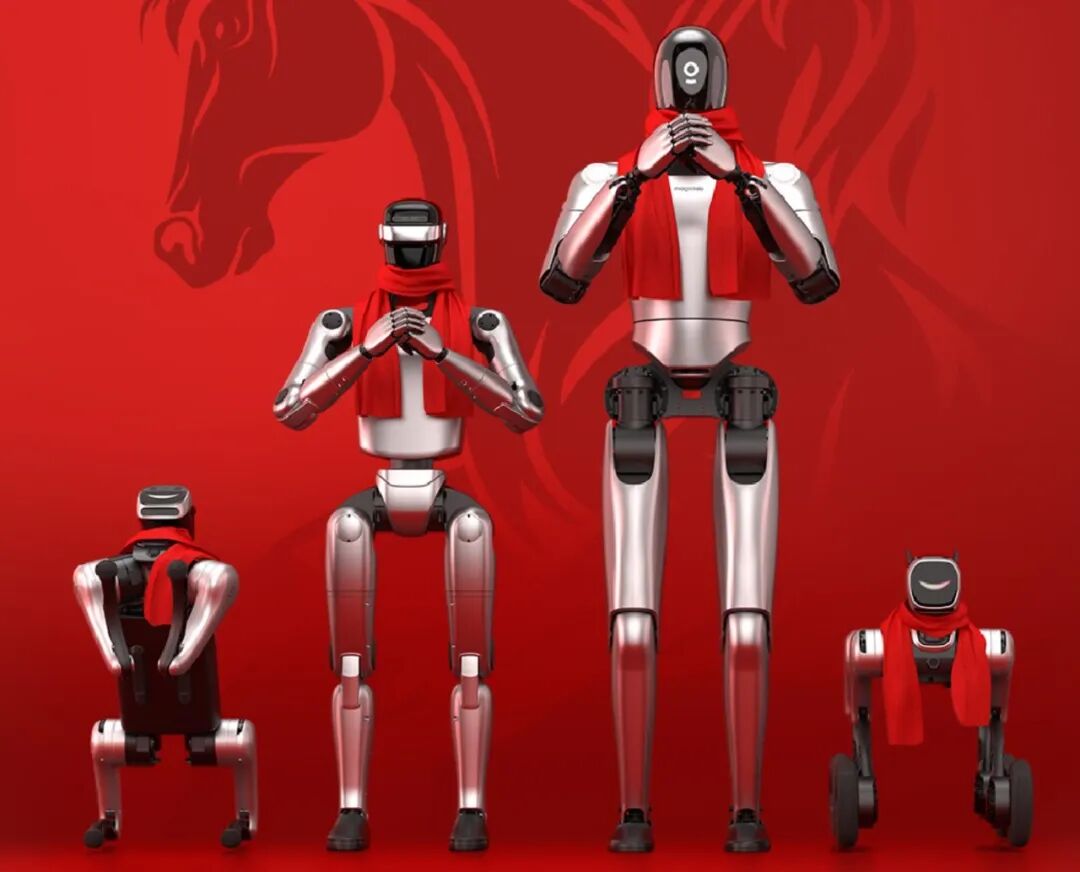
Founded in January 2024 and headquartered in Wuxi, Jiangsu Province, MagicLab (MagicLab) focuses on the R&D, production, and industrial application of embodied intelligence and general-purpose humanoid robots. Incubated by Dreame Technology, the company adheres to full-stack self-research of software and hardware, with a self-research rate of core hardware exceeding 90%. Leveraging high-torque joints, dexterous hands, and the "Atomic Vientiane " embodied large model, it builds a product matrix of full-sized humanoid and quadrupedal robots, covering industrial, commercial, and household scenarios. Through technical verification at the Spring Festival Gala and global layout, it accelerates large-scale delivery and scenario implementation.
Core Team: 1) Co-founder and CTO Chen Chunyu, a protégé of China's first-generation humanoid robot researchers, has over 10 years of R&D and management experience in the robotics industry and has worked for companies such as UBTECH. Since joining MagicLab in January 2025, he has been responsible for the company's technology system construction and core product R&D, leading the team to complete the R&D iteration of core products of humanoid and quadrupedal robots and promoting large-scale production and delivery.
2) Head of Embodied Models and Algorithm VP Zhang Tao, who holds a Ph.D. from Zhejiang University, has successively worked for Alibaba and NIO as Algorithm VP. He has published over 10 SCI and EI papers and holds more than 25 national invention patents, responsible for the company's embodied intelligence large model R&D and related technology system construction.
Products and Commercialization: MagicLab has built a "1+2+N" development framework. Among them, "2" refers to the company's two core product platforms—humanoid robots (MagicBot series) and quadrupedal robots (MagicDog series), forming the technological foundation and product backbone. "N" represents the full-scenario commercialization expansion based on these two core products, sharing a unified intelligent foundation for data interconnection and algorithm reuse, rapidly achieving flexible coverage of "N" segmented markets such as industry, commerce, and households.
In terms of commercialization, MagicLab has established partnerships with leading enterprises such as PetroChina, China Telecom, JD.com, Geely, and Toyota, covering multiple fields including petroleum and petrochemicals, manufacturing, power, and retail, with cumulative order amounts exceeding 100 million yuan. The company has simultaneously launched a series of "unmanned store" solutions, achieving regular robot deployment in Wuxi, Shenzhen, and other places, covering scenarios such as coffee shops, pharmacies, and bookstores.
6. PsiBot
Financing Information
On March 10, PsiBot announced the completion of a total of 2 billion yuan in Angel and Pre-A rounds of financing. 1) Angel round investors include "national team" capitals such as China Development Bank Financial, Guozhong Capital, and CCTV Media Industry Investment Fund; industrial capitals such as strategic investments from a listed company with thousands of billions in market value, funds under Changfei Optical Fiber, and Woerde; and financial investors such as YuanSheng Venture Capital, Zhuhai Technology Industry Group, Junshan Investment, Yanyuan Venture Capital, Dami Capital, Wofu Capital, Binfu Capital, and Taihe Capital. 2) The Pre-A round was led by funds such as Shanghai State-owned Xuhui Capital, with participation from local state-owned capitals such as Liangxi Science and Technology Innovation Industry Phase II Mother Fund (managed by Bohua Capital), Wuxi Venture Capital, and market-oriented funds such as Pufeng Capital and Taiming Capital.
Company Overview
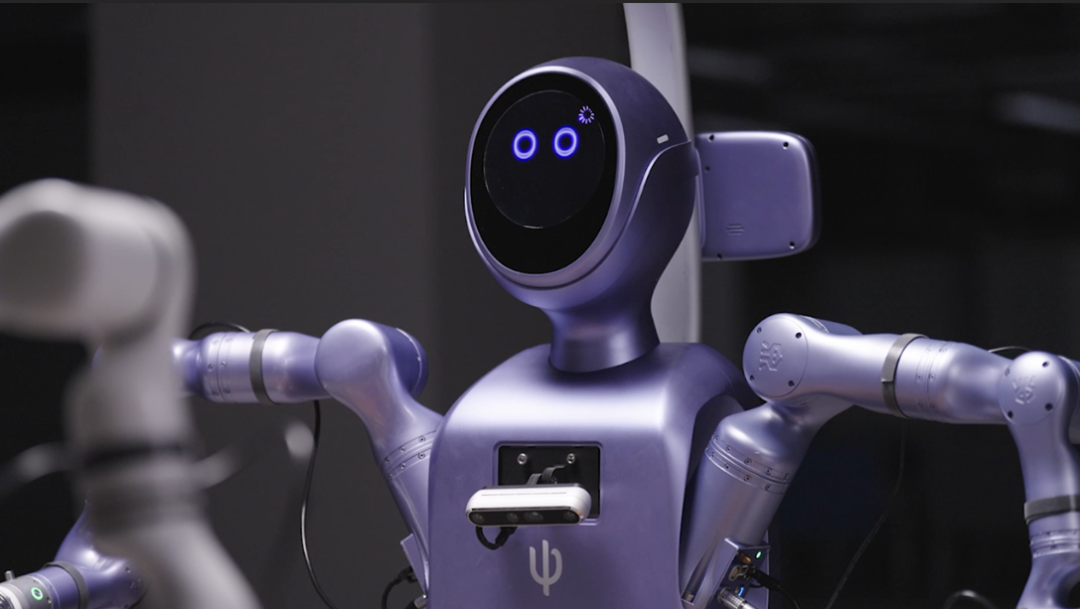
Founded in September 2024 and headquartered in Haidian District, Beijing, PsiBot positions itself as a general-purpose dexterous operation intelligent agent R&D enterprise, focusing on a software and toolchain system centered around the end-to-end VLA large model, dedicated to overcoming the challenges of dexterous operation in embodied intelligence. Its core products include: 1) Psi R series VLA models (R0/R0.5/R1); 2) Psi-SynEngine embodied data acquisition engine; 3) Hardware matrix including the PsiBot V1 dual-arm wheeled robot, PsiBot H1 dexterous hand, and the isomorphic anthropomorphic exoskeleton Psi E1.
Core Team: 1) Founder & CEO Wang Qibin, a Ph.D. graduate from Peking University, has over 20 years of product management experience in the robotics and consumer electronics fields, repeatedly achieving the industrial closed loop of products from definition, development, to market launch and globalization ("0-1-N"). He has successively worked for BlackBerry and Sonos, and later served as a senior executive at Yunji Technology, responsible for the R&D and commercialization of delivery robots, accumulating profound experience in robot productization and scenario deployment.
2) Co-founder & Reinforcement Learning Head Chen Yuanpei, a pioneering entrepreneur born in the 2000s. He graduated with a bachelor's degree in Civil Engineering from South China University of Technology, later pursued advanced studies under Professor Yang Yaodong's team at the Institute of Artificial Intelligence, Peking University, and served as a visiting scholar at Stanford University under the guidance of Professors Li Fei-Fei and Karen Liu. His research focuses on dexterous hand manipulation driven by reinforcement learning, and he was the first in the world to achieve simultaneous control of dual arms and hands for multi-skill operations in the real world using reinforcement learning.
Products and Commercialization: 1) At the hardware level, PsiBot has launched the PsiBot V1 dual-arm wheeled robot (32 degrees of freedom), the PsiBot H1 16 active degrees of freedom dexterous hand, paired with a 62+ degrees of freedom exoskeleton tactile glove (dedicated hardware for data acquisition), which can precisely capture human hand joint movements and tactile information, providing hardware support for data acquisition. 2) At the model level, the company has self-developed a hierarchical end-to-end VLA + reinforcement learning system, releasing the Psi R0/R0.5/R1 series models, and introduced the Psi-SynEngine embodied data acquisition engine (a software-hardware integrated solution), which can cost-effectively collect human operation data and enable cross-agent transfer. The Psi R1 model, based on the CoAT framework, can achieve 30-minute+ long-term complex operation reasoning.
In terms of commercialization, PsiBot prioritizes the deployment of semi-structured scenarios such as logistics and retail, jointly developing the last-mile delivery robot "Little Yellow Hornet" with Meituan, and reaching simulation training cooperation with NVIDIA, continuously advancing project PoC verification and scenario implementation.
7. LightWheel
Financing Information
On March 11, LightWheel announced the completion of Series A++ and A+++ rounds of financing, raising a total of 1 billion yuan. This round's financing includes industrial investors such as New Hope Group, Dingbang Investment (family office of the chairman of San'an Optoelectronics), Aux, and Dingshi Asset Management, as well as financial investment institutions such as Jiantou Huake, Guofang Innovation, Daohu Long-term Investment, and Qingxin Capital. The funds will be primarily invested in the continuous R&D of the physics simulation engine, the upgrading of the large-scale model evaluation system, and the construction of global delivery and local deployment capabilities, further consolidating LightWheel's leading position in the field of physical AI data and simulation infrastructure.
Company Overview
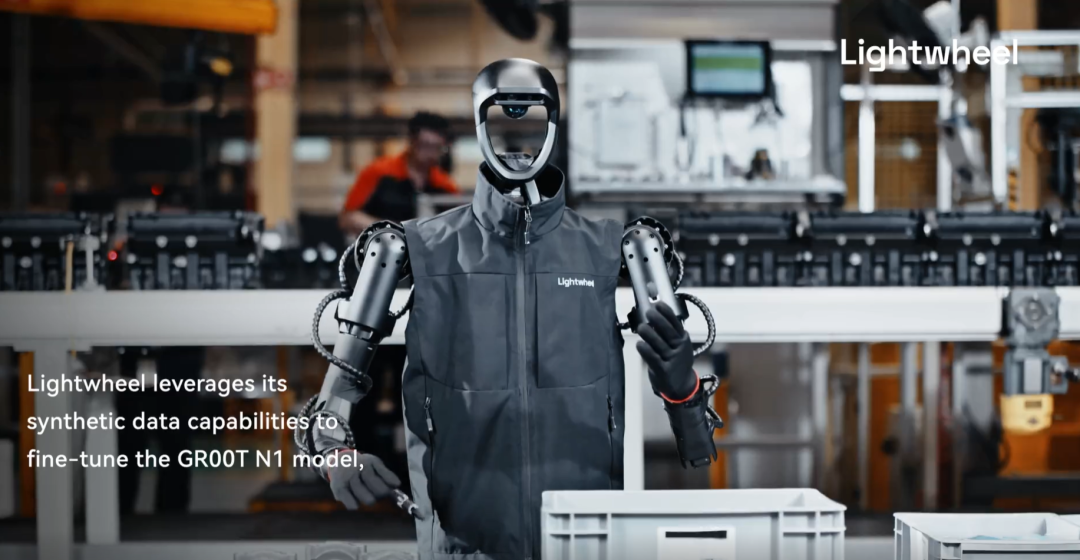
Founded in January 2023 and headquartered in Haidian District, Beijing, LightWheel (LightWheel) positions itself as a physical AI simulation infrastructure enterprise, dedicated to building "data and simulation infrastructure for the physical AI era." Through a full-stack self-research simulation technology system, it provides high-quality, large-scale synthetic data and evaluation services for embodied intelligence and autonomous driving enterprises, addressing core challenges such as low utilization of real data, high annotation costs, and lack of long-tail scenarios.
Core Team: 1) Founder and CEO Xie Chen, who graduated with a bachelor's degree in Physics from Peking University and later obtained a Ph.D. in Quantitative Finance from Columbia University in the United States, has successively served as the head of autonomous driving simulation at NVIDIA, Cruise, and NIO, building the synthetic data systems of these companies from scratch. He is the international pioneer in integrating generative AI into simulation. He leads the top-level design of the company's three-tier technical architecture of "world-behavior-evaluation" and the trinity technical system of "solution-measurement-generation," making him a leading figure in the field of physical AI and synthetic data.
2) Co-founder & President Yang Haibo, who holds a Bachelor's degree in Economics and a Master's degree in Law from Renmin University of China, has a diverse background spanning government, social organizations, and enterprises. He was deeply involved in grassroots governance and macroeconomic regulation in his early years and later served as the Director of Corporate Affairs and the Head of the Standardization Committee of the Association at Meituan. At LightWheel, he is primarily responsible for the company's strategic operations and commercialization.
Products and Commercialization: 1) At the technological foundation level, LightWheel has built a three-tier architecture of world-behavior-evaluation and self-developed multi-physics field high-precision real-time solution capabilities, enabling the construction of micron-level fidelity virtual simulation scenarios. 2) At the data and tool level, it has created a large-scale non-agent data engine and the EgoSuite human video data system, equipped with the RoboFinals industrial-grade simulation evaluation platform, supplemented by open-source toolchains such as LaraX and LeIsaac, to achieve low-cost mass production of high-quality embodied training data and support cross-agent transfer iteration.
In terms of commercialization, the company serves NVIDIA, DeepMind, leading humanoid robot enterprises, and automotive companies, covering most of the world's top world model teams. It continuously outputs large-scale synthetic data and full-stack simulation training solutions, deeply collaborating with ecological partners to advance the implementation of Sim2Real technology and the co-construction of industry standards.
8. Digua Robot
Financing Information
On March 16, Digua Robot announced the recent completion of a $120 million Series B1 financing round. Following the $100 million Series A financing round completed in 2025, Digua Robot's total financing for Series A and B rounds has reached $220 million. This round's financing includes industrial capitals such as Synstellation Capital, Didi, and Meituan Longzhu; strategic investment institutions such as Birui Capital, Joyoung Family Office, Yongning Gaoxin, BAIC Industrial Investment, Jiukun Venture Capital, Xinlian Capital, and Yarui Capital; and financial investment institutions such as Jinqiu Fund, Xingrui Capital, Chuxin Capital, Gengxin Capital, and Yunbai Capital. Additionally, old shareholders such as Hillhouse Capital, Vertex Growth Fund under Singapore's Temasek, Linear Capital, Hexuan Capital, Huangpujiang Capital, 5Y Capital, and Plum Ventures all Excessive follow-up investment (over-subscribed their follow-on investments).
Company Overview
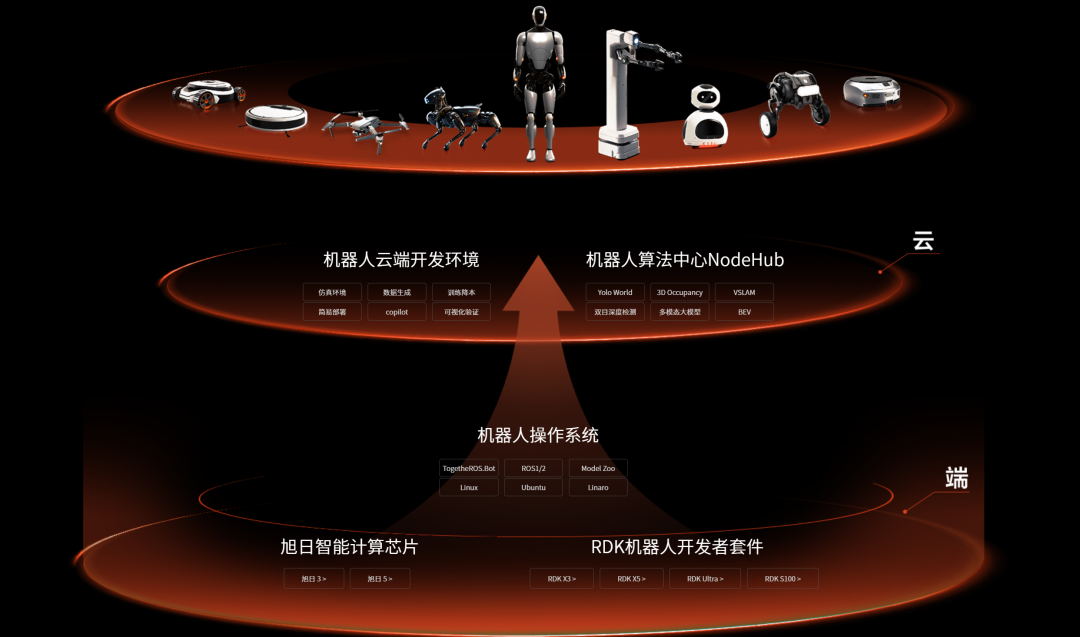
Founded in January 2024 and headquartered in Nanshan District, Shenzhen, Digua Robot emerged from the Horizon Robotics business unit. The company positions itself as a provider of robotics software and hardware universal foundations, focusing on a full-link layout of "chips + algorithms + software + development tools." Adhering to the original aspiration of "becoming the Wintel of the robotics era," it is dedicated to providing full-link development infrastructure for frontier scientific research exploration in embodied intelligence, the application landing of consumer-grade robots, and the creative development of small and medium-sized innovators and individual developers. Its main products include the Xuri series intelligent computing chips, RDK series robot developer kits, and the TogetheROS.Bot robot operating system, covering the full cycle needs of multi-scenario robot R&D and mass production.
Core Team: Founder and CEO Wang Cong, who graduated with a bachelor's degree in Computer Science from Beijing University of Technology and later pursued a Ph.D. at Wright State University in the United States, worked for Alibaba after graduation, responsible for enterprise intelligent customer service business. He later founded Wenyin Internet Company and served as a co-founder, responsible for product business. In 2018, he joined Horizon, successively serving as the head of the AIoT product line and the robotics business unit, leading the breakthrough of Horizon's internal robotics business from 0 to 1 and responsible for the construction of R&D, marketing, and sales systems. He became the CEO of Digua Robot after its independence in early 2024.
Products and Commercialization: At the hardware level, Digua Robot focuses on the Xuri® series intelligent computing chips (5~560 TOPS) and RDK® robot developer kits, covering diverse computing power needs from consumer-grade to humanoid robots. The Xuri 5 chip, with 10 TOPS of computing power and 3W of power consumption, has been widely used in products such as robotic vacuum cleaners. The flagship platform S600, with 560 TOPS of computing power, adopts a "big and small brain" architecture to meet the complex control needs of humanoid robots. At the solution level, the company provides a full-link development system integrating software and hardware and end-cloud collaboration, incorporating 200+ open-source algorithms and on-device large models, supporting "one-sentence completion of robot application development and deployment."
In terms of commercialization, the Xuri chip has shipped over 5 million units, connecting more than 100 partners and 100,000 developers, incubating over 100 robot categories. The S600 has been first adopted by strategic customers such as Fourier, Accelerated Evolution, and Stellar Era.
9. SynapX
Financing Information
On March 20, SynapX announced the completion of its first round of $50 million financing. The investors in this round include Horizon, Hillhouse Capital, Xiaomi Strategic Investment, Shunwei Capital, and Linear Capital. The financing will be primarily used for core technology and product R&D, data system construction, and talent recruitment. Meanwhile, the company's next round of financing is also progressing simultaneously, continuing to receive attention and support from international industrial capitals, family capitals, and top U.S. dollar capitals.
Company Overview
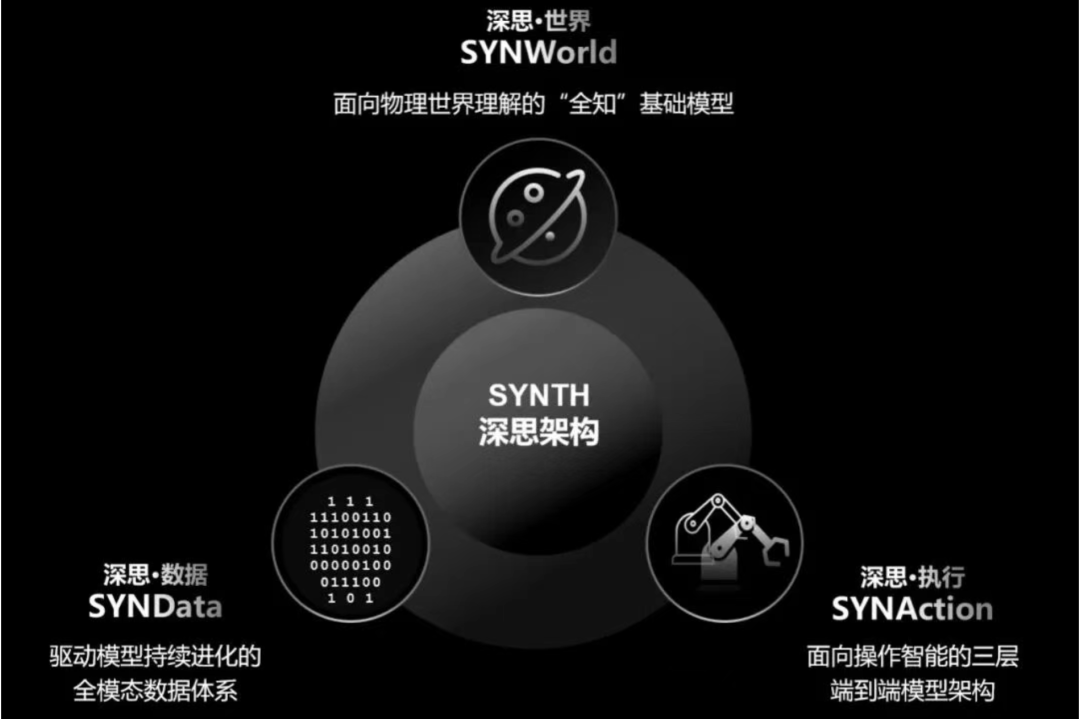
Founded in January 2026 and headquartered in Haidian District, Beijing, SynapX positions itself as a frontier technology enterprise in physical AGI, with the SYNTH ThinkDeep architecture as its technological foundation, dedicated to creating sustainably self-evolving embodied intelligence productivity, promoting true operational intelligence in robots, and accelerating the arrival of the physical AGI era. At the same time, it continuously constructs/drives a task-data closed loop—enabling robots to engage in actual work, activating data flywheel iteration with large-scale deployment as the engine, and accelerating towards the "ChatGPT moment" in the field of general-purpose embodied intelligence.
Core Team: 1) Founder and CEO, Dalong Du, holds a Master's degree from the Institute of Computing Technology, Chinese Academy of Sciences, and a Doctorate in Innovation and Leading Engineering from Tsinghua University. As one of the founding employees of Horizon Robotics 6, he was deeply involved in the design of China's first AI chip, BPU, and led the forward-looking R&D and engineering implementation of AI algorithms. He was also a founding member of Baidu IDL and one of the pioneers in China engaged in deep learning AI R&D. In 2021, he founded PhiGent Robotics and led the team to achieve mass production of high-level autonomous driving for models such as VOYAH and Chery.
2) Co-founder, Zhujin Liang, holds undergraduate and master's degrees from Sun Yat-sen University and a Doctorate in Innovation and Leading Engineering from Tsinghua University. He previously served as the Vice President of Technology at PhiGent Robotics, focusing on end-to-end AI, world models, and closed loops of imitation learning and reinforcement learning. He was among the first in the industry to promote the integration of world models and end-to-end RL closed-loop training systems into real-world systems.
Core Technologies: The company proposes the SYNTH DeepThink Architecture, which comprises three modules: DeepThink·Execution (SYNAction) pioneers the REMA frequency-division multi-scale end-to-end architecture, completing the full execution from cognitive reasoning to fine-grained control through a three-layer closed loop of System 2/1/0. DeepThink·World (SYNWorld) constructs a VFT-WFM vision-force-touch unified modeling framework, enabling multi-modal physical interaction perception. DeepThink·Data (SYNData) builds the OPDS full-modal physical data system, introducing the concept of 'AI as a Sensor' to achieve high-precision acquisition and large-scale generation of multi-modal signals.
-
![]()
The Allure of 'Acquisition Spree': Li Shufu's Left Turn, Xu Jiayin's Right
-
![]()
Strategic Transformation Yields Results: Phoenix Optics Reports 10.9% YoY Rise in Core Net Profit for H1 2026
-
![]()
Three Key Growth Trajectories Synergize! Crystal-Optech Reports 3.478 Billion Yuan in Revenue for H1 2026
-
![]()
Semi-Annual Report Sparks XPENG Motors Buzz
-
![]()
1.6 Billion Big Order Secured! SeeYA Technology's Revenue Soars by 287.87% in the First Half of the Year
-
![]()
Baidu's Profits Plunge by 68%: Unraveling the Mystery Behind the Numbers
-
![]()
Baidu’s Profits Tumble by 68%! Where Has All the Money Gone?
-
![]()
Hynix’s Taobao Store Shuts Down Abruptly: What Should Customers Do About Warranty Services for Memory Modules?