After Zhang Xue's Victory, Where is Motorcycle Intelligence Headed?
 06/05 2026
 551
551
In late March 2026, at the Portimão Circuit in Portugal, a Chinese team stood atop the podium at the World Superbike Championship (WSBK). Zhang Xue Motorcycle, a brand established just a few years ago, broke a 37-year monopoly held by European, American, and Japanese teams in the event with a victory.
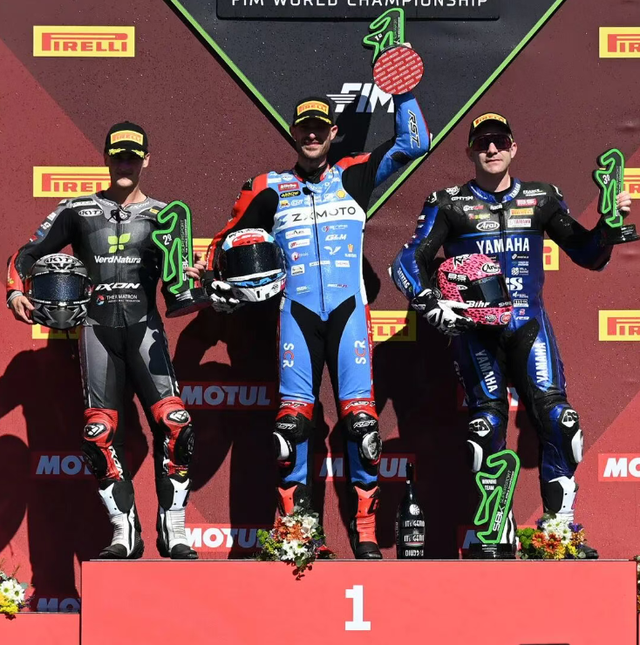
After the race, some discussed the engine, others the chassis, and some analyzed the horsepower curve of the 819cc inline-three engine. But few noticed another question: What does this victorious racing bike have to do with AI?
At first glance, this perspective seems out of place. Motorcycles are mechanical products—physical systems composed of throttles, brakes, and suspensions—seemingly far removed from software-level technologies like artificial intelligence. However, a closer look at the technical details behind Zhang Xue Motorcycle's victory reveals that the industry is undergoing change.
It is reported that the electronic control system of the championship bike, the 820RR-RS, is intelligent, featuring real-time perception, millisecond-level decision-making, and active intervention capabilities. On the track, the bike's self-developed data acquisition system optimizes vehicle parameters in real-time based on data from 100,000 laps.
Meanwhile, discussions about motorcycle intelligence are heating up on social media. Many consumers now actively consider whether a motorcycle is equipped with intelligent features when choosing a bike.
So, what stage has motorcycle intelligence reached? How does it differ from traditional automotive intelligence?
Can Motorcycles Be Intelligent?
After Zhang Xue Motorcycle's victory, a question came into the public eye: Isn't intelligence exclusive to cars? When did motorcycles become associated with AI?
The public's impression of motorcycles still lingers at the stage of purely mechanical toys—an engine, two wheels, and a handlebar. Many even believe that the charm of motorcycles lies in their rawness, free from the interference of excess electronic devices. Riders directly communicate with the machine, receiving immediate feedback with every twist of the throttle and squeeze of the brake.
However, motorcycle intelligence is far more than simply adding a touchscreen or smartphone connectivity. It is a complete technological system known in the industry as Advanced Rider Assistance Systems (ARAS), encompassing intelligence at the perception, decision-making, and execution levels.
At the perception level, modern intelligent motorcycles use sensors such as six-axis IMUs, millimeter-wave radars, and cameras to perceive their own posture and the surrounding environment in real-time. At the decision-making level, an AI chip and algorithms process and judge this data rapidly. At the execution level, the system precisely controls the engine, brakes, suspension, and other actuators based on the decisions, helping riders achieve safer and more efficient riding.
Of course, motorcycle intelligence does not stop at the core control link (control link) from perception to decision-making; it also covers communication, human-machine interaction, battery management, and other aspects.
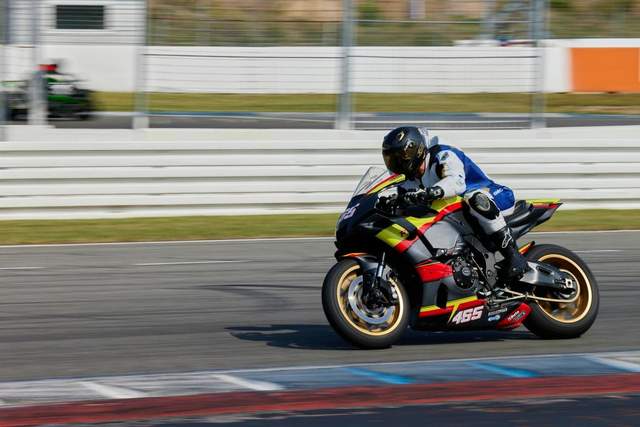
In 2024, the China Electronics Chamber of Commerce released the industry's first group standard, "Classification of Riding Intelligence for Motorcycles and Mopeds," dividing motorcycle intelligence into six levels from L0 to L2-Ultra and defining eight core systems, including communication, interaction, perception, and positioning. This marks the formal transition of motorcycle intelligence from concept to standardization.
Level L0 supports only basic functions like Bluetooth, keyless entry, and smartphone connectivity. Level L1 adds telematics, OTA updates, and remote monitoring. Level L1p enhances positioning and communication capabilities, supporting precise positioning and emergency rescue. Level L2 introduces radar and cameras for safety alerts such as collision warnings and blind-spot monitoring. Level L2p adds single-dimension control aids like cruise control and traction control. The highest level, L2-Ultra, achieves full-dimension control, integrating advanced driver-assistance functions such as adaptive cruise control and automatic emergency braking.
Currently, domestic models in the 20,000–30,000 yuan range (such as the CFMOTO 450SR and QJMOTOR SRG550) come standard with TCS, and L1-level functions like traction control are rapidly spreading to mid-range models. Meanwhile, basic configurations like cornering ABS and multiple riding modes are gradually becoming standard. L2 functions have appeared on high-end touring and adventure bikes, which typically feature advanced safety aids such as forward collision warnings, blind-spot monitoring, and adaptive cruise control.
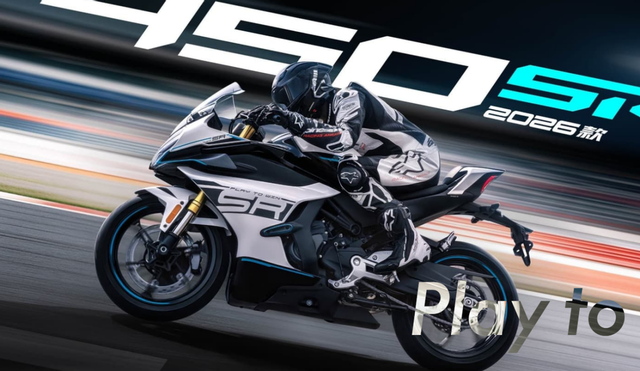
However, motorcycle intelligence has also sparked significant controversy among enthusiasts. Supporters argue that intelligence can significantly enhance riding safety, lower the barrier to entry for beginners, and allow more people to enjoy the pleasure of riding. Opponents worry that excessive electronic aids will strip away the pure connection between human and machine, turning motorcycles into soulless electronic products.
This controversy reflects the uniqueness of motorcycle intelligence: Unlike cars, it cannot pursue full autonomy, and its progression must be more cautious.
In comparison, automotive intelligent driving has entered the stage of large-scale L2+ adoption and the beginning of L3 commercialization, while the pace of motorcycle intelligence is noticeably slower. L1-level functions are transitioning from high-end options to industry standards, and L2-level functions remain concentrated on a few high-end models, with a long road ahead before true maturity.
As an emerging field, intelligence is still an extremely niche high-end configuration in the overall motorcycle market, far from large-scale commercialization. This raises a question: If automotive intelligent driving technology is already quite mature, why can't motorcycles simply copy the same approach?
Why Can't Motorcycles Copy Automotive Intelligence?
Motorcycles and cars are entirely different types of vehicles, with fundamental differences in their physical characteristics, driving logic, and safety requirements.
The core logic of automotive intelligent driving is control. The steering wheel controls turning, the brake pedal controls braking force, and the throttle pedal controls power... All actuators are wire-controlled, with computers issuing commands and actuators responding, resulting in few mechanical coupling links and far greater controllability than motorcycles. On this basis, the system can perform path planning, decision-making, and execution to achieve automated movement from point A to point B.
Motorcycles are entirely different; their turning relies on "leaning." The rider must first push the handlebars in the opposite direction to break balance, tilt the bike, and then use changes in the tire-ground contact patch to achieve steering. The entire process depends on the rider's weight shift and body posture, making it a typical human-machine coupling system.
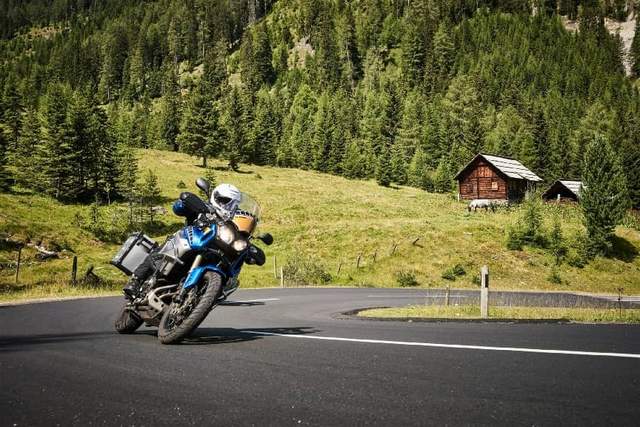
This means that if high-level autonomy is to be achieved on a motorcycle, the system faces challenges not only in controlling the throttle and brakes but also in coordinating human-machine control authority while the rider maintains balance. This is orders of magnitude more difficult than on four-wheeled platforms.
Take sensors as an example. A motorcycle's body posture changes dramatically during riding, with lean angles exceeding 60 degrees in competitive scenarios. This causes the transformation relationship between the world coordinate system and the vehicle coordinate system to change continuously and dynamically. Mature perception fusion algorithms from cars must be completely redesigned for motorcycles to achieve real-time dynamic calibration. The same millimeter-wave radar that can stably detect vehicles 150 meters ahead on a car may misjudge target positions on a motorcycle due to body tilt.
For this reason, while automotive intelligent driving has advanced rapidly, there are no truly L3-level autonomous motorcycles worldwide, and industry standards are currently set only at L0-L2U.
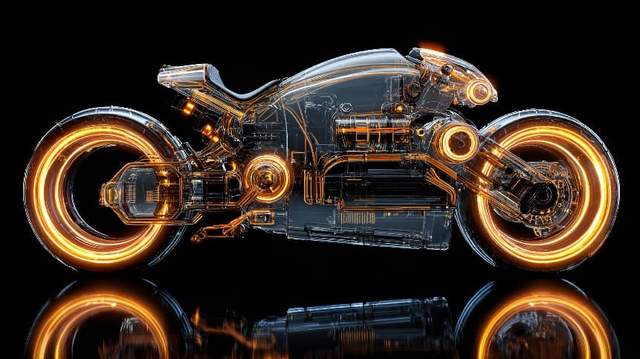
Moreover, from a spatial perspective, an intelligent car can deploy more than a dozen sensors around its body—forward millimeter-wave radars, lidars, ultrasonic sensors, and surround-view cameras—covering 360 degrees without dead zones. Motorcycles have extremely limited installation space: The front is occupied by headlights, instruments, and wiring, leaving no room for large sensor modules; the rear is blocked by the rider's body; and there are almost no flat surfaces on the sides. The current mainstream solution is to carry a single forward radar or camera, with at most a rear radar added at the tail. Perception range and redundancy are far inferior to cars, and motorcycles inherently have more perception blind spots.
From a safety standpoint, if an automotive intelligent driving system fails, the vehicle can decelerate and pull over. If a motorcycle's electronic system fails while cornering at high speed, there is almost no margin for error. Coupled with the lack of automotive-grade redundant braking circuits and redundant steering mechanisms, motorcycles have extremely little room for error, requiring stricter safety standards than cars.
Due to these stark differences in system characteristics, perception conditions, and safety baselines, motorcycles cannot simply replicate automotive intelligent driving approaches. So, what challenges does motorcycle intelligence face, and where is it headed?
The Irreversible Trend of Motorcycle Intelligence
Despite numerous challenges, the trend toward motorcycle intelligence is irreversible.
A proven viable path is from the racetrack to the market. Zhang Xue Motorcycle first validates cutting-edge electronic control technologies and uses AI as an "assistant" in top-tier competitions, then gradually reduces configurations and optimizes costs for civilian models. This not only rapidly enhances technological capabilities but also builds brand influence through racing achievements.
Cao Bin, an angel investor in Zhang Xue Motorcycle, stated in an interview with Yicai Global>: "Zhang Xue Motorcycle is moving toward electrification and intelligence. The company will invest 135 million yuan in R&D this year, with a significant portion going toward motorcycle electrification and intelligence."
Meanwhile, technological spillover from the automotive supply chain is accelerating motorcycle intelligence. As giants like Huawei, Qualcomm, Aptiv, and Valeo enter the two-wheeled market, mature automotive-grade technologies are systematically being introduced into the motorcycle industry. For example, the Qualcomm Snapdragon 8155 chip has been applied to the Great Wall Motor Soul S2000 series, providing strong computational support for the vehicles.
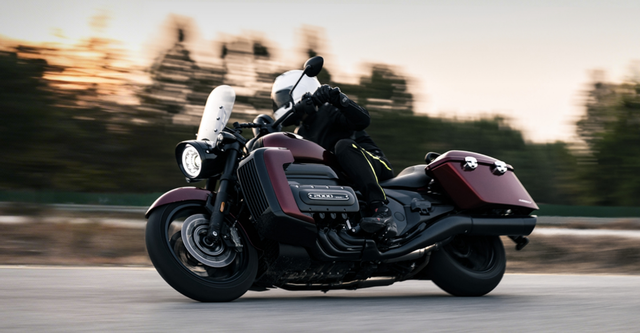
From a technological standpoint, electric motorcycles inherently have better electronic control foundations, with motors offering far superior response speed and control precision compared to internal combustion engines. Therefore, electric motorcycles have become the ideal carriers for intelligent technologies. High-end electric models from brands like Ninebot, ZEEHO, and Yadea already lead their gasoline-powered counterparts in intelligence at similar price points. The deep integration of electrification and intelligence is reshaping the entire motorcycle industry landscape.
Of course, motorcycle intelligence still faces challenges. Reliability issues under complex road conditions have not been fully resolved, particularly on wet, gravelly surfaces and corners, where the performance of intelligent assistance systems remains unstable. The prices of key components like millimeter-wave radars and AI chips remain high, making large-scale adoption difficult in mid-to-low-end models.
Uncertainty in technological routes also persists. Questions remain about whether millimeter-wave radars, cameras, or lidars should be the primary sensors for motorcycles, whether multi-sensor fusion is necessary, and to what extent driver assistance should be implemented. The industry has yet to reach a consensus, leaving manufacturers at risk of choosing the wrong path in their R&D investments.
What Does the Future Hold for Motorcycle Intelligence?
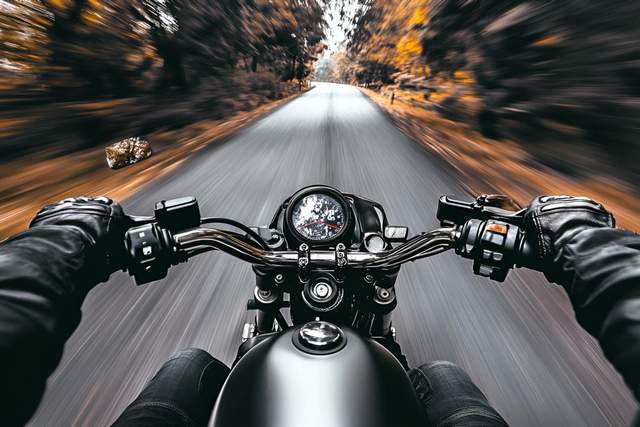
A reasonable prediction is that over the next three to five years, cornering ABS and semi-active suspensions will rapidly become standard on mid-to-high-end models, akin to automotive ESP. Radar-assisted blind-spot monitoring and adaptive cruise control will appear on a few luxury touring bikes but will remain at higher price points. As sensor costs decline and computing platform integration improves, entry-level intelligence packages are expected to trickle down to broader price ranges over a longer period.
From a longer-term perspective, the ultimate form of motorcycle intelligence is unlikely to be pure autonomy but will likely evolve into a unique human-machine co-driving model: issuing warnings when entering a corner too fast, correcting the route during long-distance riding fatigue, and actively intervening in emergencies beyond human reaction limits. It will preserve the core joy of two-wheeled riding and the experience of unity with the machine while keeping accident risks at a lower level.
The racing bike that secured Zhang Xue's victory is, in a way, a harbinger of this future. Racing environments are more extreme and demanding than public roads, and the electronic control strategies validated on the track will eventually follow the path of ABS and TCS, moving from professional racing to the mass market and becoming standard features on everyday motorcycles.
-
Ofilm Teams Up with ADSensE to Propel Large-Scale Deployment of All-Solid-State LiDAR Powered by ADS6311 Chip!
-
![]()
Loss of 2.5 Billion Yet Facing Strong Demand for Shares? Another Battle for Control of Lianchuang Electronics
-
![]()
Huawei’s Enjoy Series Flies Off the Shelves, Prompting Xiaomi to Double Down on Budget Smartphones
-
![]()
Beijing Hyundai's Top Executive Criticizes Industry Disorder: Certain Brands Treat Customers as Beta Testers
-
![]()
The domestic mobile phone market has declined for five consecutive quarters! Huawei defies the trend with significant growth: maintains its top market share
-
Annual Revenue Surpasses 3 Billion: An Automotive Trim 'Little Giant' Makes Its Debut on the Beijing Stock Exchange
-
![]()
The Space Force Wants to Spend $30 Billion on Rocket Launches: Is Trump Doubling Down, and Is SpaceX the Big Winner?
-
![]()
Going Crazy! One out of Every Three Plug-in Hybrids Sold in Europe is a Chinese Vehicle