Why Are Small and Medium Investors Still Doubling Down on AI Amid the Exodus of Capital Giants?
 04/10 2026
 624
624
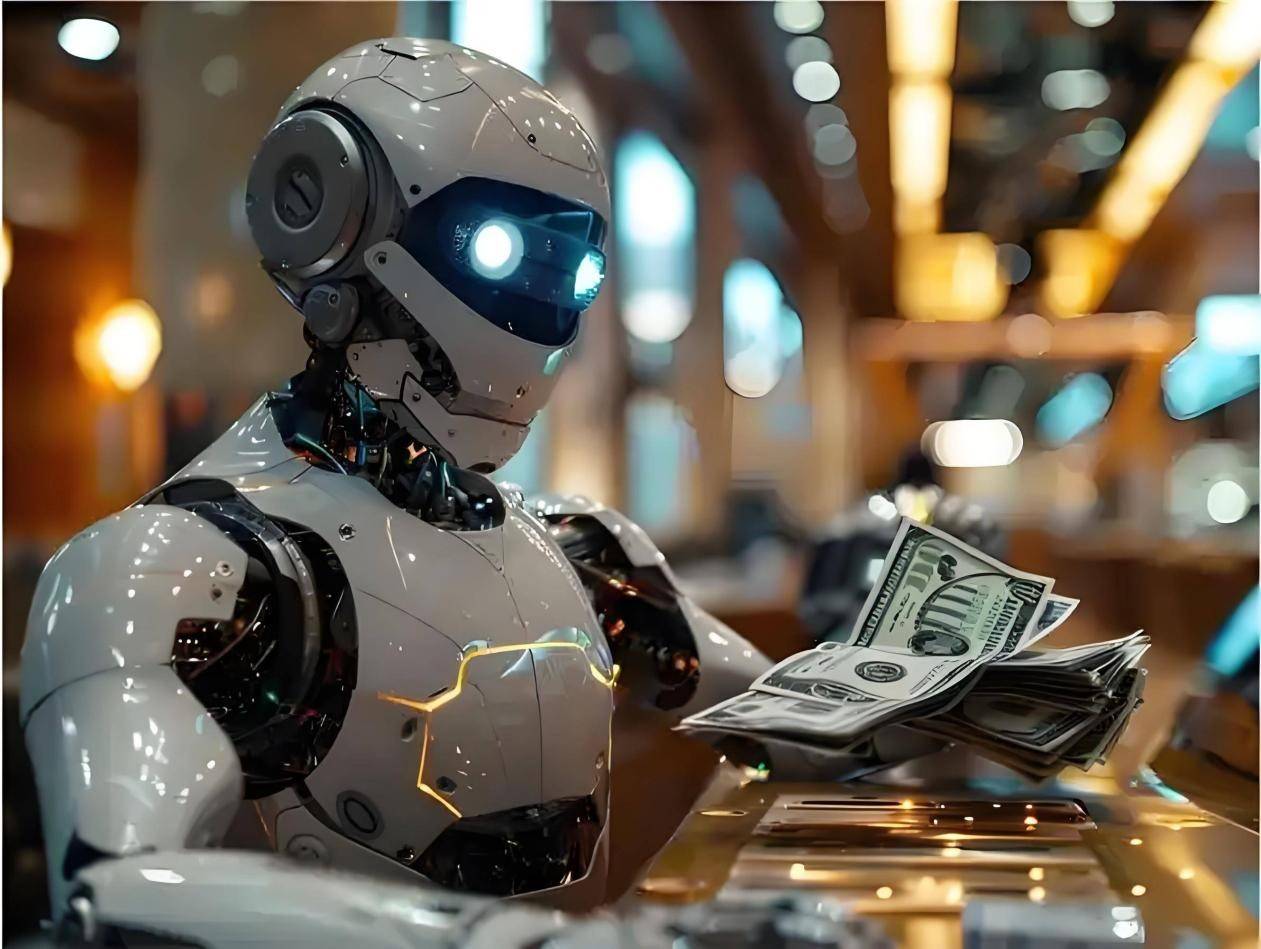
Globally, AI has surged in capital markets. By April 1, Zhipu's stock price soared to HK$917, with a market cap exceeding HK$400 billion. After MiniMax released its new M2.7 model, its stock price surged over 28%, reaching a market cap of over HK$380 billion.
Interestingly, compared to internet, healthcare, and high-end manufacturing sectors—where institutional holdings dominate—individual investors are increasingly prominent in AI. Take MiniMax as an example: exchange data shows that institutions required to disclose positions hold only about 9.3% of its shares, with the rest held by individuals and non-reporting investors.
The same trend is evident overseas.
Even before OpenAI and Anthropic go public, individual investors are finding ways to invest. Closed-end funds and thematic ETFs are seeing Crazy pursuit (frenzied demand). For instance, VCX, whose core assets include Anthropic, SpaceX, and OpenAI, has attracted over 100,000 investors, with its stock price surging to $575 at its peak.
All signs indicate that global "small and medium investors" are vying for a piece of the AI pie.
AI Is Losing Its Grip on Mainstream Investors
Currently, mainstream global capital is losing faith in AI, with even top investors' confidence waning significantly.
In 2026, Silicon-Based Observer reported that Stanley Druckenmiller, the legendary Wall Street investor with a "30-year unbeaten streak," sold nearly all his AI stocks, including NVIDIA, Palantir, and Meta. Similarly, Ruchir Sharma, chairman of Rockefeller International, warned that the AI bubble could burst at some point in 2026.
Institutional capital, always "pragmatic," is accelerating its retreat from AI.
Since last year, leading institutions like Sequoia, Morgan Stanley, Bridgewater, and SoftBank have reluctantly reduced their AI holdings, including marquee names like NVIDIA. By November 2025, Bridgewater, the world's largest hedge fund, had cut its NVIDIA stake to 2.51 million shares, a 65.3% reduction from Q2.
Even Saudi Arabia's PIF has cumulatively sold off about $12 billion in U.S. tech stocks and paused new investments in AI startups.
Why can't AI, still advancing aggressively, retain mainstream investors?
First, AI companies exhibit extreme market volatility.
For example, Moore Threads surged over 700% in five trading days before nearly halving. According to Wall Street Horizon, among Asian stocks with market caps exceeding $10 billion, at least half of the top ten most volatile stocks are recently listed AI-related firms, measured by 90-day annualized volatility.
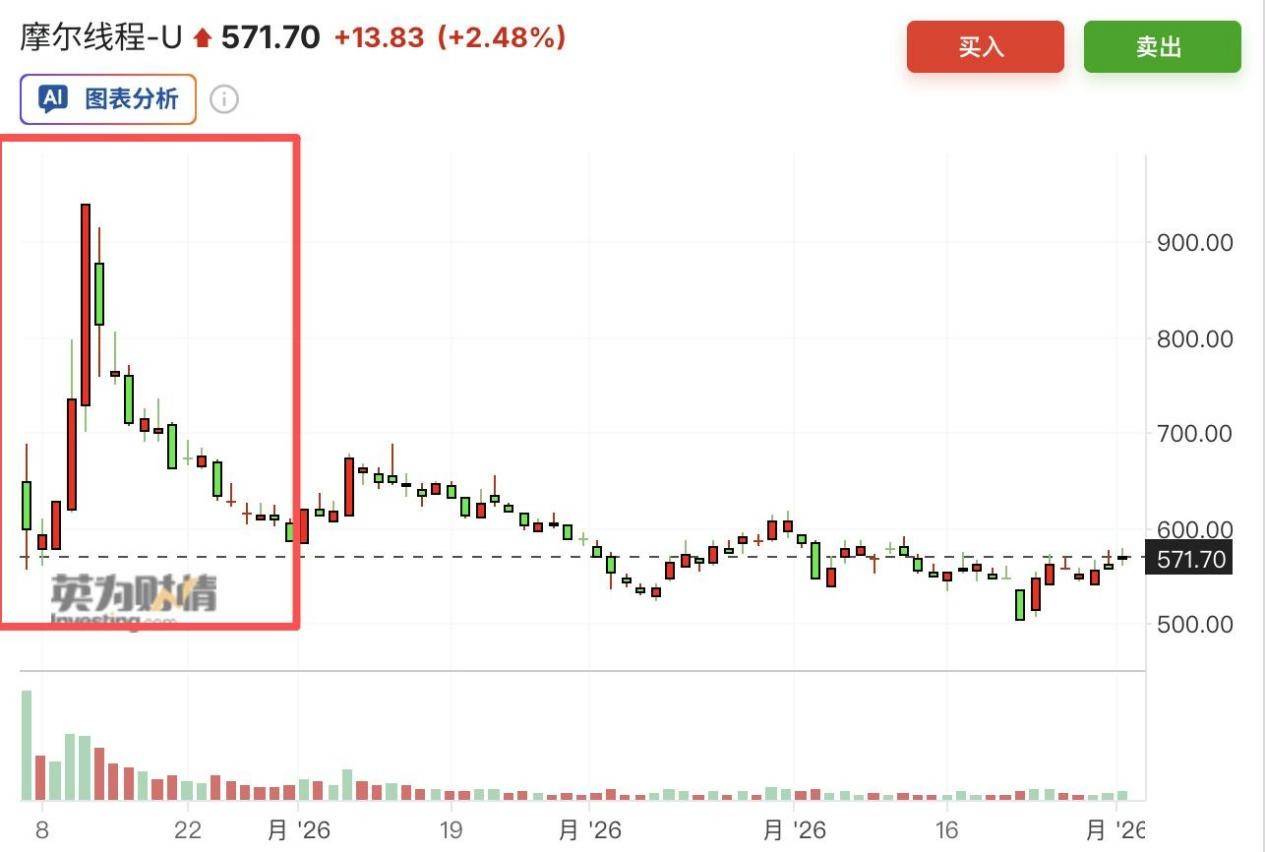
High volatility repels institutions, creating a sense of out of control (loss of control) and prompting exits. Public data shows that among the five most volatile Asian stocks, institutions hold just 13% on average, compared to ~50% in Tencent and Alibaba.
Second, beneath AI's high growth lies unresolved issues of massive losses, high costs, and imbalanced returns. Take OpenAI: it expects losses to hit $14 billion in 2026, with annual cash burn projected to reach $57 billion by 2027.
Currently, OpenAI's gross margin is only ~33%, with cash flow break-even not expected until 2030.
Even NVIDIA, a seemingly lucrative supplier, fails to alleviate capital concerns.
In Q3 2025, NVIDIA's AI chip revenue surged 210% YoY, with orders booked through 2027 and a 78% gross margin. However, its P/E ratio exceeds 75x, far above the semiconductor industry's 30x average, highlighting growing capital foamization (frothiness).
Citibank noted in a report that NVIDIA's market cap overly discounts future earnings, while Wall Street fears a valuation reset if investors stop paying for "computing power narratives." Mainstream institutions are selling NVIDIA primarily over concerns that AI computing demand growth will slow in 2026.
Facts bear this out. In 2025, global AI startup funding fell 32% YoY. Cash-strapped small and medium-sized (small and medium) AI firms canceled or delayed chip orders, causing NVIDIA's Q4 AI chip shipment growth to drop 15% QoQ.
Moreover, institutional capital inherently seeks predictability and stable returns. According to JPMorgan, to achieve a 10% baseline return on global investments (covering capital costs), AI must generate $650 billion in annual revenue. Current global AI revenue is only ~$50 billion, a 13x gap.
Notably, the past two years' massive AI inflows came at the expense of reductions in consumer and financial sectors.
In December 2025, the CSI TMT Index's daily turnover stabilized at RMB 200–250 billion, far exceeding consumer and financial sectors. Yet, as AI's return cycle far exceeds institutional expectations, with risks outweighing rewards, capital is seeking a new "safe haven."
The financial sector offers one such option. On March 17, China's non-bank financial sector saw RMB 3.633 billion in net main fund inflows. Ping An's 2025 attributable operating profit grew 10.3%, with a 4.7% dividend yield, becoming a new destination for risk-averse capital.
After years of AI exhaustion, top institutions and large funds are due for a "break."
Becoming the "Buffett" of the AI Era
Regardless of where mainstream capital flows, one undeniable fact remains: the AI investment craze is sweeping global retail investors.
As early as 2024, retail investors purchased nearly $30 billion worth of NVIDIA stock, making it the world's most-traded single stock by retail volume, surpassing Tesla. In 2026, reports claimed that sustained retail buying of NVIDIA briefly made it the largest company by market cap in the S&P 500.
Retail investors are nearly "obsessed" with global leading AI firms beyond NVIDIA.
In March, unlisted OpenAI sold ~$3 billion in shares to retail investors through banking channels for the first time.
Closed-end funds like VCX and DXYZ, which invest in top AI firms, have emerged as VC options for retail investors. For example, KraneShares' AGIX ETF, holding stakes in Anthropic and xAI while allocating to AI tech giants like Microsoft, Alphabet, Amazon, and NVIDIA, has outperformed the S&P 500 and Nasdaq since inception.
VCX, holding 20.7% of Anthropic, 17.7% of Databricks, and stakes in OpenAI and SpaceX, went public on March 19, 2026. Its shares surged from tens of dollars to nearly $575 within days, trading at a 31x premium, with over 90% of shares held by over 100,000 retail investors.
Investment forums buzz with discussions like "AI bottom-fishing" and "winning big with AI layout (AI positioning)." In an era of AI miracles, countless individual investors share the dream of getting rich overnight—or even becoming the next "Buffett."
Is this seemingly passionate wealth dream just a fluke?
First, the AI boom has indeed made some retail investors "quick money" in recent years.
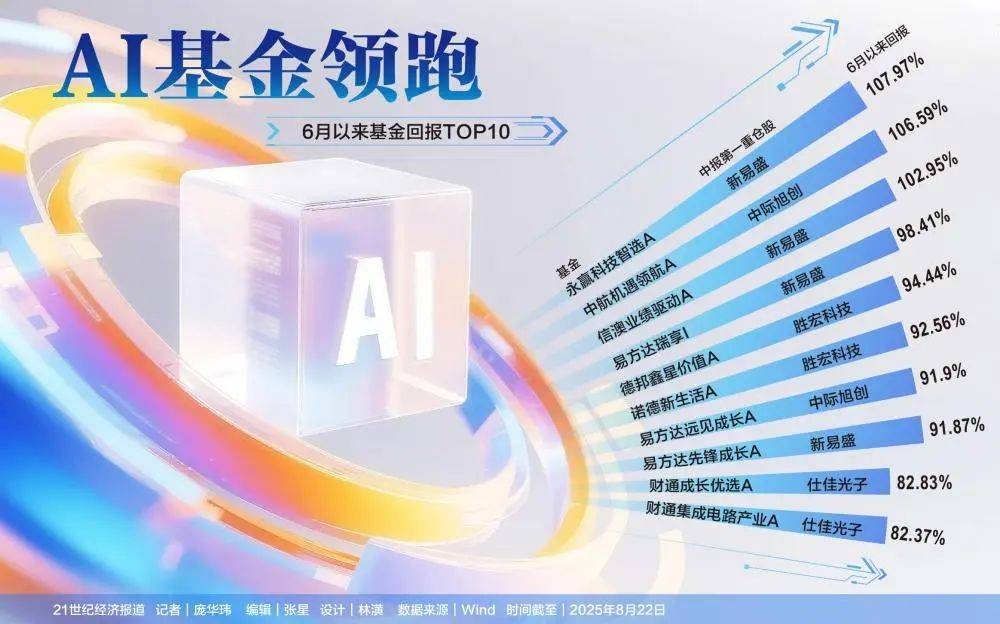
Overseas, 21% of U.S. household wealth in 2025 came directly from stocks, with AI stocks contributing half of recent growth. Domestically, the AI index has surged over 26% since 2025, with numerous stocks doubling. Last year, Yongying Technology Smart Selection A, heavily invested in AI, achieved a 239.78% annual return.
Second, market hype has fueled the AI craze.
In recent years, AI's capital narrative has been amplified, with expectations of "changing the world" creating an investment atmosphere where "missing AI means missing the next internet era." In China alone, 38 AI computing concept stocks held over RMB 1 billion in fund positions by Q3 2025.
Kweichow Moutai was once removed from top fund holdings, replaced by a growing AI investment bias.
Additionally, while Buffett, Charlie Munger, Druckenmiller, and others urge caution on AI, and Bridgewater's Ray Dalio compares the current AI landscape to the 1998–1999 dot-com bubble, many global star investors remain deeply interested in AI.
On March 4, 2026, Leo KoGuan, the "greatest retail investor ever" for his contrarian Tesla buy, announced on X that he had purchased 1 million NVIDIA shares for ~$180 million, with plans to add more. In Q1 2026, Duan Yongping newly invested in the "AI trifecta"—Microsoft, NVIDIA, and TSMC—with holdings worth ~$220 million.
Amid heated AI bubble debates, every move by top investors becomes a "benchmark" for retail investors.
Of course, for ordinary people, becoming a "Buffett" in any era is a fantasy. Most star investors' philosophies anchor in stable cash flows, safety margins, and long-term certainty, patiently holding through cycles to earn real enterprise value.
In today's AI investment frenzy, such rationality has been abandoned.
Overheated AI Investments Brace for "Contingency Plans"
Regardless, global AI investment has passed its "peak hype" phase.
Macroscopically, capital must grow more rational. In December 2025, Oracle and chipmaker Broadcom both reported earnings below lofty investor expectations. In Q1 2026, the Magnificent Seven ETF—the first to track the "Magnificent Seven" mega-cap tech stocks—fell 16%, its worst quarter since inception in 2023.
Though the AI "bubble" is widely acknowledged, capital is reluctant to stop investing, even succumbing to "fear of missing out."
Meta's Mark Zuckerberg stated that even if AI costs hundreds of billions, the risk of missing out is higher. OpenAI's Brett Taylor said, "AI will create enormous economic value like the internet... though we're also in a bubble."
Globally, the AI sector faces both bubble pressures and era-defining opportunities, forcing capital to prepare "contingency plans." Since last year's second half, hedging against AI giant defaults has become widespread.
Take Oracle: it may become the first "burst" tech giant in the AI bubble.
Since September 2025, Oracle's credit default swap (CDS) trading volume surged 90%. CDS, a financial instrument akin to insurance, protects investors if a company defaults. Oracle's weekly CDS trading volume more than tripled in 2025, with CDS costs hitting their highest since 2009.
This hedging boom reflects capital anxiety.
Meanwhile, amid AI overheating, Wall Street is shifting "from virtual to real."
On February 7, 2026, Cailian Press reported that real economy assets outperformed software and speculative assets in Wall Street markets that week. Peter Atwater, founder of Financial Insyghts, noted that as market confidence falls, capital abandons abstract concepts for real assets as safe havens.
For capital, AI opportunities remain must-seize, but real asset allocations offer future security.
Of course, capital contingency plans alone won't weather the AI bubble cycle. Tech giants must also take "rescue" actions, pivoting from technical flashiness to practical efficiency. Since 2026, the AI industry has abandoned flashy concepts, cutting non-core projects to focus on commercialization and cost control.
For example, OpenAI shut down Sora to concentrate resources on proven core products. Google's TurboQuant technology reduces large model memory usage by 1/6. Microsoft and Google accelerated CPO deployment, cutting power consumption by 40%. Some are even exploring self-built power systems or tying up with clean energy to counter rising electricity costs.
Clearly, despite defensive measures and risk aversion, capital's long-term AI expectations persist.
In capital's underlying logic, AI remains a disruptive opportunity on par with the internet—the greatest era dividend. The once-frenzied spending has shifted to rational, security-focused layouts, a calmness and contingency planning seemingly irrelevant to retail investors.
Amid AI's tides, ordinary people may see their overnight wealth fantasies collapse into a messy reality.
-
![]()
Wang Huiwen, Former Meituan Executive, Achieves 20-Fold ROI, Supports 24 AI Startups
-
![]()
Another AI Computing Power Unicorn Launches IPO! Founded by a Changjiang Scholar
-
![]()
OFILM Holdings Secures Zhongke Daojing, Marking a Significant Leap in the Optical Communication Industry!
-
What Will Be the Next Key Battleground for Large Models After AI Coding?
-
![]()
Leapmotor's Sales Soar, Yet Hidden Concerns Loom
-
![]()
China’s Action Camera Market Soars: 3.12 Million Units Sold in Six Months, DJI Secures 74% Dominance
-
![]()
Zhang Yiming: Strategic Retreat as a Path Forward
-
![]()
Exploring Charging for Some Features of QianWen App: Can It Follow the Path of Doubao?