Events Alone Can't Ease Automakers' Worries, But Brand Building Can | Duozui
 04/10 2026
 464
464

Sanduoduo Studio
As the number of events rises, sales continue to fall. The automotive industry seems to be hitting a brick wall!
According to data from the China Passenger Car Association, in the first quarter of this year, retail sales of passenger cars nationwide totaled 4.236 million units, marking a year-on-year decrease of 17%. Notably, the decline in new energy vehicle sales was even steeper, with cumulative retail sales reaching 1.844 million units, a 24% drop compared to the previous year.
In stark contrast to the sales slump, automakers have been ramping up their marketing events. Incomplete statistics show that nearly 100 events were held by automakers in March alone, with an average of 2-3 launches per day becoming the new normal. Automotive media professionals are now busier than ever, with schedules reminiscent of top-tier celebrities.
'We're aware that the current events aren't yielding great results, but if we don't do them, we'll get no public reaction at all, and sales might plummet even further!' lamented an automaker executive who wished to remain anonymous. The communication cycle for a car model has traditionally included basic steps such as static appreciation, dynamic test drives, pre-sales, launches, and later store visits, supplemented by activities like design appreciation and technology showcases.
Automotive professionals are working harder than ever, yet market feedback is dwindling. Does this signal a need to rethink the 'traffic-centric' marketing approach?
After all, traffic and sales are not synonymous.
Let's delve into two stories related to traffic.
First, renowned screenwriter Wang Hailin once criticized the data inflation in the film and television industry.
In 2017, the industry hit a small peak, with the TV series 'Princess Agents' amassing over 40 billion views. Faced with this phenomenal success, Wang Hailin tweeted, 'Every mammal on the planet would have to watch 'Princess Agents' once.'
By 2022, the topic of Zhao Liying's TV series surpassing 200 billion views trended on hot search, prompting Wang Hailin to criticize it in a series of posts. He explained, 'With a global population of 7 billion, the 200 billion views would imply each person watched Zhao Liying's show 30 times on average, which is clearly impossible.'
The second story was shared by Jia Jianxu, the president of SAIC Motor who took office in August 2024, during the mid-year administrative work report of the cadre conference.
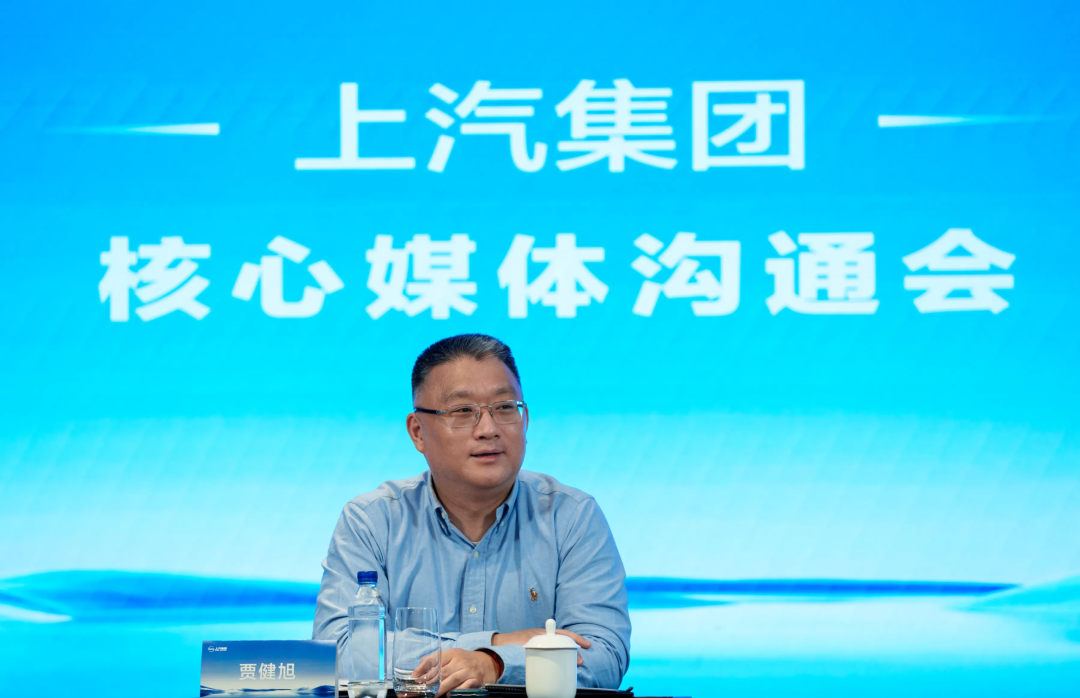
Jia Jianxu emphasized, 'Focus on online and offline marketing. What is traffic? Don't show me process indicators; I want direct indicators. The finance department should establish two key metrics: one, reduce customer acquisition costs, and two, increase conversion rates.'
'Let me share a joke. On my first day at SAIC Volkswagen, the office director handed me a BALANCE SHEET. I almost had a breakdown when I saw it. All department directors had green lights, while my numbers were either red or yellow, basically a 'tomato scrambled egg' situation! Why are the processes good, but the results poor? High volume, but no conversion? What's the use of having no leads?'
Inflated traffic can be misleading, and traffic that doesn't translate into sales is pointless!
For high-value goods like cars with long usage cycles, traffic can only be the icing on the cake, not a lifesaver. After all, a model with high volume but poor quality is bound to be consumed by the hype eventually!
As the saying goes, products are the cornerstone of an automaker's long-term success, but this doesn't mean all communication should revolve around products, especially in today's era of converging product functions. Ordinary features simply cannot capture consumers' attention. Moreover, with so many new cars and varying communication rhythms, consumers' attention is further divided.
In such a communication landscape, the importance of branding becomes increasingly evident.
When product advantages are hard to distinguish, brand impression becomes the primary factor in consumer decisions. For example, German reliability, Japanese economy, French handling excellence, NIO's service, Li Auto's family focus, and XPeng's assisted driving.
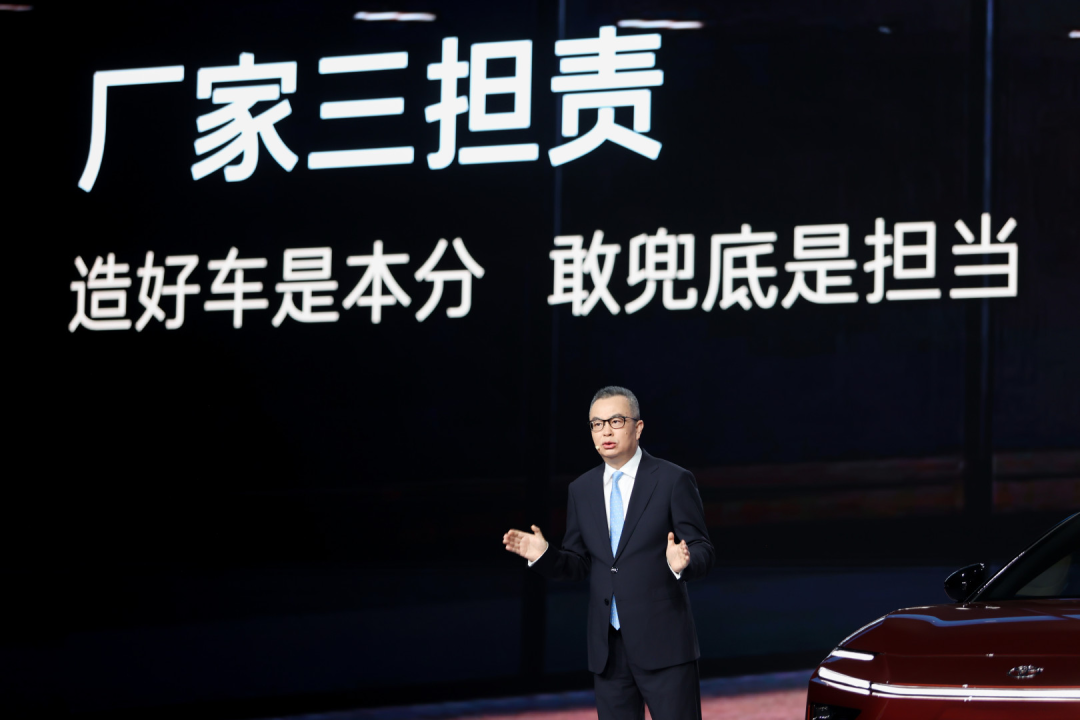
It's worth noting that recently, FAW-Volkswagen and GAC Toyota both introduced guarantee policies when launching new models, offering commitments such as new car replacements, battery replacements, and full manufacturer responsibility for issues like battery degradation, self-ignition risks, and warranty disputes.
On the surface, this demonstrates super confidence in their products, but in reality, it extends Volkswagen's reliability and Toyota's trustworthy brand labels to the new energy sector. This is a true reflection of joint-venture brands leveraging branding as a weapon when product advantages are hard to highlight. Such an approach allows loyal Volkswagen and Toyota owners to confidently switch to new energy vehicles, continuously strengthening brand influence.
In today's era, brand building should not be confined to product characteristics but should resonate more with young consumers.
Young people don't need 'pretentious' brands; they just need partners who 'understand' them. Accustomed to being 'adored,' BBA brands have failed to keep up with young people's transformations, leading to their current discounted sales status.
So, what does it mean to truly understand young consumers?
I think the recent popularity of Li Yapeng, Zhang Xuefeng, and Zhang Xuene might provide some clues. They have triggered huge public reactions because they demonstrate humanistic brilliance through their actions. Kindness, friendliness, selfless dedication, and adherence to dreams are key to their acclaim.
This reminds me of the 'Beijing Evening News' evaluation back then: 'A unique attempt to tell national sentiments through rock music.' Huang Jiaju said in an interview, 'Music should not just be about love; it should record the times.'
To put it more grandly, in human history, people, events, and things that have gained acclaim and endured must be exemplars of 'truth, goodness, and beauty.'
The essence of communication is 'truth, goodness, and beauty'!
Long-term brand building should move towards this direction, internally strengthening employee care and improving benefits, and externally actively assisting the needy and alleviating poverty. Only by making the brand's 'truth, goodness, and beauty' genes tangible can it resonate more with consumers. Examples like Pang Donglai, Hongxing Erke, and Mixue Ice Cream & Tea are the best cases.
In fact, many automakers have been on the 'truth, goodness, and beauty' path. They silently support during natural disasters and humanitarian crises, and their ESG reports well demonstrate their responsibility and commitment.
Although companies do a lot, they say little. In my view, in the coming era, in addition to building technical brands, automakers should also strengthen the construction of 'public welfare brands.' Whoever can take the lead in such long-term brand building will reap longer-term rewards!
In short, strengthening brand influence is the best antidote for automakers to alleviate their worries.
-
![]()
Domestic Pioneer: Changjin Photonics, First Listed Company Focused on Special Optical Fibers, Soars Over 15-Fold on STAR Market Debut
-
![]()
Single-Quarter Orders Break $1 Billion Barrier! Cisco’s Acacia Surfs the AI Boom
-
![]()
Consistently Propelling Technological Progress: Qualcomm’s Xu Hao Elucidates How 6G Trial Frequencies Can Optimize the Balance Between Coverage and Bandwidth
-
![]()
Liushenyu Mine Disaster Drives Industrial Innovation: Pioneering a New Era of Intelligent Mine Safety with Integrated Air-Ground Systems
-
![]()
Ant Group CEO Han Xinyi's Latest Speech: The Emergence of 'Trust Logic' in the AI Era
-
![]()
Demystifying the Rankings: Do High Scores in Robotics Competitions Equate to Real-world Implementation Strength?
-
![]()
Europe's Q1 Smartphone Market Shipments Revealed: Samsung Holds Firm at First Place, Honor Surges Over 60%
-
![]()
Mixed Fortunes: The Ongoing Transformation of the Automotive Industry's Value Landscape