Liang Wenfeng Has Never Changed—He’s Always Been a Top-Tier ‘Arbitrageur'", "Liang Wenfeng, DeepSeek, Fundraising, Arbitrage Philosophy, AI", "DeepSeek, founded by Liang Wenfeng, has broken its 'no-fu
 04/21 2026
 467
467
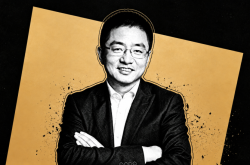
“Liang Wenfeng embodies ultimate altruism. He has no rivals because he doesn’t chase user volume, DAU, or commercialization—only AGI. His purity makes the world his friend. Liang is water, carrying and permeating everything. The best good is like water.”
This portrayal sketches the image of a tech ascetic, a maverick against the capitalist tide.
Yet when DeepSeek broke its years-long 'no-fundraising' vow—seeking at least $300 million in external funding at a valuation over $10 billion, as reported by The Information citing four insiders—the market erupted.
The instinctive reaction: The idealist who once rejected all VCs, treating DeepSeek as a pure research institution, had finally bowed to reality.
This misreads Liang most profoundly, reducing the fundraising to mere compromise or financial desperation—using an old map to navigate uncharted territory.
When we look past the appearance (superficial appearances) of talent exodus and V4 delays, focusing on Liang’s true essence—the elite 'arbitrageur' forged in financial quantitative trading—we see: He has never changed. Only the battlefield, assets, and dimensions of his arbitrage have radically evolved.
This fundraising is not the end of idealism but another classic campaign in Liang’s 'arbitrage philosophy,' meticulously calculated.
I. A Maverick Who ‘Didn’t Need Money’
To grasp Liang’s current choice, we must first revisit why he once had the audacity to shut out all capital.
The answer lies in his career as a top-tier quant trader.
DeepSeek was never an ordinary AI startup. It emerged from China’s quant private placement (private investment) giant, High-Flyer Quant. According to Simuwang data, High-Flyer ranked second among China’s $10B+ quant firms in 2025 with a 56.6% average return, trailing only Lingjun Investments’ 73.51%.
By industry standards, its AUM exceeds 70 billion yuan, with 2025 revenue around 5 billion yuan. For Liang, this wasn’t just profit—it was a fully independent, capital-insulated arsenal.
This money fortified DeepSeek’s early firewall. Amid the 'Hundred-Model War' where rivals crazy (frenziedly) raised capital and expanded, Liang’s confidence allowed him to maintain a nearly luxurious focus.
Multiple media outlets reported his rejection of tech giants like Tencent and Alibaba, along with top-tier VCs.
This stance stemmed not from arrogance but from a top arbitrageur’s instinct.
In quant trading, Liang mastered arbitrage’s essence: exploiting transient market mispricings via algorithms and speed to secure deterministic gains.
When he channeled this force into AI R&D, it spawned DeepSeek’s first miracle—what I call 'cost arbitrage.'
At the time, the global AI community clung to the Scaling Law faith: top-tier model performance required tens of thousands of GPUs and hundreds of millions in training costs.
Yet Liang’s team, like shrewd arbitrageurs, spotted a massive pricing gap between 'compute costs' and 'model performance.'
Through architectural innovations like MLA (Multi-Head Latent Attention) and GRPO (Group Relative Policy Optimization), they achieved low-cost arbitrage of 'intelligence.'
According to DeepSeek’s published technical reports and supplementary materials in Nature, DeepSeek-V3’s training cost ~$5.576 million, while R1’s cost just $294,000.
In contrast, OpenAI’s GPT-4 training cost ~$100 million. This exemplifies quant thinking: not piling resources but exploiting systemic inefficiencies to maximize output with minimal input.
Liang rejected VC money because, in his eyes, funds tied to performance clauses, valuation pressures, and exit timelines were not ammunition—they were liabilities that would disrupt his long-term tech layout (strategic layout ). According to LatePost, he once proposed 'return caps' akin to OpenAI-Microsoft terms to investors but found no takers, after which he nearly ceased meeting investors.
During this phase, DeepSeek pursued another arbitrage: time arbitrage. Using High-Flyer’s surplus capital, Liang created a 'pure research vacuum' uninterrupted by short-term market fluctuations.
In this stage, by rejecting capital, he secured the most luxurious asset for his team: the right to fail and freedom from KPIs.
Sources close to DeepSeek revealed the company had no explicit performance reviews or deadlines, with most members leaving around 6–7 PM daily.
He didn’t chase DAU or commercialization because those weren’t his current 'arbitrage targets.' His goal was architectural innovation to break NVIDIA’s compute pricing power—the ultimate 'alpha' (excess return) in his eyes during the R1 era.
However, this model, reliant on personal idealism and High-Flyer’s support, was Ultimate purity (extremely pure) yet fragile. When external competition rules shifted, the 'firewall' protecting him began to crack.
II. A New Arbitrage of ‘Options’ and ‘Sovereignty’
The cracks first appeared in his pride—his team.
Since late 2025, a string of core member departures stunned the industry: Luo Fuli, key contributor to V3’s architecture, joined Xiaomi as head of MiMo LLM division; Wang Bingxuan, first-gen LLM core author, joined Tencent; Ruan Chong, multimodal lead researcher, became chief scientist at Yuanrong Qixing; Wei Haoran, OCR series core author, left around Lunar New Year.
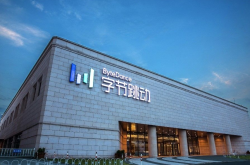
Most notably, Guo Daya, proposer of R1’s core GRPO algorithm, joined ByteDance’s Seed team for Agent R&D. Despite ByteDance denying the 'near-$100M annual salary' claim, industry consensus holds his package significantly exceeded DeepSeek-era compensation.
Why did they leave? On the surface, it was salaries.
Headhunters circulated that Big Tech offers for DeepSeek’s core staff were typically 2–3x their original pay, with the critical addition of immediately vested stock options.
DeepSeek, lacking external funding and market valuation, left employees’ options resembling 'worthless IOUs' in top talent’s eyes.
Contrast this with ByteDance’s 'Doubao shares,' which had clear exercise prices and repurchase mechanisms—DeepSeek’s 'tech idealism' paled against tangible wealth effects.
Meanwhile, the much-anticipated next-gen flagship model V4 faced repeated delays.
The Information and Reuters reported V4’s original February 2026 launch pushed to March, with multiple sources now pointing to late April. The market anxiously waited, yet few grasped the delay’s true cause.
V4’s postponement wasn’t due to lost innovation capacity but a deliberate, strategically ambitious choice.
DeepSeek is deeply adapting V4 to Huawei’s Ascend chips, requiring a complete rewrite of optimizations previously built on NVIDIA’s PTX—a massive 'bottom-up reconstruction.' NVIDIA CEO Jensen Huang recently stated in an interview that DeepSeek’s new model on Huawei’s platform would be 'a terrible outcome for the U.S.,' indirectly confirming this strategic pivot’s gravity.
What seemed like deceleration was actually Liang placing a bigger bet.
Amid internal and external crises, the fundraising news emerged.
Outsiders dismissed it as 'cracking under pressure,' but analyzing it through Liang’s arbitrage lens reveals a brilliant strategic counterattack.
He wasn’t truly short on cash—High-Flyer’s ~5 billion yuan 2025 revenue sufficed for R&D. Instead, he used fundraising to execute two higher-dimensional arbitrages.
First, an 'options arbitrage' against talent exodus.
Liang didn’t raise massive capital to pay sky-high salaries. Instead, he used a tiny equity slice (~3% via $300M at $10B valuation) to secure a $10B valuation label.
The deal’s brilliance lies in its internal impact: a one-time options pricing. The $10B external valuation instantly transformed employees’ options from 'worthless paper' into assets with a clear anchor point.
By leveraging capital market pricing power, he provided authoritative endorsement for internal talent value, stabilizing the core team and deterring poaching at minimal equity dilution cost.
Second, V4’s tortuous path to domestic (domestic) chip adaptation revealed a deeper intent: arbitraging 'technological sovereignty premium.'
Liang sharply (keenly) recognized that in the Sino-U.S. tech rivalry, a world-class model running entirely on domestic compute infrastructure held strategic and narrative value far exceeding raw performance benchmarks—a premium unmeasurable by pure market valuation.
Thus, V4’s delay was Liang trading current time and engineering costs for future irreplaceable strategic positioning and policy dividends in China’s domestic compute ecosystem.
Once V4 succeeds, DeepSeek won’t just be a model provider—it will become the standard validator and ecosystem leader for China’s autonomous AI infrastructure.
From arbitraging compute costs with High-Flyer’s money to arbitraging talent pricing power and tech sovereignty with VC money, Liang’s strategy seems to shift from isolation to openness, yet the core logic remains consistent.
What unifies these moves?
III. The Philosophy of Water, the Unchanging Dao
To fully grasp Liang’s 'unchanged' nature, we must return to his roots: quantitative trading.
For Liang, quant transcended mere moneymaking—it became a foundational operating system for observing and reshaping the world. Its core: identifying systemic inefficiencies, building models, executing strategies with minimal friction, and securing deterministic gains.
In financial markets, this manifested as using AI algorithms to capture pricing discrepancies at millisecond scales.
According to public data, High-Flyer invested ~200 million yuan in 2019 to build the 'Firefly-1' deep learning platform and another 1 billion yuan in 2021 for 'Firefly-2,' equipped with over 10,000 NVIDIA A100 GPUs. This compute foresight cemented High-Flyer’s unique position in China’s quant landscape.
For retail investors, this meant facing algorithmic opponents in market game theory (game theory). Quant trading harvests 'irrationality premiums' from emotional market swings, making traditional technical analysis harder for individual traders.
Liang’s vision long surpassed stock market K-lines. He transposed this quant mindset from financial to tech battlefields.
His arbitrage philosophy never changed—only its targets ascended.
In the R1 era, the market consensus was 'top models = massive compute.' He spotted inefficiency here, achieving compute arbitrage via algorithmic innovation.
Now, in the fundraising era, he identified two new inefficiencies:
1. 'Retaining top talent = paying exorbitant cash' → Using equity for valuation labels to arbitrage talent pricing power.
2. 'AI competition = model performance race' → In geopolitical contexts, the immense value of autonomy itself, enabling tech sovereignty arbitrage by binding to domestic chips.
This is arbitrage against era trends. Top arbitrageurs don’t complain about rules—they exploit them. They don’t follow consensus—they price it.
While rivals dissect his model parameters, he’s already shifted the chessboard to industrial and epochal heights.
As Stanford’s 2026 AI Index Report noted, by March this year, the performance gap between U.S. top models and China’s strongest contenders shrank to just 2.7 percentage points.
The narrower the gap, the higher the marginal cost of each incremental step. Liang is accumulating momentum for this final sprint in his unique way.
IV. Conclusion
Returning to the opening quote: ‘Liang Wenfeng is water, carrying and entering everything.’
Water has no fixed form.
It can be the quant torrent precisely timing 299 bids per second in financial markets or the pure research spring in AI labs without KPIs, where staff leave by 6 PM.
It can be ice-cold when rejecting all VCs or tactically adaptive when opening the fundraising gates.
Yet water’s 'dao' is constant: it flows toward value lows, accumulating maximum potential with minimal resistance.
Liang Wenfeng has never changed.
His dao remains 'arbitrage.' He’s still playing a calculated game—only now, the stakes aren’t percentage points on a quant fund’s NAV but whether China’s AI can carve an independent path amid blockade.
The ultimate altruist, the purist who spurns user volume for AGI, never left.
Liang merely continues, in his most skilled way, to secure the loosest, safest, and most resource-rich incubation environment for his ultimate goal (ultimate goal): AGI.
The best good is like water—not passive inaction but channeling water’s permeating and eroding force into every critical node of the era.",
-
![]()
Wang Huiwen, Former Meituan Executive, Achieves 20-Fold ROI, Supports 24 AI Startups
-
![]()
Another AI Computing Power Unicorn Launches IPO! Founded by a Changjiang Scholar
-
![]()
OFILM Holdings Secures Zhongke Daojing, Marking a Significant Leap in the Optical Communication Industry!
-
What Will Be the Next Key Battleground for Large Models After AI Coding?
-
![]()
Leapmotor's Sales Soar, Yet Hidden Concerns Loom
-
![]()
China’s Action Camera Market Soars: 3.12 Million Units Sold in Six Months, DJI Secures 74% Dominance
-
![]()
Zhang Yiming: Strategic Retreat as a Path Forward
-
![]()
Exploring Charging for Some Features of QianWen App: Can It Follow the Path of Doubao?