Cook Lived Up To Jobs' Expectations
 04/21 2026
 518
518
On April 21, 2026, an announcement on Apple's official website marked the end of Silicon Valley's longest power transition.
Tim Cook will officially step down as CEO on September 1 this year and transition to executive chairman; John Ternus, currently senior vice president of hardware engineering, will succeed him as Apple's eighth CEO.
Nearly fifteen years ago, Jobs handed the reins to Cook from his sickbed, when Apple's market value was around $350 billion; today, the company's market value stands at $4 trillion, with annual revenue exceeding $416 billion and over 2.5 billion active devices installed.
In March of this year, Cook still denied retirement rumors, with reports even suggesting he planned to serve until 2028; however, the situation changed faster than expected.
This news marks the end of an era and has triggered a reevaluation of Cook's historical standing.
As he steps down, people see not just a commercial miracle—a market value soaring from $350 billion to $4 trillion—but also how a professional manager redefined 'innovation' in a company deeply stamped by its genius founder through operational efficiency.
To answer these questions, we must first understand what legacy Jobs left behind.
Apple under Jobs was renowned for its product-first approach, with each new release attempting to redefine industry rules.
The failed tenures of previous CEOs like Sculley, Spindler, and Amelio showed that Jobs' legacy was never about a formula for a single product's success but rather an organizational ethos difficult to replicate.
When Cook took over in 2011, a common concern arose: Could Apple sustain its disruptive creativity without Jobs?
History provided a surprising answer.
Cook never tried to be the second Jobs; he chose a completely different path.
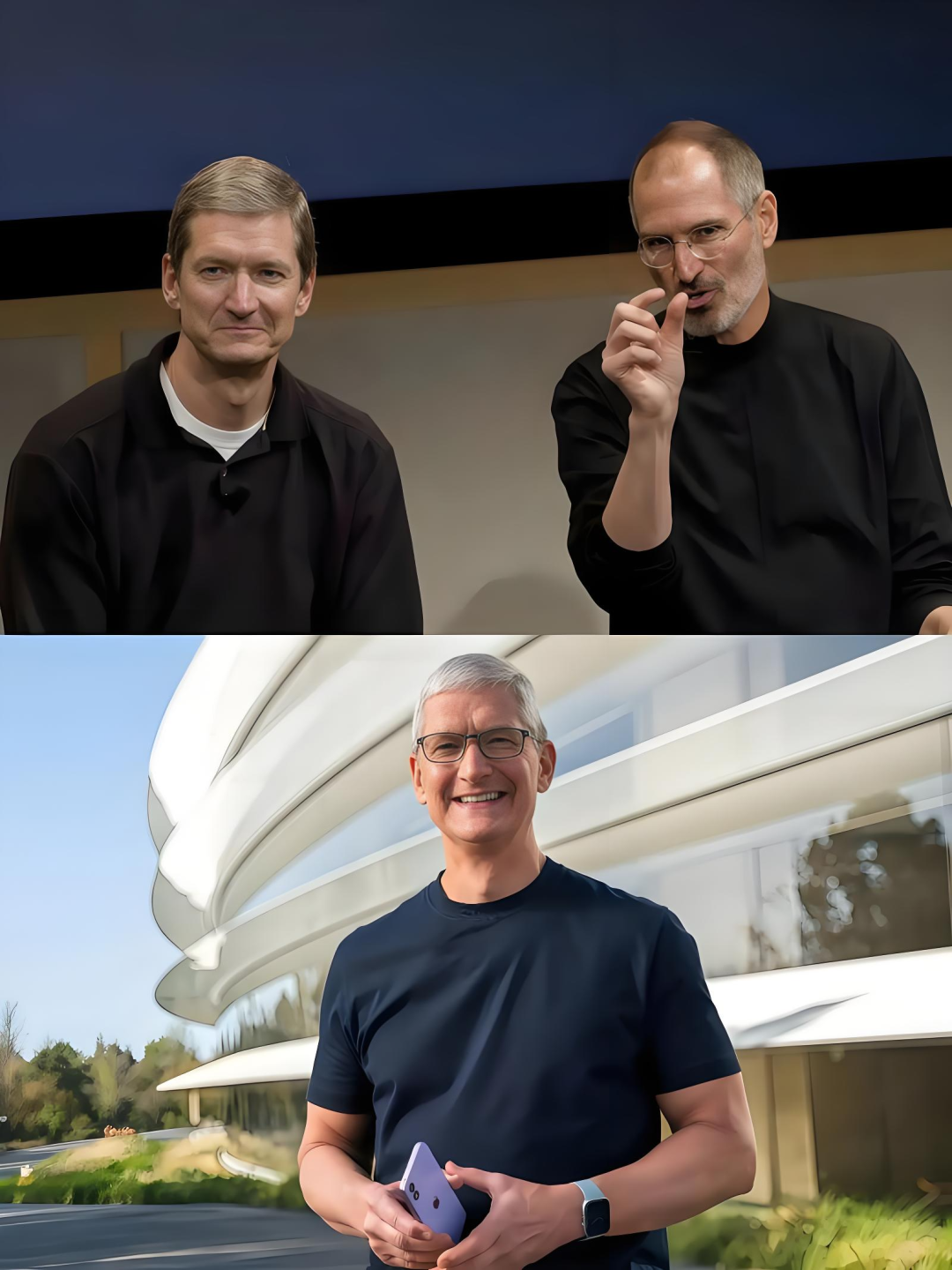
Cook, who joined Apple as an operations executive in 1998, drastically streamlined key suppliers from over 100 to around 24, reshaping the supply chain through centralized procurement.
The Cook methodology wasn't about disruptive innovation but pushing existing advantages to the extreme.
During his tenure, Apple's market value grew by approximately 1,254%, revenue by 731%, and profits by 361%.
The scale of nearly $1 trillion in capital returns and the reduction of outstanding shares from 26.226 billion to 15.005 billion all demonstrate one fact: Cook built an unprecedented moat for Apple through financial discipline and operational efficiency.
Alfred Chandler argued in *Strategy and Structure* that building organizational capabilities often determines a company's long-term fate more than product innovation.
Cook's management practices provide a perfect footnote to this theory.
A company's market value cannot surge from $350 billion to $4 trillion by luck.
Clearly, what Cook left Apple is first and foremost a financial record worthy of business school textbooks.
But the significance behind the numbers goes far beyond wealth accumulation.
He transformed Apple from a hardware company reliant on a single blockbuster (iPhone) into a vast ecosystem empire with 2.5 billion active devices.
Cook showed the world that when a company can manage its supply chain with inventory turnover measured in days and integrate hundreds of global suppliers into a precision instrument, its systemic capabilities become a moat in themselves.
Under Cook, Apple's business model shifted from 'selling products' to 'selling services,' reducing reliance on hardware sales fluctuations.
Even during macroeconomic volatility or geopolitical tensions, the continuous cash flow from those 2.5 billion devices provided Apple with resilience against risks.
He returned nearly $1 trillion in capital to shareholders, reduced outstanding shares from over 26 billion to 15 billion, and his deft adjustments to the capital structure directly supported long-term stock price growth.
For Wall Street, Cook was not just a CEO but an exceptional capital architect.
Cook's 'inheritance' of Jobs' legacy was not a simple replication but a 'redefinition.'
The Jobs era was marked by 'One More Thing' surprises, genius flashes, and an obsessive pursuit of perfection at any cost.
This model was charming but carried immense uncertainty.
When Cook took over, Apple faced threats on both sides: Samsung closing in on the smartphone market and Amazon undercutting iPads with low-cost tablets.
If Cook had continued Jobs' artist-like management style, Apple might not have survived the fierce red ocean competition.
What Cook brought was a shift from 'genius-driven' to 'system-driven.'
Instead of standing in the spotlight announcing every detail like Jobs, he built a management system that could operate efficiently without a 'deity.'
Cook streamlined key suppliers from over 100 to around 24, gaining strong bargaining power and quality control through centralized procurement.
His 'iron fist' approach to the supply chain ensured timely delivery of the iPhone 17 Pro despite semiconductor crises or trade frictions.
He proved that a great company doesn't need to rely on genius intuition constantly; it can achieve excellence through systems and processes.
Of course, this transformation came at the cost of persistent criticism about 'lacking innovation.'
In Silicon Valley's hero narrative, only those who disrupt rules like Jobs are considered great.
Products launched under Cook, such as the Apple Watch and AirPods, were seen as iPhone accessories rather than industry-redefining revolutions; the decade-long, multibillion-dollar 'Project Titan' (car project) ended in disappointment; amid the global AI wave, Apple was criticized for being slow, with Siri's stagnation becoming a pain point of Cook's era.
Even his Vision Pro, while technologically impressive, failed to gain traction due to its high price and limited applications, leading suppliers to halt production due to poor sales.
These 'failures' seemed to confirm outside doubts: Cook was merely a competent steward, not a pioneer.
But if we strip away the blind worship of 'disruptive innovation' and return to business fundamentals, Cook's value lies precisely in fixing the 'Achilles' heel' of Jobs' model.
Jobs' perfectionism led to failures like the butterfly keyboard and a narrow product line due to personal preferences.
Cook introduced a more inclusive corporate culture, established privacy as a fundamental human right, pushed the company to use 100% renewable energy, and set strict labor remediation standards after the Foxconn scandal.
Through more rational decision-making, Cook avoided CEO personal biases from fatally harming the company.
He didn't launch the next iPhone but built an ecosystem that extended the iPhone's lifecycle indefinitely.
Why can Cook be called Jobs' best successor?
Because Cook understood Jobs' true core: an extreme pursuit of user experience, extending it from products to services and ecosystems.
Jobs defined 'what makes a good product'; Cook defined 'how to make good products continuously serve users.'
Instead of trying to be the second Jobs, Cook remained the operationally skilled, detail-oriented, and understated Tim Cook.
The courage to 'be himself' is precisely the deepest tribute to Jobs' spirit of 'Stay Hungry, Stay Foolish.'""In Cook's succession plan, Ternus is also a 'Cook-like' figure: low-key, steady, detail-oriented, and familiar with the supply chain.
This shows Cook doesn't want Apple to undergo violent turbulence after his departure.
In 15 years, Cook transformed Apple from a tech company with strong personal color into a modern enterprise with perfect (perfect/mature) systems and efficient operations.
The success of 'depersonalization' is precisely Cook's greatest achievement as CEO.
He made Apple understand that a great company doesn't depend on any genius's life or death but on a system capable of self-iteration and sustained value creation.
On August 1, 2025, Cook completed 5,091 days as CEO, officially surpassing Jobs' 5,090 days to become Apple's longest-serving CEO in history.
Time itself is proof: in Silicon Valley, leaders who can steer a tech giant long-term are rare.
Jim Collins distinguished two traits of Level 5 leaders in *Good to Great*: humble personality and resolute professional will.
Cook rarely stood in the spotlight but demonstrated resolute will through nearly fifteen years of stable leadership.
Reviewing Apple's CEOs, Sculley, Spindler, and Amelio all failed to preserve Jobs' legacy.
Cook's uniqueness lies in his deep understanding that Jobs' true legacy wasn't a specific product but the ability to keep Apple being Apple.
Clayton Christensen pointed out in *The Innovator's Dilemma* that great companies often die from ignoring disruptive technologies.
Cook refuted another more common cause of death: great companies dying from management chaos and strategic drift.
Cook proved that a $4 trillion company could still operate with precision amid extreme geopolitical complexity and supply chain volatility.
Cook may be controversial in doing the right things, but in doing things right, he achieved perfection in business history.
After September 1, 2026, Cook will continue accompanying Apple as executive chairman, while Ternus needs to prove Apple's ability to define the future amid the AI wave.
What Cook left Apple is a $4 trillion balance sheet, a precision-engineered supply chain, a service ecosystem generating over $100 billion in annual revenue, and a precious blueprint for how non-genius CEOs can lead genius enterprises.
His achievements and controversies both point to a core proposition: In Silicon Valley's narrative of worshipping disruptors, can operations alone constitute a strategy?""Cook's fifteen years answer affirmatively.
A company's greatness needs both rule-breakers and rule-keepers.
Jobs accomplished the former; Cook accomplished the latter.
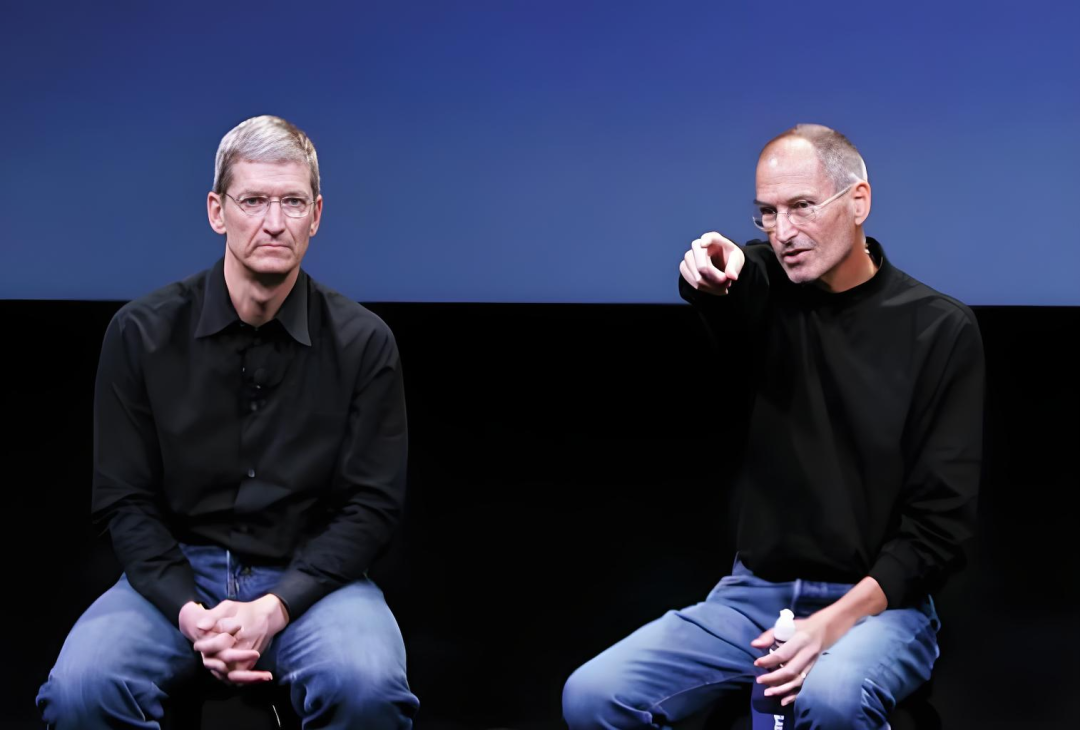
Two distinct leadership styles together wrote Apple's business epic of going from great to greater.
End of Full Text
-
![]()
Proposed to Raise 955 Million Yuan through Private Placement! Huicheng Vacuum Boosts Localization of Ultra-Precision Optical Coating Equipment
-
![]()
Cash Flow Soars 13-Fold! What Major Strategic Move is Wuhan Five Square Optoelectronics Planning?
-
![]()
Leaked Design of vivo X500: Reverts to Circular Camera Module in Top-Left Corner, Pays Homage to Classic X90 Aesthetic
-
![]()
DeepSeek Shows Signs of Foraying into Code Agents, Launches WeChat Official Account Focused on Harness
-
![]()
Auto Companies Deny Claims That ‘Cooperation with Huawei Is Non-Essential’, as Huawei Transforms into a ‘Public Platform’
-
![]()
Starship to Independently 'Return to the Launch Tower': SpaceX's Ambitions Extend Beyond Rocket Building to Dominating Space Transportation
-
![]()
Starship Set to Independently 'Return to the Launch Tower': SpaceX is Revolutionizing Space Transportation, Not Just Building Rockets
-
![]()
Anthropic and OpenAI Face Off Against Deepseek