Anthropic's Latest AI Economic Report Reveals Jobs Most Vulnerable to Replacement
 04/24 2026
 457
457

Fresh off the press: Anthropic just released a 15-page research report—*What 81,000 People Told Us About the Economics of AI*—
This study comes from the company behind Claude, one of the world's most cutting-edge AI firms today. They surveyed 80,508 real Claude users through open-ended interviews about their relationship with AI. The report explores how these users perceive AI's impact on work efficiency and who ultimately benefits from these improvements. Using Claude itself, they analyzed these interviews into quantifiable variables.
In other words, this is data from an AI company about how AI is transforming labor.
After reading the report, my concerns about AI shifted—from FOMO to wondering: "If replacement is inevitable, can AI at least make me run faster every day than I did yesterday?"
The heaviest AI users fear it the most
There's one chart I kept revisiting:
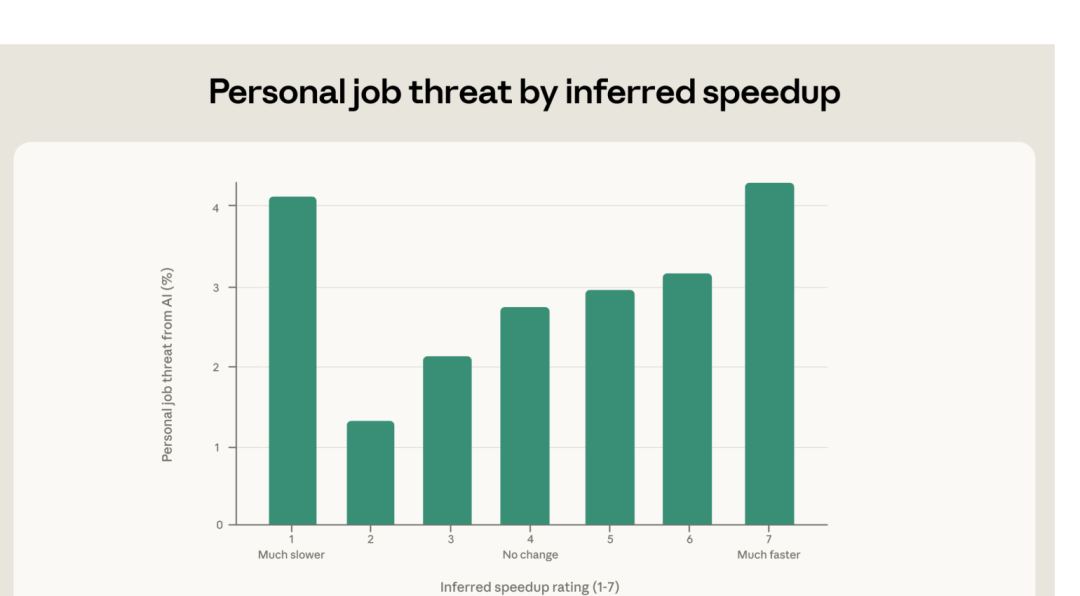
The x-axis shows "How much has AI accelerated your work?" from 1 (slowed down) to 7 (much faster). The y-axis shows "How worried are you about being replaced by AI?"
It forms a perfect U-shape.
The highest anxiety levels appear at both ends—those saying "AI slowed me down" and those saying "AI made me much faster" both hover around 4% anxiety.
The calmest group sits in the middle—those reporting "no significant change."
Translated into plain language: The more AI helps you, the more you fear it.
The original report authors noted that "job threat increases monotonically with AI acceleration" but didn't elaborate further. This single sentence reveals the core issue:
Productivity gains and job security aren't positively correlated. With AI, they might even be inversely related.
Those who use Claude most aggressively and see the greatest efficiency gains are precisely the ones most terrified of being replaced by it.
Logically, you'd expect people to love tools that help them most. But 80,000 people's data shows the more AI accelerates their work, the more they lose sleep.
Why?
The anxiety stems from uncertainty about work capabilities. When "I" can expand my scope and efficiency through AI tools, can others achieve the same gains?
In big tech companies, the "cog in the machine" theory has long been consensus: everyone specializes deeply in their vertical domain. But AI doesn't just boost efficiency in workers' existing domains—it grants them capabilities in areas they never worked in before.
Furthermore, corporate organizational structures may evolve alongside AI's growth. While becoming a "super-individual" entrepreneur remains difficult, "super-workers" who cover more ground within enterprises may emerge.

AI becomes the culprit for increased workload
Anthropic asked users: What productivity benefits do you actually feel from AI?
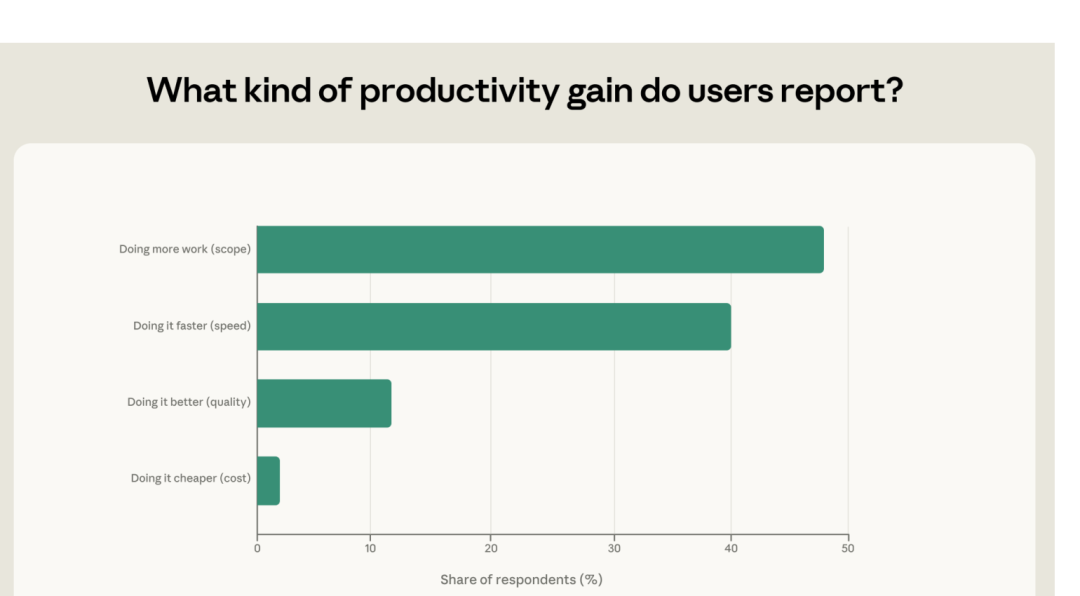
The largest share (48%) wasn't efficiency gains but scope expansion—doing things previously impossible.
For decades, our "automation" imagination followed subtraction logic: machines do your work, your hours decrease, you rest more. This narrative comes from washing machines, assembly lines, and typewriters—its default story is "humans liberated by machines."
AI operates differently. It follows addition logic: not replacing your intelligence but expanding your responsibilities.
Several report cases illustrate this vividly: A food delivery driver used Claude to build an e-commerce site on the side; a landscape gardener created a music app with Claude; a non-technical person said, "I'm a non-tech guy but now I'm a full-stack developer."
This reminds me of Wang Ziru's previous hiring spree. By today's standards where everyone writes "proficient in office and design software" on resumes, I could claim to be a full-stack developer too.
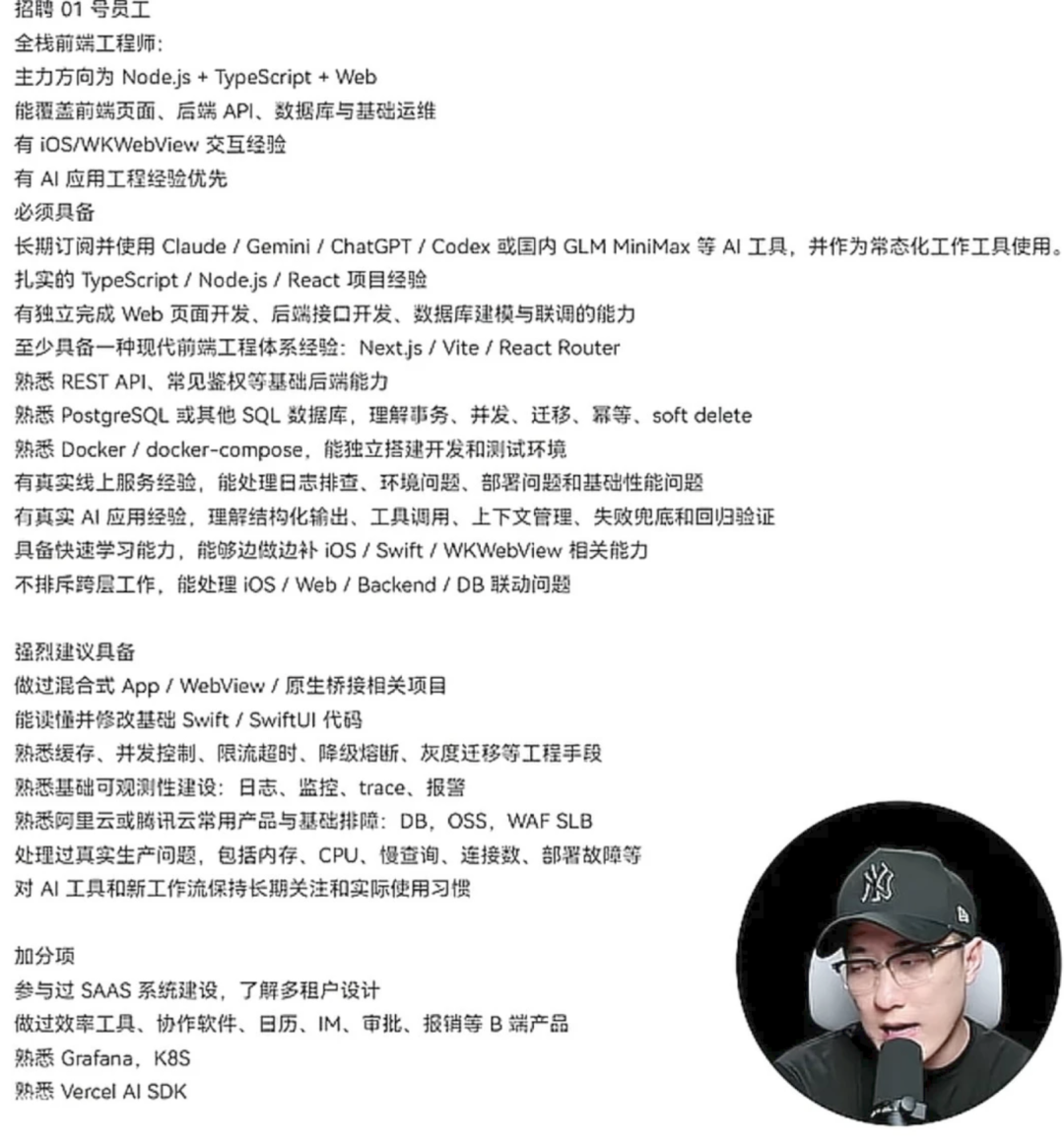
These all represent scope expansion. They didn't just work faster—they did things previously impossible.
The problem: When a tool enables everyone in society to "do more" collectively, this isn't liberation—it's capacity expansion.
Your personal options widen, but simultaneously, expected boundaries for your role expand. Employers' default expectations of "what you can do" rise with society's collective scope expansion.
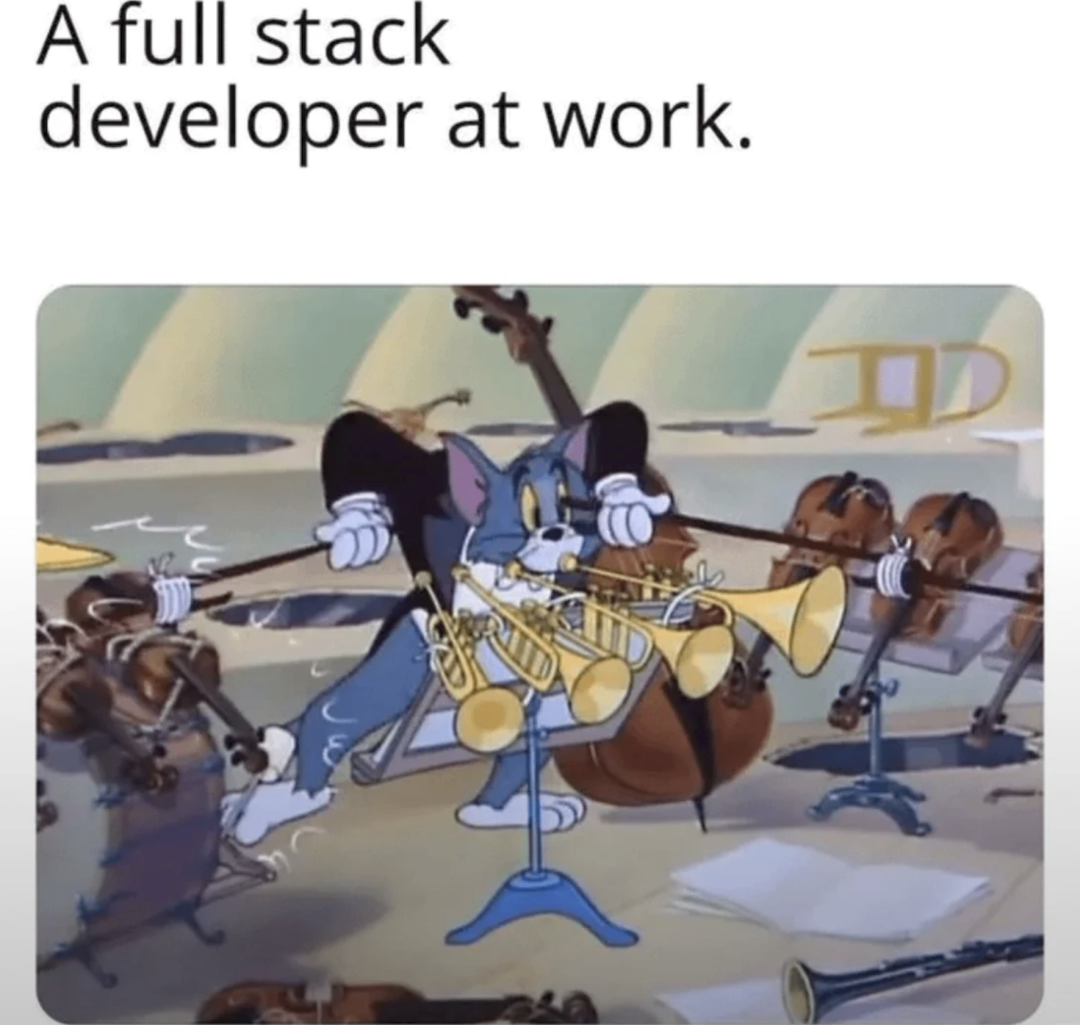
This explains why heavy AI users feel most anxious—they're not just running faster than yesterday; the entire environment pushes them to.
On page 3, a software developer said something I think deserves framing:
"When AI arrived, the project managers started giving harder and harder tickets and bugs to solve."
This isn't an isolated case. It represents a structural problem where technology pushes people toward involution.
Silicon-based life is consuming carbon-based life
More counterintuitive findings appear in this chart:
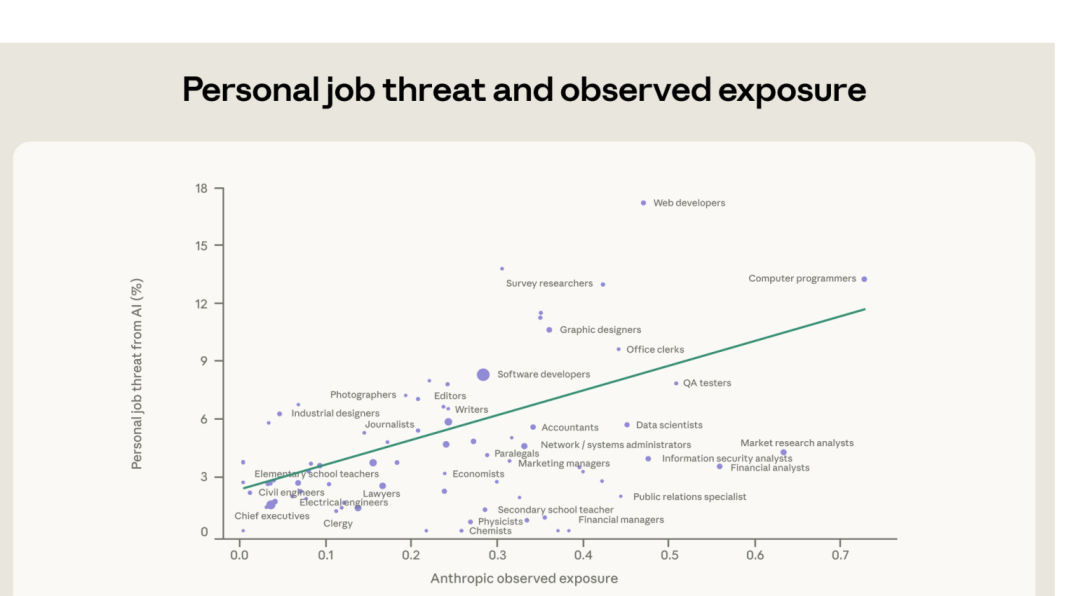
Anthropic plotted 50+ professions on a scatter graph—x-axis shows "exposure" (what percentage of tasks Claude actually performs in this role), y-axis shows anxiety about AI replacement.
Least afraid of AI (bottom-left corner): CEOs, clergy, civil engineers, elementary teachers, lawyers, chemists, physicists.
Most afraid of AI (top-right corner): Web developers, programmers, survey researchers, graphic designers, office clerks, test engineers, market research analysts.
Reading through this "most AI-fearful" list reveals nearly all are knowledge workers requiring bachelor's degrees or higher, working in offices with above-average incomes. This completely contradicts popular narratives about "which jobs AI will take first."
The default public imagination goes: AI will first replace food delivery workers, cashiers, and typists, then drivers and factory workers, and finally white-collar jobs. But Anthropic's data shows the opposite sequence: AI first impacts its creators and those who integrate it earliest into workflows.
To put it bluntly: AI is consuming its makers.
This deserves serious discussion. This end-of-the-world feeling where silicon-based beings consume carbon-based ones stems from the past decade's narrative telling 25-year-olds: Learn computer science, join big tech, become analysts, designers, or product managers—this is the surest path to class mobility.
But Anthropic's data shows this is precisely the path with highest AI exposure.
Another data point makes this even starker: Early-career professionals (under 3 years) score 8.2% on anxiety, while veterans score only 3.9%. The younger you are, the more anxious—a twofold difference.
The most anxious demographic thus emerges:
A young professional under 3 years, working at an internet/consulting/design firm, using Claude or Cursor or Copilot daily.
This represents a new form of involution
Combining these charts, I don't see just "AI replacing humans." The picture is more absurd and real:
The more AI helps you, the more anxious you become
AI doesn't give you more rest—it gives you more work
The most anxious aren't bottom-tier laborers but knowledge elites
This reveals AI-era labor's core mechanism: You must advance or regress.
Traditional involution meant competition between humans—you stay up late for PPTs, colleagues stay even later; you work weekends, others pull all-nighters. It exhausted physical human energy.
This time, the involution differs. You compete with a tool that never tires, constantly upgrades, and doubles capabilities every six months. This tool has no energy limits, no ceilings, and won't negotiate. The more proficient you become, the more you set new baselines—for next evaluations, KPIs, and job descriptions requiring "proficient with AI tools."
After reading Anthropic's report, three conclusions emerge with confidence:
1. The real AI-era threat isn't replacement but failing to meet new thresholds. You won't lose your job on a Monday morning. Over five years, you'll notice KPIs creeping upward every six months.
2. Those most vulnerable to this inflation aren't replaced by AI but collaborate most deeply with it. Embracing AI offers high personal ROI but unknown collective ROI. The more skilled you become, the more you set new baselines.
3. We used to define competitiveness by "what I can do alone." Future competitiveness will be defined by "what I can achieve with AI"—with no upper limit. This means "involution" itself lacks stopping mechanisms in the AI era.
Epilogue
After reading Anthropic's report, my anxiety transformed.
I set aside worries about sudden AI-induced unemployment—that's not the urgent issue.
Instead, I wonder: Will AI make me run faster every day for the next decade, until one morning I wake up and can't keep up?
The report's greatest value isn't providing answers but validating a feeling originally personal—that subtle unease of "feeling more tired the more I use AI"—through 80,000 real AI users saying, "Same here."

We probably won't face unemployment soon.
But we'll likely need to learn something new: maintaining rhythm in an endless marathon where forward progress is inevitable.
*All data and charts in this article come from Anthropic's *What 81,000 People Told Us About the Economics of AI* released on April 22, 2026, by authors Maxim Massenkoff and Saffron Huang. The original text: Go find it yourselves.*
-
![]()
Wang Huiwen, Former Meituan Executive, Achieves 20-Fold ROI, Supports 24 AI Startups
-
![]()
Another AI Computing Power Unicorn Launches IPO! Founded by a Changjiang Scholar
-
![]()
OFILM Holdings Secures Zhongke Daojing, Marking a Significant Leap in the Optical Communication Industry!
-
What Will Be the Next Key Battleground for Large Models After AI Coding?
-
![]()
Leapmotor's Sales Soar, Yet Hidden Concerns Loom
-
![]()
China’s Action Camera Market Soars: 3.12 Million Units Sold in Six Months, DJI Secures 74% Dominance
-
![]()
Zhang Yiming: Strategic Retreat as a Path Forward
-
![]()
Exploring Charging for Some Features of QianWen App: Can It Follow the Path of Doubao?