Beijing Auto Show: What Awaits Without Lei Jun and Zhou Hongyi?
 04/24 2026
 434
434
With 215 launch events, the automotive sector is poised for a grand finale at the Beijing Auto Show.
On the eve of this year's Beijing Auto Show, "busyness" is the buzzword, with media outlets exchanging greetings that quickly transform into a frenzy of attending multiple launch events.
At the NX8 launch event hosted by Dongfeng Nissan, it was noted that automaker launch events surpassed 80 in March, with the number continuing to climb steadily into April.
Nearly every suitable day for a launch event is packed with multiple gatherings.
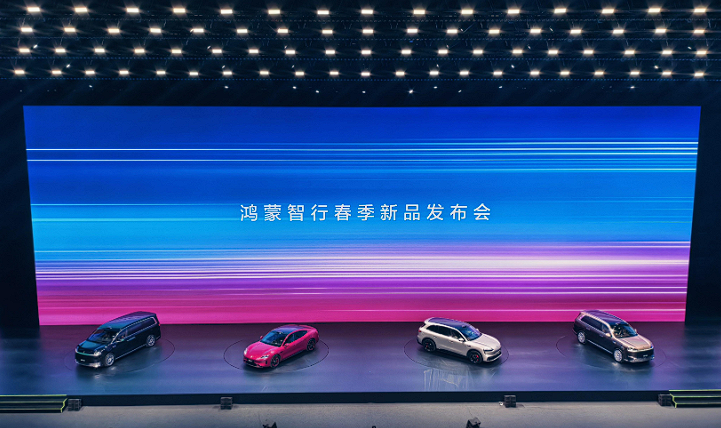
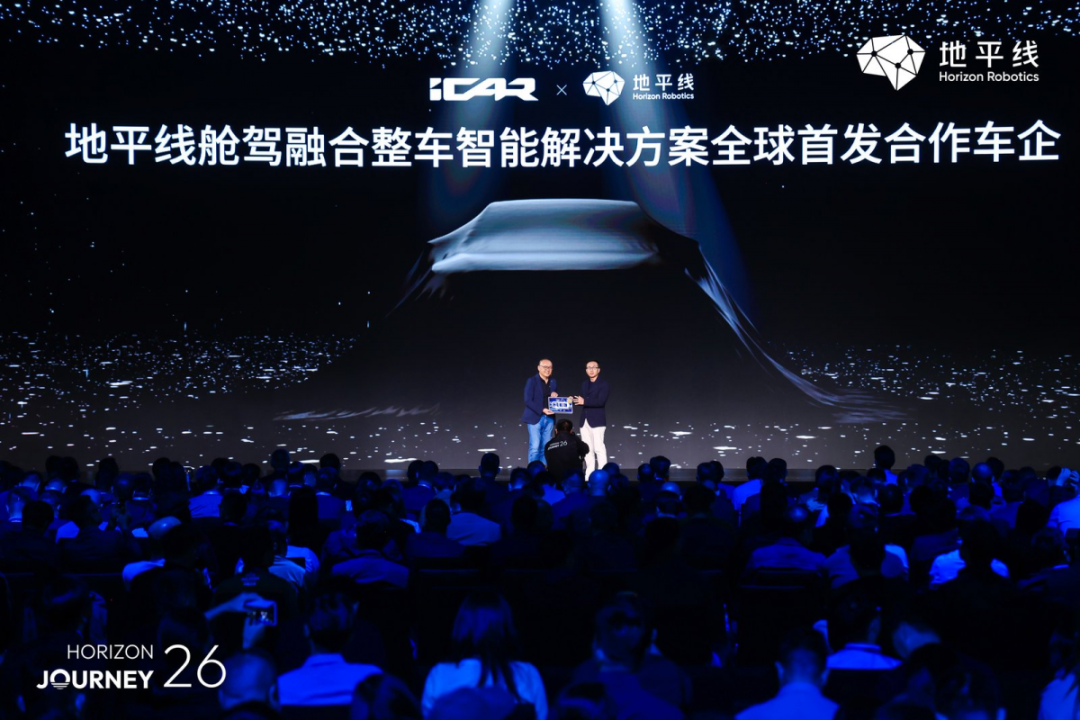
For instance, on April 22nd, the sixth day of the third lunar month—a propitious day before the auto show—the number of launch events soared to a new peak. Ten events took place, featuring domestic brands like Avatr, Chery, and VOYAH, joint venture brands such as BMW, smart, Cadillac, and Buick, as well as tech companies like HiMo, Horizon Robotics, and Qianli Technology.
Amidst this intense schedule of launch events, newly launched vehicles often become fleeting sensations, quickly overshadowed by competitors' announcements amid rapid online promotion. Only models backed by substantial promotional spending are likely to be remembered.
Automakers place such high importance on the Beijing Auto Show not only because it is one of the world's largest biennial auto events but also because the Chinese automotive market has entered a new phase of elimination. Automakers' anxieties are only alleviated through a series of launch events.
A Gathering of Distinguished Guests
Beyond the pre-show launch events, the media days of the Beijing Auto Show were even more significant. According to the organizing committee, this year's event set a new record for exhibition space and the number of launch events, with an estimated 215 events scheduled for April 24th and 25th, with most concentrated on the 24th.
Behind these numbers lie market changes driven by various factors. First, amid rising international oil prices, new energy vehicles (NEVs) have received a new boost. China boasts the highest global penetration rate for NEVs, making the Chinese market indispensable for those following NEV trends.
Affected by the reduction of national subsidies and purchase tax incentives, NEV growth slowed in the first quarter. However, with a significant rise in fuel prices, NEVs have entered a new growth phase, and competition among automakers for NEV models has reached a new climax. Leading the way, the LeDao L90, priced at RMB 179,800, has pushed the competition for 9-series SUVs to a new dimension.
On the other hand, competition in intelligent driving, which began in early 2025, finally reached its peak in 2026. The battle for intelligent driving equality has extended to models priced below RMB 100,000. As a representation of intelligence, intelligent cockpits and intelligent driver-assistance systems have become core competitive elements.
With the deep application of AI technology, new breakthroughs have been made in driver-assistance systems, with L2+-level intelligent driver-assistance becoming widely available. Almost all new models, whether from new forces or joint ventures, are equipped with so-called advanced driver-assistance functions.
More importantly, with the issuance of L3 autonomous driving licenses, L3 autonomous driving has become a new technological competition point. From hardware to software, and from automakers to solution providers, everyone is racing to lead in autonomous driving.
Beyond competing in the domestic market, automakers' competition has extended overseas, with overseas markets gradually becoming mainstream. It is rumored that some automakers have invited nearly a thousand overseas media outlets to cover the Beijing Auto Show.
Behind this lies automakers' attempts to draw a second growth curve through overseas markets.
BYD, the top-selling automaker in 2025, saw its overseas sales account for over 30% in the first quarter. More importantly, its overseas business boasted a gross profit margin of 19.46%, with net profit per vehicle being 2-4 times that of domestic sales. Thus, expanding overseas markets has become the most crucial strategy for domestic automakers.
Leveraging the momentum of the Beijing Auto Show, promoting through overseas media has become a strategic choice.
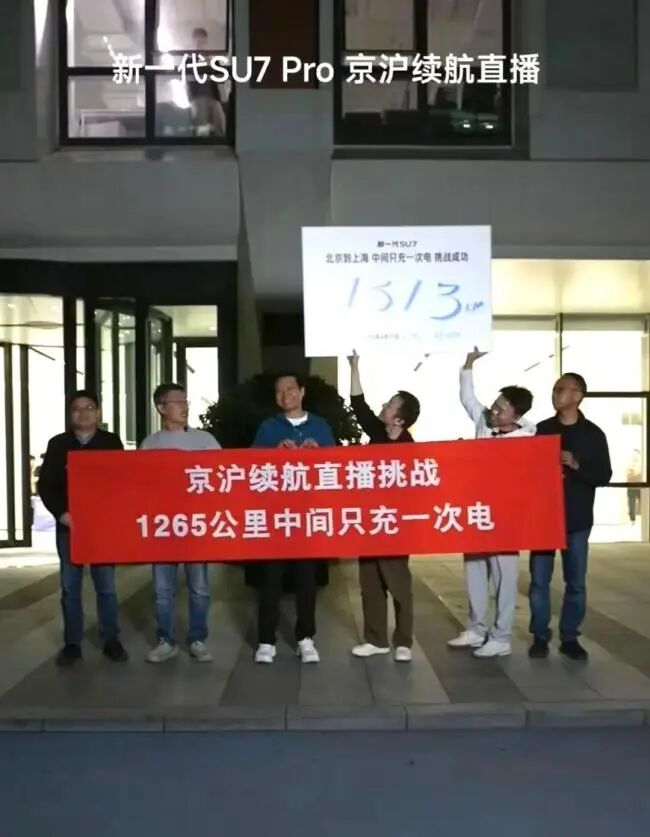
New forces are also making comprehensive efforts, launching heavyweight products before the auto show. If no new products are available, they create buzz before the event. For example, Xiaomi Automobile's Lei Jun launched the longest live stream to prove that the new generation Xiaomi SU7 can travel from Beijing to Shanghai on a single charge. The 13-hour live stream extended the intensity of competition to the personal level of automaker executives.
Joint venture automakers are no longer passively observing at this year's auto show but have joined the launch event battle. The most notable signal is the return of French brands, with Peugeot and Citroën, which have been absent from major auto shows for a long time, making a high-profile comeback and announcing brand revitalization strategies, including the global debut of multiple intelligent electric concept vehicles.
Korean automakers are also "mending the fold after sheep are lost," with Hyundai, which was absent from last year's Guangzhou Auto Show, officially entering the Chinese pure electric market with its IONIQ brand.
As for German brands, they continue to promote their strategies in China, with Mercedes-Benz, BMW, and Audi showcasing over 60 new models together.
Volkswagen Group even held a Group Night on the eve of the auto show, unveiling four global debut models at once and announcing plans to launch over 20 new energy models in China by 2026, covering all types such as pure electric, plug-in hybrid, and extended-range electric vehicles.
Despite market uncertainties, automakers are still giving their all to maintain a presence at the Beijing Auto Show.
The Ruthless Reality Behind the Celebration
Behind the seemingly bustling auto show lies the dilemma plaguing the entire automotive industry.
First, joint venture brands, having failed in the new energy sector, are clinging to their last dignity with the fuel vehicle market. However, as domestic brands continue to strengthen, the market share of joint venture automakers is shrinking.
For example, Volkswagen delivered only 548,700 vehicles in China in the first quarter of this year, a significant year-on-year decline of 14.8%. The combined sales of luxury brands BBA (BMW, Benz, Audi) decreased by 69,800 units in the first quarter, facing dual losses in sales and profits.
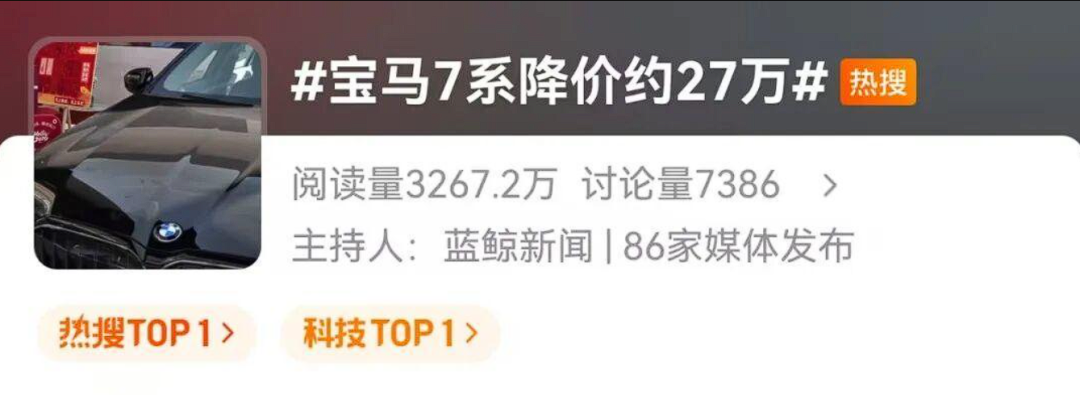
Behind this is the persistent price war. According to statistics, nearly 70 models across the industry reduced prices in the first quarter, with NEVs averaging a price drop of RMB 38,000, a 13.7% decrease, and fuel vehicles averaging a price drop of RMB 37,000, a 14.3% decrease. Luxury and joint venture brands are the main drivers of price reductions, with flagship models from BMW slashing prices by RMB 300,000, and mainstream joint venture models like Accord and Wildlander falling below RMB 140,000, forcing domestic brands to follow suit.
In this "negative-sum game," the price war of "selling at a loss for publicity" has not only failed to bring incremental sales to automakers but has also further compressed their already thin profit margins.
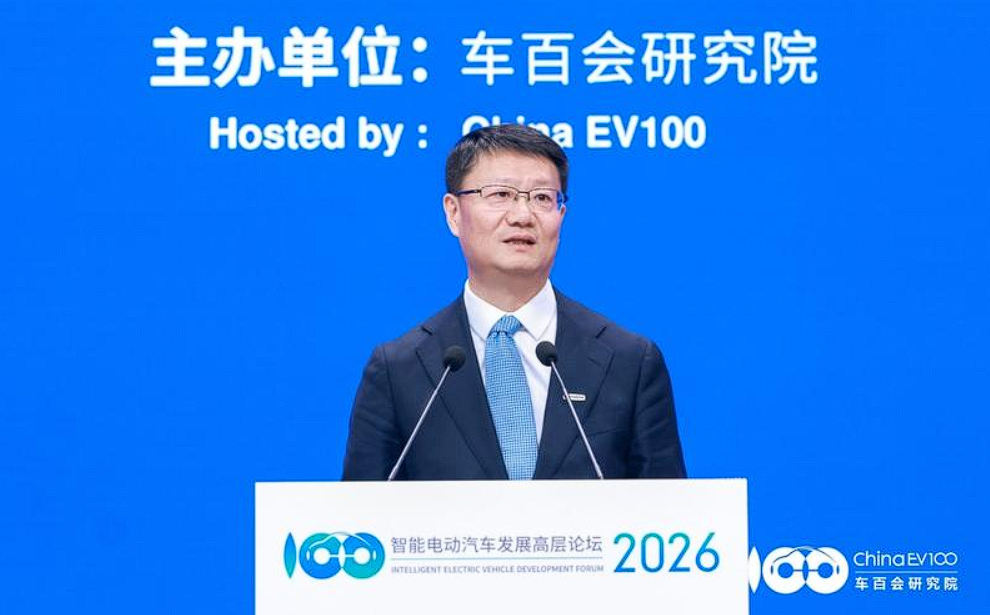
Zhao Fei, General Manager of China Chang'an Automobile Group, bluntly stated at the High-Level Forum on Intelligent Electric Vehicle Development before the Beijing Auto Show: "Currently, automakers can no longer profit solely from selling vehicles." Li Bin, founder of NIO, also noted that the entire industry is facing a systemic dilemma of "increasing sales without increasing revenue and increasing revenue without increasing profits."
Behind this lies the blow to automakers' self-developed realities. Among vehicle manufacturers, even BYD, which possesses full-chain vertical integration capabilities, saw its net profit decline by nearly 19% year-on-year in 2025, the first decline in four years.
Zhang Yun, Global CEO of Ries Strategic Consulting, metaphorically said: "Everyone is selling the same dumplings, but the ones making money are those selling the dumpling wrappers." Vehicle manufacturers are using intense launch events and price wars to compete for market share, but the profits are flowing to upstream battery and chip manufacturers, making full-stack self-development a joke.
Squeezed by multiple factors, the automotive industry's profit margin was only 2.9% from January to February this year. When selling vehicles no longer yields profits, automakers' only choice is to quickly bring new products to market, generating buzz through intense launches in an attempt to resist the erosion of the price war with "new product premiums" and capture consumers' attention and orders with "first-mover effects."
However, faced with an average of 3 launch events and 60 new models per day, consumers' attention has been severely diluted, significantly reducing the communication effectiveness of individual launch events. This, in turn, forces automakers to continuously increase the frequency of launches, trapping them in a vicious cycle of "the denser, the less effective; the less effective, the denser."
Even though the Beijing Auto Show features 1,451 exhibition vehicles and 181 debut models, few products will ultimately be remembered by the market. Behind the different exteriors of the exhibition vehicles lie the golden combination of Dongan Power's classic 1.5T engine and CATL's batteries.
Among ultra-luxury brands, only Porsche remains committed to domestic auto shows, while Rolls-Royce and Ferrari no longer participate. However, various similar products can still be seen.
Faced with market changes, the three major camps face different dilemmas but ultimately converge on the same path. Domestic brands need to transform towards high-endization to achieve a strategy of increasing both sales and profits. New forces need to quickly break through the sales inflection point and achieve profitability through economies of scale. Joint venture automakers need to bridge the gap in electrification transformation. Behind the intense schedule of launch events lies the crisis sense that "not making a sound may lead to being forgotten."
The record-breaking density of launch events reflects automakers' collective anxiety in a zero-sum game and is an inevitable pain point as China's automotive industry moves towards high-quality development.
Amid the interplay of noise and silence, fervor and calmness, the true turning point for China's automotive industry may be quietly unfolding this spring.
Note: Some images are sourced from the internet. If there is any infringement, please contact us for removal.
-END-
-
![]()
Jitian Xingzhou: A Pioneer in Optical Payloads Secures Hundreds of Millions in Series B Funding!
-
![]()
Orders Secured Through to the Second Half of the Year! The Rationale Behind the 'Surge' in Demand for This Company’s Optical-Grade Base Films
-
![]()
Beyond Patents: The Retail Rivalry of Insta360 and DJI Unfolds
-
![]()
180 Billion Market Cap Vanished! How Did Seres Fall So Far?
-
![]()
Blockbuster! Domestic storage takes the global double crown for the first time, from an AI company
-
![]()
China Spearheads Formulation! World's Pioneering Global Technical Regulation for Automated Driving Systems Greenlit and Unveiled
-
![]()
Farewell to Pulsed Support Policies: Three Major Auto Policy Directions from Multiple Departments Take Effect on the Same Day
-
![]()
Embercore AI’s Accelerated Funding: The Robot Industry’s Shift Toward ‘Learning Systems’