Who is Shining Brightest on the Eve of the Auto Show
 04/24 2026
 476
476
"The Global Automotive Feast is About to Begin"
Author | Zhong Xin Editor | Zheng Wen Produced by | Bangning Studio (gbngzs)
'The preheat (warm-up) is earlier, faster, and more extensive than in previous years,' automotive media professionals exclaimed.
Even before the opening of the 2026 Beijing Auto Show, some automakers and supply chain companies hosted various events in advance, including strategy launches, new car unveilings, and technology days, aiming to make their voices heard ahead of the information peak at the auto show and secure a prominent position in the industry.
Their moves also provided an early glimpse into the latest trends in the global automotive industry.
▍01 Volkswagen Makes a Comeback
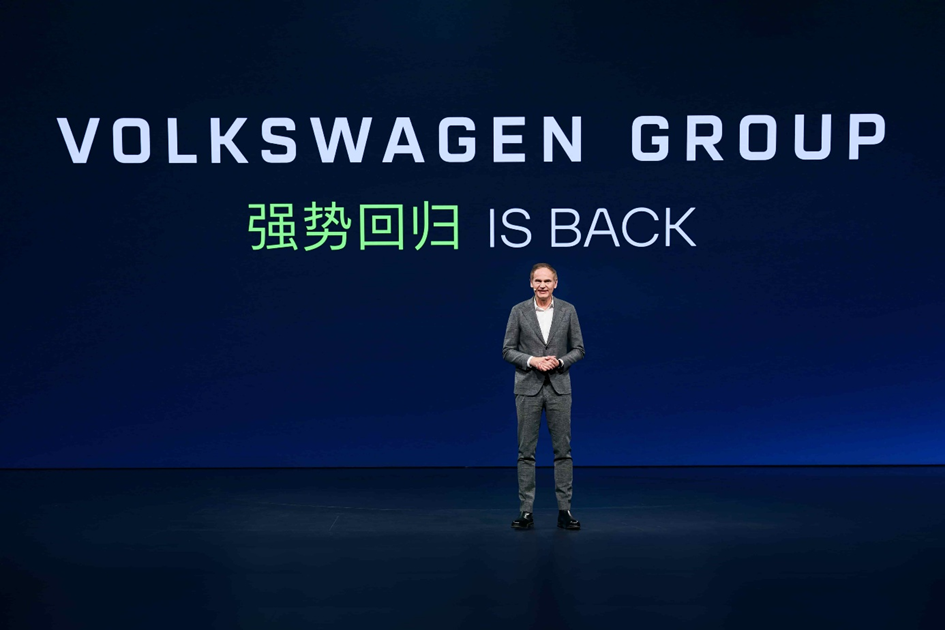
'This is our most extensive product offensive in the Chinese market. This year, we will introduce over 20 new energy vehicle models to the market, averaging nearly one every two weeks,' said Oliver Blume, Chairman of the Board of Management of Volkswagen Group, on the evening of April 21 at the Volkswagen Group Media Night.
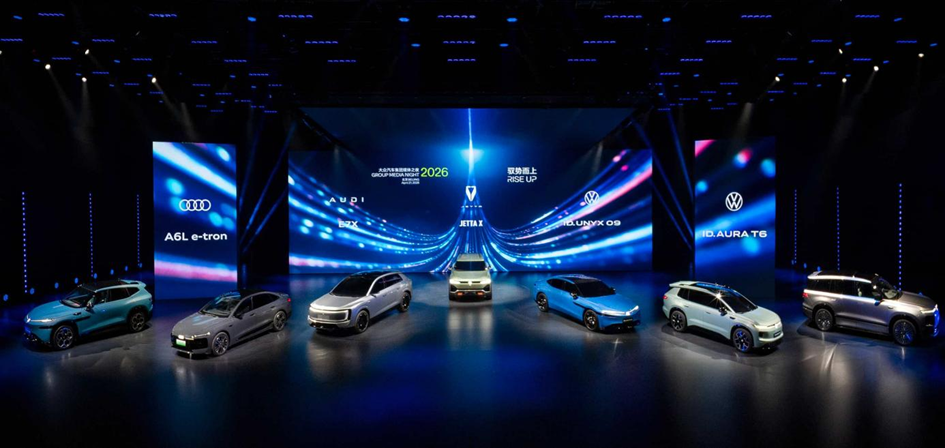
That evening, four models from Volkswagen, Jetta, and AUDI brands made their global debuts, including the Volkswagen Zhongyuan 09, developed within 24 months; the Volkswagen ID. AURA T6, based on the CEA electronic architecture and equipped with the Coolride advanced driving assistance system; the Jetta X, a pure electric concept vehicle from the Jetta brand; and the AUDI E7X, the second production model from the AUDI brand.
On the same day, Volkswagen Group released its 'Agentic AI for All' product technology roadmap, which aims to fully empower new models with the CEA architecture through AI capabilities, creating an integrated 'driving and cabin' experience. This technology will be applied to production models this year and gradually cover all models under the CEA architecture starting in 2027.
Blume stated that China is at the core of Volkswagen Group's global transformation and a key cornerstone for achieving its global strategic goals. He mentioned that Volkswagen Group aims to become a global leader in automotive technology, and the evening's event marked the beginning of a new 'Volkswagen Era' in China.
The confidence behind this large-scale product offensive stems from Volkswagen Group's growing local R&D capabilities and efficient local collaboration ecosystem. Currently, Volkswagen Group has established complete forward development capabilities in China, from concept innovation to technical verification. The new generation of products deeply aligns with the actual needs of Chinese customers in terms of design language, intelligent cockpit experience, and advanced driving assistance functions.
▍02 Changan's '1445' Global Strategy
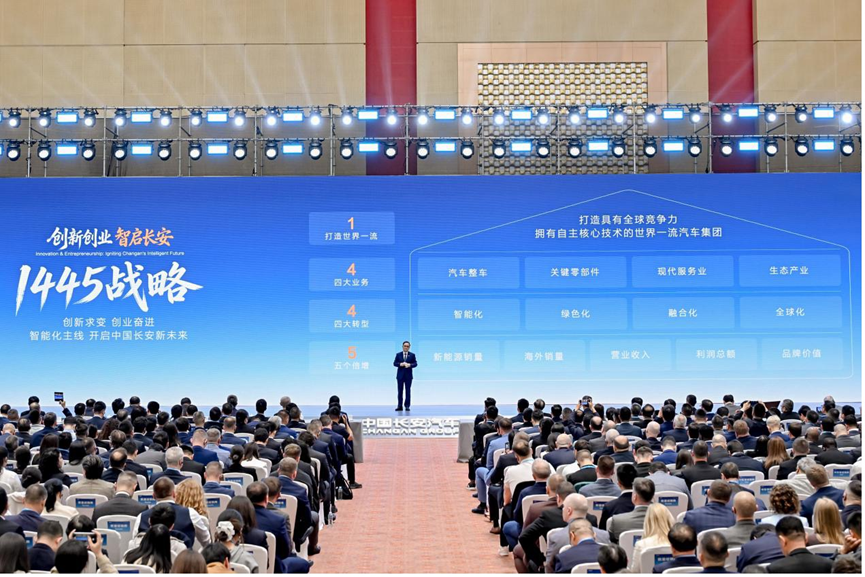
On April 21, the China Changan Automobile Group Global Strategy Launch and Partner Conference was held in Chongqing, where Chairman Zhu Huarong unveiled the '1445' global strategy for China Changan Automobile.
This is the core framework for the future development of this state-owned automotive enterprise, focusing on one goal—'building a world-class automotive group'—and four core businesses: complete vehicles, key components, modern services, and ecological industries. It aims to promote four major transformations: intelligence, greenization, globalization, and integration.
The core strategic goals are to achieve fivefold increases by 2030, including NEV sales reaching 2.4 million units, overseas complete vehicle sales exceeding 1.5 million units, and revenue rising to RMB 600 billion. Additionally, it aims to double total profits and brand value, with the brand value surpassing RMB 200 billion, entering the world's top 500 brands, and overseas sales accounting for over 40%.
Facing a century of global automotive transformation and fierce competition, China Changan Automobile proactively shifted its business logic from a past focus on volume over profit during the investment phase to a harvest phase emphasizing both volume and profit, addressing industry competition and profit pressures with high-quality growth.
At the same time, this state-owned automotive enterprise launched an upgrade plan for its mid-to-high-end brand cluster, promoting full strategic synergy between the luxury brand Avatr and the mid-to-high-end NEV brand Deepal. It insists on independent operation of front-end brands while sharing technologies and supply chains in the middle and back ends, aiming to reduce operating costs by 20%-30% and build a global mid-to-high-end brand matrix with annual sales exceeding 1.5 million units.
China Changan Automobile will focus its product lineup on global blockbuster models, planning to create one model with annual sales of 500,000 units and five models with annual sales of 300,000 units, covering multiple powertrain routes including fuel, hybrid, pure electric, and hydrogen energy.
To ensure efficient implementation of the strategy, Changan is simultaneously advancing six leapfrog engineering projects—experience, powertrain, scale, ecology, system, and value—supported by three core plans.
1. The New Energy 'Shangri-La' Plan: Continuously strengthening core technologies for batteries, electric motors, and electronics, promoting low-carbon development across the entire supply chain, and striving to achieve carbon peak by 2027.
2. The Intelligent 'Beidou Tianshu' Plan: Leveraging its self-developed SDA architecture and L3/L4 autonomous driving technologies with AI large model applications, it aims to build fully controllable intelligent competitiveness and create a 'five-zero' safe travel experience.
3. The Globalization 'Haina Baichuan' Plan: Investing hundreds of billions of resources over the next five years, it aims to establish 800,000 units of overseas production capacity by 2030, focusing on core markets such as Europe, Southeast Asia, and Latin America, with a target of 300,000 units in the European market, achieving a fundamental leap from product exports to brand and industrial exports.
▍03 New Vehicles Return to Mainstream Families
On April 22, LanTu Automobile unveiled its flagship five-seater SUV, the LanTu Taishan X8, in Beijing and initiated global pre-sales.
This is LanTu's first strategic model released after its listing on the Hong Kong Stock Exchange, offering two powertrain options—PHEV and EV—with five configurations and pre-sale prices ranging from RMB 302,900 to RMB 389,900.
LanTu believes that the latest census data shows the average household size in China has dropped to 2.62 people, with three-person households remaining the mainstream. Moreover, the home SUV market has evolved from the 'good enough' 1.0 era and the 'fridge, TV, sofa' 2.0 era to the 'family's third living space' 3.0 era of scenario coexistence. The Taishan X8 is designed to meet the higher quality of life demands of mainstream families.
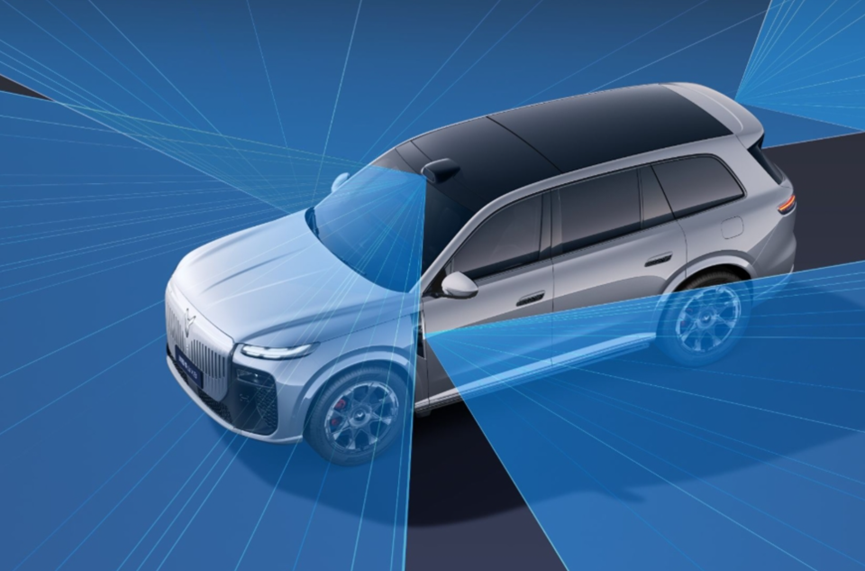
This model has three key features: first, starting at RMB 302,900, it offers the experience of a 9-series model at an 8-series price, with outstanding cost-effectiveness. Second, it targets three-person households, emphasizing the comfort and practicality of a large five-seater. Third, it features Huawei's intelligent driving and HarmonyOS cockpit, along with air suspension and rear-wheel steering, making it a rare competitor in its price range.
For LanTu, the Taishan X8 is a key model for brand elevation, sales growth, and reputation enhancement. For the industry, it is expected to drive the home SUV market from configuration stacking to a 3.0 era of scenario-based, high-quality, and all-dimensional comfort. For users, it is a family flagship vehicle that excels in space, comfort, intelligence, driving control, and safety.
On the same day, the Avatr 06T was launched. Unlike the Taishan X8, which targets three-person households, the Avatr 06T is positioned as the first performance car for young people, available in pure electric and extended-range versions, with limited-time prices ranging from RMB 215,900 to RMB 275,900.
The model comes standard with Huawei's Qiankun ADS assisted driving system and the world's highest 896-line LiDAR in mass production, becoming one of the first models to feature Huawei's Qiankun ADS 5. Even the entry-level version is equipped with in-cabin laser vision sensors, excelling in handling complex urban road conditions.
Its intelligent cockpit features HarmonyOS HarmonySpace 5 and MoLA hybrid large models, delivering more natural human-machine interaction.
Focusing on mainstream families is also Roewe.
On April 21, Roewe held its 20th Anniversary and AI New Sequence Product Launch, unveiling the results of its collaboration with Volcano Engine—the AI-native automotive sequence 'JiaYue'—and introducing the industry's first AI-native technology architecture, CPP. Three concept cars, the JiaYue 07, JiaYue 06, and JiaYue 09, were also unveiled.
According to the introduction, AI-native vehicles possess capabilities for task decomposition, real-time decision-making, comprehensive observation, and precise execution, eliminating the need for additional user learning or adaptation, while incorporating active learning and memory-growing personified dialogue models.
The 'JiaYue' sequence, unveiled at the event, is positioned as an AI-native vehicle that understands the needs of Chinese families. The three concept cars—JiaYue 07, JiaYue 06, and JiaYue 09—offer differentiated solutions for various family vehicle needs.
Among them, the JiaYue 07, as the sequence's debut model, targets mainstream families. In the future, Roewe plans to launch a new model every three months, starting with the JiaYue 07, to improve (complete) its product matrix.
▍04 'Super Technology' Reappears
On April 21, CATL hosted its Super Technology Day product launch in Beijing, unveiling the third-generation Shenxing ultra-fast charging battery, the third-generation Qilin battery, the Qilin condensed matter battery, the second-generation Xiaoyao super hybrid battery, the Na Xin battery, and the ultra-swap integrated all-scenario energy replenishment network plan.
At the launch event, Wu Kai, an academician of the Chinese Academy of Engineering and CATL's Chief Scientist, systematically explained the advantages, boundaries, and development directions of different material systems.
He stated that lithium iron phosphate is gradually approaching its theoretical energy density limit, making it more suitable for developing a technology route centered on ultra-fast charging to achieve ultimate balance. Nickel-cobalt-manganese (NCM) materials, with their high energy density, remain a key battleground for global power battery technology competition. Sodium-ion batteries, meanwhile, show broad prospects in high-temperature, extreme-cold travel scenarios and energy storage applications.
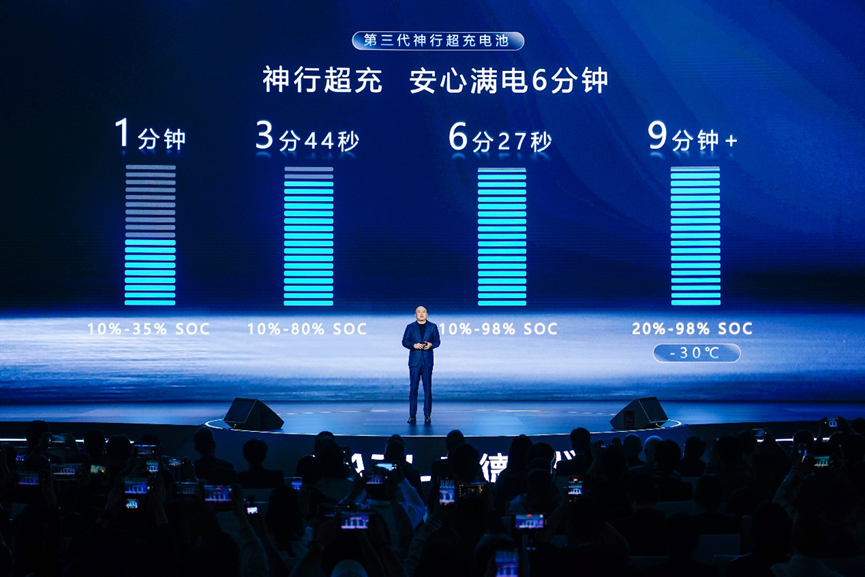
The third-generation Shenxing ultra-fast charging battery can reach full charge in just 6 minutes under normal temperature conditions. The third-generation Qilin battery achieves an energy density of 280Wh/kg, easily enabling a range of 1,000 kilometers, while the Qilin condensed matter battery extends the range to 1,500 kilometers. The second-generation Xiaoyao super hybrid battery offers a pure electric range of 600 kilometers, setting a new benchmark in the hybrid segment. The Na Xin battery will drive the sodium-ion material system from technological breakthroughs to scaling (mass) production.
From five battery products covering all chemical material systems to the ultra-swap integrated energy replenishment network, CATL has completed a full-link layout from battery products to energy replenishment infrastructure, promoting the transition of new energy travel from isolated breakthroughs to full-scenario coverage.
While top suppliers are unveiling super technologies, emerging tech stars are also taking proactive actions.
On April 22, Horizon Robotics held its annual product technology launch, unveiling its first cabin-driving integrated vehicle intelligence chip, Horizon Starry®, and its first vehicle intelligence operating system, Horizon KaKaClaw™, along with the launch of its all-scenario assisted driving system, HSD V1.6.
The Starry 6P chip delivers a BPU computing power of 650 TOPS and a memory bandwidth of 273 GB/s, simultaneously supporting the deployment of digital AI for the cockpit and high-level intelligent assisted driving large models. Through a unified memory architecture and unified underlying software, it reduces the vehicle's computing space occupation by 50%, lowers the comprehensive cost per vehicle by RMB 1,500 to RMB 4,000, shortens the R&D and delivery cycle from 18 months to 8 months, and reduces the cabin-driving integrated software and hardware delivery time by 56%.
To date, the Starry chip has secured intention (intent) production partners from over 10 automaker brands, including Volkswagen, Chery, and BYD, as well as several Tier 1 suppliers like Bosch and Denso.
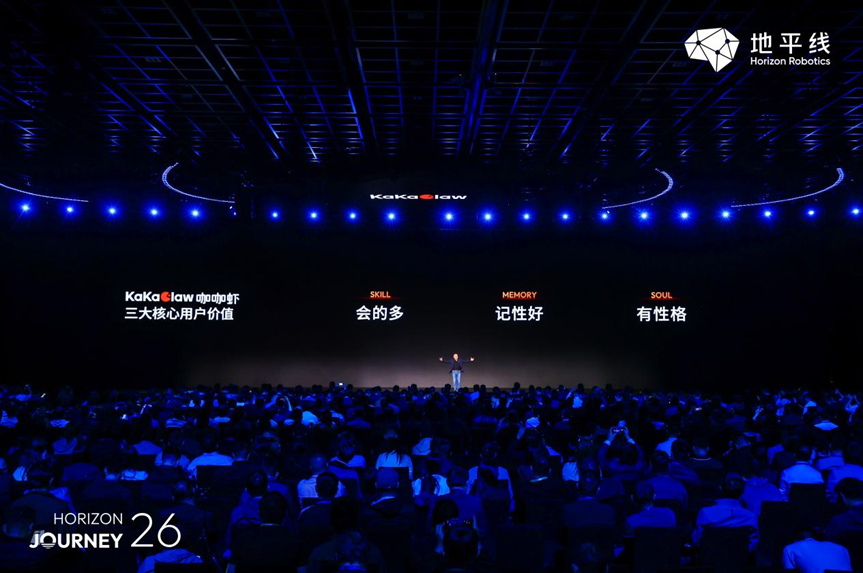
Regarding KaKaClaw™, Horizon Robotics stated that users can simultaneously schedule intelligent driving and intelligent cockpit functions in parallel through the vehicle intelligence system using natural language instructions. Physical agents, digital agents, and end-cloud large models respond synchronously, with core functions deployed locally to cover all cabin-driving scenarios.
The newly released HSD V1.6 shifts its technical focus from complex showmanship to everyday peace of mind, creating more elegant, reassuring, and efficient assisted driving around users' daily high-frequency commuting and travel scenarios.
On April 24, the 2026 Beijing Auto Show will open its doors, featuring a grand feast of global automotive future development. More new models, technologies, and strategies will debut here before entering the market and people's lives.
-
![]()
Jitian Xingzhou: A Pioneer in Optical Payloads Secures Hundreds of Millions in Series B Funding!
-
![]()
Orders Secured Through to the Second Half of the Year! The Rationale Behind the 'Surge' in Demand for This Company’s Optical-Grade Base Films
-
![]()
Beyond Patents: The Retail Rivalry of Insta360 and DJI Unfolds
-
![]()
180 Billion Market Cap Vanished! How Did Seres Fall So Far?
-
![]()
Blockbuster! Domestic storage takes the global double crown for the first time, from an AI company
-
![]()
China Spearheads Formulation! World's Pioneering Global Technical Regulation for Automated Driving Systems Greenlit and Unveiled
-
![]()
Farewell to Pulsed Support Policies: Three Major Auto Policy Directions from Multiple Departments Take Effect on the Same Day
-
![]()
Embercore AI’s Accelerated Funding: The Robot Industry’s Shift Toward ‘Learning Systems’