Li Yanhong PK Jensen Huang: Is the Measure of AI in Tokens or DAAs?
 05/15 2026
 663
663
The Direction of Baidu AI is Changing.
After three years in the large model race, the direction of Baidu AI is changing.
In 2023, following the explosion of ChatGPT, Baidu was the first major Chinese company to launch its ERNIE Bot product. At that time, Baidu enjoyed significant public attention, with users lining up for beta access, briefly becoming the face of Baidu's AI strategy.
In 2024, ERNIE Bot remained the star of Baidu's Create AI Developer Conference, personally endorsed by Li Yanhong. However, by 2025, Baidu AI's focus began to shift towards AI agent applications like Xinxiang and Miaoda, with the ERNIE large model taking on a more utilitarian role.
At this year's Create Baidu AI Developer Conference, the release of ERNIE Bot 5.1 was briefly mentioned, while the spotlight fell on its first general-purpose AI agent product, DuMate, and various vertical agents like Miaoda and Baidu Yijing.
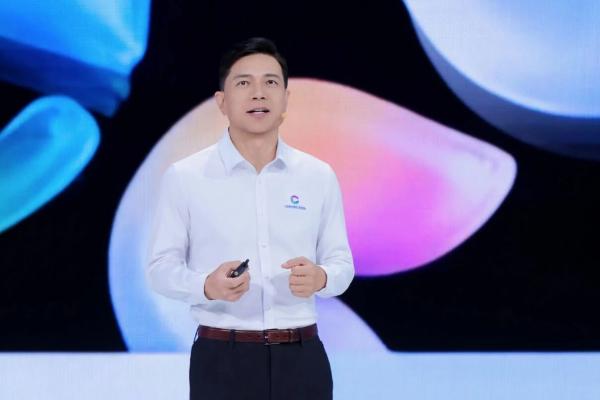
"This is the first time in history that an agent has replaced a model and gone viral! For the first time, the protagonist of AI is not a model but an application!" said Li Yanhong, Baidu's founder and CEO, at the Create 2026 Baidu AI Developer Conference.
Through the changing central roles at Baidu's Create conferences over three years, it is evident that Baidu AI's strategic focus is gradually shifting from C-end AI chat assistants to B-end AI agent applications.
In fact, in the previous two years, large models were more about technical showmanship, comparing parameters, rankings, and resemblance to ChatGPT.
However, the 2026 wave of AI agents is about value realization, competing on who can truly replace human labor in complex tasks, embed into enterprise business processes, and generate quantifiable ROI.
Large models solve the problem of AI's ability to "understand the world," while AI agents address the issue of AI's ability to "change the world."
"AI agents represent an unprecedented speed of AI penetration into various industries, professions, and scenarios, signifying a shift in AI competition from intelligence to execution," said Li Yanhong.
Thus, Li Yanhong introduced a new metric to the outside world: Daily Active Agents (DAA).
He stated that while the industry has previously focused on Tokens, which only represent costs and investments, DAA focuses on "how many agents are working for humans and delivering results," which is closer to the essence of value. He predicted that the global number of DAAs could exceed 10 billion in the future.
This also signifies a major shift in Baidu's thinking about the AI sector. From a traffic-driven mindset in the mobile internet era to a value-delivery mindset in the AI agent era, Baidu is attempting to tell a new story about productivity restructuring.
Behind this new narrative, Baidu Intelligent Cloud, representing AI cloud infrastructure, has become the most critical piece.
Can Li Yanhong Find New Value Points for Baidu AI?
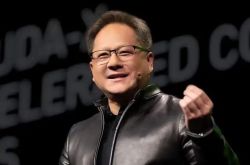
"Tokens do not necessarily represent the final outcome; they only represent costs, not benefits," said Li Yanhong, directly contradicting NVIDIA CEO Jensen Huang's assertion.
Previously, Huang proposed that Tokens are the metric and currency unit of the AI era, with corporate revenue directly equal to Token output, engineer productivity directly equal to Token consumption, and data center valuation directly equal to Token output per watt.
This logic holds true for cloud vendors selling computing power, as selling Tokens is equivalent to selling computing power. However, this logic does not seem to hold in specific production scenarios.
Whether it's enterprises, developers, or solo entrepreneurs, when using AI, they are more concerned with the value and benefits it can bring to their businesses and themselves, rather than just Token consumption.
If enterprises pay for massive Token consumption without seeing actual business value, an AI bubble may be quietly forming.
Therefore, Li Yanhong proposed a new metric for the AI era: Daily Active Agents (DAA).
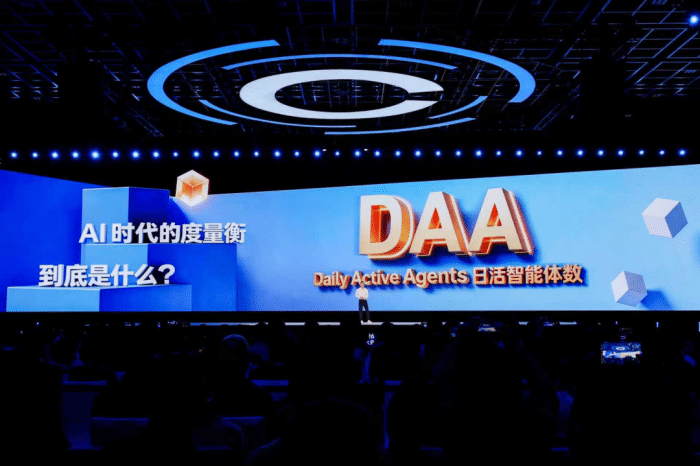
In his view, this is similar to the "Daily Active Users (DAU)" metric in the mobile internet era, but instead of focusing on human clicks and retention, it focuses on agent activity and output. "In the future, the prosperity of a platform and ecosystem should not be measured by how many Tokens are consumed but by how many agents are working for humans and delivering results," he said.
In fact, during the golden age of the mobile internet, DAU was the universal currency for measuring platform value—user retention time, open frequency, ad exposure, and all business models were built on top of the traffic funnel.
The shift from DAU to DAA undoubtedly represents a painful transformation for Baidu, as it was one of the biggest beneficiaries of the DAU logic in the mobile internet era, with its search box once being the super entrance of the entire Chinese internet.
However, everyone knows that the ceiling for mobile search is clearly visible, with user time being divided by short videos, social media, and e-commerce, turning search from a "starting point" into a "transit point."
When Li Yanhong proposed DAA, he was essentially admitting that the mobile search story is unlikely to progress further, and Baidu must find a new metric. DAA is the new value anchor he has found for Baidu AI's future.
This change in thinking not only extends to the redefinition of product forms but also alters Baidu AI's target audience.
In terms of product forms, Li Yanhong divides AI entry points into two generations: the first generation is Chatbots, represented by ChatGPT, which solve the problem of "information acquisition"; the second generation is general-purpose AI agents, which solve the problem of "task completion."
The value ceiling for the former is "knowing more," while for the latter, it is "doing more."
Based on this judgment, Baidu released the general-purpose AI agent DuMate at this year's Create conference, positioned as a "Baidu companion," aiming to integrate capabilities such as search, Miaoda, and Famous Strategist to become a "unified entry point."
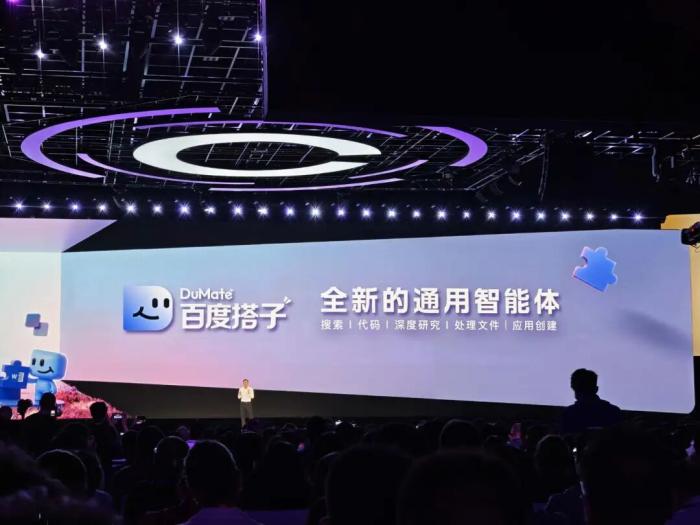
According to its product manager, Guangzhui Intelligence, DuMate supports complex multi-end task processing, file drag-and-drop analysis, scheduled tasks, and a secure sandbox environment, and is currently in free trial.
Guangzhui Intelligence also experienced the product on-site, and the product design thought process (translated as "approach" or "philosophy") is clear: to avoid user anxiety from switching between different AI agent tools and to solve multiple tasks with one product.
However, this also means that DuMate will directly compete with numerous "Openclaw" products on the market.
DuMate is a general-purpose AI agent targeted at ordinary C-end consumers but is more suitable for developers or solo entrepreneurs compared to the broader consumer base of AI chat tools.
For example, at the conference, an 8-year-old second-grader named Puman, without needing to be a traditional engineer or have a complete team, used Miaoda to build an application called "Dada Umbrella" in a few sentences, allowing classmates to share umbrellas on rainy days.
This represents the typical user group of large C and small B, the super individuals of the AI era.
Meanwhile, the code AI agent Miaoda officially released the Miaoda App and enterprise version. In terms of digital human agents, Baidu Huiboxing was upgraded to "Baidu Yijing," with Li Yanhong stating, "Digital humans are 'visible' AI agents."
It can be seen that although Baidu is withdrawing from the C-end AI chat assistant race, it is instead focusing on the large C and small B user groups, super individuals, and every developer.
This may be another layer of meaning behind Li Yanhong's strong advocacy for DAA:
In the case of being unable to disrupt the C-end landscape in the short term, Baidu is taking the lead in establishing new rules of the game at the B-end and industrial end, where clear value can be generated and measured, shifting the industry's attention from the "arms race" of model parameters to the "value race" of industrial penetration.
However, this also hides Baidu's "regret." After all, DAA is a more B-end-oriented metric and business, meaning Baidu AI is actively abandoning its obsession with C-end traffic entry points and embracing industrial AI.
From Yiwu's Small Shops to State Grid: AI Agents Enter Various Industries
The value of a strategy ultimately needs to be validated through implementation.
In Baidu AI's process of industrial adoption, Baidu Intelligent Cloud has become the sole outlet for its B-end business.
At the conference, Shen Dou, Baidu's Executive Vice President and President of Baidu Intelligent Cloud Business Group, opened his speech with industry case studies, showcasing the real-world implementation of Baidu AI agents across various industries.
For example, in the Yiwu Small Commodity Market, behind 1.26 million shops are countless "front-shop-back-factory" micro-manufacturing enterprises.
These factories are not the imagined "dark factories" but resilient small-to-medium-sized production capacities—48-hour sampling, 72-hour shipping, with bosses wearing multiple hats and handling everything "as needed."
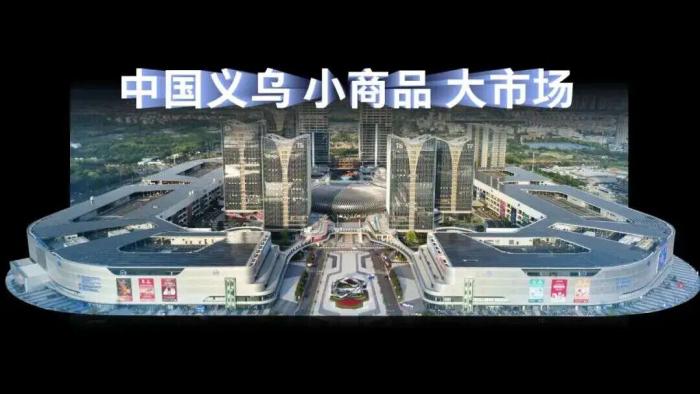
In the past, using AI to manage factories required separately training models and configuring rules for different scenarios, resulting in high costs and long cycles.
Now, Baidu Intelligent Cloud has built an "AI Factory Manager" for the local area, based on the "Yijian" visual AI agent, which comes pre-loaded with general skills such as safety hazards, equipment abnormalities, and personnel violations. Merchants can simply supplement their production line standards in natural language to uniformly schedule all factory cameras and configure rules at corresponding points. In the past, the experience of the first-generation factory owners was passed down orally; now, this experience is precipitate (translated as "preserved") as replicable digital assets, allowing the second generation to take over with confidence.
Accompanying the "AI Factory Manager" is the "AI Store Manager."
Based on Baidu Intelligent Cloud's Hogee, this marketing AI agent can analyze sales data, provide replenishment and promotion suggestions based on inventory, detect overdue orders and prompt risks in advance, and even serve as a multilingual guide on-site—"foreigners can now bargain in China."
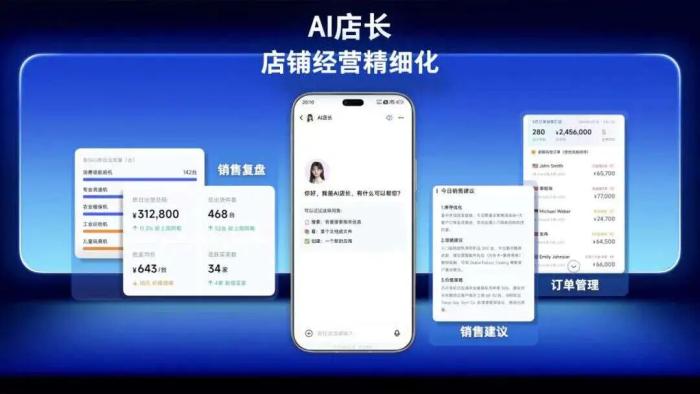
Currently, this "front-shop-back-factory" capability has been opened up to more Yiwu merchants through local partners.
Baidu Intelligent Cloud has not attempted to transform entire factories with a heavy system but instead uses lightweight AI agents to make AI the "second pair of eyes" for factory managers and the "second brain" for store managers.
Besides Yiwu, Baidu Intelligent Cloud's AI agents have also been implemented in various scenarios, including finance, automotive, mobile phones, central and state-owned enterprises, and urban ports.
Central and state-owned enterprises and the energy sector are pillars of the national economy and key scenarios for AI adoption. Currently, Baidu Intelligent Cloud serves over 80% of central enterprises, with hundreds of AI agent applications implemented in companies such as State Grid, China Southern Power Grid, PetroChina, and Sinopec.
For example, State Grid has been collaborating with Baidu for ten years, starting with intelligent customer service, launching the trillion-parameter "Guangming Electric Power Large Model" in 2024, and deploying AI agents in over 40 scenarios such as inspections last year.
In the mobile phone industry, based on Baidu Intelligent Cloud's Agent Infra AI agent-building capabilities and mobile phone manufacturers beginning to open operating system-level skills, Baidu Intelligent Cloud is helping clients create native mobile phone super assistants, such as Honor's YOYO.
Additionally, at Qingdao Port's automated terminal, the terminal intelligent control system A-TOS, empowered by Baidu Famous Strategist 2.0, achieved a 10.21% efficiency improvement. In the automotive manufacturing sector, IAT Automobile, with the help of Famous Strategist 2.0, reduced wind resistance testing time from 10 hours to minutes and shortened the entire vehicle R&D cycle by 25%.
"China has the most complete industrial system and the richest application scenarios, potentially giving rise to over 10 billion active AI agents in the future. Various types of knowledge, experience, tools, and processes precipitate (translated as " precipitate " or "accumulated") in industries will become capabilities that AI agents can inherit and amplify," said Shen Dou.
If Li Yanhong's DAA is a theoretical tower, then the stories from Yiwu's Small Commodity Market and various industries in Shen Dou's speech are the most authentic soil for AI adoption.
These cases demonstrate Baidu's strong penetration at the B-end, even performing better than expected in certain verticals. It has found the best path for AI adoption—not disruption but empowerment.
It does not forcefully insert AI into factories but seamlessly integrates it into existing production processes like "water and electricity." This "down-to-earth" capability is something many pure technology companies lack.
However, we must also acknowledge the regrets. Compared to the explosive growth of C-end products, B-end AI adoption is still like "moving mountains," with long cycles, high difficulty, and slow replication.
More importantly, customer needs across industries have changed in the AI-driven digital transformation era.
"In the past, customers needed business elasticity, reliability, cost reduction, and efficiency improvement, so cloud services mainly provided computing, network, and storage resources," said Shen Dou. "But today, customers need highly active, high-value, and scalable AI agent applications to directly solve their business problems."
Therefore, cloud services in the AI era must also be redefined to become a full-stack AI infrastructure that can support large-scale AI agent operations, continuous evolution, and secure control.
The Foundation and Flywheel of AI Agents: The Full-Stack AI Cloud Infrastructure of 'Chip-Cloud-Model-Agent'
"The second half of the AI cloud race is no longer about who consumes more Tokens but about who can use each Token better, enabling enterprises to convert Tokens into productivity 'more, faster, better, and cheaper,'" judged Shen Dou.
This is an extremely rational judgment. While cloud vendors are still competing on Token consumption, Baidu and Shen Dou have calm (translated as "calmed down") and started thinking about how to create greater value for enterprises with fewer Tokens.
This shift in thinking from "burning money" to "making money" and from "computing power stacking" to "efficiency optimization" aligns with Baidu's overall AI strategic shift.
So, what upgrades has Baidu Intelligent Cloud made to better serve enterprise customers in the AI agent era?
At the conference, Shen Dou announced that Baidu Intelligent Cloud has been fully upgraded to a "new full-stack AI cloud oriented towards large-scale AI agent applications," with the core logic of building the "best Agent Infra for unit Token intelligence" and "AI Infra with stronger per-watt performance and higher cost-effectiveness."
Obviously, this is a qualitative leap from 'selling computing power' to 'operating computing power'.
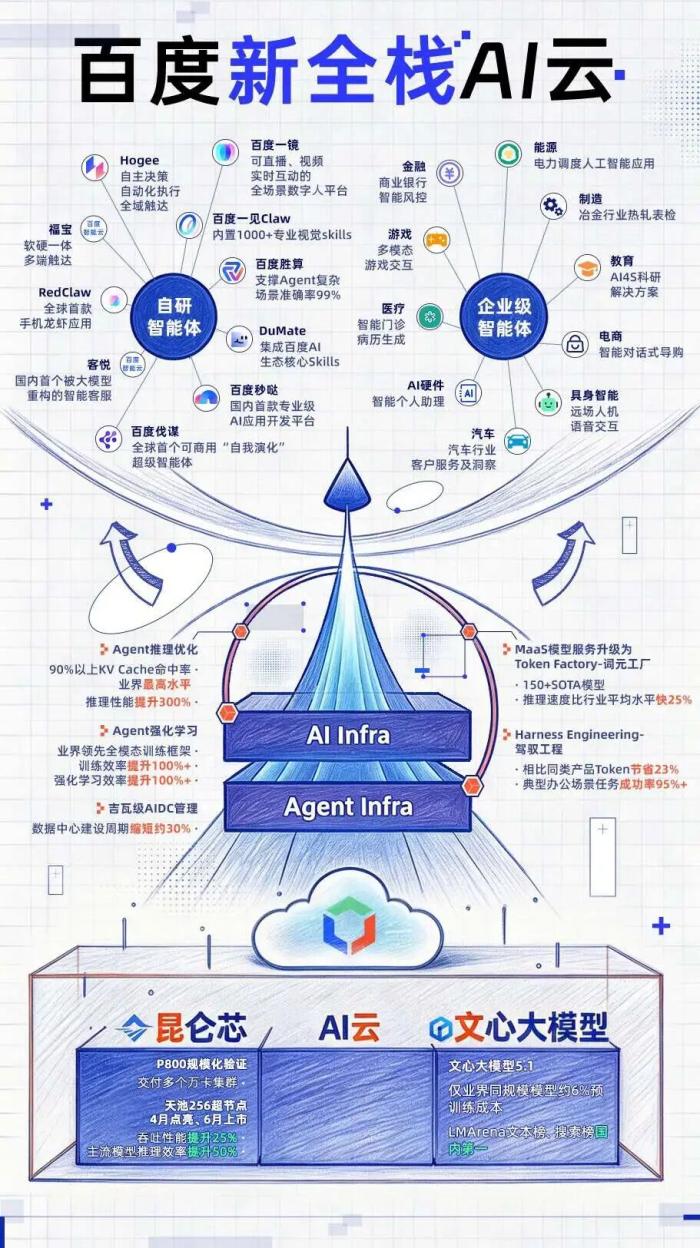
Generally speaking, for an agent to function effectively, it requires two core elements: a user-friendly model and efficient 'Harness Engineering'. Therefore, Baidu Smart Cloud has made a bold restructuring at the Agent Infra layer:
Firstly, it has upgraded the former 'MaaS Model Service' to 'Token Factory'.
In this regard, Shen Dou explained that the context length of agents is 1,000 times that of Chatbots, and tasks often consume millions of Tokens, imposing significant cost pressures. Therefore, Baidu has reconstructed its products with an Agent-First philosophy, minimizing redundant Token computations to enhance inference generation speed by approximately 25% compared to the market average.
More importantly, when calling mainstream domestic models such as ERNIE, DeepSeek, GLM, and MiniMax on Baidu Smart Cloud, the underlying computing power is entirely provided by domestic Kunlun cores.
Secondly, Baidu Smart Cloud has introduced a systems engineering approach named 'Harness Engineering'.
According to reports, it encompasses core capability modules such as long-context management, persistent memory, tool invocation, and sub-agent scheduling, with deep collaborative optimizations. The results are remarkable: it achieves a 95% success rate in handling office tasks using tools like browsers and Office, and reduces token consumption by 23% compared to OpenClaw for the same tasks, thanks to superior context management.
'In the future, enterprises will no longer ask 'which model did you use?' but 'how many valuable tasks did your agent accomplish in a day?'' This statement by Shen Dou highlights the ultimate mission of Agent Infra.
And in AI Infra, Baidu Smart Cloud has, in fact, delivered a surprisingly impressive performance. In the past, domestic chips were often considered as 'backups.' However, by 2026, the Kunlun Core P800 has become one of the 'must-haves' among domestic AI chips.
At the conference, Shen Dou announced that the all-domestic Kunlun Core cluster has successfully completed the training of the important ERNIE 5.1 version, with a linear scalability exceeding 85% for clusters of ten thousand cards and an effective training rate as high as 97%.
This signifies that China now possesses an autonomous computing power foundation capable of supporting trillion-parameter large model training without relying on external supplies.
Furthermore, the 'Tianchi 256-card Super Node' based on Kunlun cores is set to launch, offering a 25% improvement in throughput performance; the gigawatt-scale AIDC maximizes computing efficiency through a 'network-centric layout'.
It is evident that this series of upgrades, ranging from application Harness Engineering to underlying computing power hardware, collectively form Baidu's new full-stack capabilities in 'chip-cloud-model-agent.' It is no longer just about providing computing resources but aims to become an infrastructure akin to an 'operating system' in the agent era, making the development, operation, and evolution of agents more efficient and cost-effective.
Navigating Through Cycles: Advancing on the New B-End AI Track
Overall, throughout Create 2026, Baidu's AI strategy exhibits a clear 'duality': on one hand, a 'heavy' model of delving into industries and building full-stack capabilities; on the other, a 'light' application approach by directly competing in the general-purpose agent market.
On the industrial and infrastructure front, Baidu has accumulated certain advantages. Its deep integration with over 80% of central enterprises, 100% of mainstream automotive companies, more than 1,000 AI hardware manufacturers, and numerous financial and manufacturing giants forms an impenetrable industrial 'moat.'
From Kunlun cores and the Baige platform to the Qianfan large model platform, and then to the 'Token Factory' and 'Harness Engineering' for agents, the full-stack layout of 'chip-cloud-model-agent' is unique among domestic cloud providers, enabling closed-loop empowerment from hardware to application layers.
This ensures Baidu's sustained 'upward momentum' in the AI cloud market and allows it to share in the determinism growth dividends as enterprises convert Tokens into productivity.
However, in the general-purpose agent track targeting ordinary consumers, Baidu's AI narrative becomes more complex.
Whether general-purpose agents like DuMate and vertical agents like MiaoDa and FaMou can truly capture user attention amid fierce competition from external vendors remains uncertain.
From Tokens to DAAs, from models to agents, from burning money to delivering results, Baidu's AI strategy is undergoing a profound paradigm shift.
'In this era, there are no bystanders; we are all creators,' said Li Yanhong.
For Baidu, the role of a creator means: no longer being a 'fuel supplier' in the AI industry (selling Tokens and computing power) but becoming a builder of 'agent factories' (enabling agents to work and deliver results).
The success of this path depends on three key variables:
Whether DAAs can evolve from a Baidu concept into an industry consensus, whether agents can transition from being 'usable' to 'user-friendly,' and whether Baidu can find the optimal balance between an open ecosystem and closed-loop capabilities.
But at least, Baidu has taken the most crucial step. While the industry is still competing on computing power scale and model parameters, Baidu has shifted its focus to the 'daily active agents'—how many agents are working for humans and delivering results.
This represents a leap from a 'cost mindset' to a 'value mindset.' It acknowledges the reality of computing power inflation but refuses to be trapped in the dead-end of computing power competition. It redefines the meaning of 'input' through 'output' and redefines platform value through agent daily activity.
Li Yanhong sets the standard, and Shen Dou lays the foundation. After Create 2026, the second half of the AI industry may indeed shift from comparing Tokens to comparing DAAs. And Baidu has already secured its ticket to this new game.
-
![]()
Why Does Jensen Huang So Openly Praise China’s AI?
-
![]()
"Wudang" Unveiled: Arm China's Next-Gen AI VPU Redefines Video Encoding
-
![]()
From Energy Conservation and Carbon Reduction to AI Decision-Making: GECON East Intelligence and Chery Group Explore a New Green and Smart Paradigm for Automobile Manufacturing
-
![]()
WAIC 2026 Observation | AI Accelerates Towards the Core of Industries, Industrial AI Enters a Critical Phase
-
![]()
Volkswagen China Fires the First Shot in Foreign-Funded 'White Box Delivery'!
-
![]()
AI Agent Smartphones: The Next Competitive Edge Transcends Large Models
-
![]()
Over 880 Million Yuan Worth of Orders Unveiled, Bidding Launched for Shenzhen Eastern Public Transport
-
![]()
Tesla's Robotaxi Hits the Road: A Monumental Gamble with an Uncertain Future