Revisiting Investment Opportunities in the Commercial Space Industry
 05/15 2026
 654
654
By 2026, the commercial space industry is transitioning from being a mere buzzword in capital markets to a pivotal growth sector, bolstered by robust performance.
Policies, technological advancements, market demand, and capital are collectively propelling the industry towards large-scale deployment. The investment rationale has evolved from early-stage thematic speculation to a focus on value realization across the industrial chain and strategic positioning of leading niche players.
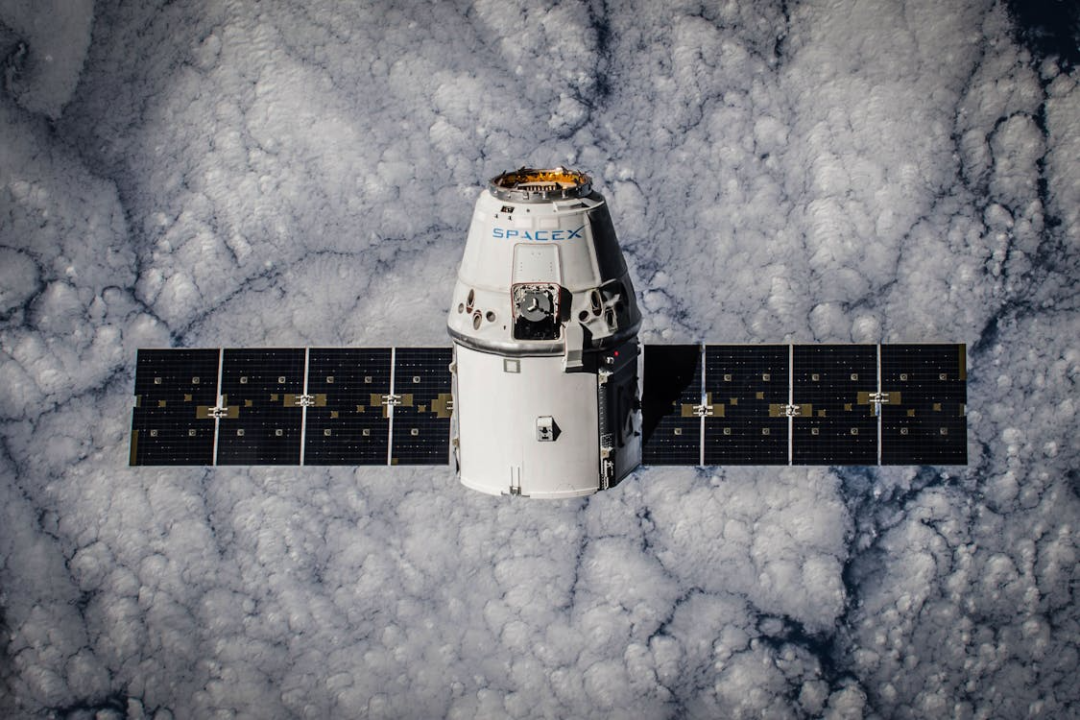
The industry's burgeoning popularity can be attributed to both the demonstration effect of international leaders such as SpaceX and significant strides in domestic policy frameworks, breakthroughs in reusable rocket technology, and the dense deployment of low-Earth orbit constellations.
At the policy level, commercial space has been elevated to a national strategic emerging pillar industry, with enhanced top-tier design and implementation safeguards.
In November 2025, the China National Space Administration officially established a Commercial Space Department to oversee industry regulation, market access, and orbital spectrum management, thereby standardizing industry entry criteria and boosting operational and project execution efficiency.
The 2026 government work report categorized commercial space alongside integrated circuits and new energy vehicles as a national strategic emerging pillar industry, with satellite internet as a core focus.
In April 2026, the Commercial Space Standard System (Version 1.0) was unveiled, encompassing six modules across the entire industrial chain and bridging regulatory gaps.
Currently, a RMB 20 billion national commercial space development fund has been set up, complemented by regional special funds. Meanwhile, the STAR Market has opened listing channels for unprofitable space enterprises, offering robust funding and institutional support for industry growth.
Amid escalating competition for orbital and spectrum resources, accelerated policy implementation ensures spatial sovereignty and industrial development certainty.
On the technological and industrial front, 2026 marks a "verification year" for reusable rockets. Breakthroughs in payload capacity are driving cost reductions and efficiency gains across the industrial chain. Private rockets, including LandSpace's Zhuque-3, Galactic Energy's Pallas-1, and i-Space's Hyperbola-2 iterative models, are undergoing intensive flight and recovery tests, while the "national team's" Long March 10B is advancing sea-based net recovery technology.
Once reusable technology matures, domestic launch costs—currently ranging from RMB 50,000 to RMB 100,000 per kilogram—are expected to plummet below RMB 20,000 per kilogram, reducing single-launch costs to under RMB 100 million. Launch frequencies could surge from a few annual missions to dozens monthly.

Simultaneously, satellite manufacturing is transitioning from customization to batch production, with lead times shortened from two years to 28 days and costs slashed by 90%. The GW and Qianfan low-Earth orbit constellations alone plan to deploy over 28,000 satellites, while other private constellations bring the total to nearly 40,000, driving explosive demand for upstream manufacturing and core components.
Additionally, localization rates for critical components such as onboard CPUs, T/R modules, and radiation-hardened chips have surpassed 80%, breaking foreign monopolies and establishing high-margin, defensible competitiveness.
The commercial space market is demonstrating clear growth in scale and value distribution. The domestic market size reached RMB 2.83 trillion in 2025 and is projected to exceed RMB 3.5 trillion in 2026, with annual growth surpassing 20%, potentially reaching RMB 7 trillion by 2030.
The industrial chain's value center of gravity is shifting downstream: upstream rocket and satellite manufacturing account for approximately 30%, characterized by high technical barriers and strong profitability (core component margins reach 40-80%); midstream launch services are entering a phase of rising volumes and prices amid reusable technology maturation; downstream satellite applications contribute over 70% of industry value, with scenarios such as satellite internet, remote sensing, space-based computing, and emergency communications transitioning from pilot projects to commercialization. Breakthroughs in direct-to-phone satellite technology could unlock consumer markets.
By 2035, the global space economy is projected to reach USD 1.8 trillion, with China serving as a core growth engine and sustaining industrial value release.
Turning to capital trends, global funds are accelerating their entry into this sector, with reshaped valuation frameworks and IPO expectations fueling sector enthusiasm. SpaceX has launched a USD 100+ billion IPO plan, with valuations exceeding USD 1.75 trillion.
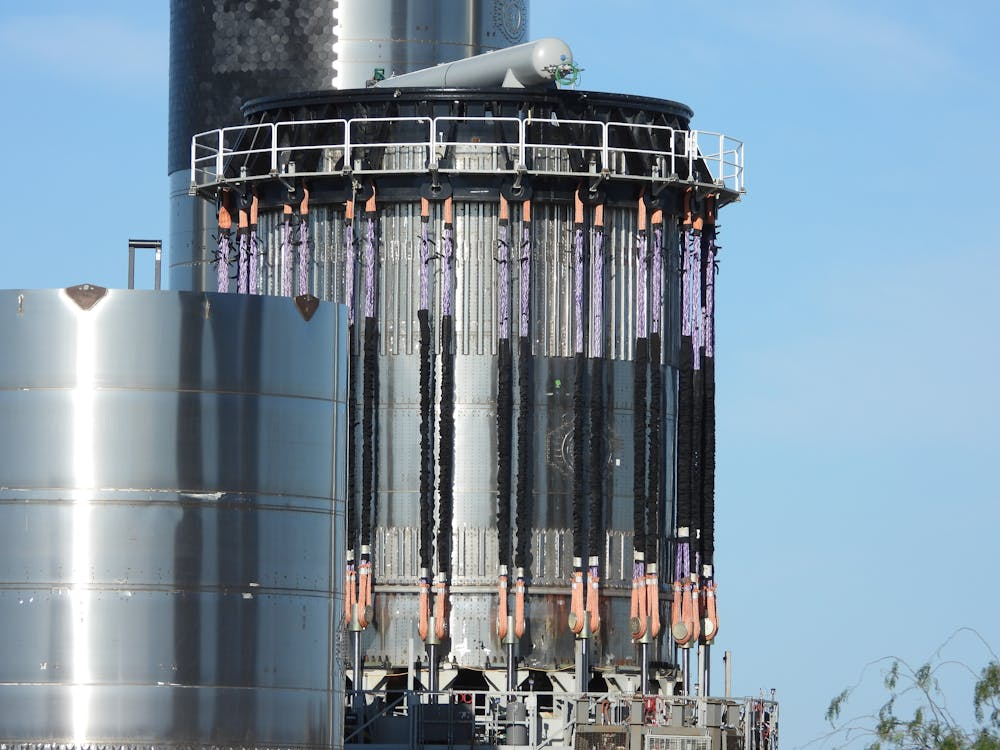
China's primary market raised RMB 8.02 billion in Q1 2026, up 4.6 times year-on-year, with multiple private rocket firms pursuing listings. The secondary market's commercial space sector also outperformed, surging over 30% from early to mid-2026 and exceeding RMB 12 trillion in market cap, with significant room for core stock valuation recovery.
Capital is currently focused on three key areas: reusable rocket industrial chains, batch satellite manufacturing and core payloads, and downstream applications and operations.
For investors, balancing pacing and risks is crucial. Short-term opportunities lie in catalyst-heavy segments such as reusable rocket verification and batch satellite launches, favoring leaders in rocket engines, T/R modules, and star trackers. Mid-term strategies could involve satellite scale manufacturing, core component localization, and ground terminal penetration. Long-term bets should target platform-based enterprises in satellite operations, data services, and space applications.
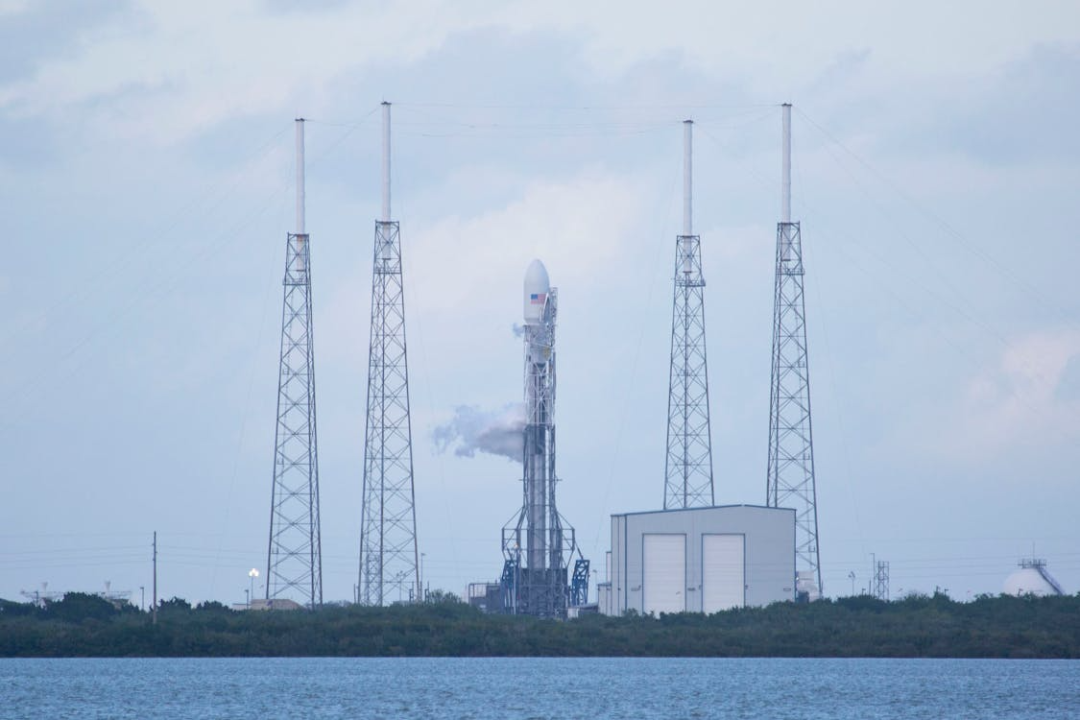
Meanwhile, risks such as technology verification failures, intensified competition, and regulatory changes warrant caution, particularly in low-barrier segments with order uncertainties.
Overall, the commercial space industry has moved beyond conceptual hype into a value-realization phase, representing a high-conviction growth sector in hard tech for the next 3-5 years. Investing in commercial space essentially means positioning for humanity's long-term space expansion and China's space power strategy, prioritizing enterprises with high technical barriers, strong industrial chain positions, and order certainty through a long-term lens.
-
![]()
Proposed to Raise 955 Million Yuan through Private Placement! Huicheng Vacuum Boosts Localization of Ultra-Precision Optical Coating Equipment
-
![]()
Cash Flow Soars 13-Fold! What Major Strategic Move is Wuhan Five Square Optoelectronics Planning?
-
![]()
Leaked Design of vivo X500: Reverts to Circular Camera Module in Top-Left Corner, Pays Homage to Classic X90 Aesthetic
-
![]()
DeepSeek Shows Signs of Foraying into Code Agents, Launches WeChat Official Account Focused on Harness
-
![]()
Auto Companies Deny Claims That ‘Cooperation with Huawei Is Non-Essential’, as Huawei Transforms into a ‘Public Platform’
-
![]()
Starship to Independently 'Return to the Launch Tower': SpaceX's Ambitions Extend Beyond Rocket Building to Dominating Space Transportation
-
![]()
Starship Set to Independently 'Return to the Launch Tower': SpaceX is Revolutionizing Space Transportation, Not Just Building Rockets
-
![]()
Anthropic and OpenAI Face Off Against Deepseek