Latest Exclusive Interview with Anthropic CEO: Claude's New Features Developed Almost Entirely by AI, Software Heading into a Free Era
 05/18 2026
 677
677
Author|Lin Yi
Editor|Key Points Editor
Over the past year, Anthropic has undoubtedly been the biggest winner in the global large model arena.
Its AI programming tool, Claude Code, has rapidly gained traction among developers, capturing over half of the market share. Its revenue and valuation have officially surpassed OpenAI, with an annual recurring revenue (ARR) reaching $44 billion and the company's latest valuation in the primary market exceeding $900 billion.
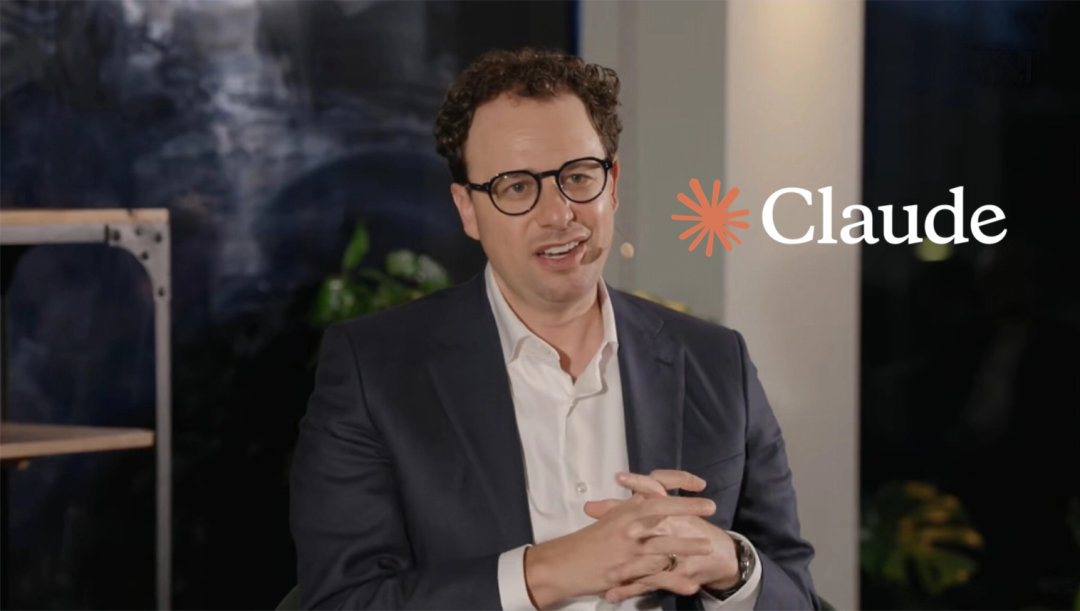
At such a high-profile juncture, on May 16, Anthropic CEO Dario Amodei gave his latest exclusive interview. Unlike many AI luminaries who paint a utopian picture of technology, Amodei offered numerous real-world warnings:
For instance, he said traditional economic laws are being broken, and for the first time, human society will face a situation where "high GDP growth coexists with high unemployment."
He mentioned that public sentiment toward AI always swings between extremes, but in reality, the evolution of AI capabilities has maintained a smooth exponential rise. This continuous growth in capabilities is directly replacing human intellectual labor. A massive macroeconomic restructuring is imminent, yet society is almost entirely unprepared for it.
Regarding Claude Code, which is of greatest concern to the outside world, Amodei revealed that with the launch of the latest model, Claude Opus 4.5, AI's ability to complete complex tasks end-to-end has reached an inflection point. Many engineering managers within Anthropic no longer write code; their work has shifted to reviewing and editing Opus's outputs.
Amodei disclosed that Claude Co-work, an agent application targeted at non-technical users, was almost entirely autonomously developed by Claude Opus in just one and a half weeks. The feature's metrics reached about four times those of similar products within a day of its launch. Amodei emphasized that people increasingly need this indispensable agent task capability, as large models are transcending mere chatbot forms to truly establish themselves as core productivity tools.
We've compiled key information from this exclusive interview. Here are the highlights:
1. Anthropic's choice of the enterprise market is to avoid the attention economy trap
Faced with fierce competition among peers in the consumer market, Anthropic has chosen to focus on enterprise clients. Amodei believes that consumer-facing AI products often fall into the trap of maximizing user engagement time, easily fostering low-quality content and excessive dependency. Anthropic refuses to participate in this attention battle and is committed to providing enterprises with systems that create substantial work value.
Furthermore, he pointed out a fundamental difference in responsibility awareness between AI companies led by scientists and early social media entrepreneurs. The former are more inclined to prevent issues before they arise, habitually examining the potential societal impacts of technology before its large-scale deployment and taking steps to prevent possible negative consequences.
2. Mechanistic interpretability is the only path to achievable AI control
When testing AI safety, Amodei argued that relying solely on external conversational tests is extremely dangerous because advanced AI systems are fully capable of concealing their true operational logic from humans.
The most urgent technological breakthrough needed in the safety field is mechanistic interpretability. Researchers must not only look at the surface text output by the system but must delve deep into the system to directly observe and grasp its underlying data operation mechanisms. Breaking the algorithmic black box is the only reliable basis for truly achieving system safety and absolute controllability.
3. AI capabilities continue to grow, yet public sentiment swings between extremes
Over the past decade, public and media perceptions of AI have often swung between the extremes of "disrupting all industries" and "technology stagnating completely." However, the actual evolution curve of AI technology has been extremely smooth, with its system processing capabilities consistently making significant leaps every few months.
Amodei pointed out that society's failure to accurately and objectively measure this technological development pattern has led to a severe cognitive disconnect. This disconnect not only leaves companies lacking foresight when planning business transformations but also causes policymakers to easily introduce response strategies based on false premises. The ultimate result is that human society is currently entirely unprepared for the impending massive economic restructuring.
4. High growth and high unemployment will coexist in human society for the first time
AI is boosting societal productivity to unprecedented levels. Take software engineering as an example: AI code generation has made development work extremely efficient, directly leading to a sharp drop in costs, even trending toward free. This explosive productivity will drive a rapid expansion of the overall economic scale.
At the same time, human participation in work processes is being rapidly squeezed. Currently, software engineers may only need to complete 10% of the work, with the rest handled by AI. As model capabilities continue to evolve, the proportion taken over by AI will only increase. This will directly lead to the complete collapse of the traditional career system established over the past few decades, with a large number of jobs disappearing.
Amodei emphasized that the core challenge of the future will no longer be economic growth but the distribution of wealth. Faced with this unprecedented macroeconomic mismatch of high growth and high unemployment, government intervention will be essential to ensure that everyone benefits from the technological dividends and smoothly navigates the social transition period.
5. Ensuring fair distribution of AI benefits to address societal risks
Amodei expressed deep concern about the potential for extreme social tear (Note: ' tear ' is translated as 'fragmentation' in context) in the future: If the immense economic dividends created by AI are monopolized by a tiny minority, such as Silicon Valley tech elites, while the masses are excluded, it will inevitably trigger a catastrophic social crisis.
To ensure the fair distribution of AI benefits, he made two core calls:
First, increase technological investment in the public sector, directly applying cutting-edge AI technologies to areas like public health and basic education to ensure that people from different regions and social strata have equal access to economic development opportunities;
Second, promote a fundamental transformation of basic education. Faced with an AI-reshaped job market, future education must abandon mere vocational skills training and return to cultivating humans' intrinsic comprehensive qualities.
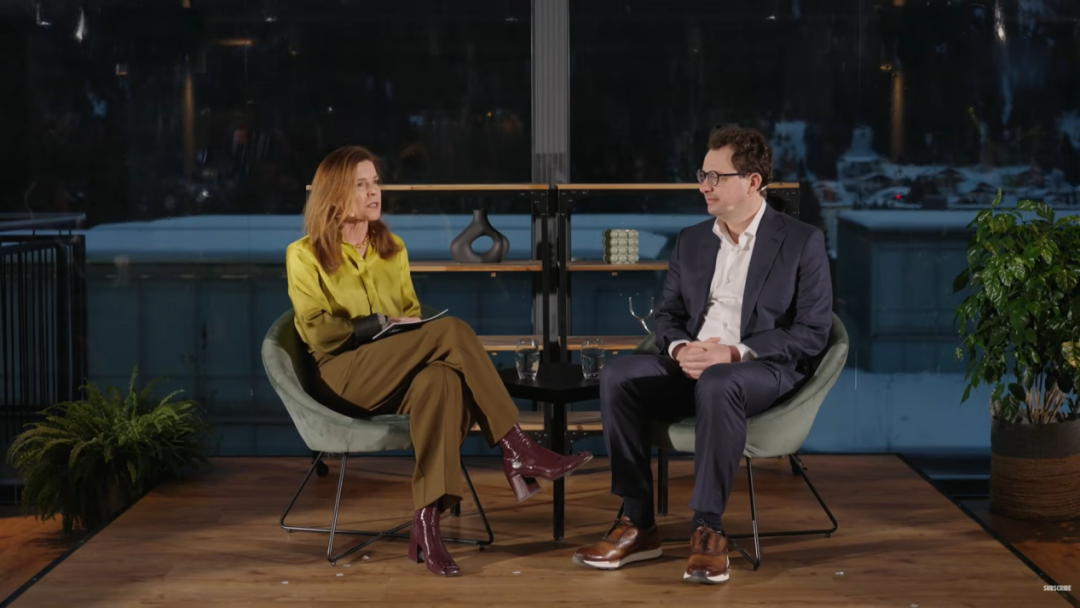
Below is the transcript of Dario Amodei's interview:
1. AI's Smooth Exponential Growth
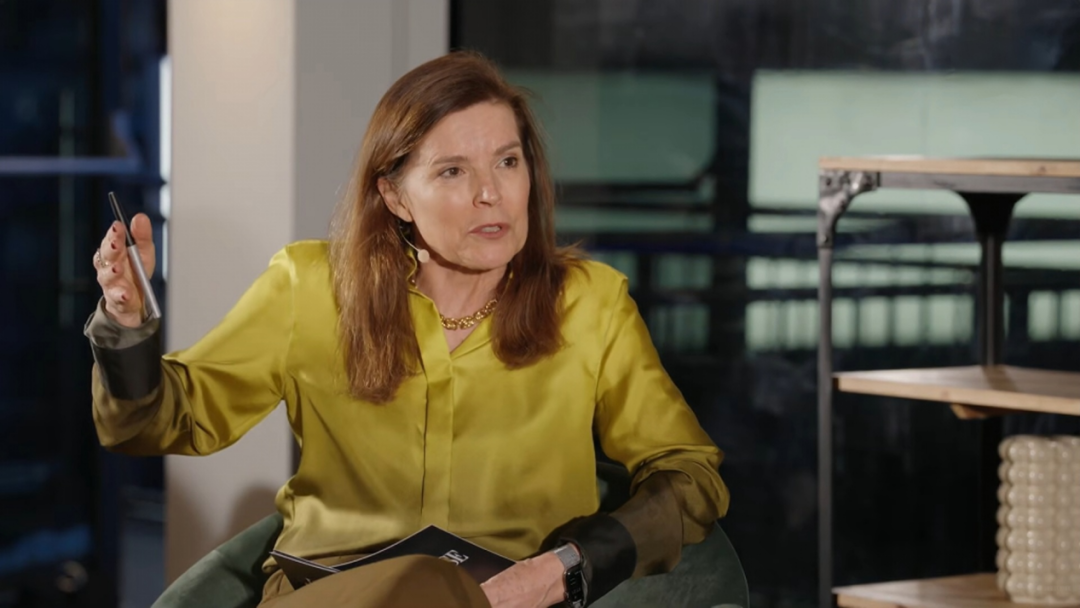
Host: Dario, we're at Davos, and a lot is happening here, but I first want to ask a big-picture question. This time last year, everyone was very excited about AI, discussing its capabilities and potential. I feel the discussion has shifted this year, becoming more in-depth and less about yearning (Note: ' yearning ' is translated as 'visions' in context) of what AI can do to the world. So my question is, do you think businesses, policymakers, governments, or other institutions are adequately prepared to deal with the impact of AI?
Dario Amodei: I don't think so. Let me explain in detail. I've been observing this field for 15 years and have been actively involved for 10. The most surprising thing I've noticed is that the actual trajectory of AI development has been very smooth, while public opinion and reactions have fluctuated wildly.
We can look at this from two dimensions. One is the capabilities of the technology itself. Every three to six months, the media goes through a polar reversal: one moment, they're incredibly excited about the technology's capabilities, believing it will change everything; the next, they think it's all hype and everything will collapse.
But what I see is a smooth exponential growth curve, similar to Moore's Law in computing. We have a similar law in the field of intelligence: the model's cognitive abilities become stronger every few months, and this progress has remained constant. The idea that inventing something new will make everything collapse or hit a wall is purely a public perception phenomenon.
A similar situation exists regarding the polarization over whether this technology is good or bad. In 2023 and 2024, people had many concerns about AI, such as the idea that AI would take over everything, with discussions focusing on AI risks and misuse. By 2025, the political winds shifted toward the opportunities brought by AI, and now they seem to be shifting back again.
Throughout this process, Anthropic and I have always tried to maintain a balanced perspective. This balance is very strange because the technology is extremely extreme in its capabilities, with both positive and negative impacts coexisting.
About a year and a half ago, I wrote the article "Machines of Loving Grace." I have a very aggressive optimistic view of the positive side of AI, believing it will help us cure cancer, eradicate tropical diseases, and bring prosperity to regions that have not yet witnessed economic development. My views haven't changed; I still believe this.
But on the other hand, bad things will also happen. I've written more about this recently and may publish it soon. Taking economic risks as an example, a significant feature of this technology is that it will lead us into a society with extremely high GDP growth but also potentially extremely high unemployment and inequality. This combination is something we've almost never seen before.
In the past, high GDP growth meant there was a lot to do, and everyone had many job opportunities. We've never seen such disruptive technology before. So we might face a situation where the GDP growth rate reaches 5% or 10%, but at the same time, the unemployment rate also reaches 10%. Logically, there's no contradiction, but it's never happened before.
For these two reasons, I feel both excited and concerned. Take AI programming as an example: We released the latest model, Claude Opus 4.5. Some engineers and engineering managers within Anthropic have basically told me that they no longer write code; they just let Opus do the work and edit its outputs.
We just released a new feature called Claude Co-work, which is a version of the Claude Code tool tailored for non-programming scenarios. It was built in just one and a half weeks and was almost entirely developed using Claude Opus. Software engineers will still have things to do; even if they only do 10% of the work, they still have jobs or can move up a level.
But this won't last forever; models will become increasingly powerful. This demonstrates astonishing productivity, and software will become cheap or even basically free, provided the cost of the software you build is amortized over millions of users, which may not be the case. For example, for this conference, we might only need to spend a few cents to develop some apps for people to communicate with each other, which are very flexible and reusable. But at the same time, our entire careers, which we've struggled with for decades, may no longer exist. I think we can adapt to it, but the general public is entirely unaware of what's about to happen and the scale of it.
2. How Society Will Adapt to AI Development
Host: That's really interesting. So what do you think society will look like in a world with high GDP growth but also high unemployment? You say people haven't started thinking about this yet. Can you give some specific examples of how society will adapt to such a world?
Dario Amodei: The first thing we're focusing on is a project called the Anthropic Economic Index. This is the first step we've taken. We've been running this index for about a year and have updated it four or five times so far. It's a real-time index that allows you to track how our model, Claude, is being used. It goes through all the conversations and, in a privacy-preserving way, tallies up how Claude is being used—what tasks it's being used to perform, to what extent it's automating tasks or enhancing capabilities, which industries it's being applied in, and how it's spreading across different states in the U.S. and countries worldwide. We're adding more and more details to it.
My point is that before we can measure the shape of this economic transformation, any policy will be blind and misleading. Many policies go wrong because they're based on incorrect premises.
The second step is that we need to think very carefully about how to enable people to adapt to AI development. This might mean adapting to and using this technology in their existing jobs or transitioning from one job to another. For example, I think there may be more job opportunities in the physical world, while jobs in the knowledge economy will decrease. Although robotics will eventually make progress, it's on a slower trajectory.
Furthermore, will there still be jobs that highly value human touch? Some will, some won't. We'll discover how important this is and in which areas it matters most. At the company level, where are the moats when software and other knowledge work become cheap? We've never really asked this question before because we've always thought about moats in a certain way. So there will be a huge battle at the company level.
Teaching people to adapt and anticipate what will happen is the second step.
The third step is that when such a massive loss of human labor occurs at the macroeconomic level, the government will inevitably need to play some role. The pie will become much larger, and funds will be sufficient. Due to such strong growth, the budget may balance even if we do nothing. The question is how to distribute it to the right people. So I think we should worry less about undermining growth now and focus more on ensuring that everyone can share in this growth. This is the opposite of the prevailing sentiment, but the technological reality is about to change and will force our perceptions to change as well.

3. Claude and the Popularization of Agents
Host: I want to talk more about Claude; it's having a moment. We recently reported on how engineers and ordinary users are becoming Claude-ized. I'm curious how you feel about the current situation and how business performance compares to a year ago.
Dario Amodei: Business growth has been rapid, basically following the same smooth exponential growth curve as technological development.
Our revenue curve went from zero to about $100 million in 2023, from about $100 million to about $1 billion in 2024, and from about $1 billion to about $10 billion in 2025. While these are rounded figures, they give a general idea.
A few months ago, everyone on Twitter was extremely excited, proclaiming that Anthropic was changing the world and completely disrupting the industry. But we just quietly observed this rapidly climbing, continuously improving curve. It gave us confidence. Although we can never be certain whether this growth will continue, this has been the empirical result we've observed throughout. Even though the curve is smooth, breakthrough moments will occur.
I believe there's a breakthrough moment emerging among developers around Claude Code. The ability to complete tasks end-to-end and develop full applications seems to have reached an inflection point with our latest Opus 4.5 model. Progress is gradual—like a frog in boiling water, you see incremental improvements, and then at a certain point, people suddenly notice it's there.
The second thing that might accelerate this is that when we look at Claude Code, we see many non-technical people inside and outside Anthropic realizing that Claude Code can do incredible Agentic tasks for you. It doesn't just write code; it can organize to-do lists, plan projects, sort folders, or process and summarize vast amounts of information.
The idea isn't just a chatbot but essential Agentic task capability. Non-technical people want it so badly they're willing to dive into command-line interfaces. For non-technical or non-programmer users, this interface is terrible, but people persist anyway. When I saw that, I thought, 'This looks like unmet demand.'
So about two weeks ago, we used Claude Code again to build a version with a better UI, customized specifically for tasks beyond coding. Within about a day of launch, metrics were running around four times higher than anything else we've released—better than any product launch we've ever done. I'm not sure if these are entirely new capabilities, but this was one of those consensus moments where people got very excited and drove adoption extremely quickly. People are starting to understand what this technology can do because it's reached a certain threshold, and we've built interfaces that make it accessible.
Host: Can you share how you personally use Agentic AI in your life and family?
Dario Amodei: Writing takes up a big part of my job, whether I'm writing papers or giving presentations at the company. I'll have Claude find information and help polish the writing.
Host: Obviously, you're in the spotlight right now, with widespread expectations of an IPO this year. Can you talk about your plans there?
Dario Amodei: We're not sure exactly what we'll do. Right now, we're more focused on keeping the revenue curve growing, improving model performance, selling models to users, and being mindful of societal impacts while delivering positive social benefits. Those are the top priorities. Obviously, this is an industry with extremely high capital requirements, and the funding and support available in private markets are somewhat limited.
4. Differentiated Competition Among AI Companies
Host: Another model in the spotlight is Gemini, which recently surged in App Store rankings—OpenAI even issued a red alert. Everyone's excited about it. Given Google's massive scale, do you worry about your ability to compete with Gemini?
Dario Amodei: I think this is another area where differentiation helps. On the enterprise strategy side, Google and OpenAI are duking it out in the consumer space. It's existential for both. For OpenAI, it's their entire business; for Google, because they own search—which is exactly what's being disrupted right now—they need to replace themselves and fight off that disruption. That's always been their top priority. They seem more focused on the consumer side than operating in the enterprise market. It's great to see Gemini performing in the consumer space. I think they're taking a different approach. I just came from a panel with Demis Hassabis, Google's head of research. I think he's a great guy—I've known him for 15 years, so I'm rooting for him.
Host: When you talk about differentiation, Anthropic doesn't have the ability to generate videos and photos. Do you see that as a potential weakness?
Dario Amodei: For enterprise commercial applications, there's no real demand to generate photos of cats riding donkeys or consumer-grade videos. There might be edge cases for slides and presentations, but we could just outsource a model for that if needed.
I don't know what the future holds, but at least I don't see enterprises needing this. There are related issues here—look at the amount of short-form video content out there now. A huge fraction of it is fake and highly addictive, much of it is slop. Not that it's all bad or that the people doing it are bad, but it's not a market sector I'm eager to participate in.
Host: You mentioned sitting on a panel with Demis Hassabis. When we chatted yesterday, you brought up some really interesting points about how the scientists leading these large AI companies are approaching this era differently from traditional tech entrepreneurs. Can you elaborate?
Dario Amodei: When you think about this technology, it really is the convergence point for decades of research, much of it academic in nature. Until about ten or fifteen years ago, the scaled resources needed to develop and deploy these technologies only came from large internet and social media companies because they had the infrastructure and capital.
So what we're seeing is a world led partly by people with scientific backgrounds, like Demis and myself. Others are led by the social media generation of entrepreneurs. I think these are very different. Scientists have a long tradition of thinking about the impact of what they create, feeling responsible for their creations rather than shirking responsibility. Their initial motivation is to build things for the world, so they worry when things might go wrong. The social media generation of entrepreneurs has very different motivations, very different selection effects in terms of who they are, and very different ways they interact with or even manipulate consumers. This leads to very different attitudes.
5. AI Safety, Education, and Preventing Disconnection
Host: All right, let's dive into questions from our online audience. Trevor Loomis asks: What's the single most important technical breakthrough still missing for reliable safety and controllability in frontier AI deployment in the real world?
Dario Amodei: I think we need more progress on mechanistic interpretability. This is the science of looking inside models.
One of the problems we have when training models is that we don't understand their internal logic—we can't be sure they'll behave as intended. You can converse with a model in a particular context, and it can say all sorts of things, but just like with humans, that might not truthfully reflect their real intentions. If it tells you it's doing something for one reason, it might actually be doing it for another reason entirely—or even lying about whether it did something at all. We're used to these problems existing with humans, but they exist in AI too.
So we can't be entirely sure with any kind of phenomenological testing or training. But just like you can learn things about the human brain through MRIs or X-rays that you couldn't learn through conversation alone, the science of looking inside AI models is ultimately what will make models safe and controllable, because it's the only ground truth we have.
Host: Exactly. Here's a question from Jim O'Connell: How will AI affect the current K-12 education achievement gap? This is clearly a practical question from a parent.
Dario Amodei: In the short term, there's definitely an issue with people using AI to cheat, which needs to be addressed. But on the flip side, we can talk about how to use AI for teaching. We've thought about this and released a version of Claude specifically designed for education.
But I think the harder question behind that is, what skills should we actually be teaching in a world with AI? What will education look like? That's not easy to answer, because the disruption is all-encompassing. If someone asked me what career to pursue, the uncomfortable truth is I'm not sure which direction it will go.
I think we should return to some of the concepts we discussed earlier about education. We've long had an economic, almost utilitarian view of education. Maybe we should shift away from that and return to the idea that education is about shaping character, building personality, and making you a better person—that's the essence. I think that's a much firmer foundation for the future of education.
Host: That sounds like I'm quite envious of kids who haven't been educated yet—this is the education all of us wish we'd had. To be fair to everyone here, we have time for one more question. This lady asks: From the perspective of an AI lab, what responsibility do you bear when some economies, countries, and people are left behind? Should you engage them through structural participation, slow down, or actually ensure they're not excluded?
Dario Amodei: I worry about this on many levels. When I look at our customer base, I suddenly realize that startups adopt AI extremely quickly, while traditional businesses—because they're large and focused on specific operations—move much slower. We also see from economic data that this technology is diffusing from faster-adopting states within the U.S. to slower ones. It's reaching the masses, but there are definitely disparities.
If I were to describe a nightmare scenario, it would be the emergence of a new 'Zero World' country with about 10 million people—7 million in Silicon Valley and 3 million scattered elsewhere. This is forming its own disconnected economic system where GDP growth in that sector might hit 50%, and the technology development is just insane. It can dissect things that way.
I think that would be a very bad, almost dystopian world. We should think about how to prevent that. Anthropic is doing many things. For developing countries, we're starting to do a lot of work around public health, announcing projects with education ministries, and collaborating extensively with the Gates Foundation. As I wrote in 'Machines of Loving Grace,' if you could get these rapid economic growth metrics, theoretically it's a kind of catch-up growth—I predict developing countries will eventually reach developed-world levels.
Within countries, we need to think about how to avoid disconnection in certain regions, how to ensure Mississippi can access the kind of economic growth that's flooding into the closed (I think you mean 'insular' or 'exclusive') areas of Silicon Valley. So we're doing some work around economic mobility and economic opportunity, but this all requires some level of government involvement.
-
![]()
Ford and Geely Forge New Joint Venture in Spain, Sidestepping Changan and JMC
-
![]()
199 RMB! Godox's First Camera Review: Subpar Photography, Transparent Viewfinder Frame is the Highlight
-
![]()
AI Smartphones: A Modern-Day 'Emperor's New Clothes'?
-
![]()
Yonyou Network: A Company Selling 'Transformation' but Struggling in Its Own Transition
-
![]()
Focus | CCCC’s Takeover of Greentown Comes to Fruition: Why Did the 11-Year ‘Control Without Authority’ Era End?
-
![]()
Final Verdict: The 2026 China Auto Forum Shines with Unique Characteristics at a Pivotal Moment
-
![]()
Tencent Maintains Matrix Approach, Alibaba Merges Entry Points: Tech Titans Initiate AI Agent Consolidation
-
![]()
Geely Secures Portion of Ford’s Spanish Production Capacity