68% Surge in Market Enthusiasm: The Game Behind Cerebras' Rise to Fame and the AI Chip Race
 05/19 2026
 576
576

According to a May 15 report by the Wall Street Journal, AI chip company Cerebras made its debut on Nasdaq, experiencing a remarkable 68% surge and achieving a market capitalization of $67 billion. This event has sparked widespread discussion within the global tech investment community.
Senior tech commentator Dan Gallagher from the Wall Street Journal put it succinctly: This represents a collective wager by the market on "NVIDIA fatigue."
Behind this figure lies a signal that is far more worthy of exploration than mere "stock price growth."
01
What Did Cerebras Do Right?
To grasp the significance of this 68% surge, we must first understand the nature of Cerebras as a company.
Its core product consists of wafer-scale chips—essentially, utilizing an entire wafer without cutting it to create a single, massive superchip.
Compared to traditional GPUs, this design eliminates the need for data transfer between different chips, significantly reducing latency and enhancing speed.
This technological approach is both highly appealing and extremely risky.
Mass-producing wafer-scale chips is an incredibly challenging task. Over the past three decades, numerous companies have attempted and failed. Cerebras stands out as one of the few that have succeeded.
However, Cerebras' true "competitive advantage" lies not solely in its technology but in its strategic positioning.
It precisely targets the GPU's weakness—in certain AI scenarios where latency is of utmost importance (such as real-time inference and code generation), traditional GPUs prove inefficient. With "ultra-low latency," Cerebras has carved out a unique ecological niche that NVIDIA cannot fully dominate.
This is the survival wisdom of startups: Rather than attempting to outcompete NVIDIA in its strongest areas, establish your foothold where it cannot reach.
02
Why the Market Is Willing to Give Cerebras a 134x Price-to-Sales Ratio
Cerebras' quarterly revenue stands at just $171 million. Based on this metric, its valuation should reasonably be a few dozen times its revenue. Yet, the market has assigned it a 134x price-to-sales ratio—what does this signify?
It indicates that the capital market is not betting on Cerebras' current performance but on the potential for "AI computing diversity."
The Wall Street Journal's commentary hits the mark: This represents a collective wager by the market on "NVIDIA fatigue." NVIDIA's dominance is overwhelming, with a market capitalization of $5.7 trillion, effectively monopolizing the global AI training market.
However, precisely because of this, the market's desire for a "second option" is extremely strong—any company that can demonstrate "there's a viable path beyond NVIDIA" will receive a substantial valuation premium.
This logic explains why Cerebras can achieve a $67 billion market capitalization with just $171 million in revenue: It's not selling today's chips but offering an option on the "future computing landscape."
03
Global AI Chip Landscape: Three Tiers of Competitors with Different Logics
Cerebras is merely one piece in this grand chessboard. If we categorize global AI chip players into three tiers, the differences in logic become evident:
Tier 1: NVIDIA—the "ecosystem monopolist." It doesn't merely sell GPUs; it sells the CUDA ecosystem, the usage habits of millions of AI engineers worldwide, and decades of community accumulation. This barrier cannot be overcome by simply offering a better-performing chip.
Tier 2: Cerebras and others—the "differentiated challengers." They avoid competing where NVIDIA excels and instead establish footholds in scenarios that NVIDIA neglects or undercovers. Low latency, specialized scenarios, and unique architectures—this is the survival strategy for startups.
Tier 3: Google, Amazon, Baidu—the "ecosystem players." These companies develop their own chips not to sell them but to provide lower-cost computing power for their AI ecosystems while reducing reliance on NVIDIA.
They do not aim to outcompete NVIDIA in the chip market but to achieve more efficient synergy within their ecosystems.

(Source: Cerebras official website)
The competitive logics of these three tiers are entirely distinct.
Tier 1 engages in an ecosystem war, Tier 2 in a single-point breakthrough war, and Tier 3 in a synergy efficiency war. Understanding this tiered structure helps elucidate why strategies vary so widely among AI chip companies.
04
In China: Where Do the Opportunities Lie for AI Chips?
Returning to the Chinese market. What does Cerebras' IPO signify for China's AI chip industry?
Firstly, market expectations for "domestic AI chip alternatives" are on the rise. Amidst uncertainties in the international supply chain, domestic large model developers, cloud service providers, and government AI computing centers are all accelerating their search for domestic alternatives.
This is not a choice but a necessity. China's AI chip market is experiencing a historic surge in demand.
Secondly, the real barrier is not single-point technology but ecological synergy. NVIDIA's greatest fear is not its chips but the CUDA ecosystem—the world's top AI engineers all code within this framework.
The real challenge for any domestic chip is not "outperforming NVIDIA" but "convincing developers to migrate."
This implies that the AI chip company that succeeds in China will likely not be the one that "builds a chip stronger than NVIDIA" but the one that "deeply integrates with China's AI ecosystem and makes developers feel at ease."
The first wave of opportunities in AI chips belongs to bold pioneers. The second wave will favor those who can transform technology into products, products into ecosystems, and ecosystems into commercial closed loops.
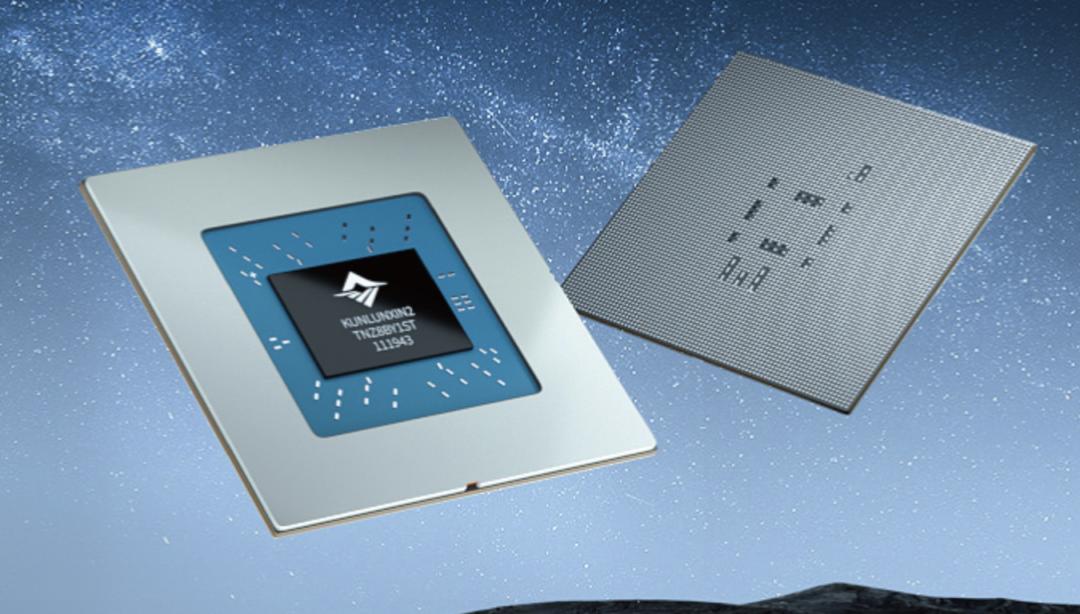
According to related media reports, Baidu's AI chip subsidiary Kunlunxin has filed for a Hong Kong IPO.
(Source: Kunlunxin official website)
While Cerebras narrates an extreme technology story on Nasdaq with its "wafer-scale chips," the Chinese market awaits its own AI chip narrative—not about how extreme the technology is but whether it can truly embed itself into China's AI industry as indispensable infrastructure.
These are two different paths. Cerebras chose "single-point extremism," proving that chip technology ceilings can still be broken.
China's opportunity may lie in "ecological integration," proving that a chip's value lies not in how impressive its specs are but in whether developers can use it effectively and whether the industry can thrive with it.
05
Three Insights
Cerebras' IPO offers three thought-provoking signals to anyone following the AI chip space:
Firstly, the valuation logic for AI chips is shifting from "revenue-driven" to "ecological niche-driven." Capital markets are willing to pay a substantial premium for "possibility" as long as a company proves its irreplaceability in a critically important field.
Secondly, AI chip competition is shifting from "single-point technology" to "ecosystem." In the future, whoever possesses a more complete ecosystem, more efficient synergy, and more developers will dominate the market.
Thirdly, for China's AI industry, computing autonomy is not merely a business opportunity but a historical imperative. Cerebras' Nasdaq debut proves global capital's excitement for this sector. In China, someone is already on the journey.
With its 68% first-day surge, Cerebras has ignited a torch for the global AI chip race.
In this race, some gain entry through extreme technology, some build barriers through ecological synergy, and some form barriers through time accumulation.
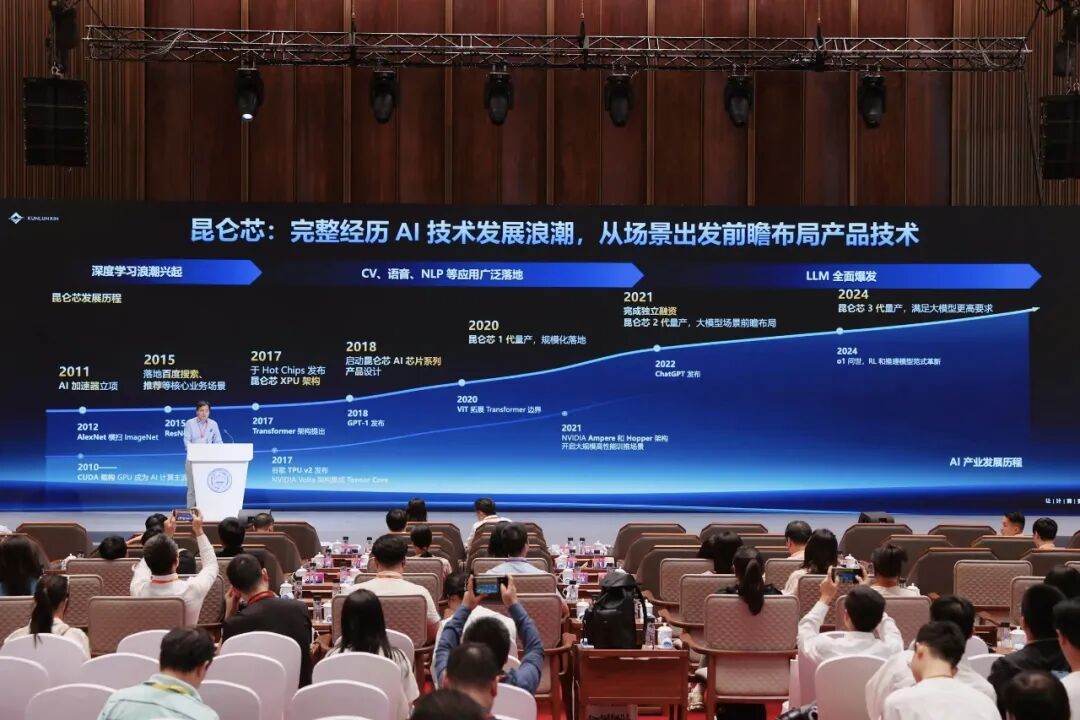
Different paths, no right or wrong—only suitability. In China, Baidu's "chip-cloud-model-infrastructure" full-stack AI strategy is providing a unique catalyst for Kunlunxin's ecological development.
These four layers are not simply stacked but interlocking, mutually driving flywheels.
Kunlunxin's computing demand drives cloud optimization, and cloud deployment scale reduces chip costs; large model training demand validates chip performance, and chip performance iterations, in turn, support more powerful model training.
(Source: Kunlunxin Technology official WeChat account)
Compared to Cerebras' "lone wolf" approach, Kunlunxin's ecological foundation is far more solid.
The massive application demands within Baidu's ecosystem serve as Kunlunxin's most reliable stress test field and best endorsement for ecological expansion.
This is precisely the embodiment of Baidu's long-termism spirit.
In 2017, when the entire Chinese internet was chasing mobile payments and sharing economy trends, Baidu quietly assembled a chip team and embarked on a long journey of self-research.
For nine years, Baidu did not chase trends or tell the fastest stories but used time to exchange for space—refining products through real-world scenarios, accumulating barriers through sustained investment, and building moats through ecological synergy.
True long-termism is not about being slow but about doing the right things at the right time and patiently waiting for compounding returns.
Cerebras' IPO proves global capital's optimism about the AI chip sector.
Kunlunxin's Hong Kong IPO represents a trump card refined over nine years by China's AI industry.
-
![]()
Focus | CCCC’s Takeover of Greentown Comes to Fruition: Why Did the 11-Year ‘Control Without Authority’ Era End?
-
![]()
Final Verdict: The 2026 China Auto Forum Shines with Unique Characteristics at a Pivotal Moment
-
![]()
Tencent Maintains Matrix Approach, Alibaba Merges Entry Points: Tech Titans Initiate AI Agent Consolidation
-
![]()
Geely Secures Portion of Ford’s Spanish Production Capacity
-
![]()
Tesla Stalls This Second
-
![]()
Elon Musk's 'Money-Burning' Spree: All Car Sales Profits Poured into AI
-
![]()
Why Did Tesla’s Profits Drop and Cash Flow Go Negative?
-
![]()
AI Titans Are All in the Red: Time for Intelligent Driving Car Buyers to Reassess?