Before Agents Can Spend My Money, They Must First Pass the Trust Test
 06/15 2026
 422
422
For AI-powered payments to gain widespread acceptance, trust issues must be addressed first and foremost.
In recent months, major payment platforms such as Alipay, WeChat Pay, JD Pay, ByteDance, and UnionPay have been actively rolling out payment solutions tailored for intelligent agents, all based on their respective business ecosystems. This trend underscores how AI is reshaping the payment landscape, particularly through the automation capabilities of agents, which are now handling real-world transactions.
Alipay, for instance, has revealed that its AI payment system has successfully processed a cumulative total of 300 million intelligent agent payments and supports 95% of the general-purpose intelligent agent frameworks currently available in the market. This milestone signifies that a comprehensive AI payment chain has been established and is now poised for large-scale commercialization.
Simultaneously, the role of payment executors is evolving from human-only to a collaborative model involving "joint decision-making by humans and intelligent agents (Agents)."
Take, for example, the scenario where users order coffee using intelligent devices like AI glasses or intelligent agents such as QianWen. They can simply voice their needs without having to use their phones. The AI assistants embedded in these devices can automatically handle the entire transaction process, from placing the order to making the payment.
Intelligent cockpits are also emerging as novel payment scenarios. When a vehicle enters or exits a parking lot, the system automatically identifies and displays a card showing the parking duration and fee. The user can then confirm verbally to "exit seamlessly."
However, this raises several questions: Who ensures that the payment does not exceed the budget? Is the payment process secure enough? Can responsibility be traced and assigned in the event of a transaction error?
In my opinion, these concerns essentially boil down to trust issues in AI payments. The primary challenge in allowing agents to spend your money lies not in technology but in whether users trust them.
Zhu Lin, General Manager of AI Payments at Ant Group, once admitted, "The real contradiction today is not a lack of traffic or insufficient technology but the unresolved issue of transaction trust."
Trust is also becoming pivotal in establishing industry standards. In other words, only by reconstructing the "trust logic" in the AI era and resolving trust issues between humans and agents, as well as among agents themselves, can AI payments truly take off.
This is precisely what major AI payment platforms are striving for, each adopting different approaches.
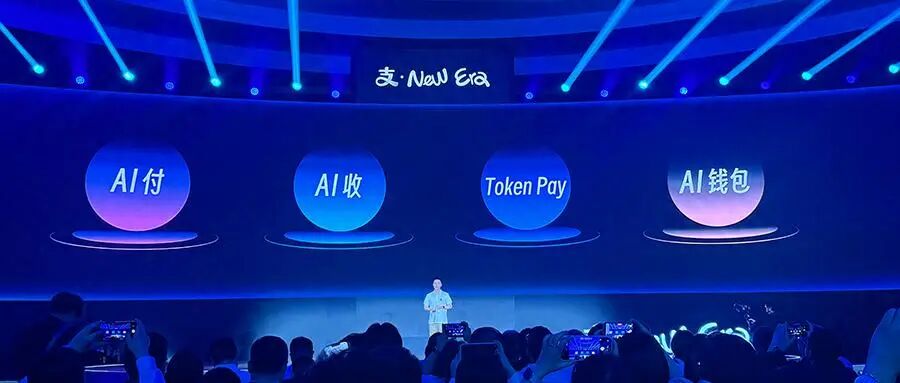 Figure | Alipay AI Pay
Alipay, for instance, while building a full-stack AI-native payment system, is also focusing on two key aspects: First, empowering users with control; second, taking responsibility in case of any issues, as embodied in its well-known promise, "You dare to pay, I dare to compensate."
To give users control, Alipay AI Payments has established three types of authorization models: (1) Basic confirmation mode, where key transactions require manual confirmation by the user; (2) Custom rule mode, where users can set their own transaction conditions, such as automatic payment for physical goods under 200 yuan; (3) Quota authorization mode, where users can set a fixed spending limit for AI agents, allowing autonomous transactions within that limit.
The underlying principle of this rule design is to "give users choice and control directly," enabling them to establish mastery over AI. For instance, the newly released AI Wallet not only manages funds but also authorizations for intelligent agents. Users can manage "agent tasks" in real-time before and during payments, set budgets, limit consumption scenarios, and define authorization boundaries, with complete billing available after payment.
An Alipay spokesperson also stated, "We are not transferring decision-making power to AI but delegating execution power to it. For every payment, the system first reconstructs the user's true intent and then strictly matches it with the authorization."
Regarding the second aspect, Alipay is extending its promise of "You dare to pay, I dare to compensate" and further solidifying it to provide a safety net for users using AI payments. This redefines the cornerstone of trust in the AI era.
JD, on the other hand, is pioneering the "universal language" of AI payments in China, setting rules for how agents spend money.
On June 11, JD officially released the Agent Autonomous Payment Protocol (hereinafter referred to as the JD A2P2 Protocol).
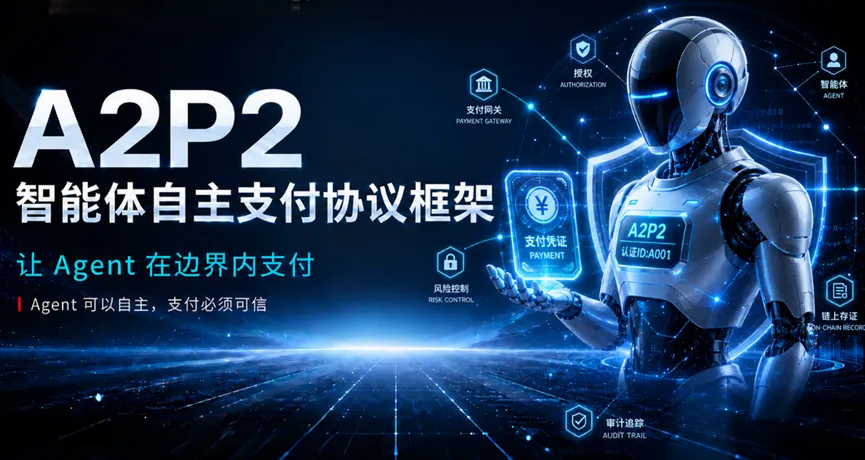 Figure | JD A2P2 Protocol
This is the first protocol in China specifically designed for autonomous payments by intelligent agents, aiming to let users spend money with AI worry-free and with every transaction traceable.
This means that intelligent agents now have the capability to complete payments autonomously within defined rules.
From JD's perspective, in the first half of the AI payment era, the industry competed on scenario coverage, payment channels, and user traffic. In the second half, the core competition has shifted to legislating commercial rules in the era of AI intelligent agents. By launching the A2P2 Protocol, JD aims to establish rules, build trust, and define boundaries for AI autonomous consumption, further securing its core voice in the next generation of digital commerce.
Prior to this, JD had already launched Agent payment products and services such as JD AI Pay and the A2A micropayment system ClawTip, forming a complete closed loop of "scenario implementation—infrastructure improvement—rule definition."
For example, ClawTip, the industry's first A2A micropayment system, focuses on transactions between intelligent agents, equipping AI with dedicated isolated wallets for autonomous inquiry, settlement, and payment. It fills the industry gap in small-value, seamless settlement within the AI ecosystem, laying a solid technical foundation for the implementation of A2P2.
Now, the A2P2 Protocol attempts to establish a set of standardized, implementable, and regulatory-compliant operational rules for the disorderly AI autonomous consumption market. It relies on a three-tier design to control AI's "spending hand."
The first tier is the pioneering six-level graded authorization system, strictly controlling AI spending permissions. The JD A2P2 Protocol references the grading mechanism of autonomous driving and systematically divides the autonomy of intelligent agent payments into six levels, L0 to L5, ensuring that AI autonomous consumption is scalable, bounded, and controllable.
Among them, L0 requires human confirmation for every payment, while L5 allows intelligent agents to make payments completely autonomously. The protocol focuses on the intermediate levels, L3 and L4: L3 allows intelligent agents to autonomously initiate payment requests within a single task, with the system deciding whether to proceed within user-set boundaries; L4 grants intelligent agents more authorization, allowing them to complete payments autonomously as long as the payment amount, scenario, and user elements are within preset ranges.
The second tier involves triple verification + fund isolation to safeguard assets. The JD A2P2 Protocol introduces the ARI (Agent Runtime Identity) mechanism, which simultaneously verifies three types of information for every transaction: user authorization (borne by the individual), agent qualifications (sole authorization), and operating environment (trusted device), preventing unauthorized transfers when agents are "hijacked."
At the same time, the protocol designs an isolated "fund carrier" layer, where AI-dedicated accounts are physically separated from the user's main account, mitigating fund risks from the source through amount, scenario, and time restrictions.
Third, full-chain evidence storage clarifies transaction rights and responsibilities. Every AI autonomous transaction is bound to a delegation certificate, decision log, and execution token, with data that is tamper-proof, fully auditable, and traceable.
In short, the JD A2P2 Protocol is a systematic solution: graded authorization confines AI's payment permissions within a "cage," isolated wallets define risk boundaries, and full-chain evidence storage enables transaction traceability.
Currently, the AI payment sector is entering uncharted territory, with leading players' competitive paths thoroughly diverging, each forming clear differentiated strategies.
Alipay pursues a full-stack infrastructure route, leveraging its mature payment system and risk control capabilities to build a universal AI payment ecosystem and secure the core wallet entry point. WeChat Pay focuses on social traffic empowerment, relying on its super entry and decentralized ecosystem to lightly integrate AI payment capabilities, achieving conversational seamless consumption with extremely broad user reach but lacking a complete fulfillment loop.
ByteDance and Baidu emphasize traffic and tool empowerment, leveraging their own AI products to connect content and transaction chains. UnionPay, as a "national team" player, builds a compliance foundation, focusing on cross-institution interoperability.
The international perspective is also noteworthy. In September 2025, Google, in collaboration with over 60 institutions including Visa and Mastercard, released the AP2 Protocol; Visa also proposed the TAP Protocol.
It is evident that JD's approach is not about competing on users or traffic but about taking the lead in standard-setting. By leveraging its full-chain capabilities in e-commerce, logistics, and supply chain, JD aims to address not just "how to pay" but also "how to make AI transactions fully trustworthy, regulatory-compliant, and traceable."
In an environment where AI intelligent agents are proliferating but the industry lacks unified norms, being the first to launch a universal protocol is essentially about vying for industry voice.
Han Xinyi, CEO of Ant Group, once emphasized that in the Agent era, the logic of traffic will fade, and the logic of trust will rise. Whoever resolves trust issues may secure the Agent ecosystem.
This also addresses the concerns of C-end users: Can I entrust my wallet to AI? Can I share my payment password with an Agent?
Faced with new scenarios of transactions between humans and agents and between agents themselves, the logic of trust still needs to be rebuilt from scratch. If this hurdle is not overcome, the changes brought by AI and its original intention to serve people and life will be compromised by various gray industries and vulnerabilities.
Alipay, JD, and others have taken a crucial step forward, but the industry still has a long way to go to truly reassure the public about entrusting their wallets to agents.
What is certain is that those who gain trust will gain the ecosystem, and those who set the rules will shape the future. The industry standard positioning battle around AI spending has only just begun.
References:
Tang Chen's classmate, 'How Far Are We from AI Payments When Agents Want to "Take Over" Wallets?'
JD Blackboard, 'JD Releases China's First Autonomous Payment Protocol for Intelligent Agents, Setting Rules for AI "Spending"'
-
![]()
Why Zhang Xue? Why HONOR?
-
![]()
Exclusive! Tencent’s ‘Tencent Drive’ with AI-Powered Asset Backup in the Works—A Game-Changing Move
-
![]()
Internal Upheaval in Initial Listing Days: SpaceX's AI Division Faces Accelerated Talent Loss, with 50+ R&D Staff Exiting in 2026
-
![]()
Price War Fails, Chinese Automakers Have No Retreat
-
![]()
Still in the Red but Outpacing Tesla: What Lies Behind SpaceX's $2.1 Trillion Valuation?
-
![]()
Humanoid Robots Go Global: From 'Actors' to 'Workers'
-
![]()
Still Incurring Losses Yet Outpacing Tesla: What Does SpaceX's $2.1 Trillion Valuation Signify?
-
What Kind of Talent Does the Industrial Internet Really Need?