Midea: Nearing Completion in Its Transformation Journey
 06/15 2026
 531
531
Source | Bohu Finance (bohuFN)
“When you're drowsy, someone offers you a pillow.” This proverb perfectly encapsulates Midea's current situation.
Two months ago, at the 2026 Whole-House Smart Home Strategy Launch Event, Midea unveiled its plan to invest over 60 billion yuan in the next three years to spearhead research in cutting-edge domains, with a particular focus on AI, embodied intelligence, and new energy.
Almost immediately after the announcement, WeChat extended an “AI assist.” Recently, WeChat officially launched its AI ecosystem, providing developers with a portal to integrate WeChat's AI capabilities. Midea, as one of the inaugural whole-house smart home beta testers, has successfully completed the integration and adaptation process.
While this may seem like just another instance of smart home interconnection, for Midea, which is striving to transition from a “home appliance manufacturer” to a “technology group,” empowering traditional home appliances with “AI capabilities” has never been a straightforward task.
For this reason, the outside world has often drawn parallels between Midea and Xiaomi—one is a home appliance manufacturer aiming to evolve into a technology enterprise, while the other is a technology company seeking to penetrate the home appliance industry. Despite their differing paths, both are advancing towards a diversified ecosystem in the AI era.
In response, Fang Hongbo, Chairman and President of Midea Group, has repeatedly emphasized that Midea and Xiaomi are not direct competitors on the same trajectory. However, the market remains skeptical—the stronger Xiaomi becomes, the more pressure Midea's stock price faces.
Midea does not view Xiaomi as its primary competitor, but the two are inevitably vying for the AI entry point in the smart home sector. Rather than going it alone, Midea might as well leverage external support.
01 Midea is Encircled by “Xiaomis”
The Chinese home appliance industry has long bid farewell to its heyday.
Data from Aowei Cloud Network reveals that the domestic retail market size for home appliances (excluding 3C) in 2025 was 893.1 billion yuan, marking a year-on-year decline of 4.3%.
In the first quarter of 2026, the market continued its downward trend, with the retail scale falling by 6.2% year-on-year. Aowei Cloud Network predicts that the decline may further widen in the second quarter.
Under the dual pressures of “intense competition” and “shrinking market,” the home appliance market has entered a phase of consolidation, and even Midea, the leader in white goods, is not immune.
In 2025, Midea delivered record-high revenue and profit performance, but its revenue growth rate began to decline quarter by quarter. By the first quarter of this year, Midea's revenue and net profit increased by 2.55% and 2.03%, respectively, showing a significant “slowdown” compared to the double-digit growth in the same period of 2025.
What troubles Midea the most is the emergence of new players who disrupt the conventional rules.
Xiaomi is a prime example. With its internet DNA and a focus on ultimate cost-effectiveness, Xiaomi has entered the home appliance sector, using smartphones as a gateway to firmly bind young users to Xiaomi's smart ecosystem.
From the user's perspective, they are not just purchasing an air conditioner or a TV but embracing a “smart lifestyle.” With just one app, they can effortlessly control the “human-vehicle-home” smart terminals.
This seamless experience has inadvertently altered user consumption habits. Once a user buys a Xiaomi product, they are likely to purchase more smart products due to ecosystem synergy.
The advent of AI large models has further solidified this trend. These models can learn user habits and preferences with every interaction, making it increasingly difficult for users to switch to other ecosystems.
Thus, Xiaomi has successfully carved out a new niche in the increasingly homogenized home appliance competition.
According to a report by third-party research institution Aowei Ruiwo, Xiaomi's TV shipments reached 9.8 million units in 2025, ranking fifth globally. According to statistics from Aiken Home Appliance Network, Xiaomi's market share was about 8.2% in 2025, ranking fourth in the market, closely trailing Midea, Gree, and Haier.
According to Xiaomi's financial report, in 2025, its refrigerator product shipments exceeded 2.8 million units, with a year-on-year increase of over 4%. Its washing machine product shipments exceeded 2.3 million units, with a year-on-year increase of over 18%, both achieving record highs.
The current home appliance market is virtually stagnant, with everyone vying for the same slice of the pie. The faster Xiaomi grows, the more threatened other competitors' market shares become. This is why the outside world constantly compares Midea with Xiaomi.
Fang Hongbo has also addressed this issue on multiple occasions. At the 2024 Annual General Meeting of Shareholders, he said, “Tactically, I take Xiaomi seriously, but strategically, I am not afraid of Xiaomi's entry.”
Recently, Fang Hongbo reiterated, “We have never said that Xiaomi is our biggest competitor, nor do we believe that any brand poses a threat to us. The only threat is ourselves.”
Surrounded by “Xiaomis,” Midea remains unfazed. Fang Hongbo's confidence stems from “efficiency.” He points out that there is limited room for efficiency improvement in the home appliance industry. Therefore, no matter how the battle unfolds, the eventual victory will come at a high cost.
The underlying message is that while the home appliance industry may seem to have a low barrier to entry, if the competition is based solely on pouring in capital and resources, no one can sustain it for long.
Fang Hongbo believes that Midea's competitive edge over the past decade has been efficiency. Unsold products tie up inventory, and excess labor ties up capital. Incorporating every unnecessary expense into the strategic framework is what efficiency is all about.
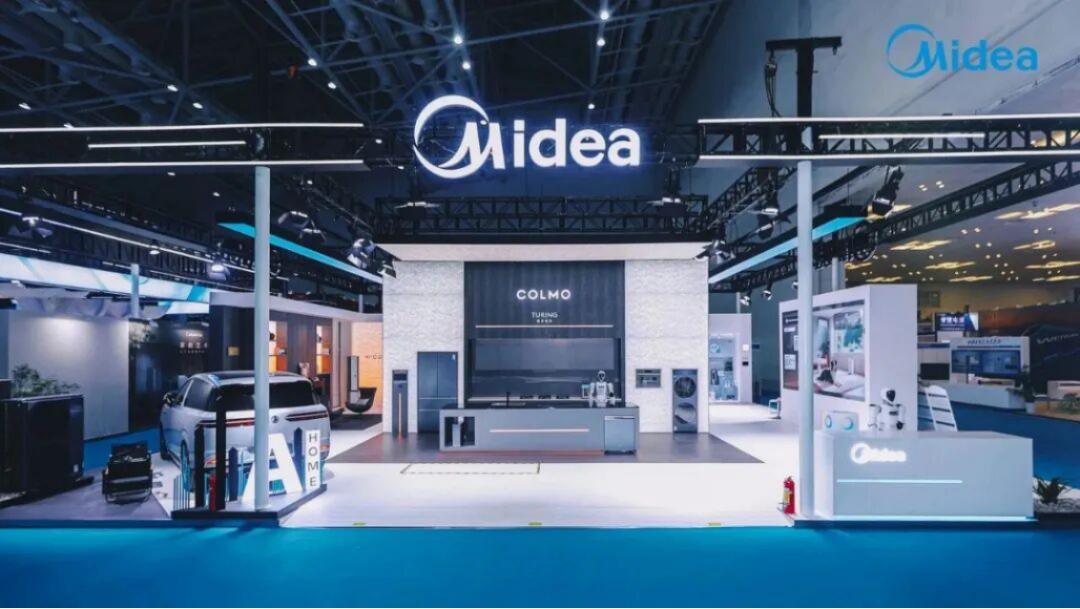
Riding the wave of the “world factory” era, Midea has turned its instinct for low-cost, high-efficiency manufacturing into second nature.
But even the most extreme industrial efficiency has its limits. Especially with more cross-industry players entering the market, the advantages of light-asset supply chain integration and product iteration brought by large model algorithms could pose threats to Midea.
Fang Hongbo is also aware of this. At a recent shareholders' meeting, he mentioned that a company's competitive edge is not set in stone.
“Twenty years ago, scale might have been the advantage. Ten years ago, efficiency was the advantage. But today, efficiency is not an absolute advantage for any company. (Midea) needs to establish a new advantage, and that is technology.”
As early as 2017, Midea boldly announced its transformation from a “home appliance manufacturer” to a globally operating technology group. However, after years of proclaiming technological transformation, Midea is still “on the verge.”
At the consumer (C-end) level, Midea has been attempting to compensate for its shortcomings in smart home appliances through external collaborations.
A decade ago, Midea and Xiaomi explored and developed a smart home ecosystem through cross-shareholding. However, as Xiaomi delved deeper into the home appliance sector, both sides have now divested from each other's stocks.
Strategic collaborations may look “ideal,” but the feedback is not always satisfactory.
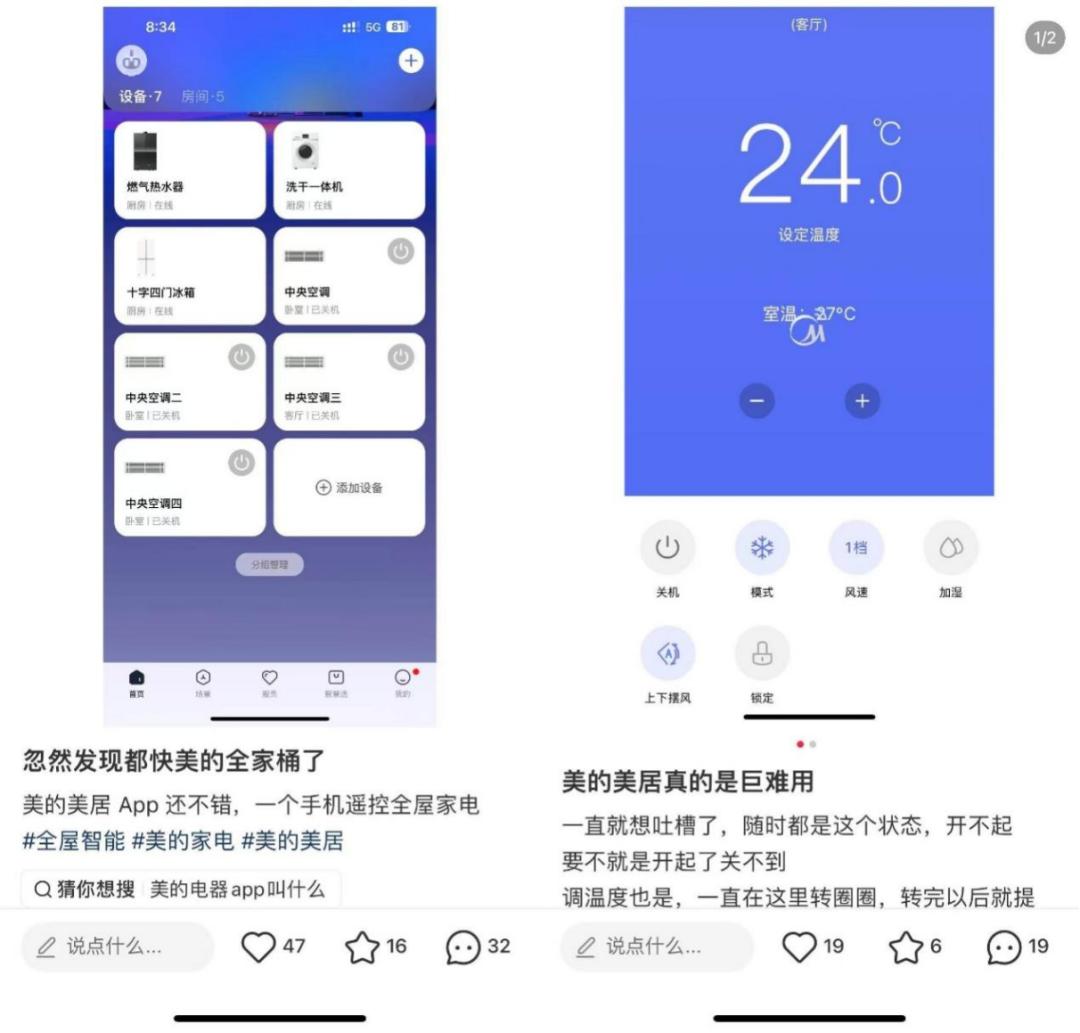
On social media, user reviews of Midea's whole-house smart home are mixed. Some complain that the app operation is too cumbersome, and device interconnection is unstable. However, some users find the smart functions quite useful, such as the air conditioner's “anti-direct blow” feature.
It is evident that Midea excels in product research and innovation, but smart applications involve app design, interaction logic, and IoT experience—areas where Midea, not being a technology company by origin, still has room for improvement.
At the business (B-end) level, Midea has also made significant acquisitions and investments to venture into new sectors such as robotics, new energy, and building elevators.
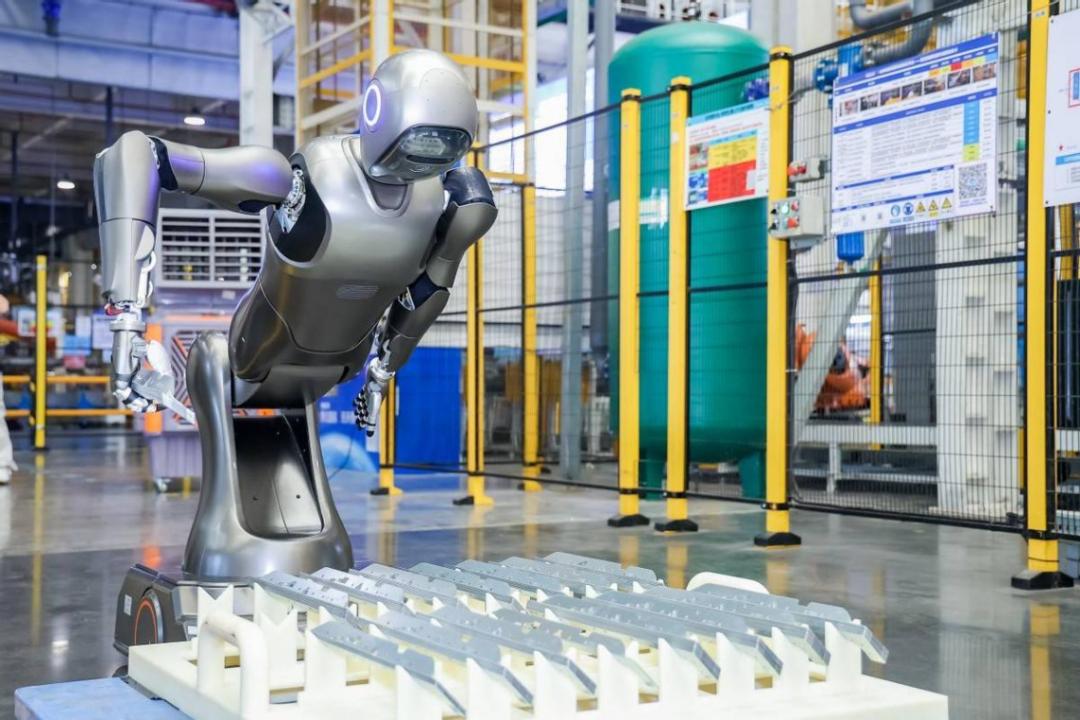
Among them, Midea's acquisition of German industrial robot giant Kuka for 29.2 billion yuan in 2017 was one of its landmark deals in transforming into a technology group.
However, according to Midea's 2025 financial report, the revenue from its building technology, robotics and automation, and other innovative businesses increased by 25.72%, 8.05%, and 26.94% year-on-year, respectively. Together, these three businesses accounted for about 20% of the total revenue, still insufficient to become a second growth engine.
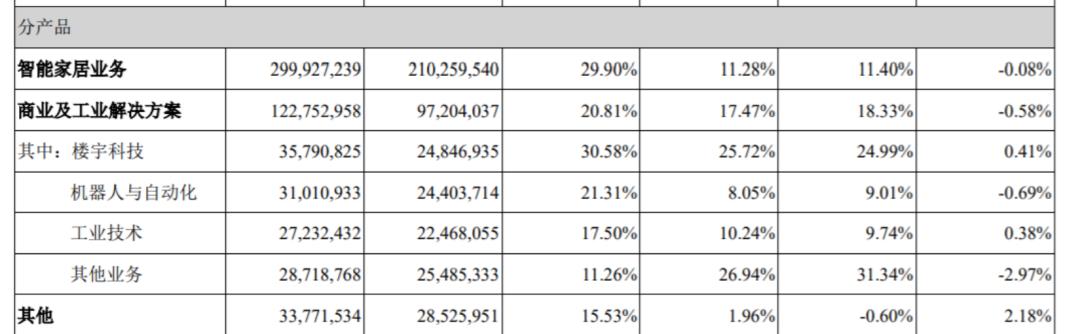
(Figure: Midea's 2025 Financial Report)
Recently, Fang Hongbo made it clear at a shareholders' meeting that “there will be no major acquisitions or large capital expenditures in the next three years.”
He stated that Midea's core businesses are still white goods and HVAC (heating, ventilation, and air conditioning). All second-curve businesses rely on these two core businesses for financial support. Robotics and new energy are secondary core businesses, while other businesses are not yet core.
The signal is clear: during the phase of sustained growth in the entire home appliance industry, home appliances provided Midea with a steady stream of incremental revenue, giving it the confidence to make cross-industry investments.
However, Fang Hongbo believes that the home appliance industry has now entered a phase of “low growth and high uncertainty.” Given the unclear paths and timelines for commercializing new businesses, it is essential to ensure the revenue of core businesses like white goods and adjust the priorities of new businesses.
Of course, this does not mean Midea will marginalize its new businesses. Instead, it requires Midea to be more precise in its calculations. As Fang Hongbo put it, “Midea doesn't know which second curve will succeed. We'll fight where we can and retreat where we can't.”
Admittedly, Midea's revenue growth has slowed, but this does not mean Midea is a “laggard.”
As a company with revenue exceeding 400 billion yuan, scale allows the company to grow faster during favorable economic cycles. However, the same scale can also make it “sluggish” during downturns.
Midea has found the direction for its transformation but still lacks an engine.
03 Seizing the “AI Cards” from Industry Leaders
Just as Midea was grappling with its smart transformation, industry leaders handed it a few “cards.”
Recently, the WeChat Official Account “WeChat Open Class” published the “Guidelines for Developers to Integrate into WeChat's AI Ecosystem,” with Midea becoming one of the inaugural whole-house smart home beta testers.
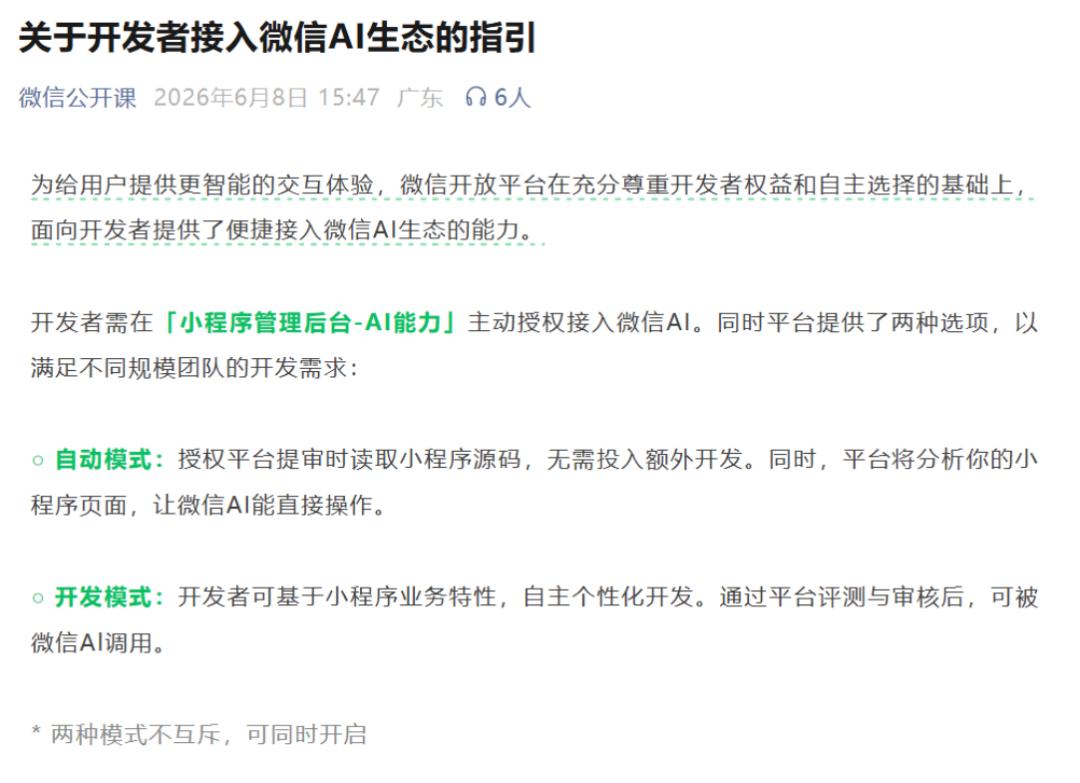
To understand this collaboration, one must first understand WeChat's AI Agent. According to multiple media reports, once this feature is launched, users can activate the AI Agent with a right swipe, and a single sentence can invoke mini-programs to complete operations.
Simply put, after integrating Midea's Meixiangjia suite with WeChat's AI ecosystem, users will not need to download a new app or reconnect to the network when purchasing a new smart home appliance. They can simply open a WeChat mini-program to set up the device.
After that, users can control Midea's smart products with a single sentence, without the need to flip through the app or remember operation steps. The Agent can also remember user needs and home scenarios, enabling natural interconnection of the entire scene.
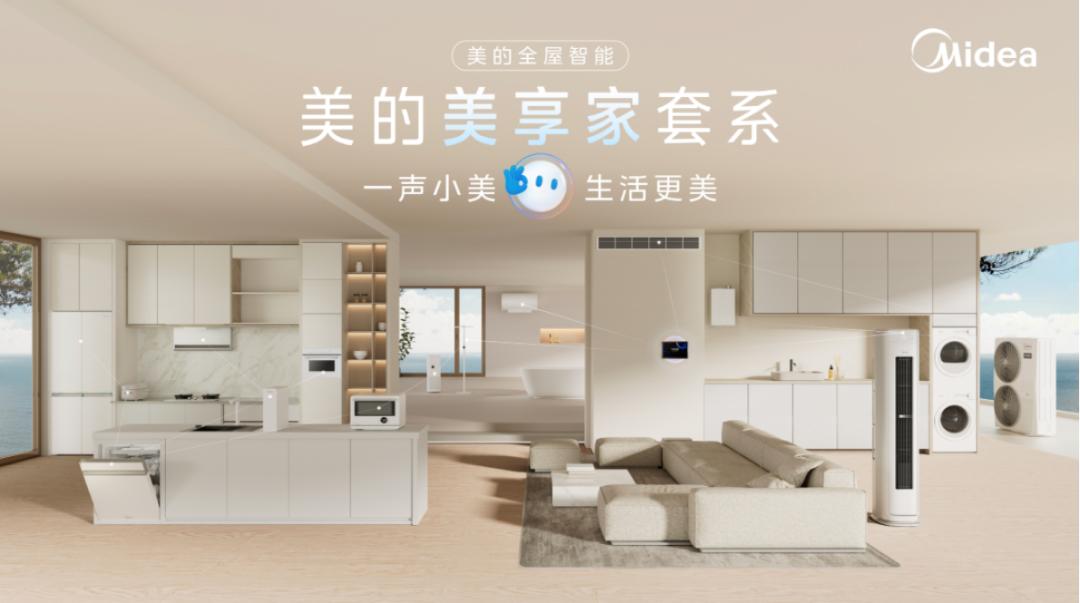
WeChat's AI ecosystem has fundamentally changed the way smart homes are used by unifying the entry points for all smart hardware. In the best-case scenario, users can control smart home appliances from all brands through WeChat's AI Agent.
Currently, in addition to Midea, Haier, TCL, and Siemens have also announced their integration into WeChat's AI ecosystem. As traditional home appliance manufacturers, they are all eager to achieve smart breakthroughs, enhance their ability to reach young users, and build private traffic pools.
It is worth mentioning that Midea and Alibaba have also recently announced in-depth collaboration in three areas: family AI brain, IoT ecosystem and lifestyle service scenario interconnection, and popular smart hardware.
The opportunity to transform the DNA of traditional home appliance companies lies in AI.
In the era of AI Agents, the “super entry point” is shifting from apps to Agents. This has provided Midea, which has been struggling to compete in the app ecosystem against other technology companies, with a new shortcut to bypass its weaknesses and directly reach users.
Of course, who will become the Agent that controls the new traffic distribution in the AI era remains to be seen. But for Midea, regardless of who becomes the ultimate “super entry point,” it only needs to ensure that its products can be easily invoked.
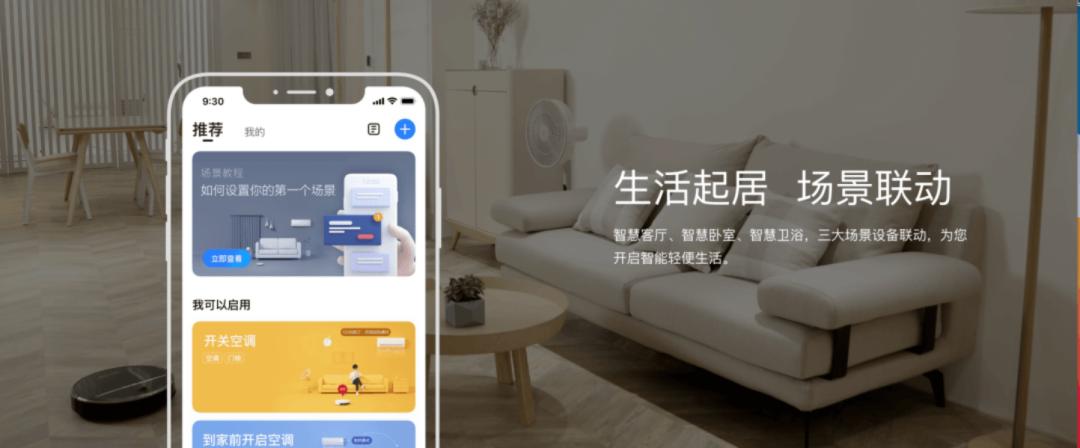
In the critical battlefield of smart transformation, Midea has secured a considerable window of opportunity for itself.
Of course, the most critical variable still lies in Midea's own hands. Investing 60 billion yuan in frontier research and development over the next three years is Midea's answer.
Fang Hongbo has said that resilience is needed for a company to navigate through economic cycles, and the highest form of resilience is “anti-fragility.”
Facing greater uncertainties, Midea is adopting a new approach: scaling back boundless expansion, refocusing on the core home appliance business, consolidating its manufacturing technology advantages, and then expanding its software and ecosystem capabilities through collaborations with industry leaders.
Chaos is the norm during economic cycle transitions, and Midea is choosing to confront its weaknesses head-on. It is more clear-minded than ever.
The cover image as well as the illustrations featured in this article are the property of their respective copyright holders. Should the copyright holders deem that their works are inappropriate for public viewing or ought not to be utilized without charge, kindly reach out to us without delay. Our platform will promptly make the necessary rectifications.
-
AI Asset Spin-offs at Tech Giants: Is Kling Paving the Way for ByteDance and Alibaba?
-
![]()
Why Zhang Xue? Why HONOR?
-
![]()
Exclusive! Tencent’s ‘Tencent Drive’ with AI-Powered Asset Backup in the Works—A Game-Changing Move
-
![]()
Internal Upheaval in Initial Listing Days: SpaceX's AI Division Faces Accelerated Talent Loss, with 50+ R&D Staff Exiting in 2026
-
![]()
Price War Fails, Chinese Automakers Have No Retreat
-
![]()
Still in the Red but Outpacing Tesla: What Lies Behind SpaceX's $2.1 Trillion Valuation?
-
![]()
Humanoid Robots Go Global: From 'Actors' to 'Workers'
-
![]()
Still Incurring Losses Yet Outpacing Tesla: What Does SpaceX's $2.1 Trillion Valuation Signify?