A $2 Billion Bet and Lin Junyang’s Second Act
 06/23 2026
 358
358
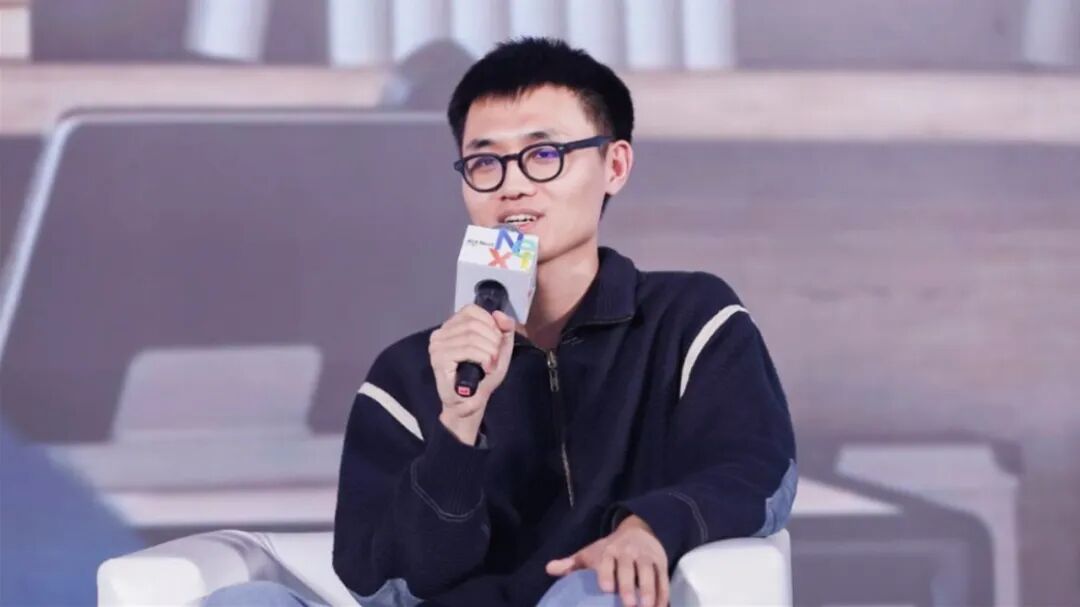
Today’s investment logic revolves around three pillars: technological paradigms, talent density, and whether a founder can shape the next era of innovation.
In mid-June, as Beijing sweltered under summer heat, a bombshell in the tech world ignited fresh fervor in China’s already restless AI venture capital scene.
The AI lab founded by Lin Junyang—former technical lead of Alibaba’s Tongyi Qianwen large language model—closed its Series A funding round.
The headline-grabbing detail isn’t the funding amount—Sequoia China and GaoRong Capital each invested $100 million, with Tencent contributing $20 million, totaling $220 million—but the valuation: $2 billion post-money (approximately 13.5 billion RMB).
A company without an official name, products, revenue, or even a website achieved this valuation in its debut funding round. Such a scenario is unprecedented in China’s startup history.
For many, the first reaction is disbelief: How can a 33-year-old who left Alibaba three months ago, armed with blueprints for world models and embodied AI, command a valuation of 13.5 billion RMB?
01
The Lin Junyang Story
Let’s start with Lin Junyang himself.
In 2019, Lin graduated with a master’s degree from Peking University and joined Alibaba’s DAMO Academy, the tech giant’s elite research arm. Few expected this fresh graduate to embark on a meteoric rise over the next six years.
Within six years, Lin earned four promotions, climbing from an entry-level algorithm engineer to Alibaba’s pinnacle technical rank—P10. At 31, he became Alibaba’s youngest-ever P10, a title shared by only a few dozen experts company-wide, equivalent to a vice president role with annual compensation ranging from millions to over ten million RMB.
By late 2022, Alibaba restructured DAMO’s AI teams, merging language and vision research into Alibaba Cloud to form the Tongyi Lab. Lin was appointed technical lead for the Tongyi Qianwen series of large models. He was 31.
What followed will sound familiar to AI observers.
Under Lin’s leadership, the Qwen (Qianwen) series surged to global prominence, becoming a cornerstone of open-source large models. By early 2026, Qwen models had surpassed 1 billion downloads worldwide, spawned over 200,000 derivative projects, and cemented their status as the world’s top open-source large models. When Qwen3.5 launched, even Elon Musk praised its “impressive intelligence density in smaller models” on X (formerly Twitter).
In three years, Lin transformed Qianwen from an internal project into a global benchmark. For any technologist, this would be a career-defining achievement.
Then came the seismic resignation that shook the AI world in early March 2026.
One morning, Lin posted a succinct tweet on X: “me stepping down. bye my beloved qwen.” Twelve hours later, Alibaba Group CEO Wu Yongming apologized to Qianwen employees during an all-hands meeting: “I should have seen this coming.”
Speculation swirled. Some attributed his departure to organizational restructuring that sidelined him. Others pointed to technical disagreements, particularly the clash between open-source ideals and commercialization pressures. Many believed he had long planned to launch his own venture.
The truth may remain known only to those involved. But one fact is clear: Lin didn’t stay idle after leaving Alibaba. Three months later, he reemerged with a $2 billion valuation.
02
Defining AI’s Next Decade
The details of this funding round are fascinating.
According to The Information, GaoRong Capital and Sequoia China co-led the round with $100 million each, while Tencent contributed $20 million.
The investor lineup demands scrutiny. Sequoia and GaoRong are China’s premier AI-focused VC firms, known for their precise and aggressive bets. Their willingness to invest $100 million each signals unwavering confidence in Lin and his vision.
More notable is Tencent. The tech giant operates its own Hunyuan large model, has invested in Zhipu AI, and maintains extensive AI deployments. Yet, it backed a former Alibaba technical lead before his company even launched.
This suggests Tencent sees something unique—a capability it cannot replicate internally or feels compelled to access through investment.
Another detail: Lin’s team was already preparing for Series B immediately after closing Series A.
The pace is breathtaking. Startups typically wait at least a year after funding to show progress before raising again. But in today’s AI venture capital landscape, the rhythm has shifted entirely. Negotiations for the next round may begin before corporate registration changes from the previous round are finalized.
According to Tianyancha data, Lin registered three companies between May and June 2026: Yuyong (Shanghai) Technology Co., Ltd. (100% owned by him), Shanghai Bulage Technology Co., Ltd. (99% owned by him), and Shanghai Gewu Zhiyong Management Consulting Partnership.
Many speculate that “Bulage” is the phonetic translation of “Pragmatics.” Combined with “Yuyong Technology” and “Gewu Zhiyong,” the direction becomes clear.
Lin isn’t building another Qianwen or a general-purpose large language model. In his post-resignation essay, From Reasoning Thinking to Agentic Thinking, he may have already revealed his strategy.
His core argument in one sentence: The first phase of AI competition focused on making models better thinkers; the next phase will focus on making models think for action.
Specifically, this means world models and embodied AI.
Currently, models like GPT, Claude, or Qianwen are “AI trapped behind screens.” They understand language, reason, and can write code or copy text, but they lack physical world awareness. They don’t know a cup will shatter when dropped, that water flows downhill, or that collisions produce force.
World models aim to teach AI the laws of physics, enabling prediction and understanding of space, time, and causality. Embodied AI allows AI to control physical entities, like robots, to act in the real world.
Lin’s focus on “Next State Prediction” aligns with this vision.
This path represents AI’s cutting edge—and its toughest challenge. OpenAI, Google DeepMind, Tesla, and domestic tech giants are all pursuing it, but no breakthrough products exist yet.
Why did Lin choose this path over continuing with general-purpose large models?
The answer is simple: The general-purpose large model field is already crowded with heavyweights—OpenAI, Anthropic, Google, and domestic giants like Baidu, Alibaba, Tencent, and ByteDance, along with successful startups like DeepSeek, Moonshot AI, Zhipu, and MiniMax. Competition here has reached fever pitch.
A new startup entering this field now faces negligible success odds, regardless of technical prowess, given the gaps in computing power, data, and ecosystem.
World models and embodied AI are different. This field is in its infancy, with everyone starting from scratch. Whoever achieves breakthrough technology first will define the next decade of AI.
Moreover, Lin isn’t starting from zero. As early as October 2025, while at Alibaba, he established a robotics and embodied AI research group within Qianwen. He has clearly been preparing for this direction for years.
This is why investors assigned a $2 billion valuation: They’re betting not on an idea but on a proven technical leader choosing the right field at the right time.
03
AI-Era Investments: Founders Define the Future
Let’s examine valuation benchmarks among current large model startups.
DeepSeek recently closed its Series A with a post-money valuation of $50 billion. Founder Liang Wenfeng personally invested 20 billion RMB, maintaining firm control.
Moonshot AI (Kimi) completed its Series D in May 2026, with a post-money valuation exceeding $20 billion—nearly quintupling in under six months.
Zhipu AI, listed on the Hong Kong Stock Exchange, has a market cap surpassing 500 billion HKD (≈440 billion RMB).
MiniMax has a Hong Kong market cap of 256.6 billion HKD.
Jieyue Xingchen secured nearly $2.5 billion in financing and is preparing for a Hong Kong IPO.
Today’s large model startups start with valuations in the tens of billions of dollars. The $2 billion valuation for Lin’s company isn’t exaggerated within this context—it’s relatively conservative.
However, the companies mentioned above all have mature products, users, revenue, and some are already listed. Lin’s company has none of these.
This highlights the most fascinating shift in today’s AI venture capital scene: Investment logic has fundamentally changed. Revenue, profits, and user growth matter less than technological paradigms, talent density, and whether founders can define the next era.
Investor psychology is equally intriguing. They fear being left behind if they don’t invest, yet worry about overpaying if they do. This anxiety drives valuations upward.
Many argue that a bubble exists. It certainly does. Every technological revolution’s early stages feature bubbles—internet, mobile internet, and now AI.
But bubbles don’t negate value. Without the internet bubble, we wouldn’t have today’s Google, Amazon, Tencent, or Alibaba. Bubbles weed out speculators, but genuine technologies and companies endure.
I often wonder: What gives technical leaders from big companies their entrepreneurial edge? Technology matters, but big companies have many talented engineers. Networks help, but investors won’t fund billion-dollar ideas solely on relationships.
The core advantage lies in proven ability to deliver transformative results within complex systems.
Lin led a team that turned an internal project into the world’s top open-source large model. Liang Wenfeng demonstrated engineering excellence by slashing large model costs to a fraction of competitors’. Yang Zhilin proved he could create products users genuinely want.
This “ability to deliver” trumps any single technical skill.
Entrepreneurship, especially in hard tech, is fundamentally a probability game. Investors seek the highest-probability success among uncertainties.
Lin represents a high-probability option. He’s young, energetic, has a proven track record, possesses cutting-edge technical vision, and chose a sufficiently large field. For investors, even if $2 billion seems steep, the potential to create a $100 billion company justifies the bet.
Of course, risks loom large.
World models and embodied AI are technically harder than general-purpose large models by an order of magnitude. They demand astronomical computing power, data, and talent. The $220 million raised may burn through in just over a year.
Commercialization timelines remain uncertain—three years? Five? Ten? Can investors sustain funding that long?
Talent acquisition poses another challenge. While Lin is exceptional, entrepreneurship requires assembling a world-class team amid fierce global competition for AI talent.
These are real problems Lin faces.
Many remark that this is the best era for truly exceptional technologists. Two decades ago, technical brilliance might land you a senior engineering role at a big company with a six-figure salary. A decade ago, the mobile internet wave offered entrepreneurial opportunities, but success remained rare.
Today, a 33-year-old technologist with proven ability can secure a billion-dollar valuation by choosing the right path, pushing human technological boundaries.
This was unimaginable before.
Yet it reflects the era’s momentum. AI represents the decade’s greatest technological revolution, attracting all capital, talent, and attention.
Lin Junyang and his peers are the fortunate ones riding this wave.
Three months ago, when Lin bid farewell to Qianwen on X, he likely didn’t anticipate standing at this starting line three months later. The transition from Alibaba P10 to founder of a billion-dollar startup happened in months.
I’m curious where this AI wave will ultimately lead us. Technology’s allure lies in its unpredictability—you never know when the next breakthrough will emerge or who will change the world next.
— END —
-
![]()
Over 50% of Revenue Hinges on Yutong Optics! This Optical Equipment Manufacturer is Charging Towards an IPO
-
![]()
YOCO Optics Finalizes Industrial and Commercial Registration Update Post 160 Million Yuan Investment in Jiangfeng Biology, Securing 20% Stake to Emerge as Second-Largest Shareholder!
-
![]()
Google Market Value Plummets by $1.5 Trillion Overnight Following the Loss of Two Key Figures
-
![]()
Put an End to the EV 'Weight Gain Race'! Can Your Car Still Be Driven Under the New National Standards?
-
![]()
In 2026, 'AI Upstarts' Collectively Bet on World Models
-
![]()
【OFweek Weike Cup】Phoenix Optics Officially Participates in the 2026 Optical Industry Annual Innovation Product Award
-
![]()
Ford Ditches Mach-E: Will Its Billion-Dollar Electrification Drive Have to Start All Over Again?
-
![]()
【OFweek Weike Cup】Shuangli Hepu Officially Participates in the 2026 High-Growth Enterprise Award in the Optical Industry