Google Market Value Plummets by $1.5 Trillion Overnight Following the Loss of Two Key Figures
 06/23 2026
 394
394
On June 22, Google witnessed its worst stock market performance in a year.
Following the opening of the U.S. stock market, shares of Alphabet, Google's parent company, continued to slide, at one point plummeting more than 7%—the largest single-day decline in nearly a year.
Based on the intraday drop, the tech giant saw its market value shrink by over $200 billion at one stage, nearly equivalent to the market capitalization of Kweichow Moutai, a renowned Chinese liquor company.
This time, market panic wasn't triggered by sluggish performance but rather by the departure of key personnel.
Within 48 hours, Google lost two AI superstars in succession.
One is Noam Shazeer, co-lead of the Gemini technology team, one of the authors of the seminal Transformer paper, and the founder of Character.AI—a startup Google had repatriated for $2.7 billion.
He is now joining OpenAI.
The other is John Jumper, the 2024 Nobel laureate in Chemistry and Vice President and Engineering Fellow at DeepMind.
He is heading to Anthropic.
In the AI industry, these two individuals represent two of Google's most critical technological strengths:
Large language models and AI for Science.
The near-simultaneous departure of these two figures has sparked concerns that Google is losing the battle for top AI talent.
Over the past year or so, the war for top AI talent has completely reshaped the power dynamics in Silicon Valley.
Google, once the trailblazer in AI, is now becoming the biggest exporter of talent in this war.
Noam Shazeer, whose departure was announced this time, is a well-known figure in the AI community.
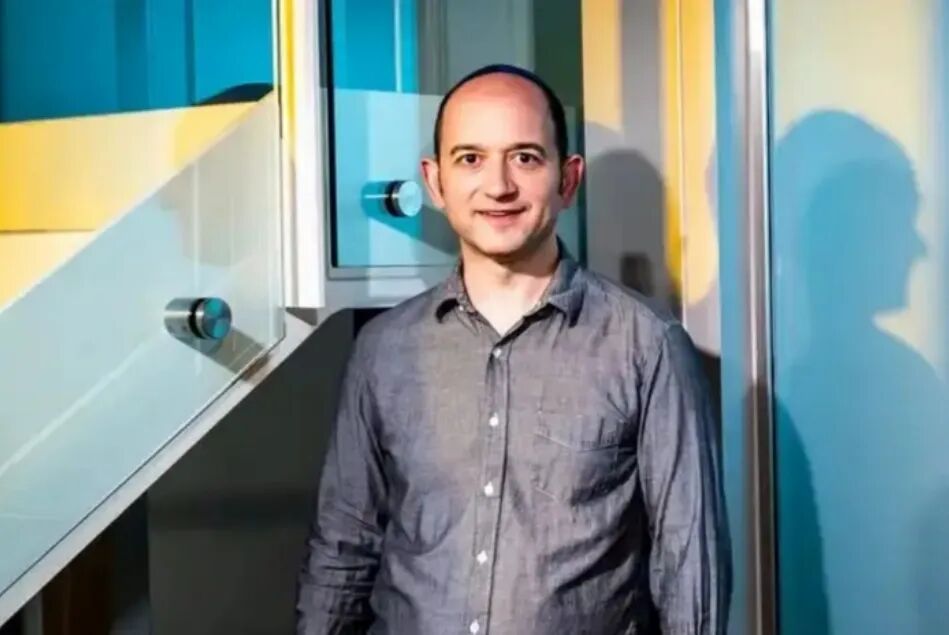
In 2017, Shazeer co-authored the Transformer paper with seven colleagues at Google, sparking the large language model revolution.
Today, all major large language models, from ChatGPT to Claude, from Gemini to Qwen, are built upon the Transformer architecture.
This indicates that Google wasn't late to the AI race; it was at the forefront from the start.
But the turning point came soon after.
Long before ChatGPT's rise, Shazeer and his colleagues developed an internal chatbot called Meena, capable of engaging in natural conversations on a wide range of topics.
Shazeer wrote an internal memo predicting that such chatbots could replace Google Search and generate trillions of dollars in revenue.
Google executives' response? Do not release it, citing safety risks and fairness concerns.
For Google, this might have been a prudent decision. But for someone like Shazeer, it felt like missing a historic opportunity.
In 2021, Shazeer left Google and founded Character.AI, a social platform allowing users to chat with AI characters.
Later, the story took an ironic twist.
In 2022, ChatGPT emerged, and the entire industry suddenly realized that chatbots weren't just peripheral toys but the next-generation AI gateway.
What Google had kept in its labs became the weapon for OpenAI to rewrite the industry order.
So, Google went back to Shazeer.
In 2024, Google secured a technology license from Character.AI through a special deal worth approximately $2.7 billion and brought Shazeer back to Google.
The entire Silicon Valley understood that the money wasn't truly buying technology but people.
Upon his return, Shazeer was given a high-profile role: co-technical lead of the Gemini project alongside Jeff Dean and Oriol Vinyals.
According to industry rumors in Silicon Valley, after Shazeer's return, he discovered a deep bug in the Gemini project. Fixing it significantly improved the model's training efficiency, enabling Gemini to surpass ChatGPT in some benchmark tests.
More than one Google employee revealed that it was Shazeer who saved Gemini.
However, the person brought back at great cost couldn't be retained.
In June 2026, Shazeer left Google again.
He posted on X (formerly Twitter): "I am delighted to announce that I will be joining OpenAI."
OpenAI's CEO, Sam Altman, responded almost instantly.
"Noam is one of the people I've most wanted to work with since the founding of OpenAI," he wrote in the post. "Only waited a decade. I think it's worth it."
In response, a well-known AI commentator wrote: "This is the most significant AI talent movement this year. It makes you wonder what exactly is happening inside Google."
Shazeer's departure has led the market to question whether Google is still missing out on top talent.
Two days later, on June 20, John Jumper also announced his departure on X.
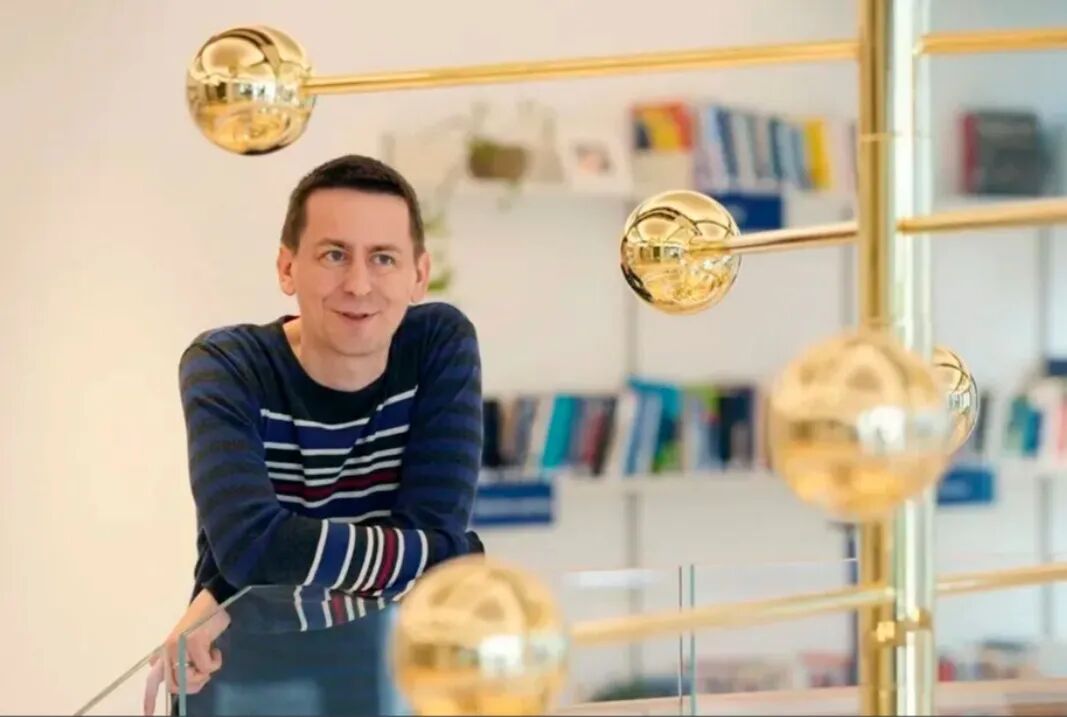
Jumper is different from Shazeer; he stayed at DeepMind for a full nine years.
In 2024, he was awarded the Nobel Prize in Chemistry alongside DeepMind CEO Demis Hassabis for leading the AlphaFold project, which used AI to predict over 200 million protein structures.
At 39, he became the youngest Nobel laureate in history.
In his tweet, he thanked Hassabis: "He gave me the opportunity to lead the entire AlphaFold team just six months after I completed my Ph.D."
This statement was meant as gratitude, but it also reminds the outside world of how attractive DeepMind once was.
At DeepMind, a young researcher could be entrusted with a mission to change the history of science, and a project like AlphaFold could be pursued not for short-term revenue but to prove how far AI could go.
But now, DeepMind's soul figure, Jumper, is leaving. His next stop is Anthropic.
After Jumper's departure, the true emotions within DeepMind were exposed by the media.
According to internal employees, "extreme frustration and widespread dissatisfaction" are spreading within DeepMind.
Employees generally believe that this former top AI lab in the world has now slipped to an "awkward third or even fourth place" in the industry.
One internal employee made a strong statement:
"In text, image, video, voice, or even vision, we no longer have a single model at the industry's cutting edge. If we can't even produce a true leader model after having so many resources and putting in more than four months of effort, what exactly are we doing?"
What frustrates internal staff even more is resource allocation.
After the merger of the original Google Brain and DeepMind in April 2023, the two teams and their cultures have failed to truly integrate.
The competition for computing resources among different teams within Google has reached a fever pitch.
In October 2025, Google turned around and sold precious Google Cloud TPU computing power to a major client—its direct competitor, Anthropic—further fueling external doubts about Google's internal computing resource allocation priorities.
Llion Jones, one of the co-authors of the Transformer paper, said early on: "I feel that Google's bureaucracy has developed to a point where I feel like I can't get anything done."
This statement, placed in today's context, has almost become an epitaph for Google's AI division.
The departures of Shazeer and Jumper mean that the undisclosed technical secrets and training expertise accumulated by Google over the past few years are now substantially spreading to OpenAI and Anthropic.
An industry insider issued a warning: "You can lock the model weights and keep them in the data center; but those who built them are taking away tacit knowledge, training intuition, safety trade-offs, architectural patterns, and experience in avoiding pitfalls."
Although Google has recognized the problem, talent continues to flow out at an alarming rate.
According to SignalFire's 2025 "State of Talent Report":
The ratio of DeepMind talent flowing to Anthropic versus the reverse is 10.8:1. The probability of engineers jumping from OpenAI to Anthropic is more than eight times higher than the reverse, and nearly 11 times higher from DeepMind.
The report also stated the two-year employee retention rates of various labs: Anthropic is about 80%, DeepMind is 78%, OpenAI is 67%, and Meta is 64%.
Heather Doshay, a partner at SignalFire, said: "If I ask any candidate which company you most dream of joining now? Anthropic is mentioned more than any other company."
Looking at the timeline of talent movements in 2026, it is densely packed and breathtaking.
In January, Andrea Vallone, head of safety research at OpenAI, joined Anthropic;
In February, Milad Nasr, who had worked at DeepMind and OpenAI, went to Anthropic;
In March, Max Schwarzer, Vice President of Research at OpenAI, and senior researcher Adam Lerer joined Anthropic simultaneously;
In May, Andrej Karpathy, a founding member of OpenAI, announced his joining Anthropic's pre-training team.
His task is to form a new team with the core mission of using the Claude model itself to accelerate pre-training research, using AI to study AI.
In June, Clive Chan, an early member of OpenAI's in-house chip team, also announced his joining Anthropic.
If in the previous months, Anthropic was mainly absorbing safety, reasoning, and pre-training talent from OpenAI, then Jumper's arrival means it is now absorbing the core scientific aura of Google DeepMind.
All signs indicate that Anthropic is becoming a talent hub, but amazingly, it is not offering the highest market prices.
Founder Dario Amodei said in a podcast: "If Zuckerberg (Meta's founder) throws a dart and hits your name, it doesn't mean you should earn ten times more than equally talented people next to you. They are trying to buy something that cannot be bought—alignment with the mission."
Many people who moved from Google to Anthropic repeatedly mention the same word: focus.
At Google, they have to make models serve a vast commercial system.
Gemini has to catch up with GPT, models have to serve search, capabilities have to enter the cloud, and products have to cater to Workspace, Android, advertising, developer tools.
Every business line needs AI, but each business line also has its own goals.
This creates a paradox: Google has the most resources, but researchers do not necessarily have the most focus.
But at Anthropic, they only need to answer one question: Can the next-generation model be stronger?
On the other hand, OpenAI is also absorbing talent from Google.
Shazeer's joining is the most symbolic move, with the founder of Transformer ultimately going to OpenAI's architecture research team.
He will serve as the head of architecture research, responsible for exploring next-generation AI model architectures.
Meanwhile, OpenAI has secretly filed for an IPO with the SEC, and Anthropic is also in the IPO preparation queue.
Jumper and Shazeer chose to join during this window period, and the timing is no coincidence, as employee-held equity is expected to be realized in the public market.
As Anthropic and OpenAI simultaneously launch a double assault on Google in terms of talent and capital markets, Alphabet's investors have reason to panic.
But Google is not the only one being poached.
The pursuit of top talent in the AI circle has entered a nearly out-of-control phase.
The entire AI industry understands a simple truth:
The value of top researchers is more irreplaceable than any chips in data centers. Such talent loss essentially means an entire technological route is shifting to competitors.
Thus, a series of no-holds-barred talent wars have erupted.
The salary competition first broke through the ceiling.
In the summer of 2025, Meta Superintelligence Labs poached seven core researchers from OpenAI within weeks.
Among them, Andrew Tulloch's compensation package was reported to reach $1.5 billion over six years.
A paper by the National Bureau of Economic Research shows that the average annual salary of the top 1% of AI researchers is about $1.94 million, about $1.5 million higher than their academic peers with equivalent qualifications.
At the top of the pyramid, Google DeepMind and other companies offer compensation packages for top researchers that can reach $20 million per year, according to foreign media reports.
The situation is similarly crazy in China.
According to a Maimai report, the average monthly salary for AI scientists/leaders reached 132,796 yuan from January to April 2026, far ahead of second-place algorithm researchers.
After Guo Daya, a core researcher of DeepSeek R1, joined ByteSeed, outside estimates suggested his long-term total compensation could reach hundreds of millions of yuan.
UBTECH offered up to 124 million yuan in 2026 to recruit a chief scientist for embodied AI globally.
A headhunter with 20 years of experience said that since 2026, budgets at major companies have "almost had no upper limit."
But sky-high salaries are only one side of the story; the other side is that CEOs are personally getting involved in talent recruitment.
Mark Zuckerberg moved his desk near the AI team, started coding again, and was even reported to have personally delivered soup to persuade an OpenAI engineer to join.
Microsoft CEO Nadella personally called potential candidates and approved ultra-high salaries.
Elon Musk announced in May 2026 that he would personally review all job applications that passed the initial screening for SpaceX's AI department.
Lei Jun personally offered Luo Fuli a salary of tens of millions of yuan, Zhang Yiming, after stepping down as CEO, still personally oversaw poaching from competitors, and Wu Yongming and Ma Huateng also took charge of AI talent recruitment internally.
However, when all the top players can offer sky-high salaries and all CEOs are personally involved, a paradox emerges:
Money suddenly didn't work anymore.
Within months of Meta Superintelligence Labs' establishment, several individuals returned to OpenAI shortly after joining.
Yann LeCun, Meta's Chief AI Scientist who had served for 12 years, also left to start his own venture at the end of 2025.
By May 2026, Thinking Machines Lab, led by Mira Murati, had lost approximately 13 founding team members, nearly a third of its original staff.
DINQ Labs' report conducted a comprehensive review of these cases, pinpointing three pivotal factors that influence the retention of top-tier researchers: alignment with the organization's mission, availability of computational resources, and organizational stability.
"When all the major players are capable of offering exorbitant salaries, the salary package itself ceases to be a distinguishing factor," the report emphasized.
This observation perfectly captures the predicament that Google finds itself in.
The departures of Shazeer and Jumper are not indicative of a compensation failure but rather a misalignment with the company's mission.
While money may initially attract talent, it is not sufficient to ensure their long-term commitment.
On June 22, Alphabet's stock price took a nosedive—a stark reminder that wiped out over $200 billion in market value in a single day, a loss far exceeding the cost of any exorbitant salary.
More significantly, capital markets are starting to recognize that AI talent serves as a bellwether for technological trajectory, product development speed, and future valuation potential.
Consequently, the AI race has reverted to its most fundamental aspect: which entity can retain the select few individuals who possess the genuine expertise to construct the next generation of models?
Google, at one point, boasted the largest assembly of such talent.
However, it is now witnessing a steady exodus of these experts to OpenAI, Anthropic, and other AI research institutions.
-
![]()
Over 50% of Revenue Hinges on Yutong Optics! This Optical Equipment Manufacturer is Charging Towards an IPO
-
![]()
YOCO Optics Finalizes Industrial and Commercial Registration Update Post 160 Million Yuan Investment in Jiangfeng Biology, Securing 20% Stake to Emerge as Second-Largest Shareholder!
-
![]()
Google Market Value Plummets by $1.5 Trillion Overnight Following the Loss of Two Key Figures
-
![]()
Put an End to the EV 'Weight Gain Race'! Can Your Car Still Be Driven Under the New National Standards?
-
![]()
In 2026, 'AI Upstarts' Collectively Bet on World Models
-
![]()
【OFweek Weike Cup】Phoenix Optics Officially Participates in the 2026 Optical Industry Annual Innovation Product Award
-
![]()
Ford Ditches Mach-E: Will Its Billion-Dollar Electrification Drive Have to Start All Over Again?
-
![]()
【OFweek Weike Cup】Shuangli Hepu Officially Participates in the 2026 High-Growth Enterprise Award in the Optical Industry