Following the Widespread Adoption of Automated Annotation in Autonomous Driving, Is There Still a Place for Traditional Annotation Roles?
 06/25 2026
 404
404
Market research firms forecast that the global market for AI model annotation services tailored to road conditions will surge to around $1.89 billion by 2025, with expectations to climb to $2.33 billion by 2026. Moreover, industry analyses suggest that the autonomous driving data annotation platform market is poised to exceed $3 billion globally by 2026, maintaining robust growth prospects in the medium to long term.
This expanding market size is intricately linked to the swift integration of automated annotation technology. Consider a domestic annotation company: its fully automated annotation production line necessitates only a handful of operation and maintenance staff to achieve the annotation throughput that would traditionally require hundreds of personnel over a year. This drastically cuts data construction costs, with annotation efficiency skyrocketing from a few hundred pieces per person per hour manually to millions at the automated system level. Previously, we delved into how automated annotation can supplant manual labor through technological advancements (Related reading: Does Automated Annotation for Autonomous Driving Enable Technology to Supplant Manual Labor?). Given this stark efficiency disparity, does traditional manual annotation still hold relevance?

What Exactly Can Automated Annotation Accomplish?
Before exploring the necessity of traditional manual annotation, it's crucial to grasp the capabilities of automated annotation.
Compared to its automated counterpart, the limitations of traditional manual annotation are glaring. An L4 autonomous vehicle generates 10TB to 20TB of data daily, with over 60% requiring annotation. Faced with petabyte-scale new data daily, traditional manual annotation's efficiency pales in comparison to the data generation rate. Furthermore, annotation costs for autonomous driving scenarios typically constitute 30% to 40% of the total project investment. Without automated solutions, the speed and cost of data production would become industry bottlenecks.
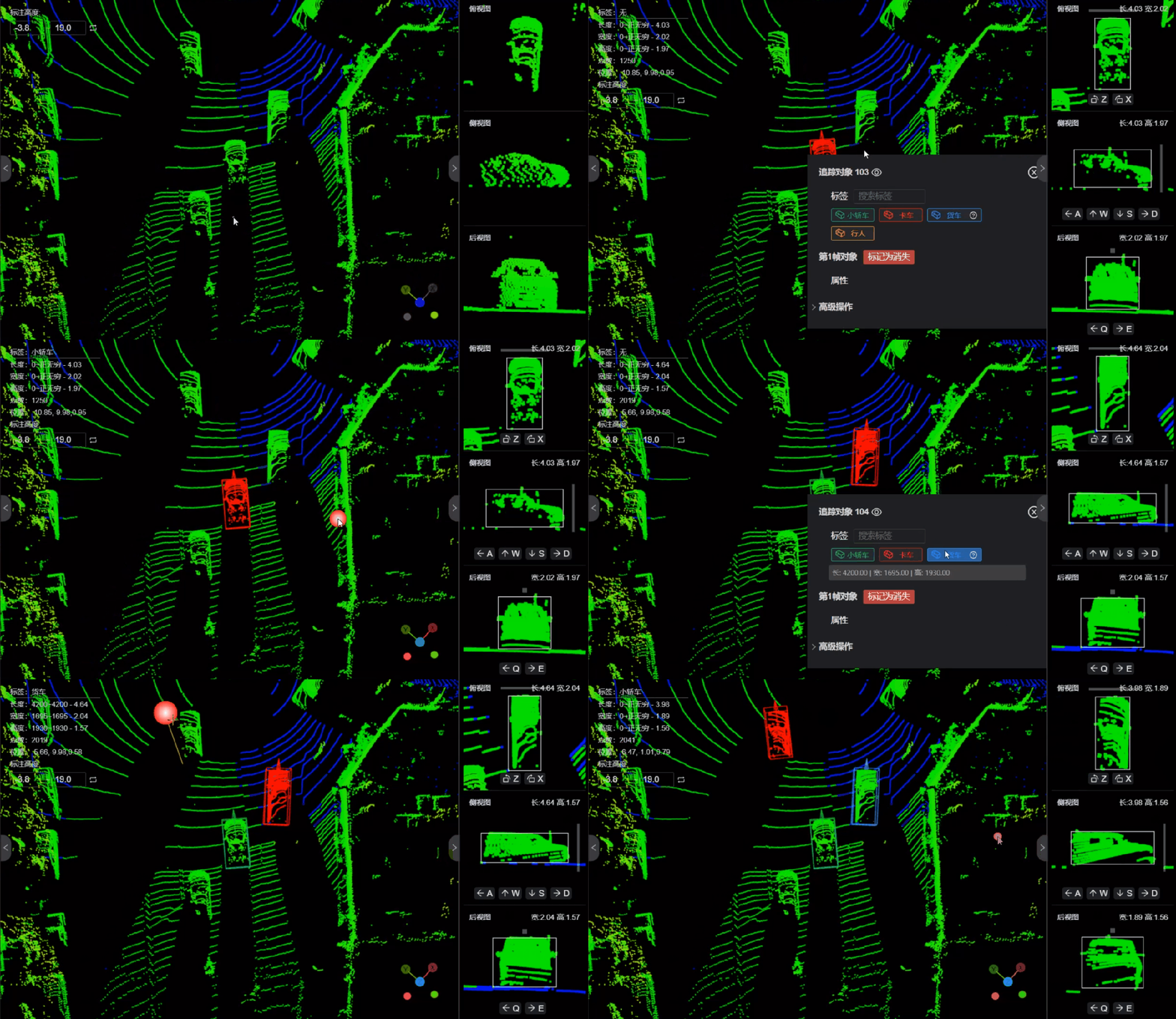
Image Source: Internet
Over the past two years, automated annotation technology has made substantive strides in several areas. At the algorithmic architecture level, the YOLO-SAM cascaded model merges YOLOv8's object detection prowess with the Segment Anything Model's segmentation capabilities, forming a two-stage collaborative annotation process. In 3D annotation, deep learning frameworks leveraging pre-trained semantic segmentation models automate ground truth annotation of LiDAR point clouds.
Regarding 4D annotation, the industry has witnessed mature implementations. The 4D-BEV billion-point cloud annotation system performs multi-view annotations of vehicles, pedestrians, and road signs from both spatial and temporal dimensions, capable of handling billion-scale point cloud data. Compared to traditional methods, such systems enhance efficiency by about 30% and accuracy by about 20%.
Leading companies' automatic annotation algorithms have consistently outperformed manual annotation benchmarks across multiple accuracy metrics. Most manual annotation providers guarantee around 95% accuracy. To further enhance accuracy, significant resources must be invested in multiple rounds of quality verification. In contrast, automated tools can achieve or even surpass human-level annotation accuracy and recall rates in adapted scenarios.
The efficiency of automated annotation is remarkable. CAIC's multimodal data fusion human-machine collaboration intelligent annotation system for the automotive industry has been certified by the National Data Bureau as a premier excellent case. According to disclosed data, its automation rate exceeds 90%, and manual intervention can be reduced to 8%. Tesla's automatic annotation system, after processing data from 8 cameras, has slashed annotation costs from $0.5 per frame to $0.02 per frame. Additionally, combining semi-automatic annotation tools with AI pre-annotation has compressed the annotation time for a single frame image from 15 minutes to 90 seconds.
From these data points, automated annotation has established clear advantages in routine scenarios, repetitive tasks, and large-scale data processing. Does this imply traditional annotation has lost its value?

Several Hurdles Automated Annotation Cannot Surmount
Undeniably, automated annotation has revolutionized data annotation efficiency and costs. However, numerous short-term challenges remain formidable.
The first issue is scene generalization. Automated annotation algorithms' performance heavily relies on training data coverage. In familiar scenarios, they achieve high accuracy and efficiency. Yet, when confronted with new scenarios, unfamiliar object types, or extreme environmental conditions not covered in training data, algorithm performance plummets. Research clearly indicates that current automatic annotation methods' generalization ability in open-world scenarios is still lacking. In essence, automated annotation excels at handling known knowns but falters against unknown unknowns.
Another challenge is the insufficient handling capacity for edge cases. Autonomous driving's true tests lie not in highways under favorable weather but in infrequent yet high-consequence edge scenarios, such as occluded pedestrians, scattered obstacles, and abnormal traffic conditions. These scenarios demand professional judgment and experience in data annotation. Automated algorithms lack sufficient reference bases in these scenarios, making accurate annotation decisions difficult.
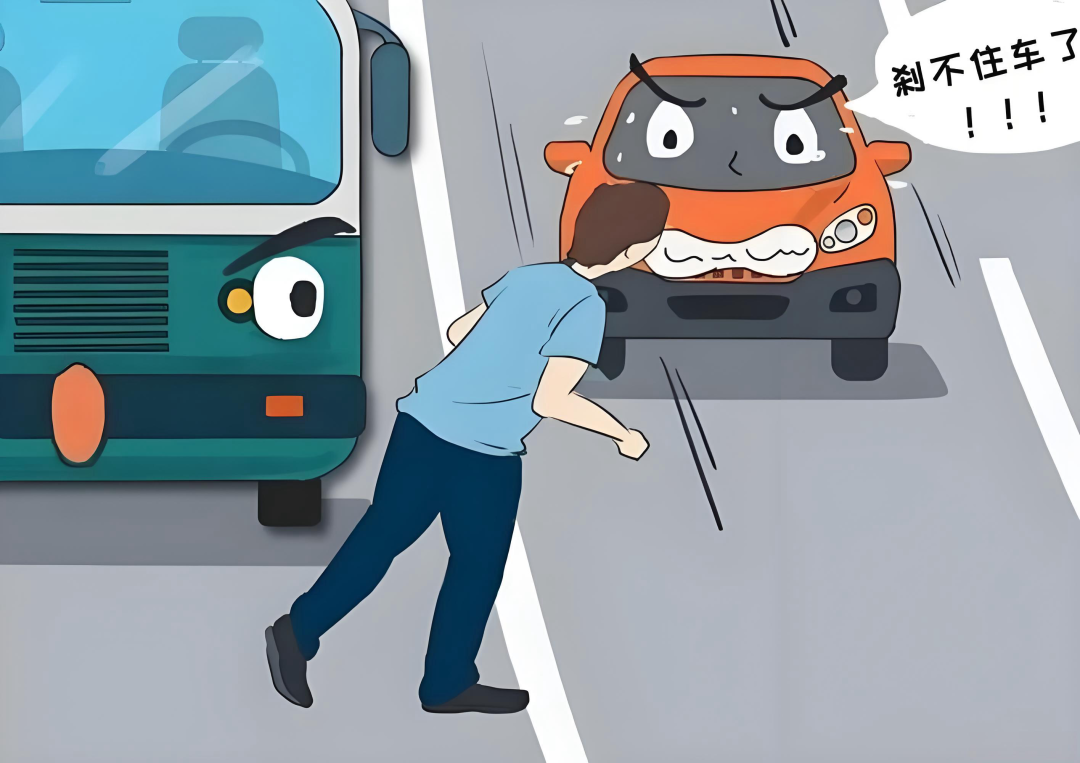
Image Source: Internet
Understanding complex interaction scenarios is also arduous for automated annotation to judge accurately. Real-world road traffic abounds with subtle interactions between people, vehicles, and people, and vehicles and vehicles. A pedestrian's hesitation, a vehicle's lane-changing intention, and the meaning of a gesture all convey different intentions. These nuances are challenging to simplify into bounding boxes or semantic labels, requiring annotators to possess a deep understanding of traffic scenarios—something automated tools currently lack.
Closed-loop quality verification is also challenging for automated annotation to accomplish independently. At this stage, data generated by automated annotation still necessitates human verification of its quality. If models are trained solely on annotations generated by automated systems, errors may continuously accumulate and amplify. To mitigate this, an independent quality assessment mechanism must be introduced, and high-quality assessments themselves require professional annotators to complete.

Where Does the True Value of Traditional Annotation Reside?
By comprehending the limitations of automated annotation, we can elucidate the value of traditional annotation.
Traditional annotation does not merely entail slower but more meticulous human work. Instead, it involves manual annotation capable of addressing complex and abnormal situations that automated tools cannot. When algorithms encounter unprecedented scenarios, only annotators with professional knowledge and judgment can make correct annotation decisions—an ability indispensable in the safety verification of autonomous driving.
As previously mentioned, the accuracy of automated annotation necessitates human verification and calibration, a task only experienced annotation experts can perform. Whether the annotation data generated by automated tools is accurate, complete, and compliant with standards ultimately requires human judgment. Therefore, traditional annotation will not be supplanted by automation but will instead evolve to serve as the quality inspector and coach for automated annotation.
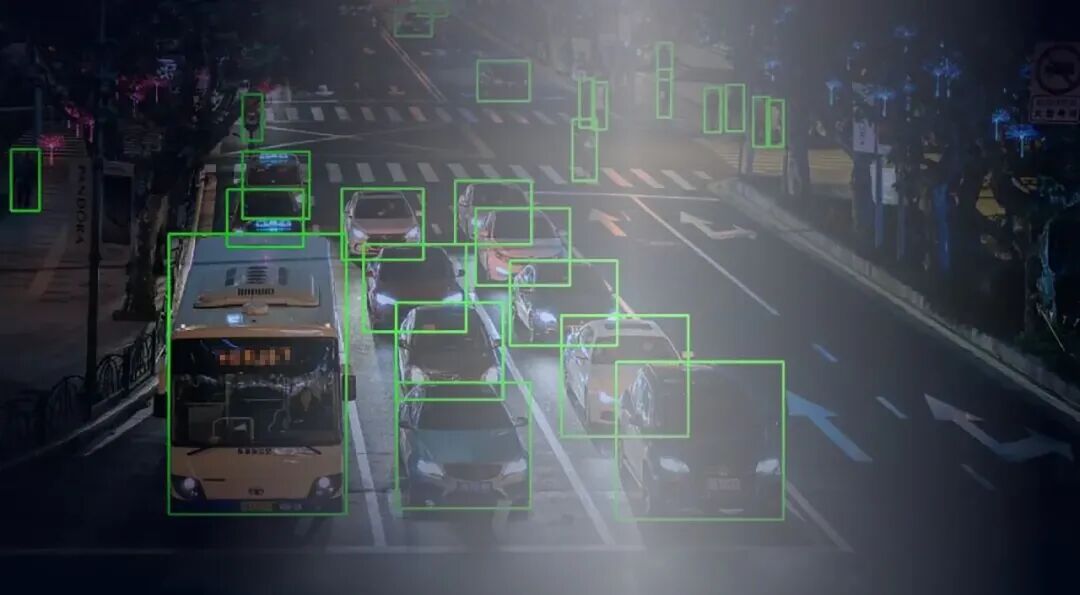
Image Source: Internet
Furthermore, traditional annotation can respond more swiftly to new scenarios. When autonomous driving systems expand to new geographic regions, weather conditions, or traffic rule environments, automated annotation algorithms require retraining or fine-tuning—a process demanding large amounts of high-quality annotation data as training material. These initial data can only be obtained through manual annotation. Without the foundational data provided by traditional annotation, automated annotation would be unfeasible.
From industry practice, the truly effective approach has never been a binary choice between fully automated or fully manual processes but rather a blend of both. The current mainstream annotation mode is pre-annotation + manual refinement and review, where AI completes over 80% of the basic annotation work, and annotators are responsible for correcting complex parts such as occluded and special scenarios. In this mode, overall annotation efficiency can be enhanced by 2 to 3 times, while the workload for manual sampling inspections can be reduced by 60%. Some refer to this mode as human-machine collaboration, which essentially separates tasks based on the respective strengths of humans and machines—machines handle repetitive, large-scale, and rule-defined tasks, while humans tackle complex, abnormal, and judgment-requiring tasks.

What Is the Market Telling Us?
Real-world market data also corroborates the aforementioned judgment. Despite the rapid development of automated annotation technology, the global data collection and annotation market continues to grow rapidly, from $4.41 billion in 2025 to $5.64 billion in 2026, representing a compound annual growth rate of 27.9%. Additionally, the market for AI model annotation services for roads has also expanded from $1.89 billion to $2.33 billion. If automated annotation could entirely replace manual labor, this market would contract rather than expand as it currently is.
The market is growing because the demand for data in autonomous driving is increasing at a rate far exceeding the speed at which automated annotation technology can replace manual labor. Data demand is expanding, and so is the annotation market. Automated annotation addresses efficiency issues—producing more annotation data with the same investment—while traditional annotation addresses quality and coverage issues, ensuring that annotation data remains accurate in complex scenarios and usable in unknown scenarios. Thus, traditional and automated annotation address different facets of the problem.
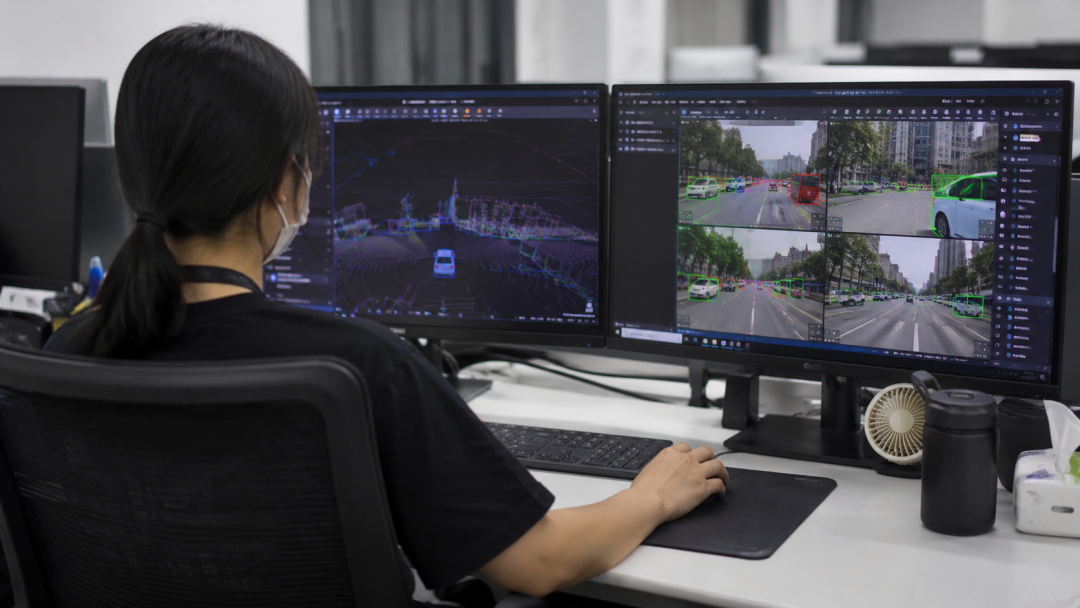
Image Source: Internet
In fact, industry leaders such as Baidu Intelligent Cloud and SpeechOcean are capturing the high-end market through AI large models and self-developed annotation platforms, but none of these companies have abandoned manual annotation capabilities. SpeechOcean's self-developed DOTS-AD annotation platform integrates the SAM model to enhance 2D semantic segmentation efficiency by 50% but also retains a complete manual annotation and quality control system. CAIC's intelligent annotation solution has achieved over 90% automation but relies on humans for the remaining less than 10% of work, which happens to be the most critical and complex part.
After extensive discussion, let's revert to the original question: Following the widespread adoption of automated annotation, is there still a need for traditional annotation?
The answer is affirmative, but the role of traditional annotation is undergoing a fundamental transformation. It is no longer the primary force in data production but has become the gatekeeper of quality assurance, the handler of edge scenarios, and the pioneer of new scenarios. Practitioners of traditional annotation no longer need to perform repetitive tasks like assembly line workers but instead require deeper scene understanding and quality judgment capabilities.
In essence, automated annotation will not eliminate traditional annotation but will redefine it. It can liberate humans from repetitive labor and enable them to focus on what only humans can do—perhaps this is the true essence of technological progress.
-- END --
-
![]()
Expert Interpretation of New Policy Combination: Activating the Trillion-Dollar Automotive Aftermarket
-
![]()
Doubao Goes 'Professional', Volcano Rolls the Snowball
-
AI: No Sign of a Bubble!
-
![]()
NVIDIA-Backed AI Unicorn Secures $1.5 Billion Funding: Revenue Soars 2000%
-
![]()
Doubao Pro is Here: How Can Seed 2.1 Be Integrated into Real Processes?
-
"PCB Juice" Sees Four Consecutive Declines: Even Computing Power Material Suppliers Can't Lift This "Old Stock"
-
![]()
Potential 'Seismic Shift' in the U.S. TV Industry: Competition Shifts from Hardware Sales to Traffic Entry Points
-
![]()
Audi A6L's Defense in the Luxury C-Class Market: Following Huawei's Smart Driving Integration, Is Large-Battery HEV the Next Move?