Potential 'Seismic Shift' in the U.S. TV Industry: Competition Shifts from Hardware Sales to Traffic Entry Points
 06/25 2026
 525
525
The U.S. TV industry may appear calm on the surface, but a recent deal could signal a shift in the direction of industry competition. On June 15 (local time), U.S. tech media outlet TechRadar reported that Fox had announced its intention to acquire streaming platform Roku for approximately $22 billion. The deal is still awaiting regulatory approval and is expected to be completed by 2027.
Roku, the protagonist of this deal, is a U.S. streaming media company that aggregates content from Netflix, YouTube, and others onto TV entry points through its smart TV systems and set-top boxes.
Upon completion of the deal, Fox will gain Roku's brand, hardware ecosystem, Roku OS, The Roku Channel, advertising platform, as well as user data and entry capabilities covering over 100 million households.
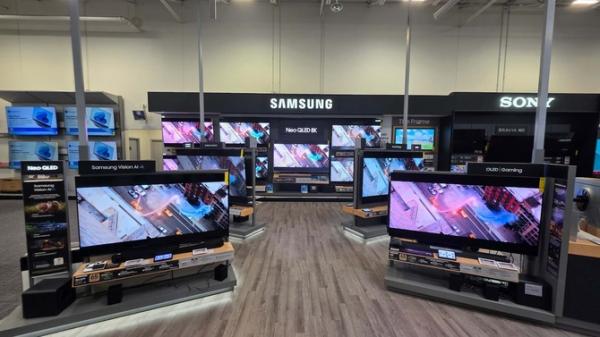
Through this acquisition, Fox's goal is straightforward: to gain access to household TV traffic entry points via Roku, rather than just serving as a content provider.
Why is it vying for household TV traffic entry points?
Fox's Acquisition of Roku Aims at Traffic Entry Points
Fox, a long-established U.S. media conglomerate, operates across broadcast television, news channels like Fox News, as well as sports and film and television content, maintaining a significant position in the North American TV landscape.
Attracting more users and securing traffic entry points through content is key to generating long-term revenue, which is the core logic behind this move.
The impact of this acquisition extends beyond content, potentially affecting smart TV operating systems, content aggregation platforms, and TV brands, while also indirectly influencing Google TV's competitive position.
Google TV is Google's TV platform that integrates various streaming services into a unified interface, centralizing content from YouTube, Netflix, and others for easy user search and viewing.
Originally belonging to different ecosystems, this acquisition places them within the same competitive framework, intersecting on the dimension of 'traffic entry points.'
Following the news, TechRadar cited user discussions highlighting the most immediate concerns: whether the content ranking on Roku's homepage would change, if Fox content would receive greater exposure, and if advertising resources would shift toward its own ecosystem.
While the ultimate impact of this deal remains difficult to predict, it signals a shift in the TV industry's competitive focus from 'selling TVs' to 'what users see after turning on their TVs.'
From Selling TVs to Managing Content Within Them
Over the past two decades, the U.S. TV industry has undergone two distinct phases of change.
The first phase was the hardware era. Samsung, LG, Sony, and later rapidly growing Chinese brands like Hisense and TCL, focused their competition on picture quality, screen size, chip capabilities, pricing, and supply chain efficiency.
During this stage, users primarily cared about display performance, while TV companies competed for market share.
The second phase gradually shifted toward operating systems. As hardware performance became increasingly uniform, industry profit margins narrowed, and the importance of operating systems rose.
Google launched Google TV, Amazon introduced Fire TV, Samsung stuck with Tizen OS, LG continued developing webOS, while Roku built high user coverage in North America through its relatively simple interface design and extensive hardware partnerships.
With the proliferation of smart systems, TVs ceased to be merely 'products sold' and began evolving into continuously used platforms. Users cared less about brands and more about what they saw after turning on their TVs and whether they could quickly find content.
The second phase was characterized by operating systems beginning to influence content distribution, though not yet fully altering consumer decision-making logic.
Changes in the advertising market validated this trend.
According to the Interactive Advertising Bureau's (IAB) '2025 Digital Video Ad Spend & Strategy Report,' Connected TV (CTV) has emerged as one of the fastest-growing advertising sectors in recent years, with ad budgets continuously shifting from traditional TV to streaming platforms.
This is one reason why Fox's acquisition of Roku has been widely interpreted as marking the beginning of a third phase of competition.
The truly valuable assets are the users, viewing duration, ad inventory, and content distribution capabilities accumulated daily by the platform, which hold far greater long-term value than a TV brand itself.
Google TV and Roku: Competing Beyond Just Systems
Many consumers view Google TV and Roku as two distinct TV systems.
In reality, their development strategies differ significantly. Google TV is backed by Google's internet ecosystem, including YouTube, Google Play, Google Assistant, Gemini, and the Android ecosystem, which collectively form its foundational capabilities.
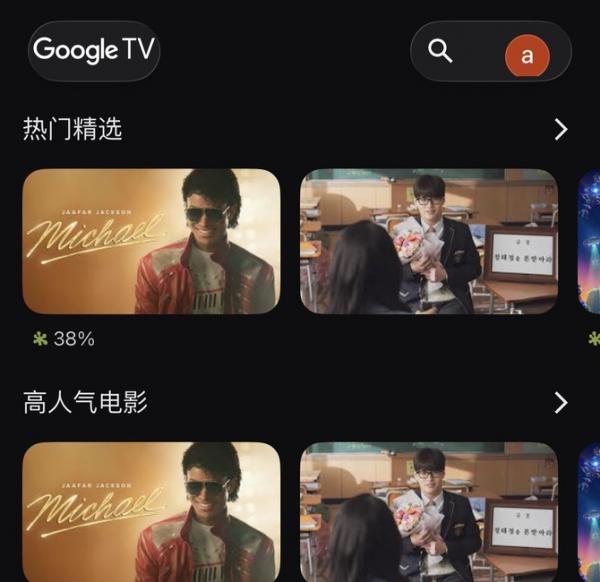
Google aims to keep users within its ecosystem from the moment they turn on their TVs, encompassing search, content recommendations, ad distribution, app downloads, and smart home control.
Roku's development path is entirely different. Lacking an Android ecosystem or smartphone business, it focuses solely on the household TV entry point.
To date, Roku not only provides the Roku OS but also operates The Roku Channel, a free streaming service, and has built a CTV advertising platform for advertisers.
With Fox's entry, Roku's existing structure will undoubtedly change.
Fox Sports, Fox News, and Tubi (Fox's free streaming platform) will gradually integrate into Roku's ecosystem, propelling it further toward an integrated 'content + distribution + advertising' model.
The competition between Google TV and Roku essentially boils down to two approaches:
One is Google TV's vision of keeping users within the Google ecosystem for all actions; the other is Roku's attempt, after incorporating Fox content, to retain users within its own content and advertising ecosystem.
They are competing not just for TV systems but for the attention span of users every time they turn on their living room TVs.
Forcing TCL to Build Its Own System
The impact of Fox's acquisition of Roku varies across TV brands.
TCL has been a frequent topic of industry discussion. In the U.S., most TCL products directly adopt Roku TV or Google TV systems, making them important partners. Hardware is produced by TCL, while systems are provided by the platforms—a division of labor that has long operated in the North American TV market.
This division has its advantages. TV manufacturers focus on manufacturing and cost control, while system platforms handle software updates, app ecosystems, and content partnerships. Each party specializes in its own domain.
However, this structure may now undergo subtle changes. As systems increasingly approach the user entry point, the space for TV brands to participate diminishes.
What content users see after turning on their TVs, how ads are allocated, and which apps are prioritized are no longer determined by hardware but by the system.
From this perspective, TCL will likely need its own system in the future to gain greater influence.
Hisense Has More Leeway
In contrast, Hisense's strategy does not rely entirely on external systems.
Beyond Google TV and Roku TV, Hisense's VIDAA has been advancing overseas for years. In markets like Europe, the Middle East, and Australia, it has accumulated numerous local app partnerships and formed its own content platform.
In the short term, this acquisition will not alter Hisense's product lineup in the U.S. market.
What truly warrants attention is that if Google and Roku continue expanding their platform ecosystems, owning an independent system will become more than just a product configuration for TV companies—it will require long-term investment.
Hisense's VIDAA system layout (layout) in the U.S., Europe, and Asia has left it with ample room.
Samsung and LG Have Already Prepared Years Ahead
This deal has relatively limited direct impact on Samsung and LG, as both companies have long completed their system ecosystem layout (layouts) and have not outsourced their systems.
Samsung continues developing Tizen OS and has established Samsung TV Plus (its free streaming channel), Samsung Ads (its advertising platform), and SmartThings (its smart home platform).
LG has been refining webOS while operating LG Channels (its free channel). In recent years, it has also licensed webOS to some third-party TV brands to expand its platform influence.
For Samsung and LG, once TVs are sold, advertising, content, and services remain within their own platforms—this is where they currently differ from and align with Chinese brands.
Chinese Brands Still Have Time
Many believe that intensified competition between Google TV and Roku will place greater pressure on Chinese TV brands.
In the long run, this may not be the case. Historically, Chinese TV companies have relied on manufacturing capabilities, supply chain efficiency, and price competition to open up overseas markets.
These advantages will not change shortly. What truly needs improvement is the system ecosystem.
Google TV and Roku still dominate in the U.S., but the market structure is more fragmented in Europe, Southeast Asia, and Latin America.
This leaves room for Chinese companies. Future competition in the TV industry will not hinge solely on price but will increasingly emphasize systems, local content, app ecosystems, and AI capabilities.
Systems will become a new source of differentiation. Naturally, this process will not happen overnight. App quantity, local content, developer ecosystems, and advertising platforms all require years of accumulation.
This is a slow-moving variable.
However, for Chinese brands that already possess global manufacturing and distribution capabilities, this represents a crucial window to establish long-term competitive barriers.
Entry Points Are Becoming the True Focal Point of Competition
The impact of Fox's acquisition of Roku will not immediately manifest in sales volumes, but it signals a clear trend.
In the past, the focus was on how many TVs were sold. Now, it's about where users linger after turning on their TVs, what they watch, and whether they keep coming back.
TVs remain entry points, but their value is shifting backward. The significance of the screen itself is declining, while systems, content, advertising, and data are rising.
Fox's acquisition of Roku is not about buying devices but about purchasing user entry points—and its impact on the TV industry is already unmistakable.
-
![]()
Can Computers, Despite Daily Price Hikes, Still Be a Viable Purchase?
-
![]()
January-June Auto Stocks' 'Resilience Ranking': Geely Alone Posts Gains, Six Plummet Over 40%, One Tumbles 54.5% | Mirror Pro
-
![]()
China’s Public Charging Market: Didi Charging, Teld, and Yunkuai Take the Lead
-
![]()
The First Year of AI-Native Mid-Year Shopping Festival: Technology Reconstructs Human-Product Matching for 618
-
![]()
Micron has released its financial report, showing revenues of $41.5 billion, a 74% increase quarter-over-quarter, with a gross margin of 84.6%. The company provided both short-term and long-term guida
-
![]()
Expert Interpretation of New Policy Combination: Activating the Trillion-Dollar Automotive Aftermarket
-
![]()
Doubao Goes 'Professional', Volcano Rolls the Snowball
-
AI: No Sign of a Bubble!