7-Day Stock Surge Matches BYD’s Market Cap: Is Zhipu’s $1 Trillion Valuation Justified? | Insights
 06/25 2026
 345
345
Capital Frenzy Meets Real Challenges for China’s AI Giants
Original Content by Dianshu Digital Economy Studio
Author | Tan Yan
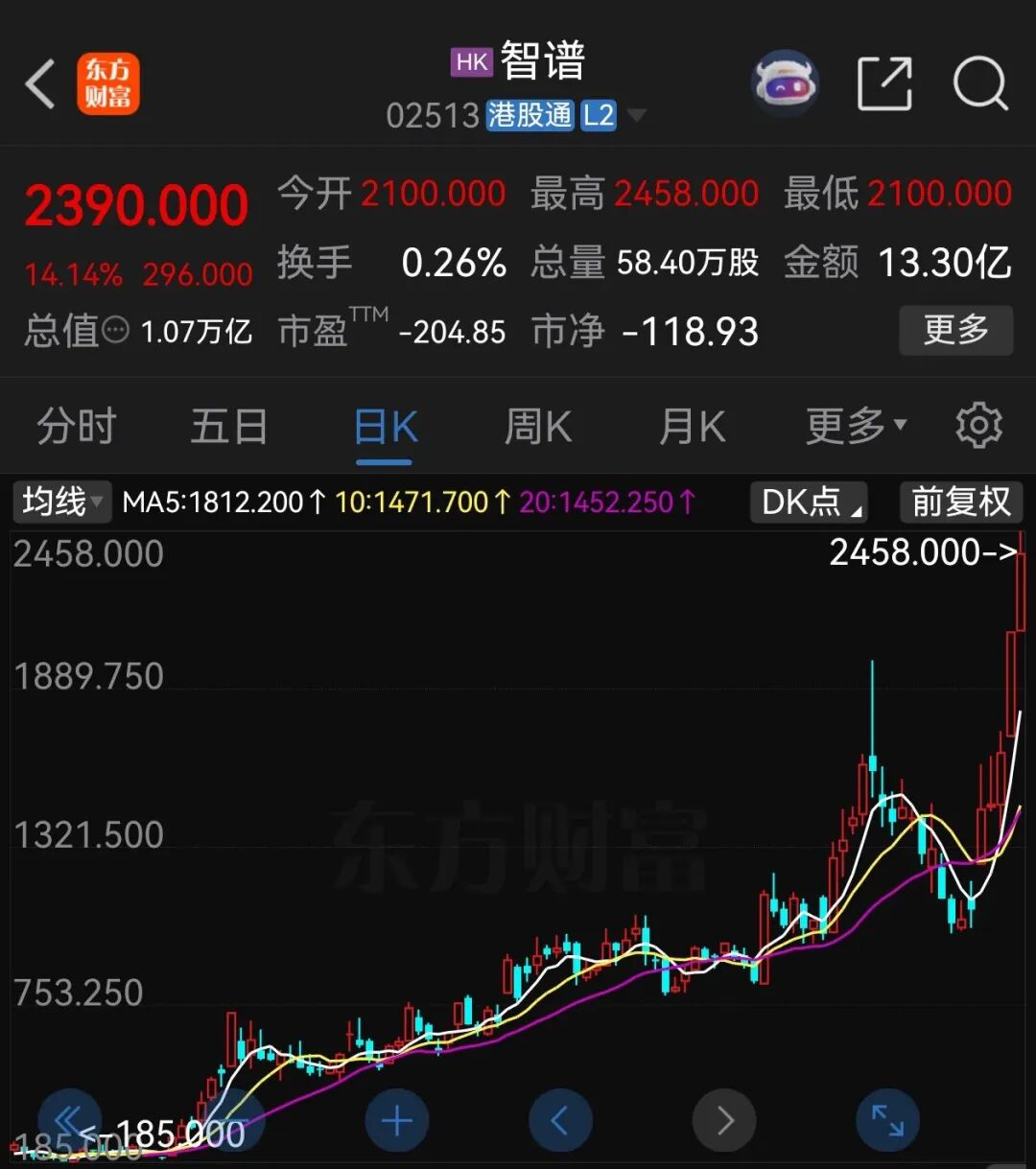
On June 22, shares of Hong Kong-listed Zhipu (02513.HK) soared to HK$2,980 apiece, propelling its market capitalization to HK$1.27 trillion (≈RMB 1.1 trillion). By market close, the stock settled at HK$2,410/share with a valuation of HK$1.07 trillion, officially joining the “trillion-dollar club.” For context, BYD’s A-share market cap currently hovers around ≈RMB 760 billion. Even after recent corrections, Zhipu’s market cap gain from June 11–22 alone nearly equals BYD’s total valuation.
From Tsinghua Lab to Unicorn: Zhipu’s Meteoric Rise
Less than six months after its January 8, 2026, Hong Kong Stock Exchange debut, Zhipu’s stock has surged over 1,900%. This Tsinghua University spin-off achieved in seven years what most tech firms take decades to accomplish. Behind this rapid ascent lies nearly two decades of technical accumulation by its founding team, the industrial wave of large-scale AI model innovation, and capital’s bold bet on AI narratives.

Roots in Tsinghua’s Labs
Zhipu’s origins trace back to 2006 at Tsinghua University, where the Knowledge Engineering Group (KEG) launched AMiner, an academic search system leveraging AI to analyze research trends and academic networks. Led by newly minted Ph.D. Tang Jie and supported by Zhang Peng (who joined KEG in 1998 and earned his Ph.D. under Tang), the team transformed AMiner into a global academic platform with billions of researcher profiles and papers, used in over 200 countries by 2019.
Thirteen years of lab research laid the foundation for Zhipu. In June 2019, the AMiner team spun off to establish Beijing Zhipu Huazhang Technology, with Zhang Peng as CEO, Tang Jie as Chief Scientist, and Liu Debing as Chairman. Nearly all founders hailed from KEG, bringing over a decade of technical expertise to commercialize large-scale AI models.
Zhipu initially focused on knowledge graphs and semantic technologies for government and enterprise clients, achieving profitability in its first year. The turning point came in 2020 with OpenAI’s GPT-3 release, which showcased the potential of large-scale models. Zhang Peng spearheaded internal discussions, leading to an all-in bet on general-purpose large model R&D—an aggressive move for a domestic startup.
In 2021, Zhipu released China’s first proprietary pre-trained large model framework (GLM) and launched a Model-as-a-Service (MaaS) platform. The team then scaled model parameters from 10 billion to 100 billion, directly competing with GPT-3.
This gamble was costly: training a 100-billion-parameter model cost tens of millions monthly in computing alone, with an 8–9-month R&D cycle. Failure could bankrupt the company. Despite internal disagreements, the team proceeded.
After nine months, Zhipu open-sourced GLM-130B (130 billion parameters) in August 2022. By November, independent evaluations ranked it Asia’s only model on par with GPT-3 in accuracy, excelling in certain metrics. This breakthrough propelled Zhipu from academia to mainstream visibility, establishing it as a domestic leader.

Trillion-Dollar Valuation in Six Months
The real inflection point came in early 2023. ChatGPT’s explosion turned large-scale models into a capital magnet, with Zhipu—one of China’s few firms with 100-billion-parameter technology—becoming an investor darling.
Zhang Peng noted a 180-degree shift in investor sentiment around the 2023 Chinese New Year. Previously, financing required explaining large models’ technical logic; afterward, he met 3–4 investor groups daily.
In 2023, Zhipu completed multiple funding rounds, with its valuation reportedly surging past RMB 10 billion within a year. Alibaba, Tencent, Ant Group, Sequoia, and Hillhouse Capital joined as backers, making Zhipu China’s first large model startup valued over RMB 10 billion.
From 2024–2025, Zhipu rapidly iterated its technology, launching the GLM-4 series models, multimodal large models, CogVideoX (video generation), and end-to-end speech models, covering text, image, video, and voice. Commercially, it built three pillars: cloud APIs, private deployments, and industry solutions, serving finance, government, energy, and manufacturing.
On January 8, 2026, Zhipu became the world’s first listed company focused on general AI foundation models, debuting on the Hong Kong Stock Exchange at HK$116.2/share, raising over HK$4.3 billion. The public offering saw 1,159.46x oversubscription, attracting cornerstone investors like Gaoyi Assets and Taikang Life. At launch, its market cap stood at ≈HK$52.8 billion, closing at ≈HK$57.89 billion on day one.
While market attention focused on its “first global large model IPO” status, expectations for sustained gains remained mixed.
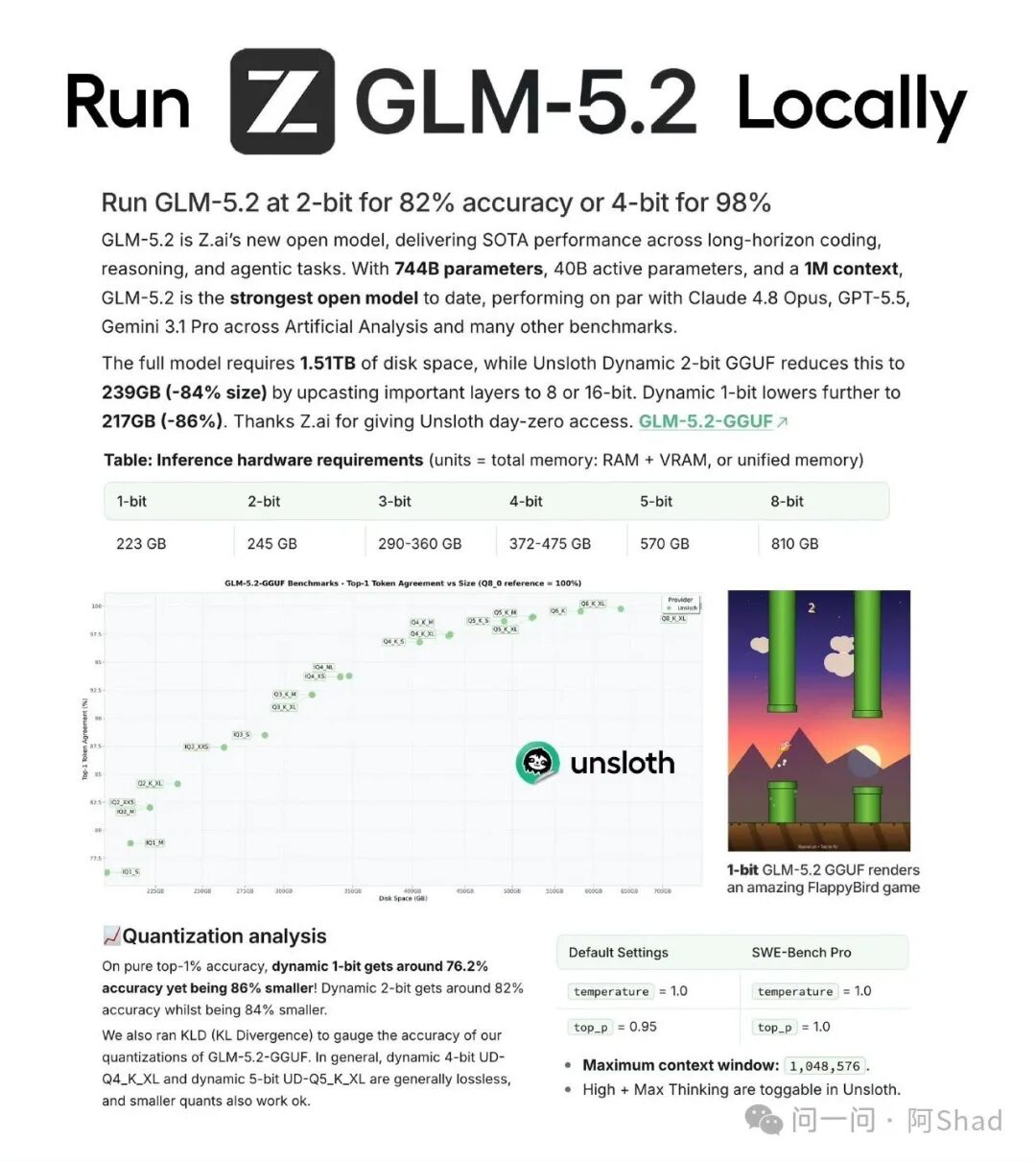
Zhipu’s stock truly took off in June 2026. On June 1, it announced plans for a STAR Market listing, seeking RMB 15 billion in funding (RMB 12 billion for R&D). The application-to-approval process took just 16 days, surprising markets. On June 8, Zhipu joined the Stock Connect, triggering heavy southbound capital inflows (net purchases exceeded HK$5 billion by June 18). On June 17, it unveiled GLM-5.2, supporting 1 million-token lossless context windows and ranking globally in multiple benchmarks.
Under these tailwinds, Zhipu’s stock skyrocketed. From HK$1,097 on June 12 to a peak of HK$2,980 on June 22, it surged 170%+ in seven trading days, breaching the HK$1 trillion market cap milestone. 
Trillion-Dollar Valuation Masks Deep Challenges
Despite the trillion-dollar halo, market skepticism persists. A valuation inflated by capital enthusiasm clashes with unproven technical and commercial capabilities, creating Zhipu’s core dilemma. After peaking, its market cap dropped to HK$969.26 billion by June 24.
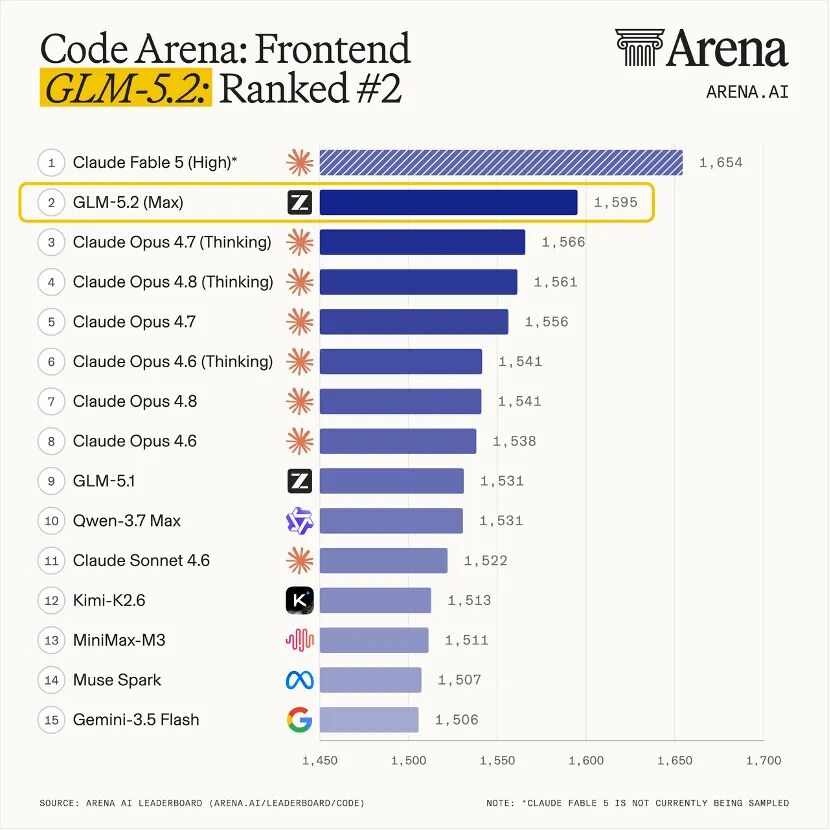
First, technical gaps and competitive pressures loom. While GLM-5.2 places Zhipu in the global top tier, it lags behind leading overseas models in multimodal understanding, complex reasoning, and long-context agent capabilities. Elon Musk once noted on social media that Chinese large-scale models might take months to match overseas leaders.
Domestic competition is fierce. DeepSeek dominates developers via open-source strategies, Doubao excels in consumer-facing products, and MiniMax breaks through in social and multimodal fields. Internet giants like Baidu, Alibaba, and Tencent are also ramping up investments.
Zhipu lacks insurmountable technical barriers. Competitors could quickly close or surpass its model advantages. In AI’s fast-paced innovation cycle, a six-month lead is fragile. Slower model iterations could erode its valuation’s technical foundation. 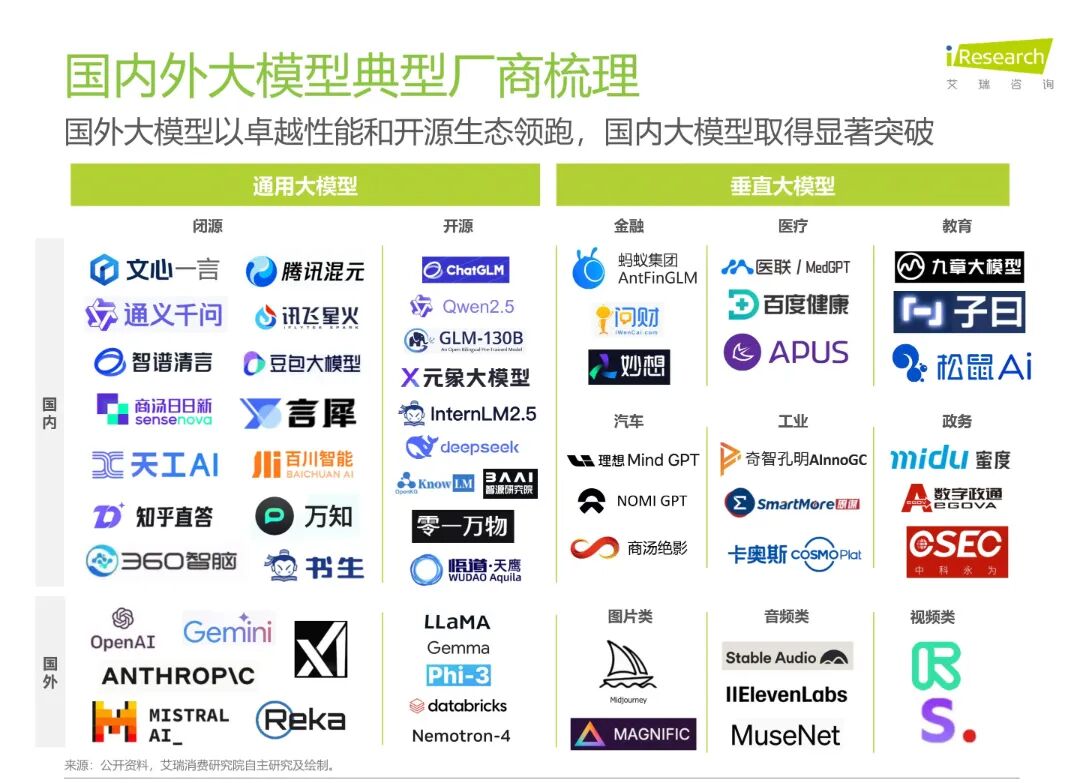
Second, computing bottlenecks and cost pressures persist. Large-scale models depend heavily on computing power, a chronic shortage for Chinese firms, including Zhipu. In late January 2026, Zhipu limited sales of its Coding Plan due to computing constraints. Developers reported slower inference speeds compared to overseas models, with queuing during peak demand.
More concerning is the mismatch between revenue and valuation. Zhipu’s 2025 revenue was RMB 724 million, implying a price-to-sales ratio exceeding 100x against its trillion-dollar market cap. For context, Alibaba Cloud generated RMB 158.1 billion in FY2026 revenue—218x Zhipu’s total—yet Zhipu’s valuation nears half of Alibaba’s market cap. This disparity fuels concerns over a valuation bubble.
Zhipu’s surge is also driven by extremely limited float. Free-floating shares account for <3% of total equity. After deducting cornerstone investments, tradable shares are scarce. With southbound capital pouring in and few large-scale model alternatives, small capital inflows can trigger extreme volatility.
This “small-float-driven valuation” model is unsustainable. On July 8, 2026, 25.68 million shares (≈HK$100s of billions in value) will unlock—multiple times the current float. Post-lockup, a flood of shares could reverse supply-demand dynamics, pressuring the stock. Indeed, on June 23, Zhipu’s stock plunged 16% to HK$1,980, highlighting small-cap fragility.

AI’s Global Bubble Debate
Zhipu’s trillion-dollar valuation reflects broader AI capital fervor. The controversy over its valuation mirrors the industry’s “bubble debate.”
By 2026, AI bubble concerns peaked. Skeptics argue that semiconductor valuations hit 2008-level highs, while the industry faces hype-driven chaos. Traditional firms relabel themselves as “AI-powered” without breakthroughs, real applications, or revenue, yet see valuations soar. Startups raise billions without clear business models, burning cash and eroding industry credibility. Official media has warned against blind following, disorderly competition, and hype, urging a shift from “land grabs” to “practical implementation” to cool markets.
Optimists, however, cite strong fundamentals. Mainstream research dismisses systemic bubbles, acknowledging only structural excesses. Unlike the 2000 dot-com bubble, this AI wave rests on solid technical progress and industrial demand. Large-scale models already demonstrate clear productivity gains in coding, customer service, content creation, and industrial design, transcending mere speculation.
More importantly, the AI industry is supported by massive real capital expenditures. According to TrendForce data, the combined capital expenditures of the world’s nine largest cloud providers will reach $830 billion in 2026, a more than 70% increase from 2025. Goldman Sachs predicts that global AI-related capital expenditures could exceed $1 trillion by 2027. Such large-scale physical investments indicate that AI is not a castle in the air but is actively reshaping the infrastructure of the global technology industry.
Returning to Zhipu itself, the underlying logic of its trillion-dollar market capitalization is precisely ‘scarcity premium.’ Market analysis points out that Zhipu’s valuation premium comes from three layers of scarcity: the extreme scarcity of independently listed large-scale model companies globally, the scarcity of AI technology companies in the Hong Kong stock market, and the scarcity of tradable shares due to lock-up periods. Against the backdrop of southbound capital’s urgent need to allocate AI assets, Zhipu has become the optimal choice, with concentrated capital inflows driving up its valuation.
To some extent, what Zhipu is experiencing is very similar to the leading companies during the dot-com bubble twenty years ago. In the early stages of a technological revolution, capital always tends to prematurely factor in future growth expectations, discounting long-term value into the present and causing a severe divergence between valuation and fundamentals. Bubbles are inevitable, and so are their bursts—the bursting process will eliminate a large number of low-quality companies riding the hype, bringing valuations back to rationality. However, truly technologically capable and industrially valuable leading companies will realize their long-term value after the bubble, just as Amazon and Google emerged after the 2000 dot-com bubble.

In Conclusion
Zhipu’s trillion-dollar market capitalization is both a milestone and a mirror for the development of China’s AI industry. It reflects not only the achievements of domestic large-scale model technological progress but also the overvalued estimations driven by capital frenzy.
For Zhipu, a trillion-dollar market capitalization is not an endpoint but a new starting point—how to translate capital recognition into sustained technological advantages, how to optimize its commercialization structure to achieve healthy profitability, and how to preserve its value amid lock-up expirations and industry competition are the questions it must answer next.
For the entire AI industry, Zhipu’s surge and potential volatility also serve as a reminder to all participants: the long-term value of artificial general intelligence is undeniable, but the short-term euphoria of capital will eventually recede. When the tide goes out, it will become clear who is swimming naked and who is truly building technological moats. Only companies that genuinely root themselves in technology and deeply cultivate the industry can navigate through cycles and stand at the forefront of the era.
THE END
This article is an original piece from
-
![]()
Expert Interpretation of New Policy Combination: Activating the Trillion-Dollar Automotive Aftermarket
-
![]()
Doubao Goes 'Professional', Volcano Rolls the Snowball
-
AI: No Sign of a Bubble!
-
![]()
NVIDIA-Backed AI Unicorn Secures $1.5 Billion Funding: Revenue Soars 2000%
-
![]()
Doubao Pro is Here: How Can Seed 2.1 Be Integrated into Real Processes?
-
"PCB Juice" Sees Four Consecutive Declines: Even Computing Power Material Suppliers Can't Lift This "Old Stock"
-
![]()
Potential 'Seismic Shift' in the U.S. TV Industry: Competition Shifts from Hardware Sales to Traffic Entry Points
-
![]()
Audi A6L's Defense in the Luxury C-Class Market: Following Huawei's Smart Driving Integration, Is Large-Battery HEV the Next Move?