Qianwen Faces U.S. Obstruction: Alibaba’s AI Progress Hindered by External Pressures
 06/26 2026
 536
536
Leadership in the Tech Race: Navigating Headwinds
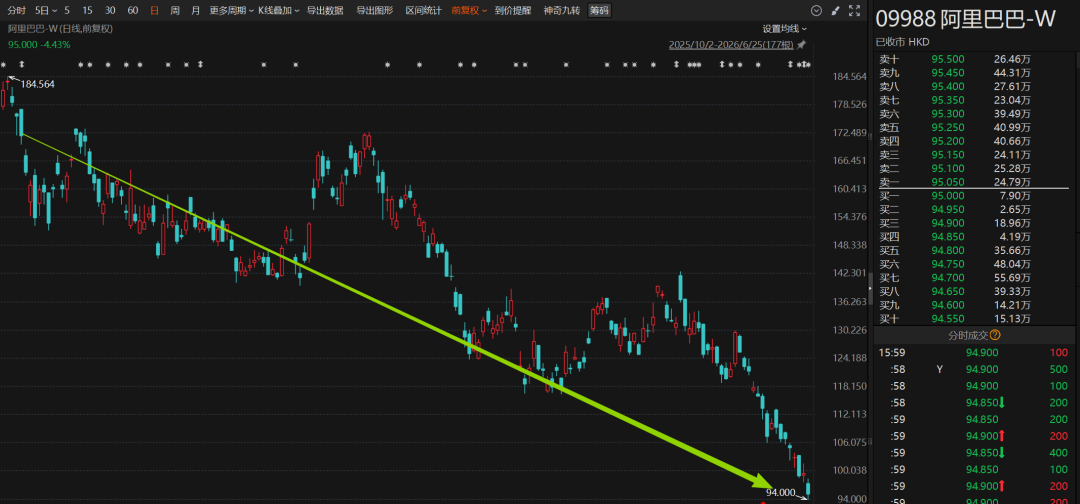
On June 25, Alibaba’s Hong Kong-listed shares plummeted by 5%, closing at HK$94.55 per share—the lowest level since February 2025.
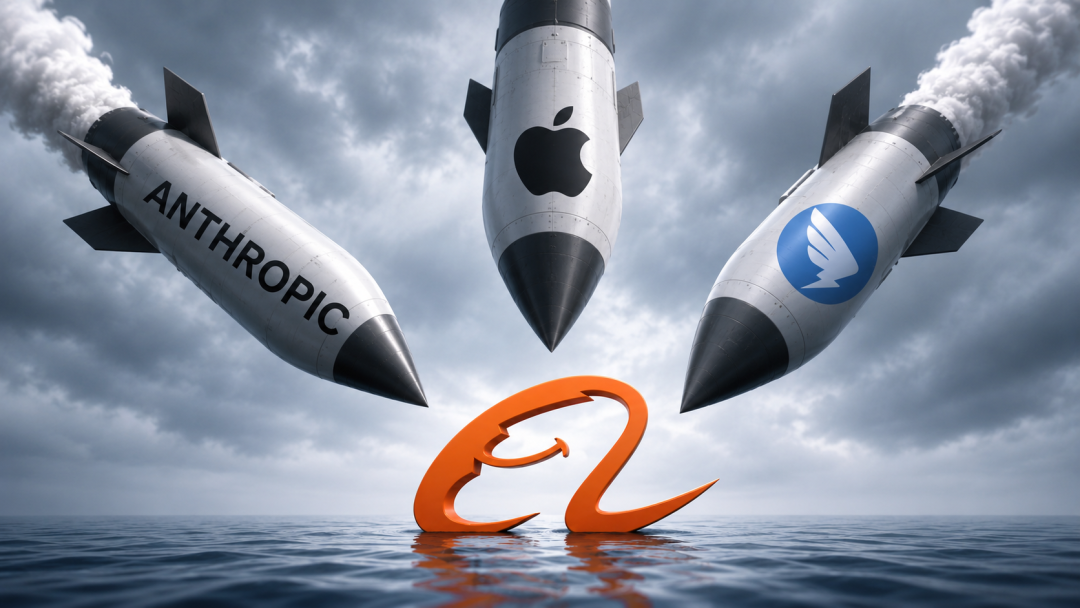
The market panic wasn’t triggered by poor financial results but by a letter. U.S. AI firm Anthropic sent a communication to the U.S. Congress and White House, alleging that Alibaba’s Qianwen team had engaged in over 28.8 million interactions with Anthropic’s Claude model via nearly 25,000 fake accounts, labeling it a “large-scale model distillation” effort.
Anthropic described this as the “largest known case of unauthorized distillation to date.”
The term “distillation” refers to a standard AI practice where users repeatedly query a model, compile the outputs into a dataset, and train new models. Major AI labs, including Anthropic itself, openly conduct systematic evaluations and benchmarking of competing models.
Anthropic had previously employed similar tactics against DeepSeek, Moonshot AI, and MiniMax. Framing routine model interactions as “theft” is a transparent pretext, but stock prices don’t parse technical nuances—they react to perceived risks.
Coincidentally, on June 23, Alibaba had filed a lawsuit against the U.S. Department of Defense in a California federal court, demanding its removal from the “Chinese military enterprises list.” Two days later, Anthropic’s accusation dominated media coverage.
The sharper Alibaba’s technological edge grows, the denser the external obstructions become. Over the past six months, from organizational inefficiencies to talent competition, regulatory scrutiny, and geopolitical interference, every leap forward for Alibaba’s AI has been met with non-technical disruptions.
01 Apple Partnership Under Scrutiny: Overseas Obstructions Intensify
For Alibaba’s AI, this marks the latest chapter in a two-year saga of sanctions.
In February 2025, Apple and Alibaba announced a partnership to introduce Apple Intelligence for iPhones in mainland China, powered by Alibaba’s latest model. It was a mutually beneficial collaboration: Apple needed a compliant local AI partner, and Alibaba sought access to a consumer base of hundreds of millions.
Progress, however, stalled. According to the Financial Times, multiple co-developed AI products were submitted for review to Chinese cyberspace regulators but got stuck at the Cyberspace Administration of China (CAC). Insiders revealed that escalating U.S.-China geopolitical tensions have led Beijing to scrutinize U.S.-related transactions more closely, particularly in AI.
Ultimately, such deals require higher-level approval. As of June 2025, the review process remained in limbo.
Apple had partnered with Alibaba to secure CAC approval, but rising U.S.-China trade tensions subjected their collaboration to stricter scrutiny. A technical partnership became entangled in broader geopolitical negotiations.
Meanwhile, Alibaba’s AI faced more direct international obstacles.
In September 2025, Anthropic announced it would halt AI services to “Chinese-controlled enterprises,” the first such policy shift by a U.S. AI company. The ban could impact Chinese firms like ByteDance, Tencent, and Alibaba, with Anthropic estimating a loss of hundreds of millions in global revenue.
By November, on the day of the Qianwen app’s launch, foreign media cited a White House national security memo claiming Alibaba provided technical support for Chinese military operations targeting U.S. interests. The report relied heavily on suggestive language like “may” and “internal rumors” to attack Chinese AI security, later admitting it lacked “factual verification.”
The tactics mirrored those used against Huawei—using “national security” as a pretext to obstruct market access.
These geopolitical disruptions, unrelated to Alibaba’s technical capabilities, have realistically slowed its global expansion and dampened capital market confidence.
Yet when a company stakes its future on technological transformation, the true obstacles often lie beyond technology itself.
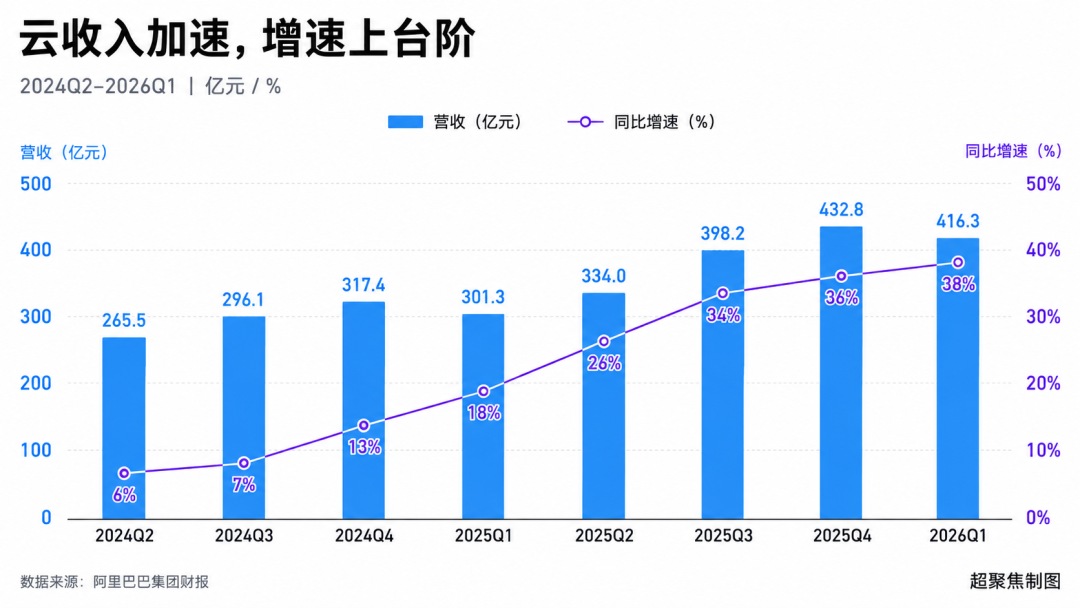
Alibaba Cloud’s AI-related product revenue achieved triple-digit growth for eleven consecutive quarters, reaching RMB 8.971 billion in Q4 FY2026, accounting for over 30% of external commercial revenue for the first time. Wu Yongming revealed during the earnings call that AI model and application services’ annualized recurring revenue would surpass RMB 10 billion in the June quarter.
In Gartner’s generative AI assessment, Alibaba Cloud ranked as a leader across all four dimensions. IDC reports showed Alibaba Cloud dominated China’s public cloud market for large model training and inference with a 42.2% share. The Qianwen series secured a prominent position among global open-source models, with Qwen 3 scoring 1,433 points on LMSYS Chatbot Arena, ranking third globally.
From chips (T-Head) and cloud infrastructure (Alibaba Cloud) to model layer (Tongyi Qianwen) and application layer (e-commerce, DingTalk, Amap), Alibaba has built a complete full-stack AI ecosystem.
Joe Tsai called this the “full-stack AI strategy”: in-house chip development, infrastructure, advanced large models, and application layers, with control and optimization at every level.
This architecture appears flawless, but technical completeness doesn’t guarantee smooth commercialization.
02 Technological Leadership, Persistent External Threats
If pressure from across the Pacific represents external variables, internal organizational inefficiencies pose Alibaba’s most significant recent challenge.
On June 4, Teng Yaxin, a former AI product manager at DingTalk’s Wukong Business Unit, published a 75,000-word resignation essay titled “Inside DingTalk” on Alibaba’s internal network. The essay detailed the lifecycle of DingTalk’s flagship AI project, ONE, from inception to dismantling, accusing the team of pandering to superiors, fostering toxic internal competition, and prioritizing leadership whims over product logic.
Six days later, Alibaba’s Partnership Committee intervened, criticizing DingTalk’s management style in an internal post. Subsequently, DingTalk CEO Chen Hang (Wu Zhao) stepped down, replaced by Chen Yusen, born in 1992.
This sudden management shakeup had an element of randomness but reflected deeper organizational dilemmas within Alibaba’s AI efforts: when a flagship product carrying the group’s AI strategic transformation bears multiple objectives—user relief, product iteration, organizational reform, and commercialization—product logic often yields to organizational politics.
During Wu Zhao’s tenure, DingTalk released dozens of AI products: AI Note, AI Search, AI Spreadsheet, ONE, Agent OS, resulting in severe feature bloat.
The deepest critique of ONE in “Inside DingTalk” was that it served not ordinary employees but an imagined high-net-worth manager. This microcosm revealed fundamental disagreements over product positioning, which were amplified and politicized amid organizational inefficiencies, ultimately culminating in a CEO replacement.
Alibaba restructured its AI organization three times in three months. In March 2026, it established the Alibaba Token Hub Business Group; in April, it upgraded its Technology Committee; in June, it merged the Tongyi Large Model Business Unit and Future Living Lab to form the Token Foundry Business Unit, directly overseen by Wu Yongming.
Each adjustment aimed to solve the same problem: how to grant AI business sufficient decision-making speed and resource priority within a massive organization. However, frequent restructuring itself depleted organizational execution power and talent stability.
In early March, Tongyi Lab planned to split the Qwen team from a vertically integrated model into horizontally divided units for pre-training, post-training, text, and multimodal tasks. This led to the departure of Lin Junyang, who led the open-sourcing of Qwen 3.5 and advocated a “small team, large closed loop” full-stack approach.
According to iBlackHorse, after the stunning debut of HappyHorse, team members received a flood of calls from headhunters. ByteDance, Tencent, and multiple AI startups approached team members, with Tencent offering AI talent salaries about 50% above market rates.
Meanwhile, Zhou Jingren, a core figure in Tongyi’s large models, was promoted to Chief Scientist but no longer oversaw specific product lines. Within the tech community, opinions differed on whether this was a “coronation” or a “sidelining.”
The core contradiction for Alibaba’s AI is that while its capabilities continuously improve, the path from technology to commercial success is repeatedly disrupted by non-technical factors.
Global AI commercialization entered a clear differentiation phase in 2026, with programming and video as the two main battlefronts. Cursor’s annualized revenue surpassed $2 billion, Anthropic’s Claude Code captured 54% of the model share in programming scenarios, and ByteDance’s Seedance 2.0 generated over RMB 1 billion in monthly revenue for Volcano Engine in the video domain.
Alibaba’s Tongyi is also developing programming and video capabilities. However, beyond technical acclaim from open-source communities, its commercially viable products with consistent market recognition remain scarce.
According to IDC, for the full year of 2025, Volcano Engine dominated China’s enterprise-grade MaaS market with a 49.5% share in token calls, while Alibaba Cloud trailed at 28%, a 20-percentage-point gap.
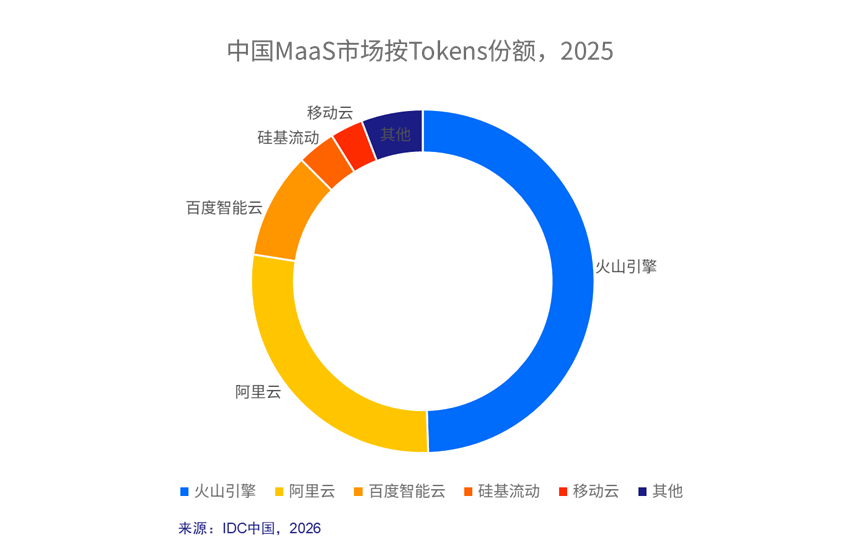
This gap stems not from technical capability but from productization, scenario adaptation, and commercialization abilities—areas most vulnerable to disruption by organizational inefficiencies, strategic vacillation, and external political pressure.
In June 2026, Alibaba released its first native language world model, Qwen-AgentWorld. That same month, it open-sourced three embodied AI models under the Qwen-Robot Suite. Technologically, Alibaba’s AI development has not stalled.
However, whether technological advantages can translate into market success depends on more complex issues: Can Alibaba minimize the impact of these “external maneuvers”? After all, geopolitical undercurrents will not recede due to a company’s technical prowess, nor will organizational tensions automatically resolve with CEO involvement.
Just as rice seedlings planted by Jack Ma and his executives require over a hundred days to reach harvest, AI’s journey from sowing to reaping involves a long wait.
But while rice fields face challenges from weather and pests, Alibaba’s AI confronts variables unrelated to technology or products—external maneuvers beyond the chessboard.
The fields teach a simple truth: plant when you must, endure when you must. Whether Alibaba can withstand these “external maneuvers” may ultimately determine its AI harvest.
- END -
-
![]()
Profits Skyrocket! From Leasing to Construction: A Storage Enterprise with Hundred-Billion-Yuan Revenue Plans 1.175 Billion Yuan Investment in New Headquarters
-
![]()
Discounts Now on Offer: Is Xiaomi No Longer Grappling with Vehicle Shortages?
-
![]()
Samsung Doesn't Make Money the Hard Way
-
![]()
Japanese Media Acknowledges: China's Engine Technology Outstrips That of Japanese Firms
-
![]()
Japanese Media Concedes: China’s Engine Technology Outpaces Japanese Firms
-
![]()
Doubao Professional Version Unveiled! China Now Boasts Its Own National-Level Professional AI Agent
-
![]()
ByteDance and Alibaba Both Step Back from the Gaming Arena
-
Xiangeo International Clears BSE Review: Setting a Global Standard for the ‘Chinese Sound’ | A-Share Financing Brief