Japanese Media Acknowledges: China's Engine Technology Outstrips That of Japanese Firms
 06/26 2026
 499
499
Introduction
It was only a matter of time before this happened.
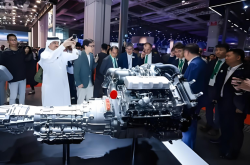
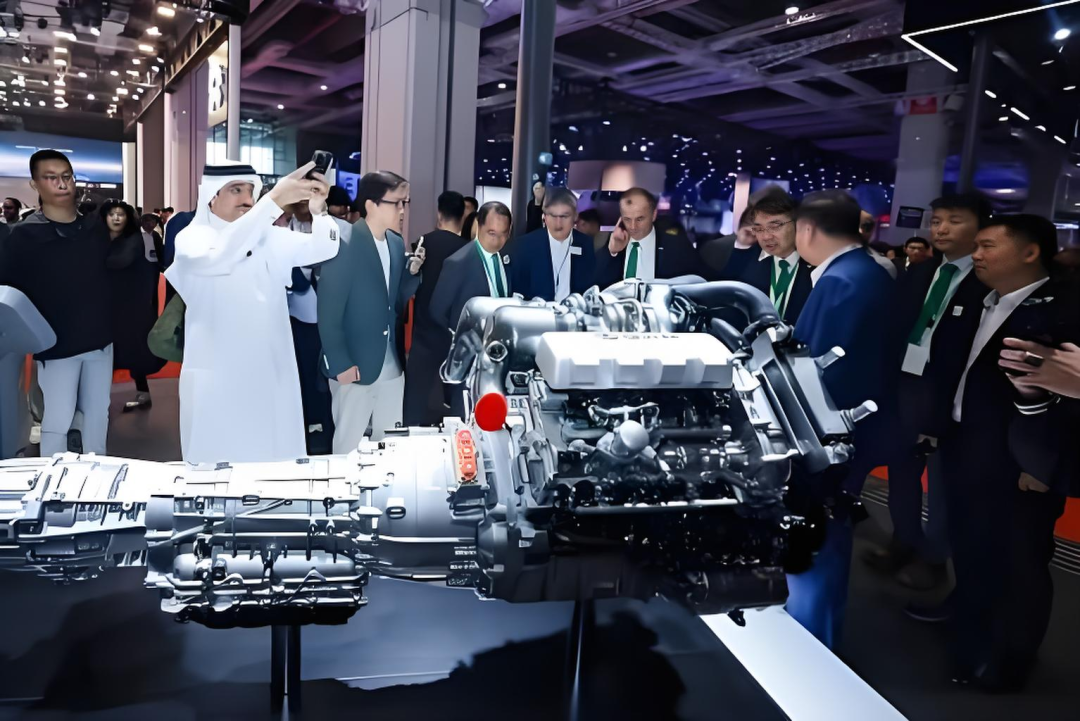
In recent years, the automotive industry has increasingly viewed engines as a relic of the past, especially with the surge in new energy vehicles (NEVs). Many believed that internal combustion engines (ICEs) would gradually fade into history. However, while the world has largely focused on electrification, several Chinese automakers have been quietly enhancing traditional ICEs.
Traditionally, ICE technology has been the stronghold of foreign automakers. When it comes to engine technology, Japanese automakers, in particular, have been globally recognized for their prowess, especially in hybrid technology. Yet, this landscape is undergoing a transformation.
On June 17, Nihon Keizai Shimbun published an article titled "Chinese Automakers Rapidly Catching Up to Japanese Rivals in Engine Technology, Boosting Power Conversion Efficiency, and Harnessing Artificial Intelligence." The piece highlighted a series of recent breakthroughs by Chinese automotive brands in efficiency, performance, and cost reduction.
In essence, Japanese media now concede that Chinese automakers are swiftly surpassing their Japanese counterparts in engine technology. This significant leap forward is attributed to rapid intelligence-driven development. Following reposts by multiple foreign media outlets, there is a belief that Japanese automakers' leading position in engine technology will soon face a formidable challenge.
01 Combining Technology with Intelligence
Many may recall that during the heyday of gasoline-powered vehicles, several Chinese automakers achieved remarkable milestones in engine thermal efficiency. For instance, Chery, Geely, and Dongfeng have all introduced hybrid engines with thermal efficiencies exceeding 48%, directly challenging what was once the technological bastion of Japanese automakers.
The Japanese media article also sheds light on the latest engines from Chery, Geely, and Changan, particularly their HEV hybrid engines released this year, providing a thorough analysis of their significance.
For example, at this month's Shenzhen Auto Show, Chery's new Tiggo 9, equipped with the "Kunpeng Tianqing" hybrid system, stole the limelight. According to data released by Chery in April, the engine's thermal efficiency has reached 48.57%, with Vice President Hong Gaoming dubbing it "the engine with the highest thermal efficiency in the world."
Foreign media emphasize that while high horsepower figures are appealing, efficiency is paramount. Thermal efficiency measures the proportion of fuel energy converted into usable power rather than being wasted as heat. Traditional gasoline engines typically fall far short of this level, and even modern, efficient hybrid vehicles with thermal efficiencies exceeding 40% are considered remarkable.
More efficient engines can reduce fuel consumption, emissions, and extend driving range while enhancing hybrid performance without the need for larger battery packs. Chery also stated that the Kunpeng Tianqing technology will be applied to plug-in hybrid electric vehicles (PHEVs) and extended-range electric vehicles (EREVs).
Geely is not far behind, with its "i-HEV" hybrid engine achieving a thermal efficiency of 48.41%, already featured in the Xingyue L model. According to released details, the engine boasts a high compression ratio of 15.5:1, advanced combustion design, reduced internal friction, Miller cycle valve timing, and ultra-high-pressure fuel injection.
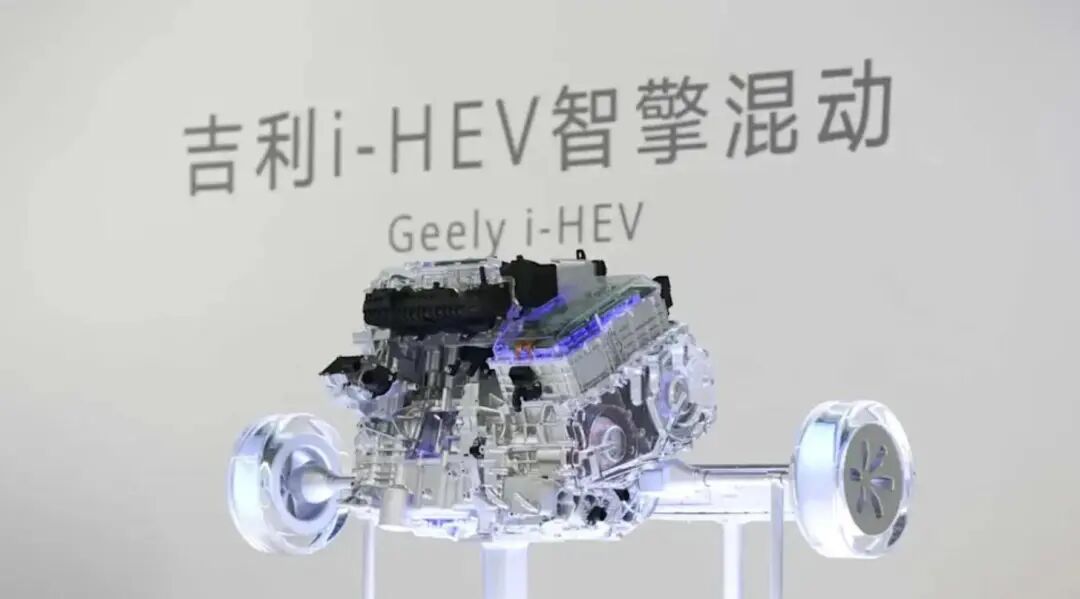
These enhancements are complemented by Geely's new intelligent hybrid management system, which reportedly leverages real-time data such as altitude, humidity, and temperature to optimize driving efficiency. In essence, this engine excels because it is smarter. Geely CEO Gan Jiayue stated bluntly at the April press conference, "We will fundamentally overturn the existing hybrid technology of Japanese automobiles."
Changan Automobile has achieved mass production breakthroughs in fuel injection technology, with its "Blue Whale Super Engine Hybrid" launched in May featuring a 500bar high-pressure fuel injection system, claimed to be the first of its kind in mass production globally. Existing direct injection systems typically peak at around 200bar, with higher pressures enabling finer atomization, thus improving thermal efficiency and enhancing acceleration performance.
It is evident that these three engines are, strictly speaking, designed for HEV hybrids. The significance of hybrids lies in the replacement and upgrading of ICEs. Globally, despite China's new energy penetration rate reaching new heights, more than 70 million consumers still opt for traditional gasoline vehicles each year.
It is clear that even amid the new energy wave, ICEs remain a crucial foundation for Chinese brands. Chery sold 2.8 million vehicles last year, exporting 1.34 million, surpassing BYD and Geely to become China's largest automotive exporter. However, gasoline-powered vehicles still account for 70% of Chery's total sales.
Japanese automakers have traditionally led in engine technology, while Chinese competitors have compensated for their shortcomings by focusing on electrification. According to MarkLines data, Chinese companies accounted for 59% of the global electric vehicle market last year, while Japan accounted for only 3%. However, in the non-electric vehicle market, Japan held a 30% share, surpassing China's 20%.
According to GlobalData forecasts, by 2038, pure gasoline vehicle sales will decline by 36%, but hybrid vehicles will maintain a stable market share of 15%. This implies that whoever can secure the technological high ground in hybrid engines will dominate this transitional market. Guangfa Securities analysis suggests that Chinese automakers are reshaping the global hybrid market landscape through a combined strategy of "high-efficiency engines + intelligence."
02 From Catching Up to Leading
This round of technological breakthroughs can be seen as part of Chinese automakers' dual strategies in both the electrification and gasoline vehicle markets. On the one hand, they are vigorously promoting electric vehicles overseas; on the other hand, they are quietly enhancing ICE technology to meet market demands from those not yet ready to abandon ICEs.
This dual strategy, coupled with R&D capabilities that foreign manufacturers find hard to match, makes the current situation truly noteworthy. ICEs may not make a comeback, but they are far from obsolete. China is merely ensuring that it can participate in writing the final chapter of the ICE era.
Of course, there is growing concern that Chinese automakers are surpassing Japanese automakers in all aspects, including sales, technology, and regional presence. For example, by 2025, Chinese automakers are expected to sell approximately 27 million vehicles globally, surpassing Japan's 25 million for the first time, claiming the top spot globally. This marks the first time since 2000 that Japanese automakers have lost their sales crown.
This shift in power dynamics is clearly reflected in the rankings of various automotive companies. BYD surpassed Ford to rank sixth globally in 2025. Meanwhile, Geely achieved a similar breakthrough, surpassing Honda to rank eighth in the global automotive market.
China's aggressive expansion into the global market is unstoppable, with six Chinese automakers now among the world's top 20. These six Chinese automakers include major brands such as Chery, Changan Automobile, SAIC Motor, and Great Wall Motor, surpassing Japanese automakers in number. Only five Japanese automakers remain among the top 20 in global sales.
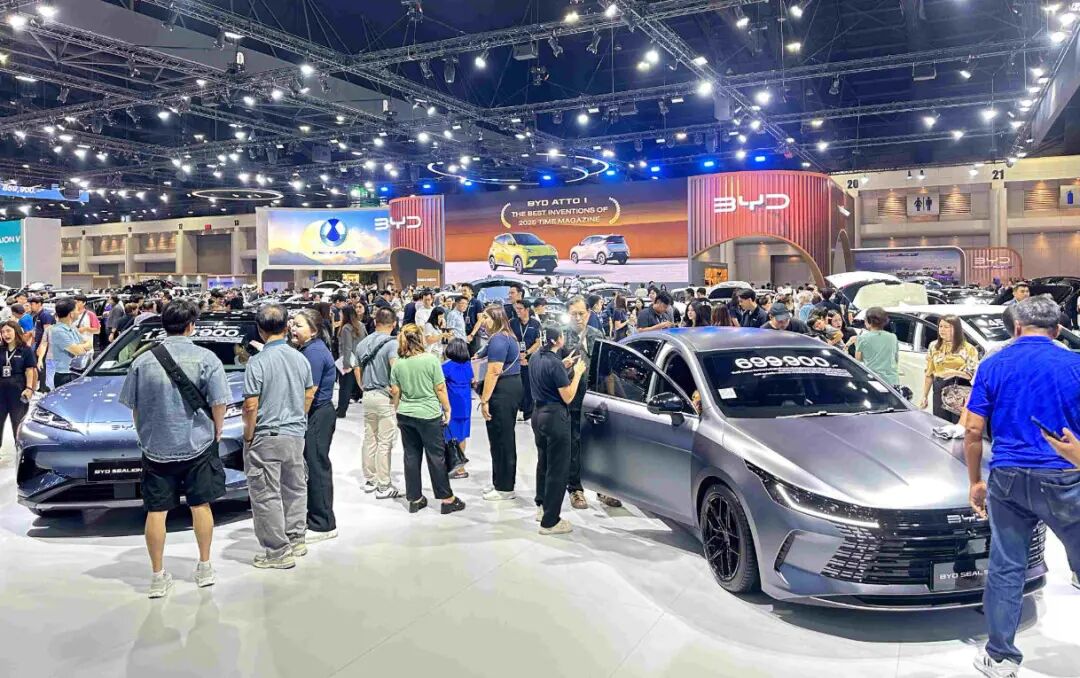
Meanwhile, Chinese automobiles not only dominate the traditional automotive market but also in the new energy sector, where BYD has officially surpassed Tesla to become the world's top-selling pure electric vehicle automaker. Factors driving this reshuffling include China's strong advantages in advanced technology, cost-effectiveness, and extremely fast R&D cycles.
Today, Chinese automakers are accelerating their expansion into right-hand drive markets from Australia to Southeast Asia, challenging long-dominant Japanese automotive companies with high-end electric vehicles targeting affluent consumers.
Executives state that in right-hand drive markets, particularly in Australia, Southeast Asia, and Hong Kong, the penetration rate of electric vehicles is already relatively high. Price is not the primary factor attracting consumers to Chinese automotive brands; these consumers are also looking at other features such as air suspension and seat massage.
For example, the fact that Chinese automakers have flocked to the Hong Kong Auto Show in recent years is the best evidence. For decades, Hong Kong streets have been dominated by Japanese vehicles, with the Toyota Crown Comfort being the mainstay of Hong Kong taxis and the Toyota Alphard being the top choice for celebrities and the wealthy. However, according to data from the Hong Kong Transport Department, in the first four months of this year, electric vehicles accounted for over 80% of newly registered private cars in Hong Kong. Chinese brands such as BYD, GAC Group, Zeekr, and Denza are rapidly rising, all surpassing their Japanese competitors.
Data from the China Passenger Car Association shows that in the first four months of this year, Toyota's market share in Southeast Asia declined by 1.4%, and by 4.1% in Oceania. Meanwhile, Chinese automakers' market share increased, with Chery's market share in Southeast Asia growing by 1.7% and BYD's market share in Oceania growing by 2.5%.
Just as Japanese automakers did when entering the global automotive market in the 1980s and 1990s, Chinese automakers are also seeking to enhance their competitiveness by shifting from exporting domestically produced vehicles to establishing localized production overseas.
Editor-in-Charge: Du Yuxin Editor: He Zengrong

THE END

-
![]()
NIO Maintains Brand Premium: Onvo Sets Minimum Price at 150,000 Yuan, Avoids Direct Competition with Leapmotor and BYD | MJ Pro
-
![]()
“From a 5-minute escape window to a zero-fire baseline, I finally feel confident driving an electric vehicle”
-
![]()
Profits Skyrocket! From Leasing to Construction: A Storage Enterprise with Hundred-Billion-Yuan Revenue Plans 1.175 Billion Yuan Investment in New Headquarters
-
![]()
Discounts Now on Offer: Is Xiaomi No Longer Grappling with Vehicle Shortages?
-
![]()
Samsung Doesn't Make Money the Hard Way
-
![]()
Japanese Media Acknowledges: China's Engine Technology Outstrips That of Japanese Firms
-
![]()
Japanese Media Concedes: China’s Engine Technology Outpaces Japanese Firms
-
![]()
Doubao Professional Version Unveiled! China Now Boasts Its Own National-Level Professional AI Agent