Discounts Now on Offer: Is Xiaomi No Longer Grappling with Vehicle Shortages?
 06/26 2026
 534
534
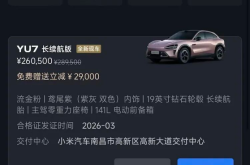
According to a report by Lanjing News, Xiaomi Automobile has recently rolled out employee purchase discounts at its retail outlets. Initially, these perks were exclusive to internal staff. However, through store operations, regular consumers can now also avail themselves of these benefits, with several models readily available for immediate purchase. Presently, the Xiaomi SU7 Pro, YU7 Long-Range Edition, YU7 Pro Edition, and YU7 Max Edition all have vehicles in stock. Take, for instance, a brand-new YU7 Long-Range Edition showcased on the official APP. After selecting options like the driver's zero-gravity seat and flowing gold paint, the final price comes to 260,500 yuan, whereas the internal purchase price is 250,500 yuan, representing a direct discount of 10,000 yuan. 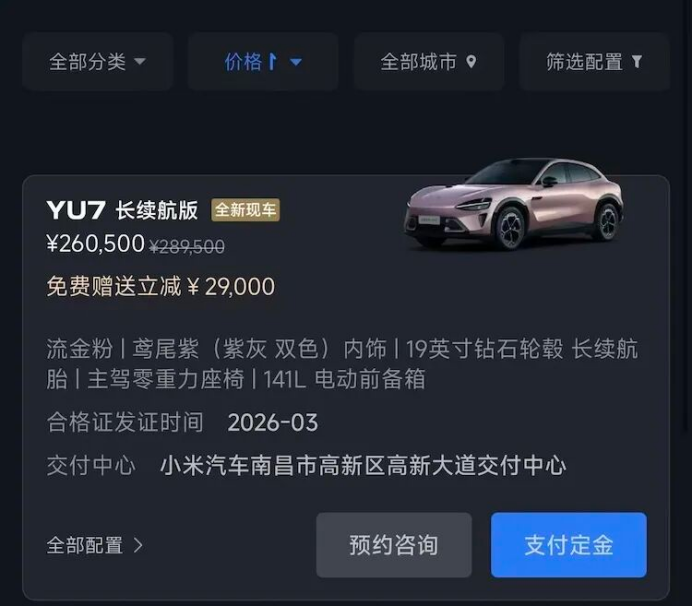
Store sales personnel revealed that most of these discounted vehicles are inventory models manufactured between February and March of this year. Among them, the YU7 boasts abundant in-stock reserves, while the SU7 is relatively scarce. The promotion is set to run until the end of this month, with only about 30% of the stock remaining. Sales staff indicated that customers can enjoy the discount by logging in with an employee account to place an order. The final registration and contact details will be recorded under the purchaser's name, and the account transfer will be completed upon vehicle pickup. Regarding the unauthorized transfer of employee discounts by stores, Xiaomi Automobile's official customer service clarified that this activity is not a publicly launched event by the brand and that specific policies should adhere to the explanations provided by offline store sales staff. They also emphasized that as long as the transaction is completed at an official authorized store, purchasing a vehicle in this manner will not affect any official benefits or the subsequent normal use of the vehicle. From the initial scenario of "vehicles being scarce" to the current "in-stock promotions," Xiaomi Automobile's recent moves have come as somewhat of a surprise. 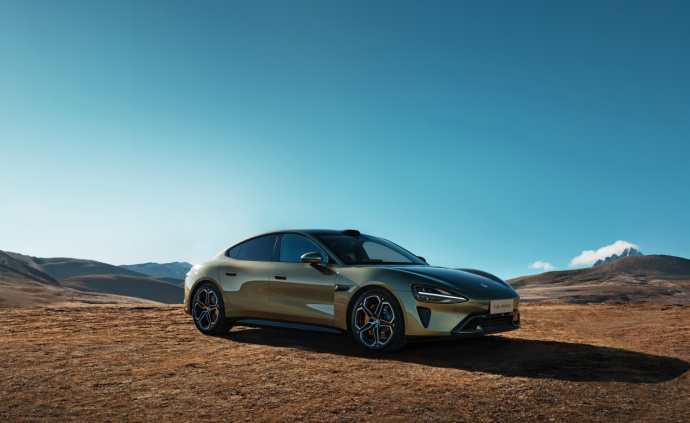
Recalling Xiaomi Automobile's market performance in the early stages of its launch, it began with high enthusiasm and an overwhelming number of orders. The Xiaomi SU7 was launched in March 2024, garnering over 50,000 reservations within just 27 minutes of sales opening and more than 88,000 reservations within 24 hours. However, due to initial production capacity constraints, vehicle delivery times were extended. The standard version had a delivery time of 53-56 weeks, with second-hand in-stock vehicles generally commanding a premium of 10,000-20,000 yuan, indicating extremely tight in-stock vehicle resources. By March 2025, the waiting time for the SU7 Pro version was nearly a year, and the Max version required about 8 months of waiting, with some consumers even having to wait until the following year to take delivery after placing their orders. After the launch of the YU7 in June 2025, the delivery time for the SU7 was still as long as 33-52 weeks. In just two years, Xiaomi Automobile's delivery situation has undergone a dramatic transformation. According to the latest information, as of June 20, 2026, the delivery time for the new Xiaomi SU7 has been significantly shortened to 5-8 weeks across all models, with quasi-in-stock vehicles available for delivery in as little as 1-5 weeks, completely eliminating the long waits of up to half a year experienced with the initial models. 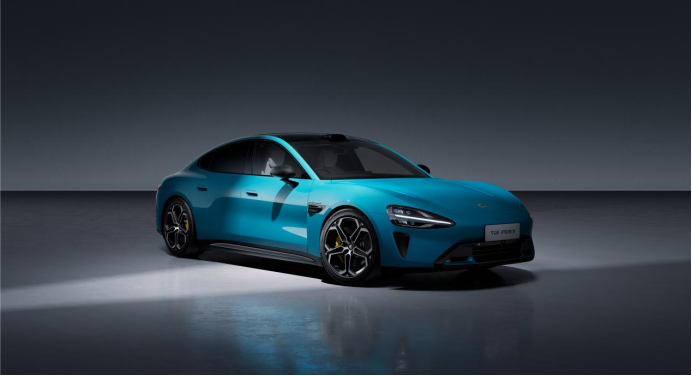
Upon closer examination, however, everything seems to fall into place. On the one hand, its production system at the Yizhuang factory in Beijing has become increasingly sophisticated, with more stable production line operations and gradually improving vehicle production efficiency, leading to a more consistent rhythm of new vehicle deliveries. After resolving the production capacity bottleneck, market supply shifted from insufficient to abundant, eliminating the need for long queues at stores, with a large number of in-stock and quasi-in-stock vehicles available for consumers to choose from directly. On the other hand, earlier this year, Lei Jun revealed in a livestream a delivery target of 550,000 vehicles for the entire year. However, from January to May of this year, cumulative deliveries have just surpassed 150,000 vehicles. Currently, Xiaomi's sales growth has significantly slowed down, with the explosive growth momentum of the initial launch period waning. With nearly half the year already passed, the task completion rate is less than 30%, putting overall progress under significant pressure. 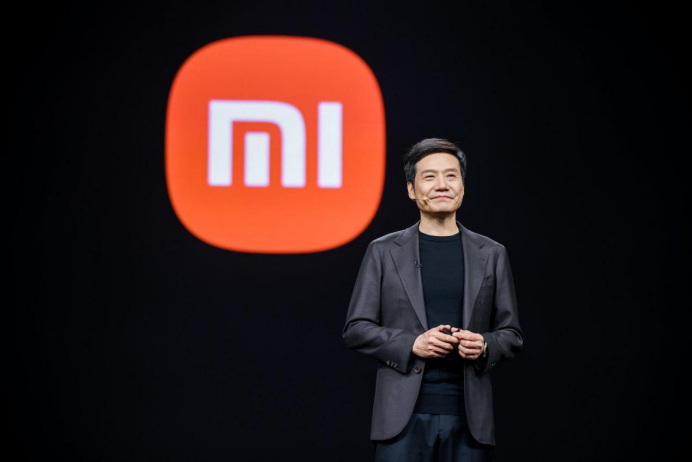
It's also worth noting that since the beginning of this year, multiple competitors to the Xiaomi SU7 and YU7 have entered the same market segment. The Qijing GT7 and Shangjie Z7, as well as the LanTu ZhuiGuang S and Zhijie EHX, are all equipped with Huawei's full-stack technology system, featuring HarmonyOS cockpit, Qiankun ADS advanced intelligent driving, and 800V high-voltage platforms as standard across all models, making them direct competitors to the Xiaomi SU7 and YU7 in terms of key configurations. As more competitors to the Xiaomi SU7 and YU7 emerge, consumers now have more options for comparison and choice. Xiaomi's potential market competition pressure is quietly mounting. 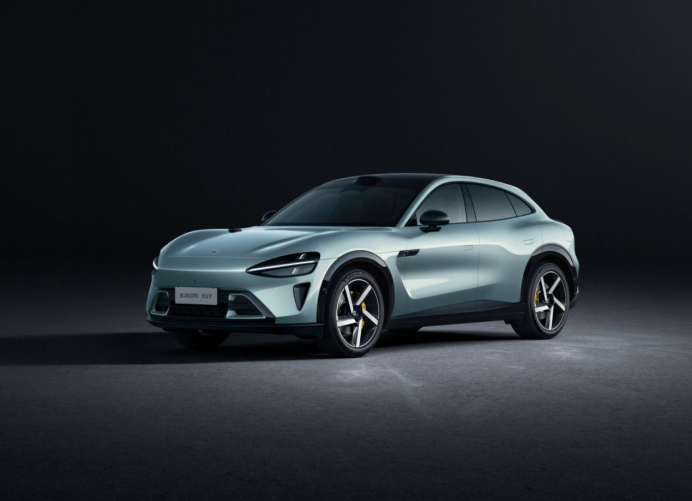
In essence, Xiaomi's scarcity has diminished. In the early days of the same price segment market, Xiaomi Automobile was almost in a league of its own. Now, with the continuous launch of new products from various companies, consumers have a wider array of choices, and attention is naturally diverted. When competitors' intelligent driving, range, appearance, and cockpit experiences are catching up or even surpassing Xiaomi's, it becomes challenging for Xiaomi to maintain the absolute allure it had when it first launched. In the long run, to continue stabilizing its market share in the segment, Xiaomi Automobile still needs to rely on a more diverse range of models and high-quality intelligent driving experiences to solidify its competitiveness. (Image source: Internet, removed if infringing)
-
![]()
NIO Maintains Brand Premium: Onvo Sets Minimum Price at 150,000 Yuan, Avoids Direct Competition with Leapmotor and BYD | MJ Pro
-
![]()
“From a 5-minute escape window to a zero-fire baseline, I finally feel confident driving an electric vehicle”
-
![]()
Profits Skyrocket! From Leasing to Construction: A Storage Enterprise with Hundred-Billion-Yuan Revenue Plans 1.175 Billion Yuan Investment in New Headquarters
-
![]()
Discounts Now on Offer: Is Xiaomi No Longer Grappling with Vehicle Shortages?
-
![]()
Samsung Doesn't Make Money the Hard Way
-
![]()
Japanese Media Acknowledges: China's Engine Technology Outstrips That of Japanese Firms
-
![]()
Japanese Media Concedes: China’s Engine Technology Outpaces Japanese Firms
-
![]()
Doubao Professional Version Unveiled! China Now Boasts Its Own National-Level Professional AI Agent